
"Fine Art Experiments"
I hate the term "fine art" but I don't know what else exactly to call these besides just black and white.
Anyway, I've been doing some editing experimenting with this lighthouse shot. It's kind of a lot of photoshop work to do this, the mostly just cutting out all the bits of the lighthouse with the pen tool. The other stuff isn't too complicated. Just masking and selective adjustments and a sky replacement.
I'm just wondering what other people think of something like this and which one you like better? I have several of these types of edits on my portfolio here if you are interested and several other lighthouses as well. I'm thinking of making a whole series like this, I just need to go photograph some more lighthouses!
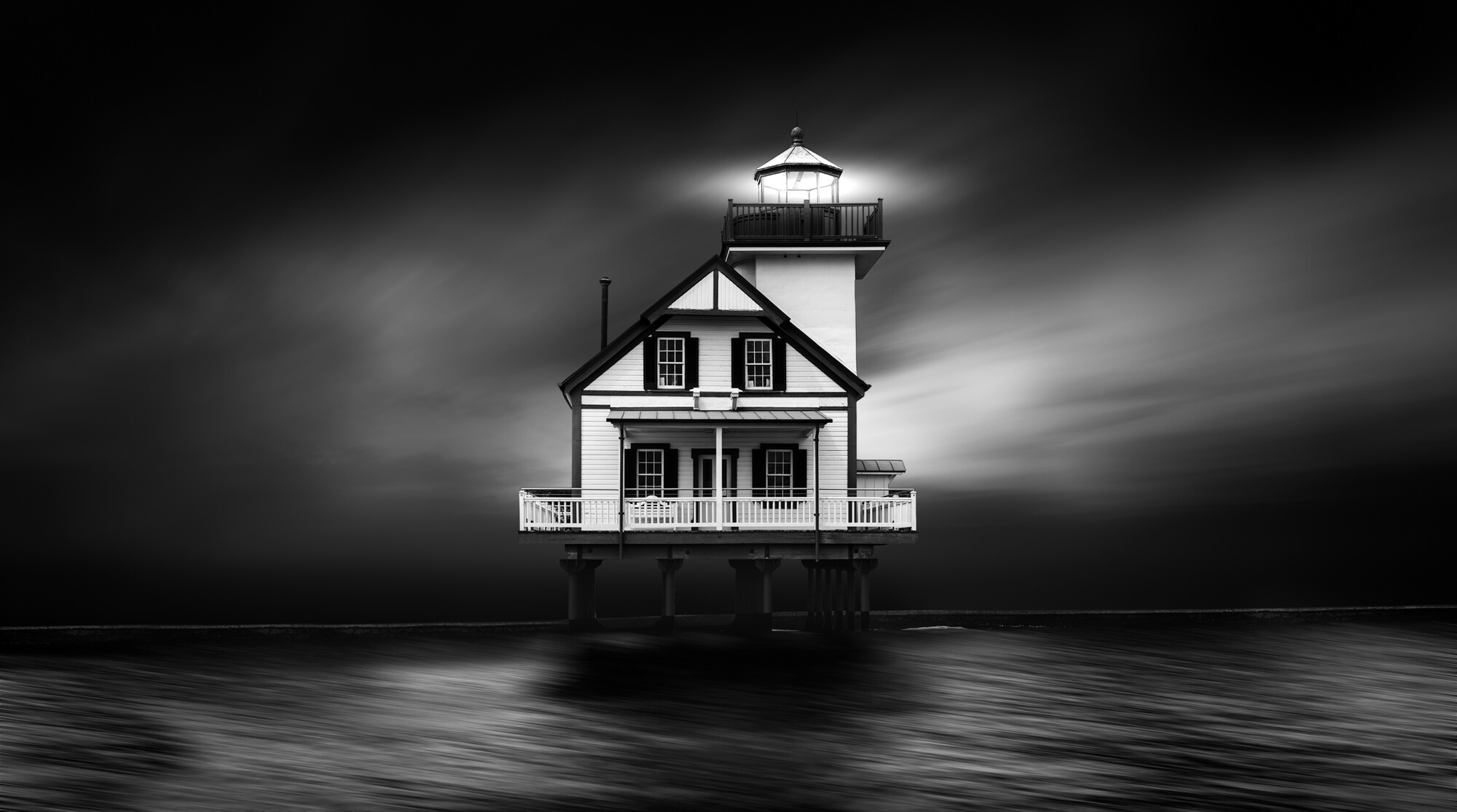
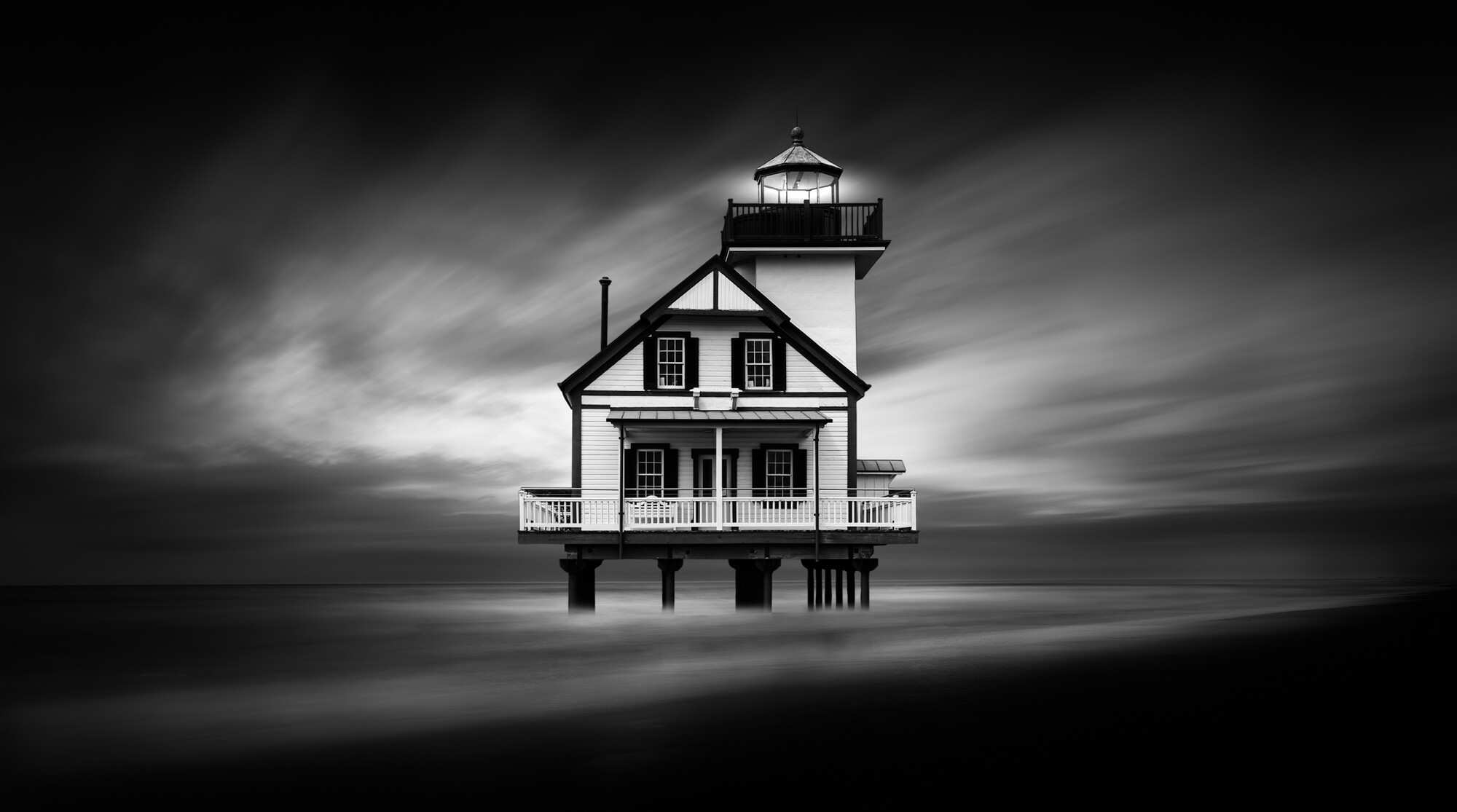
I'm not really going for super realistic here which is something to keep in mind. With that being said, there is something I like about the 2nd one but it also just looks like the lighthouse is in the middle of the ocean which doesn't really make sense. In the first I've kept the base where the lighthouse sits, although I altered it so it's a straight line rather than jutting out on the left. But I feel like that "anchors" the lighthouse better. I kept the original water but added a blur filter.
I think I like the first one slightly better because it is a little more realistic but there is also something about the 2nd one I like. Maybe if I didn't know the location it wouldn't look as weird to me? I think you could imagine a location where this does make sense. Like the tide is in and thats why the lighthouse is in the water. Or something like that.
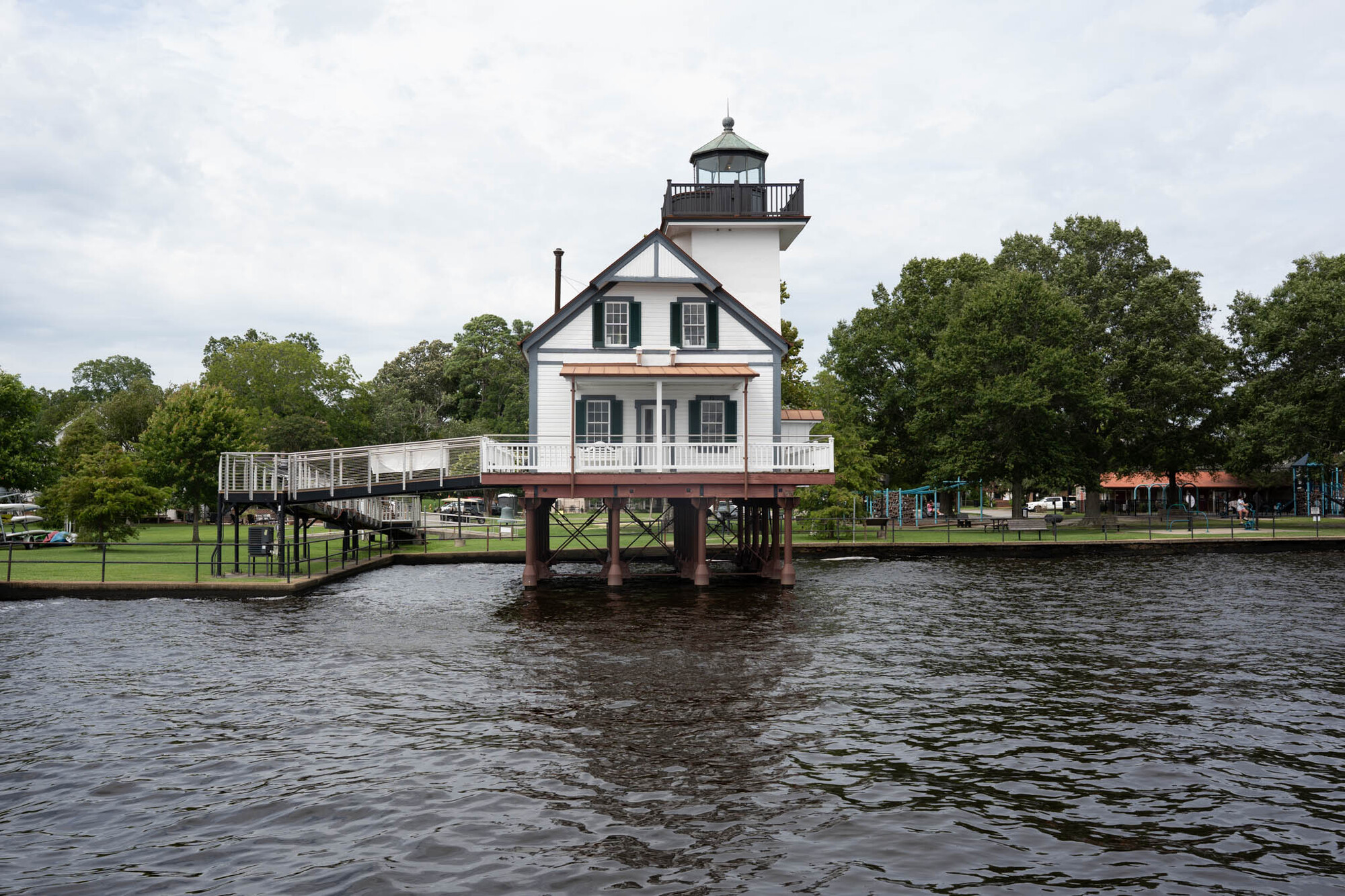
I also included the original photo so you can see what I was working from. If you are interested in the process more I'd be happy to explain it but I didn't want to get too into the weeds about it in this post.






23 Comments
I think both of these are terrific. IMHO, the issue with a lot of photographs is between people that want a strictly unedited image and the other group that does "expressive photography", which is where I think actual "fine art" starts. The work can be very emotional in nature, or interpretive. I am very careful to always let people know that my photographs do not represent objective reality, but my version of reality. I really like both of these. Just a word to think about for interpretive photographers in general is to never apologize in any way for the work. Some, like me, will love the work, others will think you are an absolute traitor to the craft. But therein lies the truth. You have raised these from being a craft, to being actual art. These two images should be very well received by people.
You actually have inspired me to go back and look at a photograph that I made of the Bass Head Lighthouse in Maine. I've always liked the image but it comes off as a post card - pretty picture.
Looking forward to seeing it. The one time I was there the tide was too to get in a good spot. I did my best but you could barely see the lighthouse.
Me too, Nathan!
Thanks Nathan! I couldn't agree more with you about the people who think you are a traitor to the craft for editing photos, haha! I see so many posts on social media along these lines that just make me cringe. And also make me think, "if you only knew how much editing went in to most of the famous photos you've seen." Even the great Ansel Adams "edited" his photos. I partly blame AI, and I partly blame people just not knowing what they are talking about.
I've always been drawn to the more "expressive photography" rather than objective reality my self. I could not think of anything more boring than just snapping a shot and saying "well here it is, nothing else I can do." Look at my original photo here. By fstoppers standards I would give it a 1. Anyone could take it. But what I turned it into is something completely different and not boring if I do say so myself! And, I had this in mind when I took the original photo. I liked the composition but it was mid day and overcast. Something I can't change. But, I knew I could transform it into something else. Some may still think it's a 1 but there's nothing I can do for them except ignore them.
When I first got into photography I was kind of one of these people that thought I had to get everything right in camera. But the longer I did photography and the more I learned what was possible the more I changed my tune. Watching someone like Elia Locardi do things like blend focal lengths, replace skies, and distort "reality" ever so slightly but come away with something amazing really inspired me to do more of that and not apologize for it 🙂.
Sorry for such a long reply. I just had a lot to say on the "reality/expressive" topic.
I 100% agree with people that say you should get it right in the original exposure. But only in terms of the exposure. If you get it right in the original exposure then you won't ahve to bracket or use HDR in most cases. But that's the limit of what has to be right in the original exposure. The mantra to "get it right in the exposure" goes back to the film days when our options were much more limited. When I am working with my film cameras, which is often, I am a stickler for getting it right in exposure because, in those cases my options post exposure, and film processing, are very limited if I am going to print it in my darkroom. But even there, there are a lot more options than many people think there are. But the very most crucial thing is to get it right in exposure, the rest is interpretation.
Yes, I agree 100% I was kind of vague when I said get it right in camera. You should absolutely get the exposure right whether you bracket or not. What I meant is the people that think you should have to get everything you want out of a scene in camera. People that think editing is some kind of cheating.
I agree. I think they may need a good laxative to clear out their brain. Hope that made you chuckle a bit!
😂😂😂
I think I remember that location Mr. Foreman.
Both your edits are wonderful. I especially love your "Floating Lighthouse" in photo #1.
I can never find the line between different genres of photography: 25% fine art, 30% landscape, 15% minimalist and 30% black and white. 🫤
Thank you for sharing.
Thanks Dean!
Hi Kyle! Good on you for sticking your neck out here! You've put the issue plainly on the table. I'm fine with longer text - should be more of it on FS as far as I'm concerned; what I find most interesting about this SOCIAL forum is what my fellow photographers think about what they do, their rationale, as the images speak for themelves.
You and Nathan describe this touchy issue very well, in rational terms. I think it is good if discussion is rational, while rationality doesn't even enter into art much at all. Maybe it does in craft: a knife with no handle has no rational purpose, but could well be produced by a knifesmith as a work of art. Nathan makes this point succinctly: "You have raised these from being a craft, to being actual art".
I'm interested in photography pretty much purely as art, and take almost no record shots with my dedicated camera. Most good artists are good at the craft aspect of their work, and this is very important in photography (most important, you might think if you just studied FS!). I can't think of one image I've been prepared to share that looks much at all like the RAW file - they tend to look like s&%t! Our phones now do a remarkable amount of polishing of the original file, fairly well, but look at the haloes around rooftops & trees below that "interesting" sky that look so much better than reality. Almost all darkroom prints are edited in various ways. The idea of a camera as the presenter of truth or reality is simplistic.
Very well said Chris. And what you said about RAW files is so true. I've gotten my images on my computer before and been like "what in the hell has happened?" But I'm almost always able to get them where I envisioned. The RAWs really can look terrible sometimes! I'm just glad there are others out there that appreciate the "art" of photography. And I am very honored that at least some of my fellow photographers consider some of my work to be art.
For some reason it won't let me reply to your 2nd comment. So I'll do it here. Fstoppers is weird sometimes.
I really like your edit, I may have to steal it haha! I do still have some tweaking to do to these before I'm done.
I really appreciate your comments and compliments. I'm definitely going to be looking to do more like this. I've just got to find the time and will power to get to the other North Carolina lighthouses. I don't live on the coast and they can be anywhere from 3-5 hours away. Hard to make a day trip out of that. Although I could do it if I really set my mind to it.
I think you are right though. I think I have something here that could really make a cool series of some sort.
On a side note. I just looked up Michael Kenna. Wow! What amazing work. I hadn't heard of him till now. Definitely going to start following his work.
the very minimal times I have presented images with no editing involved actual documentation. I have done these a few times, almost always if there are legal proceedings involved. The other would be when I have done work for the government in documenting the work contractors have done so the contractor can get their draw checks. A couple of times for law enforcement and once to show that the signatures on a will were forged; and that one was interesting!
After my manifesto, I should compliment you on your actual images, Kyle. They DO look like an extension of you earlier lighthouse images, which really appeal to me, especially as I gravitate more & more to monochrome and departure from "reality" to something that appeals in an inexplicable way to me, in the work of others, like Michael Kenna for instance, and my own efforts.
I like both your images, which make good use of the flat, "boring" light in the original, as a starting point for something else, something a bit magical. I prefer the sky in the second, while the lighthouse just doesn't quite sit as well in the whole scene in the second, and I find the diagonal ?shore line distracting.
Far be it from me to "correct" your vision, but I liked them enough to use the sea and a little more glow around the light in the first, while preserving the structure in the light housing in the second and its lovely sky to blend them, just for fun.
Well done! Let's see more. Especially if you find more lighhouses, this could form the basis for an exhibition theme, a book, or one section of a book. You have talent, imagination and facility, with a special knack for striking monochrome.
These both feel fantasy-like to me. The second one especially makes me think of fog which is probably why it feels like the lighthouse is floating. I really like the tension of feeling solid and not solid at the same time.What stands out to me is how you captured a solidness. As for comparing the two, the first feels more anchored which I appreciated, but the second one keeps pulling me back because tt feels more imagined.I believe they would work well in the realm of fine art! I’m as interested in the technique as the image itself. It feels both intentional and graphic, but never loses atmosphere. I would enjoy seeing a whole series done this way; and if you’re ever up for it, even a simplified explanation of the process would be fascinating. I've watched the video link you posted before, but I think being able to read through would be better for me. Hope your new year is going well. I just checked your portfolio on here. I haven't for awhile, and it was really enjoyable. Nice work!!
Thank you Photo Girl! I agree with you about the 2nd one. It's a little awkward, for lack of a better term, but there is still something about it that draws me to it.
As far as the process goes the tedious part is cutting out what ever subject you have. In some cases it can be easy. But in this case with the lighthouse, not only do I have to cut out the main structure but you also have to cut out all the little small spaces in the railings the glass the pilings at the bottom, etc.... That process alone can be time consuming. After that it's not as hard. I will say it really helps to have a vision first. Like in this instance I knew I wanted the entire background gone. I didn't want any of the park behind the lighthouse to be in the image. I did previous one of this same lighthouse from a different angle and that one I thought worked well with leaving some of the park.
You also need some other images that will work well with the composite. The 2nd photo here is a completely different long exposure photo I took a few years ago. I basically just placed the lighthouse in it to see how it would look first. I thought it had potential so I just went with it. I have also used the sky from that image in several of my other photos. I need to go shoot some more long exposure skies that I can use.
For the actual processing itself. I usually start with a base in lightroom. I convert to b/w and then do some global adjustments until I'm just barely clipping the highlights and shadows. I then take all my pieces into photoshop. Once I have the composite the way I like it that's when I start fine tuning the edit. And it's really just a bunch of dodging and burning using multiple curve layers and painting in the adjustment selectively where I want it. I'm also using sky replacements. Sometimes just a radial gradient to give the illusion of a light source. The cool thing about this for me is the options are really limitless. Where ever your imagination can take you. It all starts with that vision at the beginning.
IDK how much photoshop you know so some of this may seem really advanced but if you have a basic knowledge of how masks work it's really not that hard. I may have to do a blog series or something showing how I piece these together.
Thanks again!
Late to the party Kyle.... both are really great images, each I like for different reasons.
These days I am more apt to ask myself what I feel when viewing a piece, trying to put analysis to one side until I fully understand the emotion invoked.
In this sense, I actually prefer the 2nd image - I like the way it is isolated from the background and the smooth water helps convey more of a dream.
The first image on the other hand provides more of a solid foundation as suggested. Perhaps the first seems more natural to what our minds might expect, the 2nd more surreal?
My viewpoint on editing is that we are trying to create art. Since day 1 photographers have manipulated outcomes - be it from choice of film stock, focal length of lens, chemicals/paper choice etc. As long as it was created by a camera I don't really care how and image is enhanced.
Thanks Alan!
I am certain they would sell very quickly though I know that wasn't what your impetus. I think they are stunning for want of a better word. They really grab me. I'd have them on my wall if there was room!
Thanks, Colin!
I should have added to my comment that if I could only have one, it would be the top one, the darker one of the two. I feel a sense of supernatural danger when I look upon it.