A backpack is a decision about your spine. A roller or a hard case is a decision about your gear surviving somebody else's baggage system. The moment you stop walking your kit from the car to a trailhead and start moving it through airports, freight elevators, gravel lots, and cargo holds, the questions change: does it clear the sizer, does it take a drop from waist height onto concrete, and can you still get to a lens without unpacking the whole thing on a hotel floor. Weight becomes the enemy in a way it never is with a backpack, because every ounce of shell and wheel and handle is an ounce you cannot spend on cameras.
Two axes decide this purchase. The first is soft versus hard: a soft roller is lighter, holds more usable gear per external inch, and rides in the cabin, while a hard case is heavier, wastes volume on shell thickness, and does not care what a baggage handler thinks of it. The second is the sizer. Most major US carriers cap carry-on at 22 x 14 x 9 inches (56 x 35 x 23 cm) including wheels and handles, and airlines have been getting serious about measuring: United began deploying automated bag scanners at gates in late 2025 and has said the system is expanding across its network. Outside the US, the footprint often shrinks and, more painfully, a weight cap appears: several European and Middle Eastern carriers hold economy cabin bags to 7 to 10 kg, which an empty pro roller can eat most of before you load a single body.
Every dimension and weight below is taken from the manufacturer's current spec page rather than from a press release or a memory of an older version, and the entries stick to what the specs and the documented design of each bag will support. Where a bag's dimensions sit close to an airline limit, we flag it, because a case that is legal in Denver and illegal in Dublin is a specific kind of expensive mistake. If you want something to carry rather than roll, our camera backpacks guide covers that side of the problem.
Our Picks
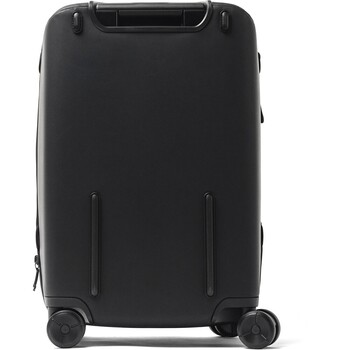 Best Carry-On Roller Peak Design Roller Pro Carry-On
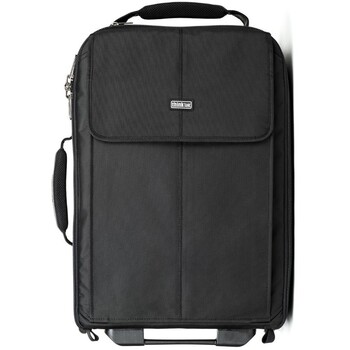 Best for Air Travel Think Tank Airport Advantage XT
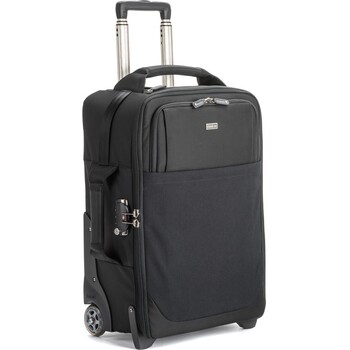 Best Roller for Working Pros Think Tank Airport Security V3.0
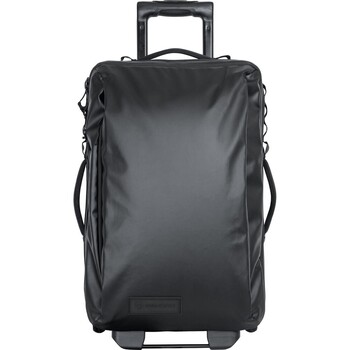 Best Roller and Backpack Hybrid WANDRD Transit Carry-On Roller
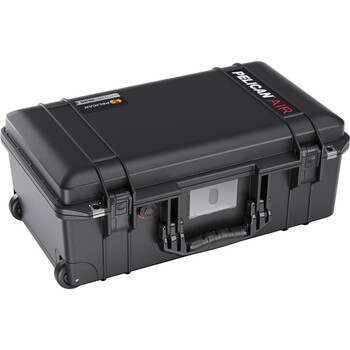 Best Hard Case Pelican 1535 Air Carry-On Case
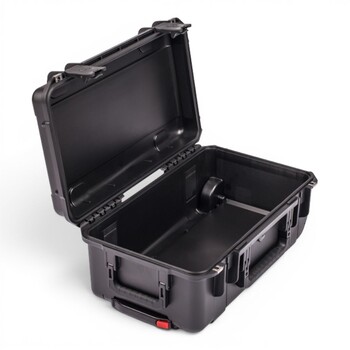 Best Budget Hard Case SKB iSeries 3i-2011-7 Case
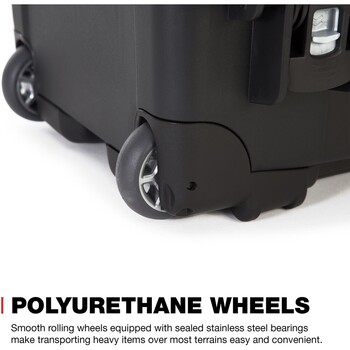 Best Hard Case for Rough Locations Nanuk 935 Case
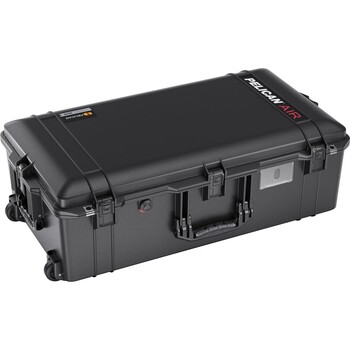 Best Check-In Pelican 1615 Air Case
Best Carry-On Roller: Peak Design Roller Pro Carry-On
Its drawbridge lid folds down against a wall instead of splitting like a clamshell, so this 8.6-pound hybrid opens fully in the tight floor space beside a hotel bed.
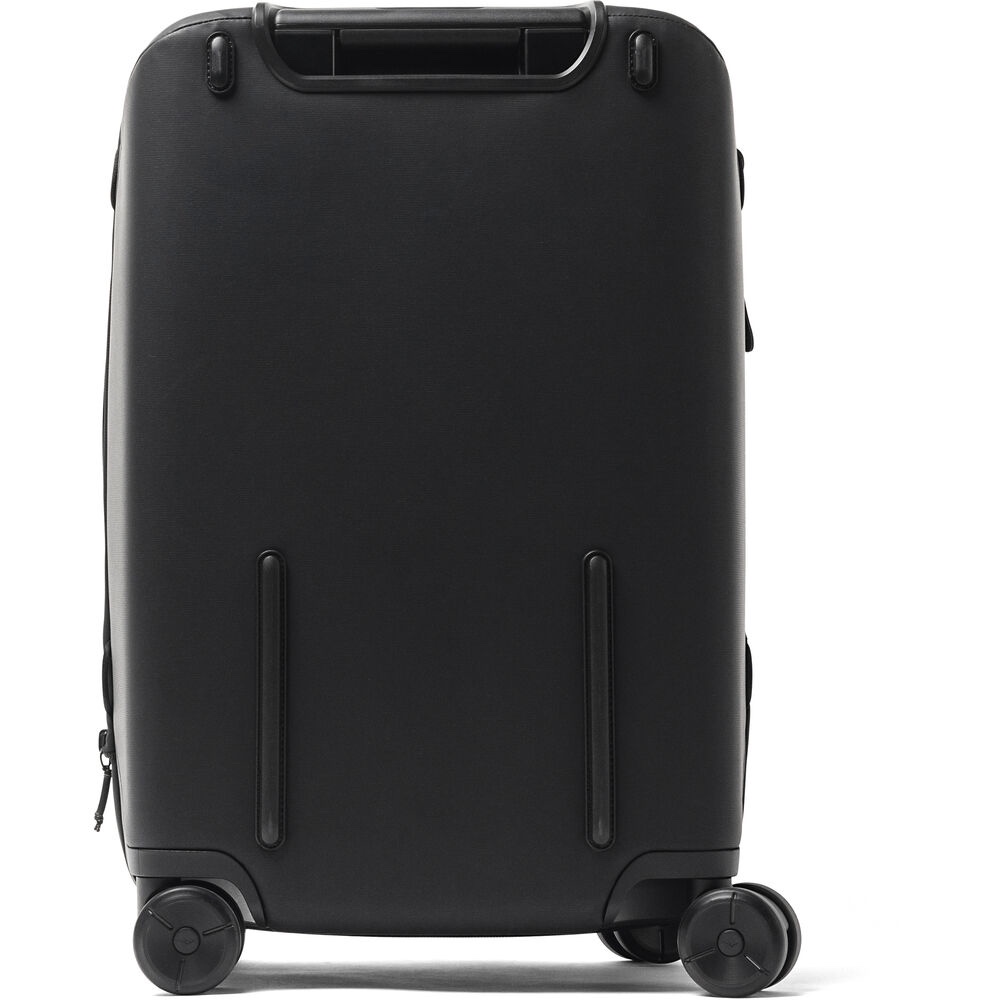
Peak Design spent years telling people it would not build a roller, then shipped the Roller Pro Carry-On after a Kickstarter run in 2025, and the thing that makes it interesting is not the carbon fiber handle. It is the drawbridge lid. Instead of splitting like a clamshell and needing a bed or a bench to open flat, the front panel folds down while the back stays vertical, so you can open it against a wall in an airport corridor or in the two feet of floor space beside a hotel bed and still see everything. Anybody who has tried to unpack a conventional roller in an economy hotel room already understands why that matters.
Structurally it is a hybrid, which is the right answer for a cabin bag. The shell is 550D recycled fabric wrapped around a rigid polycarbonate interior, so it holds its shape against overhead-bin abuse without the dead weight and wasted volume of a true hard case, and the zippers are weatherproof. The 60 mm wheels are noticeably smaller than the 80 mm wheels Think Tank uses, which costs you a little on broken pavement, but they run four-wheel spinner style and Peak Design sells them as replaceable parts. The whole system takes Peak Design's camera cubes, and the X-Large cube was designed specifically to fill the Roller Pro, deep enough to swallow a 400mm prime.
The expansion zip is the other reason it wins here. Zipped shut, it is 9 inches deep and sits inside the standard US carry-on box. Expanded, it grows 2 inches and adds 5 L, which is a check-in or a drive-home mode, not a gate mode. Airlines are increasingly measuring rather than eyeballing, so use the expansion accordingly.
The honest weakness is weight. At 8.6 lb empty it is heavier than the Think Tank Airport Advantage XT and heavier than the WANDRD Transit, and on a carrier that enforces a 7 kg cabin allowance you have surrendered more than half your budget before a camera goes in. It is also the most expensive soft roller here by a wide margin, and you are paying partly for hardware design that a Think Tank buyer would call jewelry. For the photographer who flies mostly US domestic, wants one bag that works as camera luggage and as a normal suitcase, and cares that their gear opens cleanly in tight spaces, it is the best-executed roller on the market, so check the current price of the Peak Design Roller Pro Carry-On at B&H.
What We Like
- Drawbridge lid opens fully in tight spaces
- Hybrid soft and rigid shell protects without hard-case bulk
- Expands from 34 L to 39 L when you no longer need to be carry-on legal
- Camera cube system means it converts to normal luggage in a minute
- Replaceable wheels and a lifetime warranty
What Could Be Better
- 8.6 lb empty is heavy for weight-capped international cabins
- 60 mm wheels are small next to pro rollers
- The camera cube costs extra unless you buy the cube kit bundle
- Priciest soft roller in this guide
Best for Air Travel: Think Tank Airport Advantage XT
Stripped to 7 pounds empty, the Advantage XT leaves real gear headroom under a 7kg cabin cap, and its 8-inch depth clears sizers that reject 9-inch rollers.
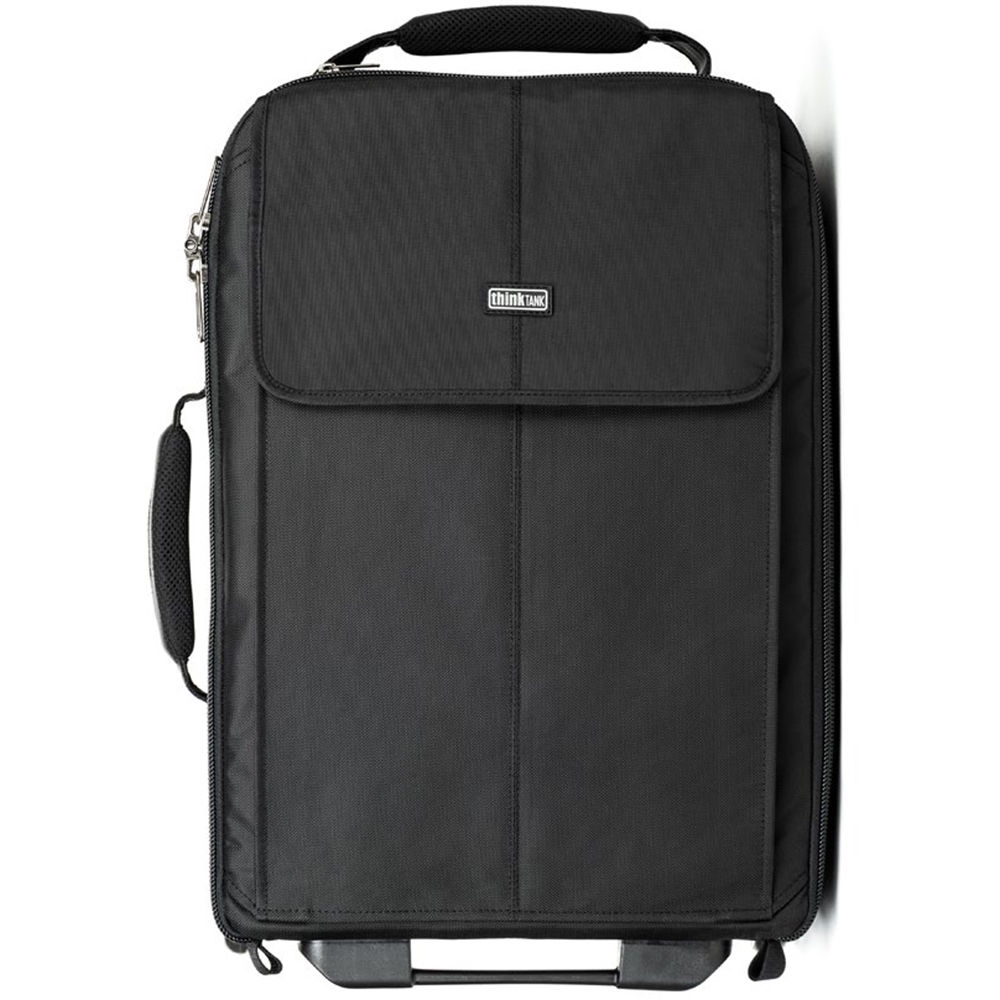
Weight limits, not size limits, are what strand photographers at foreign gates. Lufthansa holds economy cabin bags to 8 kg and enforces it at Frankfurt and Munich, Emirates holds economy to 7 kg, and a great many Asian and European carriers sit in the same range. That is the entire reason the Airport Advantage XT exists. Think Tank stripped a full pro roller down to 7 to 7.8 lb empty, or 3.2 to 3.6 kg, which on a 7 kg allowance leaves you somewhere between 3.4 and 3.8 kg of camera. Walk the same door with an Airport Security V3.0, which starts at 5 kg empty, and you have 2 kg to work with.
Getting there meant giving things up, and Think Tank was honest about which ones. There is no ballistic-nylon armor plating, no built-in cable lock, and the case is 8 inches deep rather than 9, so the interior is shallower and a gripped body with a big zoom attached fits with less room to spare. What survived is the part that matters: the 80 mm wheels with sealed bearings, the user-replaceable handle and wheel housings, the closed-cell foam dividers, and lockable YKK zipper sliders. It still swallows two gripped bodies with lenses mounted plus five to eight more lenses, which is more than most photographers actually fly with.
The 14 x 21 x 8 in footprint is the other half of the argument. It fits inside the US 22 x 14 x 9 in box with room to spare, and its 20.3 cm depth is close enough to the common 55 x 40 x 20 cm European carry-on standard that it clears most sizers where a 9-inch-deep roller gets rejected. Verify against your specific carrier before you fly, because the limits are not uniform and the enforcement is getting stricter, not looser.
The obvious limitation is that lightness and toughness are the same argument from opposite ends. This is a soft bag with foam inside, so it protects against the bumps of transit, not against a 200 lb suitcase landing on it in a cargo hold. Do not check it. Think Tank's own store shows it backordered periodically, so buy it when you see stock rather than waiting for a sale. For anyone whose photography involves international flights on carriers that weigh cabin bags, this is the roller to own, so check the current price of the Think Tank Airport Advantage XT at B&H. Also consider the Think Tank Airport International V3.0 if you want the same tight international footprint with TSA locks and a heavier build.
What We Like
- 7 lb empty leaves real headroom under 7 kg and 8 kg cabin caps
- 8-inch depth clears sizers that reject 9-inch rollers
- Full-size 80 mm wheels despite the diet
- Handle, wheels, and housings are user-replaceable
- 17-inch laptop compartment survived the weight cut
What Could Be Better
- Shallower interior than a 9-inch roller
- No integrated cable lock or ballistic-nylon shell
- Not built to be checked
- Availability is intermittent
Best Roller for Working Pros: Think Tank Airport Security V3.0
The default working-pro roller carries a 600mm f/4 detached inside a carry-on footprint, armored in 1680D ballistic nylon, though it runs up to 12.9 pounds empty.
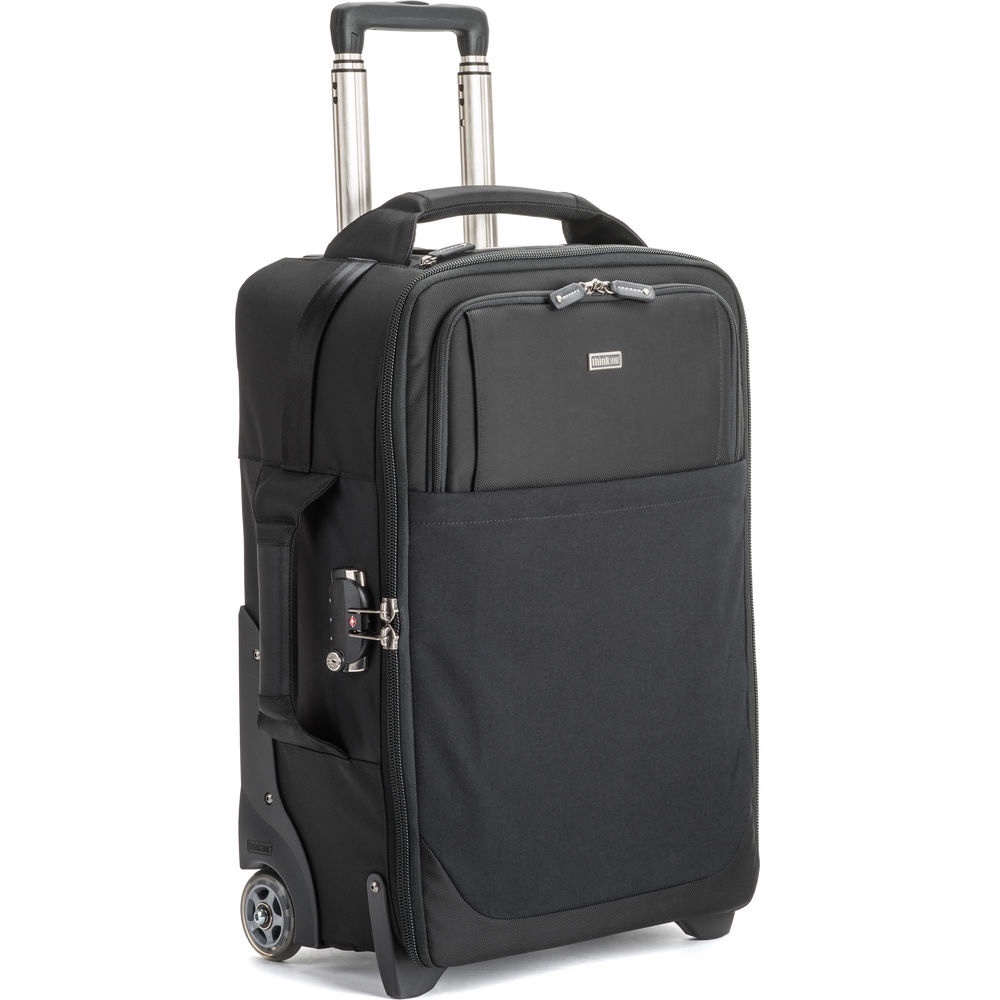
Walk any major sporting event, political rally, or commercial set and count the rollers. A large share of them will be this one. The Airport Security V3.0 is the default working-professional roller because it does the one thing no other soft bag on this list quite manages: it takes a 600mm f/4 detached, or a 500mm f/4 with a body attached, and then still rolls onto a plane at 14 x 22 x 9 in. That capability is the entire pitch, and if you shoot sports or wildlife for a living it is not negotiable.
The build is the other half. The 1680D ballistic nylon shell is genuinely armored compared to the fabrics on lighter rollers, the 80 mm wheels ride on sealed ABEC 5 bearings that survive years of terminal floors, and both the wheels and the handle are user-replaceable, which is why you still see decade-old examples in service. Think Tank bundles a TSA-approved zipper lock and a steel-cored cable lock so you can tether the bag to a chair leg or a light stand while you work, which is a real, unglamorous feature for anyone who has left gear unattended in a press room.
You pay for all of that in kilograms. At 11.1 to 12.9 lb empty, or 5 to 5.8 kg, this bag is close to a non-starter on any airline that weighs cabin luggage: a 7 kg allowance leaves you between 1.2 and 2 kg for gear, which is one body and a lens. It is also 9 inches deep, which is legal on US majors and a coin flip in Europe. This is a bag for photographers who fly primarily US domestic, drive to most jobs, and need capacity and security over grams.
The one thing it is not is protective in the way a hard case is protective. Ballistic nylon resists abrasion and puncture, not crushing, and this bag lives in the cabin or it dies. Nothing here is a substitute for the Pelican if your gear is going under the plane. If your work looks like a long lens, two bodies, a laptop, and a set of stadium credentials, this is still the bag to beat, so check the current price of the Think Tank Airport Security V3.0 at B&H.
What We Like
- Carries a 600mm f/4 in a carry-on-sized bag
- 1680D ballistic nylon and 80 mm ABEC 5 wheels built for daily abuse
- TSA zipper lock and cable lock included
- Replaceable wheels and handle keep it alive for years
- 17-inch laptop and 10-inch tablet compartments
What Could Be Better
- Up to 12.9 lb empty, which weight-capped cabins will not tolerate
- 9-inch depth is marginal on many non-US carriers
- No crush protection, so it cannot be checked
- Heavy to lift into an overhead bin when fully loaded
Related posts

Best Roller and Backpack Hybrid: WANDRD Transit Carry-On Roller
Lightest roller here at 6.8 pounds, the Transit rides on two crush-proof wheels and doubles as ordinary luggage once you leave its separate camera cube at home.
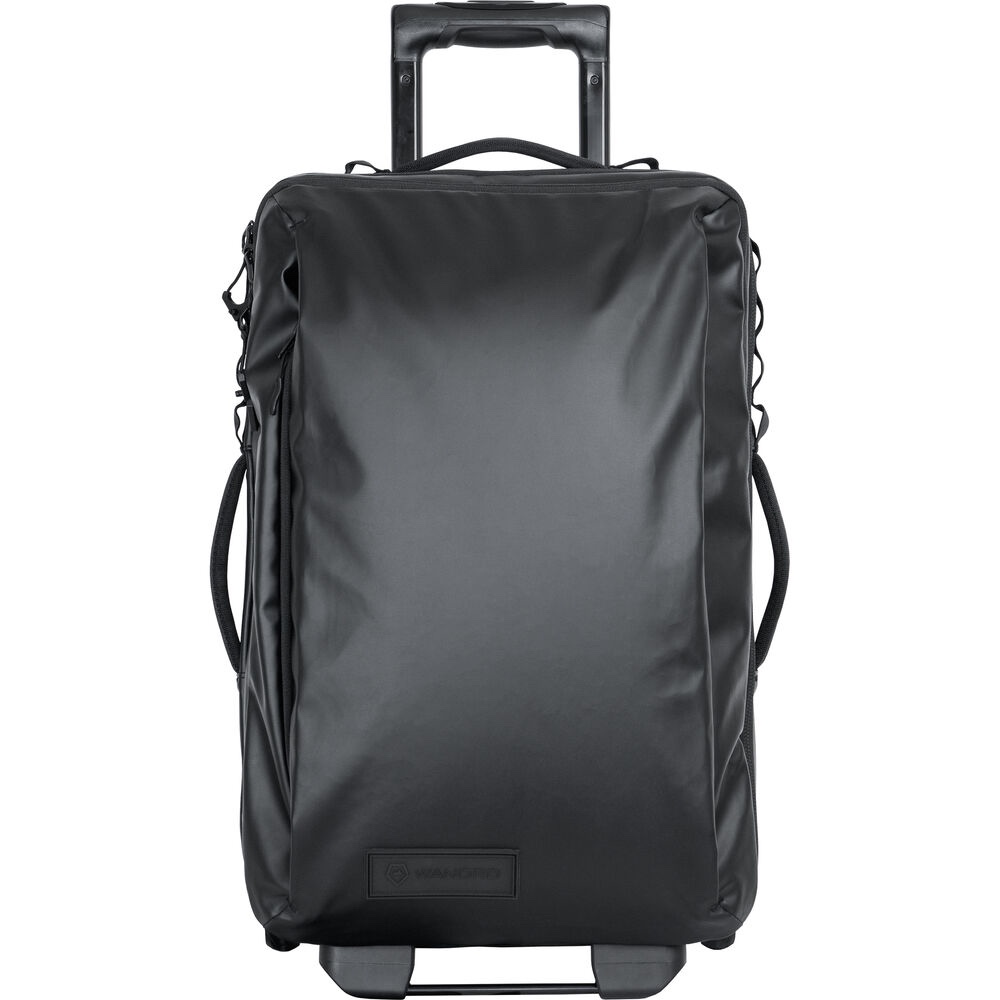
WANDRD built its name on backpacks, and the Transit Carry-On Roller is what happens when a backpack company designs luggage. It behaves like a travel bag first and a camera bag second, which is either the point or the problem depending on what you are doing with it. At 40 L it holds four-plus days of clothes, and if you drop a WANDRD Essential or Essential Plus camera cube into it, part of that volume becomes a padded, dividered camera compartment. Leave the cube at home and it is simply a well-organized suitcase.
At 6.8 lb empty it is the lightest roller in this guide, and 21.5 x 13 x 9 in keeps it comfortably inside the US carry-on box. The construction is unusual: a genuine hardshell back panel takes the structural load and the impacts, while the front is a weather-resistant tarpaulin covered in pockets, which is where the organization lives. Magnetic buckles on the compression straps are the sort of detail that sounds like marketing and turns out to matter when your hands are full at a curb. There is a dedicated AirTag pocket, which in 2026 belongs on every piece of luggage sold.
Two wheels, not four. That is a deliberate choice and it will divide people. Two-wheel rollers track better on rough ground and cobblestones and they do not scatter sideways on a sloped jet bridge, but they must be dragged behind you rather than pushed upright alongside you, and they are worse in tight airplane aisles. Loaded, the two-wheel design rolls happily and hauls poorly: the grab handles are there, but a fully packed 40 L bag is a genuinely awkward thing to carry up stairs.
The clear-eyed take is that this is not a dedicated camera roller. The camera cube is a separate purchase, the padding is nothing like what Think Tank builds in, and a photographer traveling with three bodies and six lenses should buy a real camera roller instead. For a traveling creator flying with one body, two or three lenses, a laptop, a drone, and a week of clothes, the ability to carry all of it in one legal carry-on is the whole game, so check the current price of the WANDRD Transit Carry-On Roller at B&H. Also consider the Think Tank Walker Pro Rolling Backpack if you want a bag that genuinely converts into a backpack when the pavement runs out: it has deployable harness straps and takes a 400mm f/2.8 mounted on a body.
What We Like
- Lightest roller here at 6.8 lb
- Doubles as ordinary luggage when the camera cube stays home
- Hardshell back panel with an organized tarpaulin front
- Magnetic compression buckles and a hidden AirTag pocket
What Could Be Better
- Camera cube is sold separately
- Two wheels, so it drags rather than pushes
- Unpleasant to hand-carry when fully loaded
- Far less gear padding than a purpose-built camera roller
Best Hard Case: Pelican 1535 Air Carry-On Case
Reworked in HPX2 polymer to 8.69 pounds empty, this IP67 case is genuinely watertight and crushproof, and its TrekPak insert reconfigures in a minute as your kit changes.
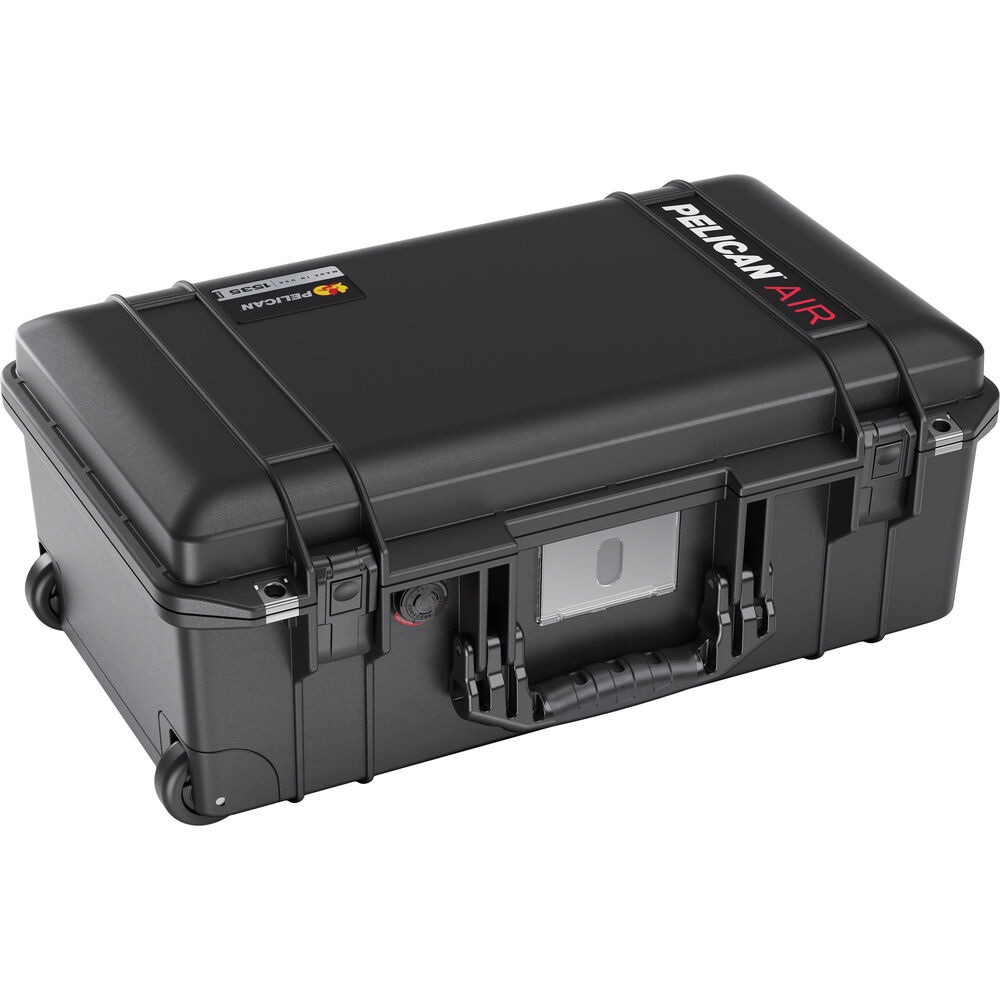
Hard cases have one job, and the 1535 Air does it at a weight that no longer feels like a punishment. The original 1510 was and remains the industry standard, but it weighs 11.99 lb before you add foam. Pelican's Air line reworked the same case in HPX2 polymer and brought the 1535 in at 8.69 lb empty, within an ounce of Peak Design's soft roller and roughly 3 lb under the Airport Security V3.0, while keeping the IP67 rating, the crushproof shell, the O-ring seal, and the automatic pressure equalization valve that keeps the lid from vacuum-locking after a flight.
Configuration is the decision that actually matters. Pick-and-pluck foam is the cheapest option and the worst one for a working kit, because the moment you buy a new lens the layout is wrong and you cannot un-pluck foam. TrekPak, the corrugated-panel-and-steel-pin system, is what most photographers should buy: you cut the panels once with the included tool and rearrange them in a minute when the kit changes. It adds a bit over 3 lb to the empty case, which is worth budgeting for before you weigh this against a soft bag.
The size claim needs care. At 21.96 x 13.97 x 8.98 in it sits right at the edge of the 22 x 14 x 9 in US carry-on box, which means it passes a sizer with essentially zero margin, and gate agents have every right to look at a large black hard case and ask you to check it. Plenty of photographers fly it as a carry-on without incident. Some get stopped. Plan for the possibility, because if it does get gate-checked, this is the one bag in the guide where that outcome is survivable.
The tradeoffs are structural. Hard cases waste interior volume on shell thickness, so the 1535 holds meaningfully less than a soft roller of the same external size, and its 7.21-inch interior depth is tighter than a soft bag's expandable one. There is nowhere to put a laptop unless you buy the lid organizer, and it is awkward to hand-carry any distance. For any photographer whose gear ends up in a truck bed, a boat, a cargo hold, or a location where somebody else is doing the lifting, none of that matters against a case that is genuinely watertight and genuinely crushproof, so check the current price of the Pelican 1535 Air Carry-On Case at B&H. Also consider the classic Pelican 1510 Protector Case if you want the heavier, thicker-walled original for a lower price.
What We Like
- 8.69 lb empty, light for a wheeled hard case and no heavier than a pro soft roller
- Genuine IP67 watertight, crushproof, dustproof protection
- TrekPak insert reconfigures in a minute as your kit changes
- Automatic purge valve stops post-flight vacuum lock
- Limited lifetime warranty and a huge accessory ecosystem
What Could Be Better
- Sits at the absolute edge of the carry-on box, so gate-checking is a real risk
- Shell thickness eats usable interior volume
- No laptop compartment without the optional lid organizer
- TrekPak and foam add over 3 lb to the empty weight
Best Budget Hard Case: SKB iSeries 3i-2011-7 Case
SKB's answer to the Pelican 1510 undercuts it on price, ships with a Think Tank divider set in the DL configuration, and carries an unconditional lifetime warranty.
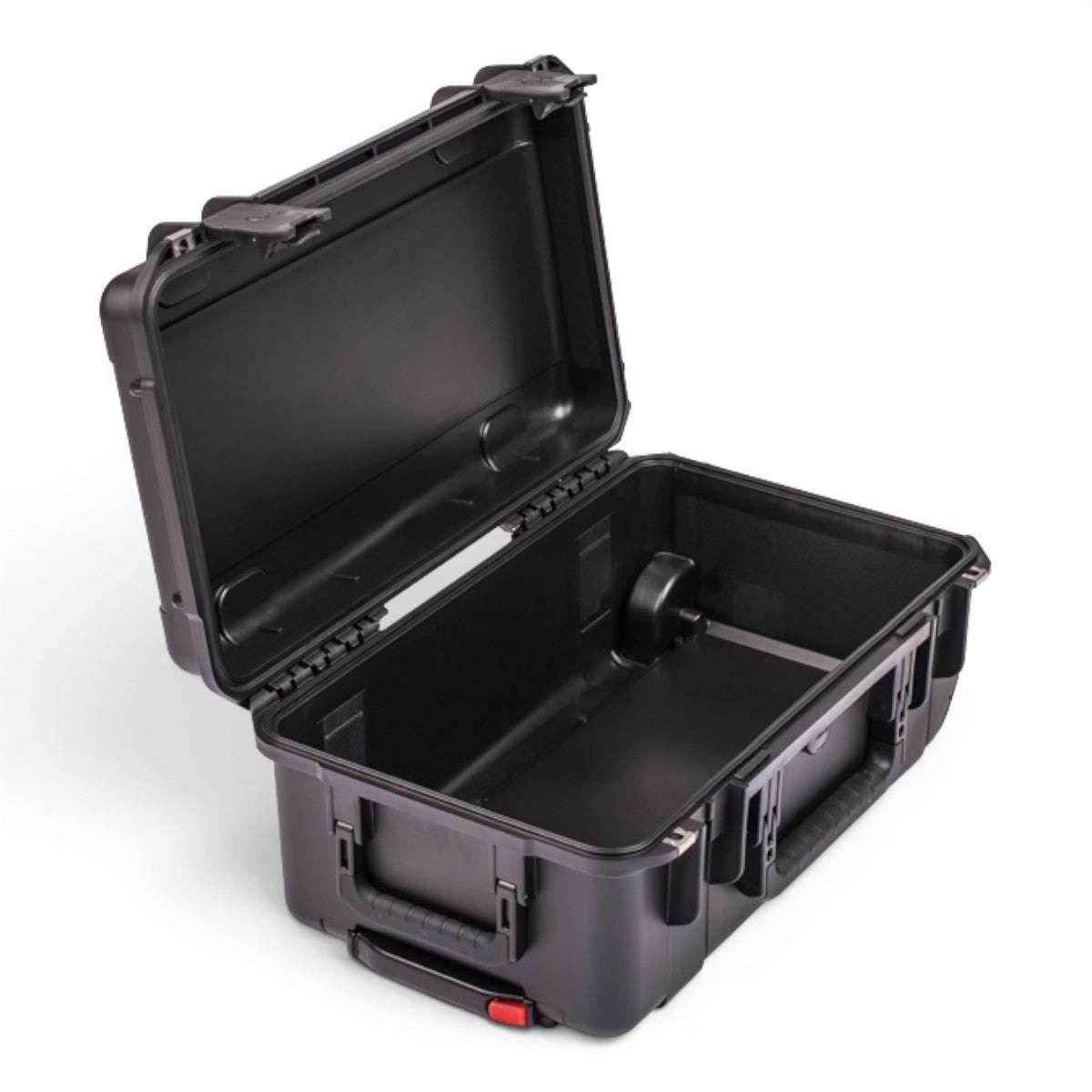
Nobody talks about SKB the way they talk about Pelican, and that gap between reputation and reality is where the value is. The iSeries 3i-2011-7 is SKB's direct answer to the Pelican 1510: nearly identical external dimensions, a slightly larger usable interior at 20.38 x 11.44 x 7.5 in, the same submersible design, the same pressure equalization valve, and an unconditional lifetime warranty rather than a limited one. It typically sells for well under what an equivalently equipped Pelican costs.
The configuration to buy is the 3i-2011-7DL, which ships with a divider set that Think Tank designed. That is not a marketing footnote. It means the interior is a proper photo layout: a Nylex-wrapped, closed-cell foam divider with 90-degree body bends, 10 nylon dividers on heavy-duty hook-and-loop tabs, and a lid organizer with three zippered clear mesh pockets and a top-loading sleeve that takes a tablet or a slim laptop. Buying a Pelican and then buying a laptop-capable lid organizer separately gets you to the same place for more money.
Where SKB gives ground is in the small stuff. The trigger latches are functional but do not have the reassuring snap of Pelican's Press and Pull latches, the plastic finish looks and feels a grade cheaper, and the wheels are adequate rather than excellent. Resale is also worse: a used Pelican holds its value in a way an SKB simply does not, so if you plan to sell in two years, the discount you saved buying is a discount you will pay back.
It is also 9 inches deep and 10.5 lb empty, so the carry-on math is the same as the Pelican's: legal in the US, marginal elsewhere, heavy in a weight-capped cabin. Nothing about a hard case is light. For a photographer who needs real crushproof, watertight protection and does not need the badge on the lid, this is the smartest money in the category, so check the current price of the SKB iSeries 3i-2011-7 Case at Amazon.
What We Like
- Pelican-class protection for meaningfully less money
- Think Tank designed the divider set in the DL configuration
- Lid organizer includes a real laptop and tablet sleeve
- Unconditional lifetime warranty
- Slightly more usable interior than the comparable Pelican 1510
What Could Be Better
- Latches and finish feel a grade below Pelican
- Weaker resale value
- Wheels are merely adequate
- 9-inch depth and 10.5 lb empty weight make international carry-on a gamble
Best Hard Case for Rough Locations: Nanuk 935 Case
PowerClaw latches close hard and work with gloves, and polyurethane wheels handle gravel far better than most, making this 11.6-pound IP67 case the pick for rough ground.
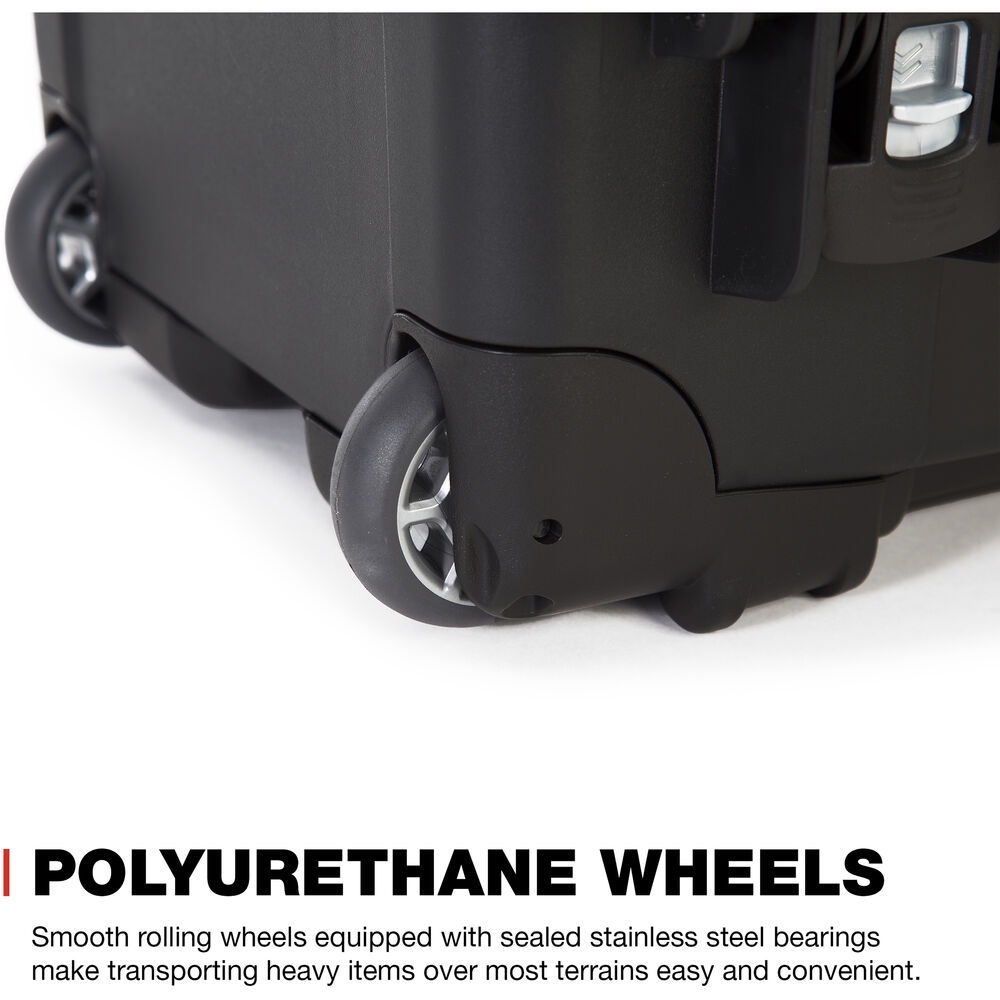
Two details separate the Nanuk 935 from every other hard case here, and both of them are things you touch. The first is the PowerClaw latch, a cam-action design that pulls the lid down hard as it closes and has an integrated slide lock, which is far easier to work with cold hands or gloves than a squeeze-and-pull latch. The second is the wheels: polyurethane, running on sealed stainless-steel bearings, and noticeably better on gravel, grass, and broken pavement than the small hard plastic wheels most cases in this class use.
The rest is textbook. The NK-7 resin shell carries an IP67 rating and Nanuk states submersion to 1 m for 30 minutes, the interior is a hair larger than the Pelican 1535 Air's at 20.5 x 11.3 x 7.5 in and 28.5 L, and the case is made in Canada with a limited lifetime warranty. It ships empty, with cubed foam, with padded dividers, or with custom foam, and the padded-divider version is the one most photographers want. External dimensions of 22 x 14 x 9 in put it exactly on the US carry-on limit, with all the gate-agent caveats that implies.
The number that will decide it for you is 11.6 lb. Empty, that is nearly 3 lb heavier than the Pelican 1535 Air, and it is the price of the thicker shell and the better hardware. If you are flying, that difference is real and the Pelican is the smarter case. If your gear is going into the back of a pickup on a forestry road, onto a boat, or onto a beach, the Nanuk is the one you want, because it is built to be dragged across surfaces that would scar the lighter case.
It also has no laptop provision without the optional lid organizer, and Nanuk's accessory ecosystem is thinner than Pelican's, so third-party inserts and custom foam are less abundant. For location work where the case earns its keep on the ground rather than in the air, it is the most solid thing in this guide, so check the current price of the Nanuk 935 Case at B&H.
What We Like
- PowerClaw latches are the best in the category, gloves on or off
- Polyurethane wheels handle gravel and grass properly
- IP67 with a stated 1 m, 30-minute submersion rating
- Slightly larger interior than the Pelican 1535 Air
- Made in Canada with a limited lifetime warranty
What Could Be Better
- 11.6 lb empty, the heaviest carry-on-sized case here
- No laptop provision without the optional lid organizer
- Smaller accessory and custom-foam ecosystem than Pelican
- Exactly at the carry-on limit, with no margin
Best Check-In: Pelican 1615 Air Case
Sized to a checked bag yet just 14.06 pounds empty, the 1615 Air swallows a full multi-body kit and leaves real payload under a 50-pound airline limit.
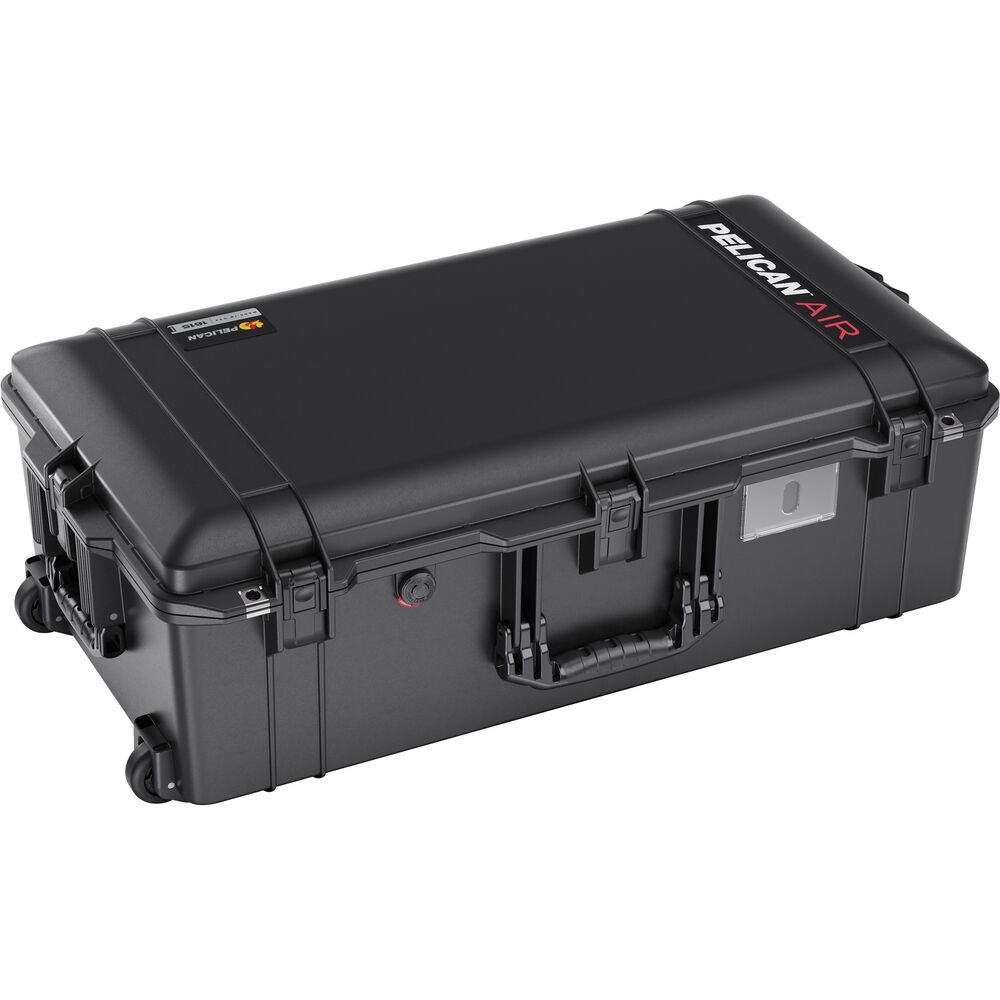
At some point the kit stops fitting in a carry-on and you have to hand it to the airline. When that day comes, the 1615 Air is what you hand them. Its 29.59 x 15.5 x 9.38 in interior takes a full working kit, two or three bodies, a wall of lenses, a couple of strobes, or a long lens laid flat, and its exterior sums to almost exactly the 62 linear inches most airlines allow for a checked bag before an oversize fee applies. Do that arithmetic yourself before you fly, because 32.58 plus 18.4 plus 11.02 leaves you nothing to spare.
Pelican's Air construction is what makes this practical rather than theoretical. A traditional case this size is a genuinely miserable thing to move, but at 14.06 lb empty and 17.6 lb with the foam set, the 1615 leaves real room under a 50 lb checked-bag limit for actual gear. The two wheels are quiet and roll on stainless-steel bearings, the shell is IP67 and ATA rated, and the automatic purge valve does the same job it does on the 1535 after a pressurized flight.
Buy it with TrekPak. In a case this large, foam is a commitment you will regret within a year, whereas TrekPak panels can be re-cut and repinned as the kit changes, and they hold heavy items in place better than dividers do. Put a lock through each latch, put an AirTag inside, and do not put anything in it you cannot afford to have delayed for three days, because a hard case protects against impact and water, not against the airline sending it to the wrong continent.
The real limitation is that this case is a commitment to a certain kind of job. It is too big to carry up a flight of stairs comfortably, too big for most car trunks alongside a passenger's luggage, and needlessly heavy if your kit is one body and three lenses. It exists for the photographer who flies to shoots with a crew and a gear list, and for that person it is the correct answer, so check the current price of the Pelican 1615 Air Case at B&H. Also consider the Think Tank Production Manager 50 V2 if what you are actually moving is lighting: it is a soft rolling case built for flash heads, modifiers, and C-stands rather than cameras.
What We Like
- 14.06 lb empty leaves real payload under a 50 lb checked limit
- Interior swallows a full multi-body kit or a long lens laid flat
- IP67, ATA rated, and crushproof for cargo-hold treatment
- TrekPak reconfigures without buying new foam
What Could Be Better
- Exterior sums to essentially the full 62 linear inch checked allowance
- Too large and heavy to move comfortably by hand
- No laptop provision without the optional lid organizer
- Overkill for a one-body, three-lens kit
How to Choose a Roller Bag or Hard Case
Start with a question that has nothing to do with the bag: who is going to be holding it. If the answer is you, the whole way, a soft roller is the better tool. It is lighter, it holds more gear per external inch because it does not waste an inch of wall thickness on every side, it has a laptop compartment, and it opens without needing a table. If the answer is a baggage handler, a boat crew, a bush pilot, or a production assistant, buy a hard case and stop arguing with yourself about the weight. Soft bags resist abrasion. Hard cases resist crushing. Those are different problems, and no bag solves both.
Then measure the flight, not the bag. US majors including American, Delta, United, Alaska, and JetBlue publish a 22 x 14 x 9 in carry-on limit that includes wheels and handles, and Southwest allows a more generous 24 x 16 x 10 in. Most US carriers do not weigh cabin bags, with Frontier and Hawaiian the notable exceptions. Fly internationally and both variables tighten: footprints often shrink toward the 55 x 40 x 20 cm European standard, and weight caps in the 7 to 10 kg range become common and are enforced at the gate. This is where a 12.9 lb empty roller becomes a problem you cannot solve by repacking. Airlines are also moving from eyeballing to automated sizers, so the era of getting away with a slightly oversized bag is closing.
Wheel count is the spec people underrate. Four-wheel spinners are effortless on smooth airport floors, roll upright beside you, and take the load off your wrist, but their small casters catch on cobblestones and gravel and they roll away on a sloped jet bridge. Two-wheel rollers drag behind you at an angle, which is harder on your arm over long distances but far better on bad ground. Wheel size matters more than count: 80 mm wheels on sealed bearings, the Think Tank standard, deal with cracked sidewalks that 60 mm wheels stumble on. Check whether the wheels are user-replaceable, because on a bag you keep for a decade the wheels are the part that dies first.
Interior volume in liters, meanwhile, tells you almost nothing, because a hard case's usable volume is much smaller than its number implies and a soft bag's expands. What you want is the interior depth: 7.5 inches accepts a gripped body with a standard zoom mounted, and much less than that starts forcing you to dismount lenses. Divider systems matter more than the shell brand. Foam locks you into today's kit, and TrekPak-style panels or hook-and-loop dividers let you rebuild the layout the week you buy a new lens. If the case you want ships with foam and dividers as options, take the dividers.
What We're Looking For
Our picks weigh protection against real transport risk, empty weight against real airline limits, wheel and handle quality against the surfaces these bags actually cross, and whether the interior can be reconfigured when your kit changes rather than only when you bought it. Every dimension, weight, and rating above was verified against the manufacturer's current spec page and a live retailer listing at the time of writing, and airline limits were checked against carrier policies that change often enough to be worth re-checking before you fly. Most picks across our buying guides come from gear our writers have used and reviewed hands-on. Where we have not put a specific bag through a full review, the entry is written from its published specification and documented design, and we say so rather than implying a mileage log we do not have.
Frequently Asked Questions
Can You Take a Pelican Case as a Carry-On?
Yes, if you pick the right one. The Pelican 1535 Air and 1510 are both built to the maximum US carry-on footprint of 22 x 14 x 9 inches, so they clear a standard sizer with essentially no margin. A gate agent can still ask you to check a large hard case on a full flight, and non-US carriers with tighter size or weight limits may refuse it outright.
Is a Hard Case Worth the Extra Weight?
Only if somebody else is going to handle your gear. A hard case is heavier and holds less than a soft roller of the same external size, and those costs buy you crushproof, watertight protection you simply cannot get from ballistic nylon. If your gear never leaves your hands, that protection is insurance you are paying to carry.
How Much Does an Empty Camera Roller Weigh?
Between 7 and 13 lb for the bags in this guide. The Think Tank Airport Advantage XT starts at 7 lb (3.2 kg) and the Airport Security V3.0 can reach 12.9 lb (5.8 kg). Under a 7 kg international cabin cap, that is the difference between 3.8 kg of usable gear allowance and 1.2 kg, which is one body and a lens.
Should I Buy Foam or Dividers for My Hard Case?
Dividers, in almost every case. Pick-and-pluck foam is cheap and gives excellent shock isolation, but it is permanent, and the layout stops fitting the day you buy a new lens. TrekPak panels or hook-and-loop dividers can be rebuilt in minutes and hold heavy gear securely, which is why most working photographers end up there.
Do I Still Need a Tripod Strap on a Roller?
Most pro rollers include one, and it is worth using. Think Tank's rollers ship with tripod straps and a cup, which lets you hang a travel tripod off the outside rather than sacrificing interior volume to it. Our tripods guide covers which travel tripods are light enough to carry that way without unbalancing the bag.
Fstoppers may earn a commission from purchases made through links in this article. Our picks are made independently by our editorial team.