
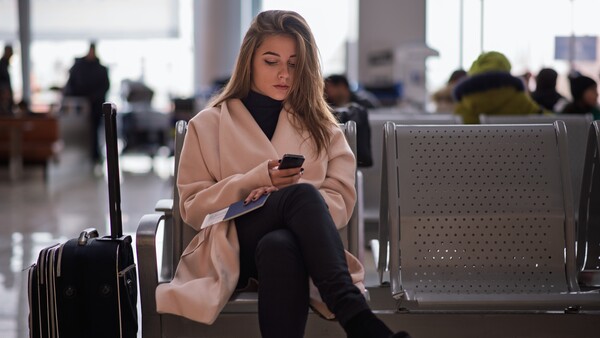
If you fly with a camera bag, 2026 is the year the gate finally caught up with you. The bag that "always made it on" for the last five years is now getting weighed, measured, and gate-checked with a consistency that did not exist before. For most travelers this is an annoyance. For photographers it is a real problem, because a camera kit is the densest, heaviest, and least checkable thing most people carry. A few bodies, a couple of fast lenses, batteries, and a charger can push past a 7-kilogram (15.4 lb) cabin limit before you have packed a single shirt, and unlike a sweater, you cannot exactly stuff a 70-200mm into the overhead and hope.
Two things are worth being honest about up front. First, most of the weight limits themselves are not new. International carriers have capped cabin baggage at roughly 7 to 10 kilograms (15.4 to 22 lb) for years. What has changed across 2025 and 2026 is enforcement, which has tightened sharply. Second, the bigger shift for many travelers is not weight at all but fare structure, as airlines increasingly strip the free carry-on out of their cheapest fares entirely. The good news is that a photographer who understands the new landscape can still build a kit that travels cleanly. You just have to be deliberate about it.
Stricter Enforcement at the Gate
The clearest change is in the United States, where carriers historically did not weigh carry-ons and enforced size loosely. That era is ending. Airlines are increasingly enforcing their published dimensions, with less of the visual leniency a busy gate agent used to offer. American moved in a different direction, removing some traditional metal gate sizers to speed up boarding while still enforcing the same 22 x 14 x 9 inch (56 x 36 x 23 cm) limit, which in practice can shift more of the call to gate-agent judgment. Across the majors, published carry-on dimensions include wheels and handles, so a bag sold as a carry-on may not measure as one once you check the airline's actual sizer.
There is also a quieter trap that catches more photographers than the sizers do: boarding order. On the lowest fares, you board last, and on full flights the overhead bins are already packed by then, so even a perfectly compliant bag gets gate-checked into the hold for lack of space. That is the real reason your bag ends up below deck, and it is why your batteries and most fragile gear should never be in it.
Budget economics shifted too. Frontier's carry-on fees now run around the high two figures when booked and about $99 or more at the gate, depending on route and timing, and after Spirit Airlines ceased operations on May 2, 2026, Frontier is the carry-on-fee comparison point most US travelers will reach for, though Allegiant remains in the ultra-low-cost field as well.
The Rise of the Stripped-Down Basic Fare
For photographers, the fare you book now matters as much as the airline you book it on. Cheapest-tier fares are increasingly being unbundled so that the free overhead carry-on disappears, leaving you only a small personal item.
Among US carriers, United is the one to watch: its domestic Basic Economy allows a personal item only, with no overhead carry-on, though its international Basic Economy fares generally do include a carry-on. American and Delta are more generous and still include a full-size carry-on on their cheapest domestic fares, with Delta marketing that fare as "Main Basic." In Canada, Air Canada has gone the same way as United, excluding the carry-on from its basic fares on flights within Canada and to the United States, Mexico, Central America, and the Caribbean since early 2025, leaving a personal item only, though onward international itineraries still include a carry-on.
Europe is where this accelerated. The Lufthansa Group introduced a new Economy Basic fare on short- and medium-haul routes, for tickets booked from late April 2026 and travel from May 19, 2026, that includes only a personal item of 40 x 30 x 15 cm (15.7 x 11.8 x 5.9 in) across Lufthansa, Swiss, Austrian, Brussels Airlines, and the group's other carriers. The familiar 8-kilogram (17.6 lb) cabin bag is still there, but only if you buy up to a higher fare. Air France and KLM publish a 12-kilogram (26.5 lb) cabin allowance on many economy fares, yet their basic fares can restrict you to only a small bag unless you pay to add hand baggage, so the fare class on your confirmation is what governs, not the airline's headline number.
A larger reform is still unresolved. In 2025, Airlines for Europe said its member carriers had started applying a guaranteed minimum free personal-item size of 40 x 30 x 15 cm (15.7 x 11.8 x 5.9 in). Separately, the European Parliament adopted a position on January 21, 2026 backing the right to carry one personal item up to 40 x 30 x 15 cm (15.7 x 11.8 x 5.9 in) plus one small cabin bag of up to 100 cm (39.4 in) in combined dimensions and 7 kilograms (15.4 lb) at no extra charge. That is a parliamentary position, not law. It still needs agreement with the Council of the European Union, and a regulatory gap remains for now, so do not plan around it yet.
The Weight Limits That Matter Most
Where you fly determines how much trouble you are in, and the weight ceiling varies enormously by carrier. These are the current cabin-baggage weight limits on major airlines, for standard economy fares:
- British Airways: up to 23 kg (51 lb) for the larger cabin bag, plus a separate small under-seat hand bag, by far the most generous of any major carrier, though you must be able to lift it into the locker yourself
- easyJet: 15 kg (33 lb) for the free under-seat cabin bag (45 x 36 x 20 cm / 17.7 x 14.2 x 7.9 in), with a larger 56 x 45 x 25 cm (22 x 17.7 x 9.8 in) bag, also 15 kg (33 lb), available only with a paid upgrade or Speedy Boarding
- Air France and KLM: 12 kg (26.5 lb) on standard economy fares
- Wizz Air: 10 kg (22 lb) for the free under-seat bag, with the larger trolley reserved for Priority
- Ryanair and Vueling: a free small under-seat bag only, with the 10 kg (22 lb) overhead cabin bag requiring Priority or a paid upgrade
- Norwegian: around 10 kg (22 lb) on its cheaper fares
- Lufthansa, Swiss, and Austrian: 8 kg (17.6 lb), but only on fares above Economy Basic, which on short and medium haul now includes just a 40 x 30 x 15 cm (15.7 x 11.8 x 5.9 in) personal item
- Eurowings: an 8 kg (17.6 lb) cabin bag as a paid add-on, with the BASIC fare including only a small 40 x 30 x 25 cm (15.7 x 11.8 x 9.8 in) bag
- Turkish Airlines: one 8 kg (17.6 lb) cabin bag plus a personal item up to 4 kg (8.8 lb)
- Emirates, Qatar Airways, Singapore Airlines, and Cathay Pacific: 7 kg (15.4 lb) in economy, though some routes and higher cabins allow more, so check your exact booking
- Budget Asian carriers vary: AirAsia and Jetstar commonly use a 7 kg (15.4 lb) combined cabin allowance, while Scoot economy allows up to 10 kg (22 lb)
- US carriers including American, Delta, United, JetBlue, and Alaska: no published carry-on weight limit, with size enforced instead at 22 x 14 x 9 inches (56 x 36 x 23 cm), while Southwest is more generous at 24 x 16 x 10 inches (61 x 41 x 25 cm)
The practical takeaway is that a mirrorless body with a grip, a fast standard zoom, a second lens, and accessories routinely lands between 4 and 6 kilograms (8.8 and 13.2 lb) before the bag itself, which means a 7 or 8 kilogram (15.4 or 17.6 lb) limit on Emirates, Singapore, or the Lufthansa group is a genuine ceiling you will hit. Enforcement on those carriers is also among the most consistent, with Lufthansa weighing bags at check-in on busy departures out of Frankfurt and Munich, and Turkish weighing on most routes.
There is a second distinction that trips up photographers more than weight does. Some carriers are weight-limited, and some are effectively piece-limited. Emirates economy, for example, is built around a single 7-kilogram (15.4 lb) cabin piece rather than a carry-on plus a separate personal item, so slinging a second camera pouch over your shoulder can itself break the rule no matter how little it weighs. Qatar economy is one 7-kilogram (15.4 lb) carry-on with only limited additional small items allowed, and a laptop bag counts as carry-on rather than riding free. On carriers like these you often cannot solve a weight problem by splitting the load across two bags, so check whether your carrier counts pieces or kilograms before you plan how to distribute gear.
One more thing to remember on a connecting trip: pack to the strictest operating carrier you will actually board, especially on separate tickets or self-connections. A bag that boards freely on Delta in Atlanta can be weighed and refused when you connect onto a 7-kilogram (15.4 lb) carrier the next morning.
The Battery and Power Bank Rules Photographers Can't Ignore
Running parallel to the baggage changes is a coordinated tightening of lithium battery rules that lands squarely on photographers and filmmakers, and the details are easy to get wrong.
The long-standing rule, in place for years, is that spare lithium batteries and power banks must travel in the cabin and never in checked baggage, and they must come out of any bag that gets gate-checked or planeside-checked. That has not changed. What is new in 2026 is a layer of restrictions on power banks specifically. ICAO specifications effective March 27, 2026, adopted across its member states, together with IATA operator guidance, limit passengers to two power banks, prohibit recharging a power bank onboard, and push carriers toward stricter rules on using a power bank to charge your camera batteries or other devices in flight, a restriction some carriers extend to a full in-flight ban. On top of that baseline, several carriers add accessible-storage rules that keep power banks out of overhead bins, where a fire would be hard for crew to reach: United bars power banks from overhead bins as of March 1, 2026, and Southwest now limits passengers to one portable charger and also bans overhead-bin storage, with Lufthansa Group, Emirates, and several Asian carriers applying similar rules.
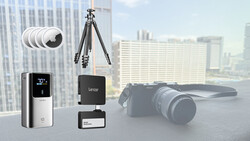
For capacity, most camera batteries sit well under the 100 watt-hour threshold and are no problem. Larger V-mount cinema batteries and many drone batteries fall in the 100 to 160 watt-hour band, which is limited to two spares and requires airline approval, and anything above 160 watt-hours is banned outright. The simplest defense is to keep every battery, charger, and power bank in the small personal item that stays under the seat in front of you, where it is always with you, always reachable, and never at risk of being checked into the hold. Do not count on topping up camera batteries from a power bank in the air.
How to Build a Carry-On Kit That Flies
The fix is not to leave gear behind. It is to distribute weight intelligently and to carry a lighter kit by design.
Start by wearing the weight. Outerwear and small personal accessories are often treated separately from your baggage allowance, so a photographer's vest or a jacket with deep pockets can carry a body, a spare lens, batteries, and filters, and the camera with a lens mounted can hang around your neck during boarding. None of that sits in the bag when it meets the scale. Just be aware that strict carriers can still challenge anything that looks like extra baggage, so do not overload to the point that the vest is obviously a second bag.
Use the personal item as your real camera bag, where you are allowed one. On US and most European fares, the under-seat personal item is the slot you are guaranteed, so a compact camera backpack or sling bag sized to roughly 40 x 30 x 20 cm (15.7 x 11.8 x 7.9 in) becomes the smart place to put your densest, most valuable gear. Two cautions, though. The strictest under-seat allowances are shallower than that, with the Lufthansa Group's new Basic fare sizer only 15 cm (5.9 in) deep, so a 20 cm (7.9 in) bag has to be soft-sided and underpacked to squeeze in. And on the piece-limited carriers above, where a second bag is itself the violation, pack everything into one compliant piece instead.
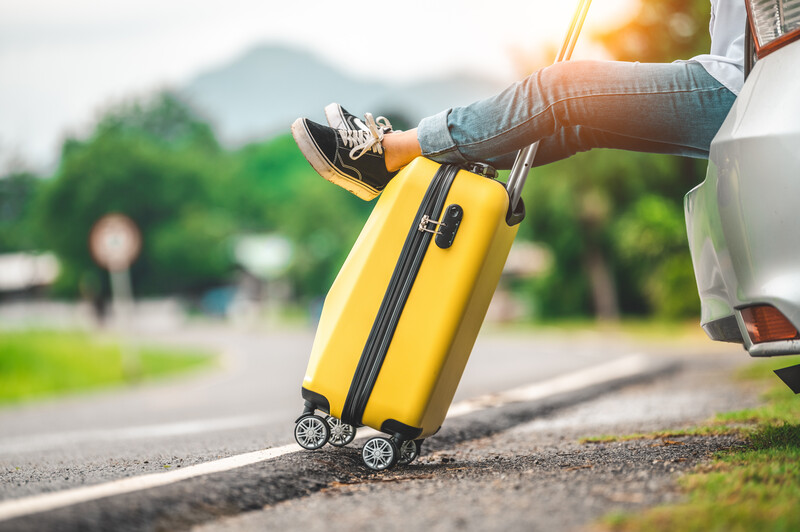
Watch the loaded shape, not just the empty spec. This is the quiet killer for camera bags. A backpack that measures fine empty bulges well past its dimensions once it is full of bodies and glass, and thick harnesses, rigid back panels, side handles, tripod sleeves, and wheel housings all count when the bag meets the sizer. Pack the bag the way you will fly it, then measure it.
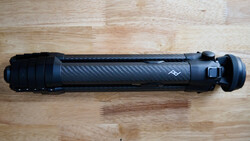
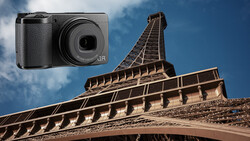
Carry less by choosing your system for the trip, not your whole collection. A single mirrorless body with two small primes will almost always weigh less and draw less attention than a body with a large zoom, and a fast 35mm or a compact standard prime lens covers more than people expect. A travel tripod that folds short enough to disappear inside the bag saves both space and the argument at the gate. This is also where a premium compact earns its place, since a single fixed-lens camera can replace a two-lens kit for travel and reportage. Our guide The Well-Rounded Photographer is useful for thinking through which genres you actually shoot on the road, so you pack for those rather than for every hypothetical.
Do not forget the laptop. A laptop and its charger can add 1.5 to 3 kilograms (3.3 to 6.6 lb), often more than a lens, and on weight-limited carriers a laptop bag counts toward your cabin allowance rather than riding free. Factor it into your number from the start.
Weigh and measure at home. A small luggage scale costs almost nothing and removes the single biggest source of gate-side panic. Pack the bag you intend to fly with, hang it from the scale, and know your number before you leave the house, measuring with wheels and handles included.
Finally, check the exact carrier and fare before you book, not after. Two airlines on the same route can differ by 8 kilograms (17.6 lb), and your fare class can quietly remove your overhead access entirely. If a trip involves a strict 7-kilogram (15.4 lb) or piece-limited carrier, plan the whole kit around that from the start. When gear genuinely will not fit any allowance, a sturdy checked hard case for the least fragile items, or shipping a case ahead to your destination, beats gambling expensive bodies on bin space, though valuable and irreplaceable gear should stay with you in the cabin whenever possible.
The photographers who will sail through 2026 are not the ones with the lightest gear. They are the ones who know the number and the rules for their specific flight, wear what they can, keep their batteries close, and build the bag around the rule instead of hoping it will not be enforced. Plan it once, and it stops being a problem. For making the most of a deliberately pared-down travel kit once you arrive, Photographing the World: Landscape Photography and Post-Processing and Photographing the World: Japan are both built around exactly the kind of lean, travel-first shooting these new rules are pushing all of us toward.

Join the Fstoppers community for free
-
Post comments and join in the discussions
-
Browse the site ad-free
-
Share your work and get featured in the community
-
Compete in the photo contests for fun and prizes
15 Comments
Good info Alex. I would add a note to check if there are any customs taxes on camera gear. I’m literally on my way home from a Mexico trip where we were working. My companion and I both had full kits (mine was 2 bodies and 7 total lenses) and were charged $770. Each. Apparently Mexico only allows for two cameras and lenses including attached. If I had know ahead I would have packed a lot lighter—as is I was carrying three “just in case lenses”. Oops!
That sucks...$770 in unexpected cost...was that $770 charged to both you and your companion? OR was it for each camera? This is what I am reading "My companion and I both had full kits (mine was 2 bodies and 7 total lenses) and were charged $770. Each." Am I reading that wrong?
If the airlines want to gatecheck my equipment into the cargo hold, they first have to put an end to pilferage from checked bags by their own employees, and then they have to match baggage claim checks with luggage tags at the baggage carrousel. Otherwise I'm not checking anything more valuable than my dirty underwear.
Do you have lithium batteries in your kit?
In 2019, I travelled to New Zealand. Apparently, carry on weight and size checks are common there. On domestic flights, I really had to balance my suitcase, my carry on bag and my backpack because checked. When I packed correctly, I just hit the weight limit on all three items (also a great not to buy and bring souvenirs) but when I flew from Christchurch to Wellington I had to repack three times until all pieces were cleared. It was a little bit like Tetris: which item goes into which bag.
In most parts of Asia, weighing carry ons is also very common. North America and Europe are unfortunately adapting to this habit.
oh travel...NO...EVERYTHING cost too much today, untrustworthy airlines and the hidden cost of bringing baggage. Too much of a hassle anymore...this article was very informative. If I were a business owner as a Professional Photographer I would not want to be travelling from place to place for work. I guess you would have to pass the cost onto your client just to make ends meet...
When flying, I now carry cameras, lenses, flash and batteries in a messenger bag or backpack. Clothes, chargers, grip equipment goes in the rolling bag. If the rolling bag must get checked at the gate, no big deal.
Cost of doing business includes travel expenses so invoice it. Checked luggage is a crapshoot as airlines and airport authorities have weighed it is cheaper to not staff baggage claim than to pay for a theft. You want cheap tickets, you got it.
Alex, you are providing fodder for the argument to rent the equipment at your destination or shipping it beforehand with adequate insurance against loss/damage.
Alex, I hate to complain because I think you've been a great addition to F Stoppers. However, as a Canadian I have to complain. I betcha we have more visitors to the US than anyone, (even counting Trump's BS about us) and you missed Canadian airlines from your comparison. Thanks a lot.
The 7kg is a terrible thing if you travel solo. Already had trouble with Ethihad. Here are some recommendations for landscape/travel: A universal GaN charger with several usbc cables become very important. Bring light laptop, mine is 950gr but macbook air or similar are reasonable, and then light 4TB disk like Samsung's. wide angle zoom and a superzoom or one of the lighter 70-180/2.8 zooms and 2 primes like 24/1.4+45-55/1.8 or 35+85/1.8 for night and possibly something light and ultrawide makes it manageable around 3kg if you dont plan to shoot sports or wildlife. If you need 400m and beyond this is a real problem. Cropping a 70-300 or on a second backup apsc is an option i used before. Another thing is that backpacks weigh less and are checked less often than trollies . Send tripod in lagguage If you can buy new as a backup upon arrival.
On my last trip from California to Alaska, I was concerned about my carry-on photo equipment. The Alaska Airline agent put a red tag on my bag. She said,"This stays in the cabin. Have a nice flight."
My wife and I are retired. Flying became too dehumanizing an experience for us years ago. We initially went back to the long road trips. We've now extended it to our, at least annual, trips to Europe which are now handled by cruise ship repositioning runs (on one as I write this).
I must say I do find it curious that in all the responses so far, not a mention of redefining one's needs, renting on location or shipping ahead.
Thanks Alex for the informative article. I have been seeing YouTuber's videos on the new rules out there for flying.
I'm quite concerned as to alternatives for taking expensive camera gear on airlines, especially for chasing solar eclipses in Spain, Iceland and Egypt. If I was at home I'd want a couple of tripods set up, one with a 600mm lens, the other with a wider view, maybe the 24-120mm. But I can't seem to figure out how to do that flying overseas. Perhaps some of the readers will have some helpful suggestions??? I can't imagine checking these except perhaps the tripods.
Here a thought...by m43