A tripod is the only piece of gear you will buy that gets better with age and worse with compromise. Cameras get replaced every four years, lenses every decade, but a good set of legs will outlive both if you buy the right one the first time. The trouble is that almost every tripod on the market looks competent in a product photo, and the differences that actually matter, how much the legs twist under a long lens, whether the locks seize after a day at the beach, how low the thing will actually go, only reveal themselves after you have owned it for a season.
Three axes decide this purchase. The first is what you put on top, because a 600mm lens and a 24mm lens make completely different demands on a set of legs. The second is how far you carry it, since the tripod you leave in the car is worth nothing. The third is the head, which is where more people go wrong than anywhere else, because a superb set of legs under a sloppy ball head is still a sloppy tripod.
We have organized this guide by the job you need done rather than by price, and every pick below carries its real weakness in plain language. Load ratings deserve particular skepticism: manufacturers measure them differently, and a tripod rated for 15 kg will still shudder in wind with an 8 kg rig on it. Where a rating comes from a marketing sheet rather than an independent standard, we say so.
At a Glance
- Best Overall: Peak Design Pro Tripod
- Best Travel: Falcam TreeRoot Quick Lock Travel Tripod
- Best Budget: Manfrotto Befree Advanced
- Best Heavy-Duty and Studio: Gitzo Systematic Series 3 GT3543LS
- Best Carbon Fiber Value: Leofoto Ranger LS-324CX PRO
- Best for Video: Manfrotto Nitrotech 608 With 645 FAST Twin Carbon
- Best Compact and Tabletop: Sirui 3T-35K
Best Overall: Peak Design Pro Tripod
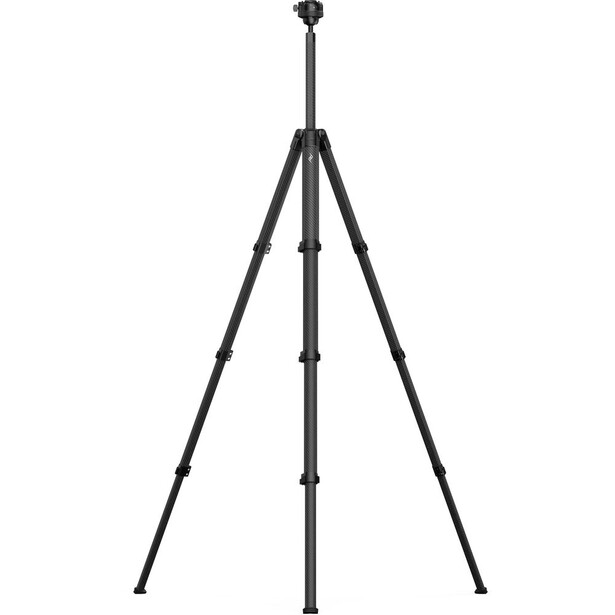
- Material: carbon fiber legs, CNC-machined aluminum hub
- Legs: 4 sections, flip locks
- Max height: 168.4 cm (66.3 in), or 138 cm with the column down
- Min height: 15.9 cm (6.3 in)
- Folded length: 50.1 cm (19.7 in)
- Weight: 1.9 kg (4.2 lb)
- Load capacity: 18.1 kg (40 lb), manufacturer rating
- Head: integrated ball head with fluid panning, Arca-Swiss compatible clamp
- Price: $899.95 (B&H)
Peak Design's original Travel Tripod was a clever answer to a packing problem and a mediocre answer to a stability problem. The Pro Tripod is the company admitting that and starting over. It doubles the payload rating to 18.1 kg, moves to a flanged carbon center column that resists twist rather than inviting it, and keeps the geometry that made the first tripod famous: legs and column that nest into roughly the diameter of a water bottle, so it slides into a pack's side pocket instead of strapping to the outside.
The details are where the money goes. The flip locks throw in a single motion, so a full deployment is a handful of flips rather than the nine separate twist-lock rotations a four-section tripod normally demands. The ball head is built into the hub instead of bolted on, which buys back the height most integrated designs lose, and its panning platform sits above the main ball lock with genuine fluid damping and a laser-etched 360-degree scale, which is rare on a ball head and the reason a stitched panorama or a slow video pan does not judder. The bubble level doubles as the plate release: push it to one side and the clamp opens, and a separate switch locks it against opening by accident.
Set it against a Gitzo of similar money and the Peak Design gives up modularity and gains packability and speed. That is a fair trade for a landscape or travel photographer who walks to their locations, and a bad one for someone shooting a 600mm lens off a gimbal head, which is what the Systematic below is for. The Pro line is carbon only, so there is no cut-price entry into the platform, and the price sits well above what most photographers have ever spent on legs. The quick-release plate needs a hex key, with no D-ring or coin slot, which is an odd oversight on a tripod otherwise obsessed with speed; a folding hex key stows in the center column, and the toolless Field Plate is a separate purchase. At 168.4 cm fully up, and 138 cm with the column down, it is also not quite eye level for a tall photographer. We have not put one through a full Fstoppers review yet, so the rigidity case here rests on the engineering rather than our own hands-on testing: an 18.1 kg load rating on a tripod that weighs 1.9 kg, and a flanged carbon center column built to resist the twist that undermines lighter legs. If you want one tripod to cover a decade of hiking, travel, and general work, check the current price of the Peak Design Pro Tripod at B&H.
Also consider the Peak Design Pro Tall if you are over six feet and tired of stooping, since it reaches 197.4 cm and weighs 2 kg instead of 1.9 kg.
What We Like
- An 18.1 kg payload rating on a tripod you carry at 1.9 kg
- Packs to the diameter of a water bottle and fits a pack's bottle pocket
- Flip locks deploy all four sections in seconds
- Integrated ball head with real fluid panning
What Could Be Better
- Expensive, with no aluminum version to lower the entry price
- The camera plate requires a hex key, not a coin or D-ring
- 168.4 cm is below eye level for taller photographers
Best Travel: Falcam TreeRoot Quick Lock Travel Tripod
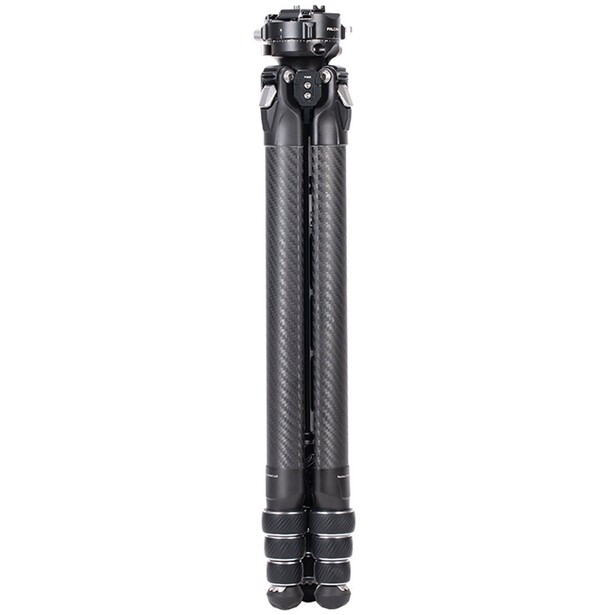
- Material: M40 high-modulus carbon fiber, Reuleaux triangle leg tubes
- Legs: 4 sections, quick twist locks (roughly a third of a turn)
- Max height: 155.2 cm (61.1 in), or 130.5 cm with the column down
- Min height: 16.8 cm (6.6 in)
- Folded length: 47.3 cm (18.3 in)
- Weight: 1.5 kg (3.3 lb)
- Load capacity: 5 kg (11 lb) at the ball head, 20 kg for the tripod itself, manufacturer ratings
- Head: inverted ball head integrated into the center column, with an F38 Pro quick release
- Price: $387 (B&H)
Twist locks are the tax you pay for a compact tripod, and most photographers accept them grudgingly. The TreeRoot is built around reducing that tax. Its locks release and clamp in about a third of a turn rather than a full one, so you can grab all three sections of a leg in one hand, give a single short twist, and drop them out. Over a week of sunrises, that difference is why the tripod comes out of the bag instead of staying in it.
The legs are the other unusual thing here. Falcam uses M40 high-modulus carbon fiber, a stiffer grade than the T300 most tripods in this class are built from, and shapes the tubes into a Reuleaux triangle rather than a circle, which resists torsional flex better than a round tube of the same wall thickness. That is the engineering answer to the wind-up feeling a light tripod develops when you torque a heavy body onto it. The center column detaches and inverts for low work, and the tripod sits 16.8 cm off the ground with the legs splayed, low enough for foreground rocks and wildflowers without a separate low-angle adapter.
The ceiling here is the head. The inverted ball head is built into the center column rather than screwed onto it, and it is rated to 5 kg, so a full frame body with a 70-200mm f/2.8 (roughly 2 kg) has sensible headroom while a 100-400mm or a big prime does not. Falcam quotes 20 kg for the tripod itself, which is true and also beside the point, because your camera is hanging off the head. You are not completely stuck with it: Falcam sells the A130 threaded center column module separately, which swaps out the whole column for a flat 1/4 in and 3/8 in mount and lets you fit any head you like. That is an extra purchase and an extra thing to carry, and it is the honest answer to whether this tripod grows with you.
If your camera bag weighs less than a laptop bag and you fly with it, check the current price of the Falcam TreeRoot Quick Lock Travel Tripod at B&H.
Read our full review: Not Just Another Travel Tripod: A Review of the Falcam Treeroot Quicklock Travel Tripod
Also consider the Freewell FW-T1 if you want something even lighter, since it weighs 900 g with its hybrid ball and pan head and turns its center column and a detached leg into a monopod. Its head carries the same 5 kg rating as the Falcam's (the 8 kg figure Freewell publishes is for the center column), and its five leg sections taper to 13 mm tubes at the bottom.
What We Like
- Twist locks that release in about a third of a turn
- Stiff M40 carbon fiber and torsion-resistant triangular tubes
- Drops to 16.8 cm without extra hardware
- 47.3 cm folded, which fits inside most carry-on bags
What Could Be Better
- The head is rated to only 5 kg, which caps the whole system
- The head is integral to the center column, so upgrading it means buying the separate A130 column module
- Falcam's 20 kg tripod rating describes a load path your camera never actually uses
Best Budget: Manfrotto Befree Advanced
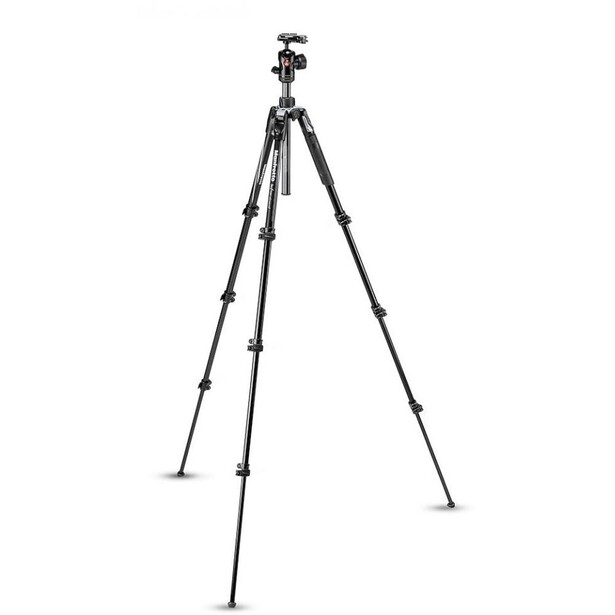
- Material: aluminum
- Legs: 4 sections, lever locks
- Max height: 151 cm (59.4 in), or 128 cm with the column down
- Min height: 40 cm (15.7 in)
- Folded length: 40 cm (15.7 in)
- Weight: 1.59 kg (3.5 lb)
- Load capacity: 9 kg (19.8 lb) safety payload (UNI/PdR 105:2021)
- Head: 494 aluminum ball head, 200PL PRO plate (Manfrotto RC2 and Arca-Swiss compatible)
- Price: $164.95 (B&H)
Cheap tripods fail in the same place: the leg locks. They go gritty, they slip under load, and within a year you are tightening them past the point where they should hold and watching the camera settle anyway. The Befree Advanced is the cheapest tripod we are comfortable recommending precisely because Manfrotto did not cut that corner. The lever locks carry the same design language as the company's professional legs, and a lever either closes or it does not, which removes the guesswork about whether a section is going to creep under load.
The rest of the package is sensibly specified for the money. The 494 ball head has three separate controls, a main lock, a friction adjuster, and an independent panning knob, which is one more than most kit heads offer and the difference between framing a level horizon and fighting one. The 200PL PRO plate works with both Manfrotto's RC2 system and Arca-Swiss clamps, so it does not lock you out of upgrading the head later. The 9 kg payload is a UNI/PdR 105:2021 safety figure rather than a marketing number, which makes it directly comparable to the Gitzo below.
What you give up is low-angle capability and outright height. Minimum height is 40 cm, a genuinely poor number, and there is no center-column inversion, so if you shoot macro or want the camera in the dirt, this is the wrong tripod. It also needs the column raised to reach its full 151 cm, and a raised aluminum column is the least stable configuration any tripod has. Aluminum transmits vibration more readily than carbon fiber, which shows up on long exposures near traffic or in wind, and the Befree Advanced Carbon Fiber version exists if that matters more to you than the price, though it swaps the lever locks for twist locks.
For a first serious tripod, or a second set of legs to leave in a car, none of that is disqualifying. Buy it, keep the column down whenever you can, and put the money you saved toward glass. When you are ready, check the current price of the Manfrotto Befree Advanced at B&H.
Also consider the Benro Slim TSL08AN00 if you want to spend even less and can live with a 4 kg payload rating instead of 9 kg.
What We Like
- Lever locks that stay tight, which is rare at this price
- The 494 head has real friction control and independent panning
- Plate works with both RC2 and Arca-Swiss clamps
- 9 kg payload covers a full frame body and a fast telephoto zoom
What Could Be Better
- 40 cm minimum height rules out low-angle and macro work
- Needs the center column raised to hit its full height, which costs stability
- Aluminum damps vibration less well than carbon fiber
Best Heavy-Duty and Studio: Gitzo Systematic Series 3 GT3543LS
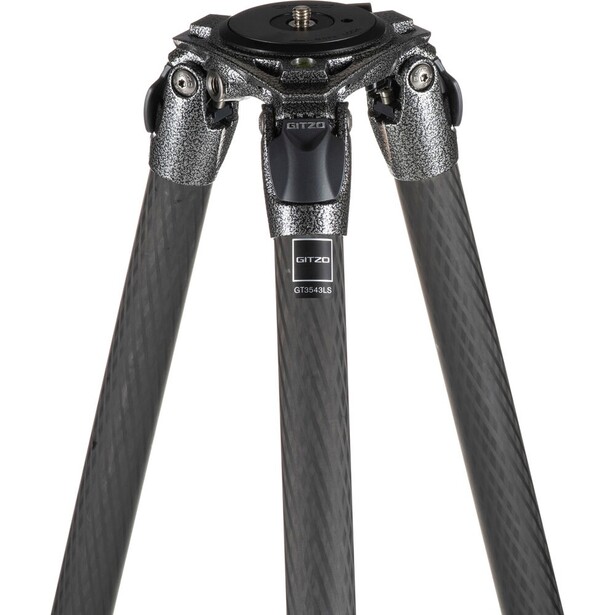
- Material: Carbon eXact tubes
- Legs: 4 sections, G-Lock Ultra twist locks
- Max height: 146 cm (57.5 in)
- Min height: 9 cm (3.5 in)
- Folded length: 57 cm (22.4 in)
- Weight: 2.03 kg (4.5 lb)
- Load capacity: 28 kg (61.7 lb) safety payload (UNI/PdR 105:2021)
- Head: none, legs only, with a 70 mm modular top casting
- Price: $1,089 (B&H)
There is a category of photographer for whom every tripod recommendation on the internet is useless: the one shooting a 600mm lens at a bird, a technical camera at a building, or a 100-megapixel back at a still life where a micron of movement shows at 100 percent. That photographer buys a Systematic, and has been for thirty years, because nothing in this weight class is this indifferent to load. Its 28 kg rating is measured to the UNI/PdR 105:2021 standard rather than estimated by a marketing department, and it carries that at 2.03 kg.
The design principle is subtraction. There is no center column, the single largest source of vibration in a conventional tripod, and no head, because Gitzo assumes you have opinions about heads. What sits on top is a 70 mm modular casting that accepts a flat disc, a geared column, a video half-ball, or a leveling base. Set the flat disc in place, mount a gimbal head directly to it, and you have the most rigid platform available to a photographer who still has to walk to the location. Pull the disc out, splay the legs, and the camera drops to 9 cm off the ground.
The G-Lock Ultra twist locks carry internal O-rings that keep dust, sand, and water out of the leg tubes, they need only a short twist to bite, and they survive the grit that destroys cheaper mechanisms. Field photographers who have owned the same Systematic for a decade are not unusual, which is the argument for spending this much on legs.
The caveats are significant. This is legs only, so budget for a serious head on top, and a good ball or gimbal head is not a small purchase. It tops out at 146 cm, below eye level for almost everyone, with no column to make up the difference unless you buy one, and it folds to 57 cm, so it does not disappear into hand luggage the way the Peak Design or the Falcam does. If your heaviest lens is a 70-200mm and you fly a lot, you are paying for headroom you will never use. If you shoot wildlife, architecture, or medium format, check the current price of the Gitzo Systematic Series 3 GT3543LS at B&H. Our guide to the best tripod heads covers what to put on top of it.
Also consider the Rogeti T32MAX if you shoot architecture or product work and want a geared center column with a nesting mini tripod built in, though the C32G geared column it ships with is rated to 6 kg (13.2 lb), far below what the legs themselves will hold.
What We Like
- 28 kg payload measured to an independent standard, at 2.03 kg
- No center column, which removes the biggest vibration path
- Modular top takes a flat disc, geared column, leveling base, or video half-ball
- G-Lock Ultra locks shrug off sand and salt
What Could Be Better
- No head included, and it deserves an expensive one
- 146 cm maximum height is below eye level for most people
- 57 cm folded, so it does not pack small
- Costs more than most photographers have ever spent on legs
Best Carbon Fiber Value: Leofoto Ranger LS-324CX PRO
- Material: carbon fiber, with water-resistant twist locks
- Legs: 4 sections, twist locks, 32/28/25/22 mm tubes
- Max height: 148.8 cm (58.6 in)
- Min height: 17.5 cm (6.9 in)
- Folded length: 60 cm (23.6 in)
- Weight: 1.94 kg (4.3 lb) legs, 2.47 kg (5.4 lb) with the head
- Load capacity: 15 kg (33 lb) legs, 20 kg (44 lb) head, manufacturer ratings
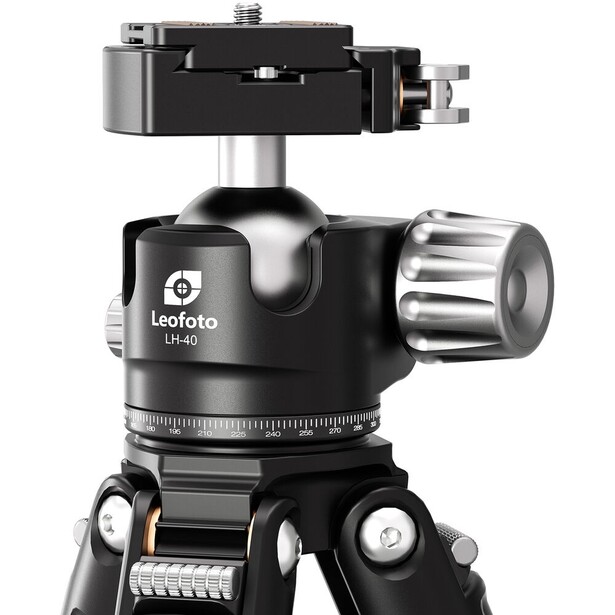
- Head: LH-40LR ball head, 40 mm ball, Arca-type lever clamp, 530 g
- Price: $489 (B&H)
Leofoto built its reputation on tripods that look and feel like Gitzos and cost a fraction as much, and the Ranger does it most convincingly. The current LS-324CX PRO is a real revision rather than a paint job. Leofoto changed three things: the twist leg locks are now water-resistant, sealed to keep water and grit out of the threads; the carbon tubes use a higher-density layup than the version they replace; and the leg angle stops were reshaped to work one-handed. If you have ever knelt in a tide pool trying to free a seized leg lock, the sealing alone is worth the upgrade.
What you get for the money is a 15 kg rating on 32 mm top tubes at under 2 kg, which is genuinely close to Systematic territory for roughly a third of the outlay. The LH-40LR ball head bundled with it is not a compromise part either, with a 40 mm ball, a lever-release Arca-type clamp, and a 20 kg rating of its own, so the head is not the thing that gives out when you point a 70-200mm f/2.8 downhill. Kitted up it weighs 2.47 kg, and it is the tripod we would hand to a landscape photographer who wants one set of legs to do everything.
It is not the tripod for a flight with a strict carry-on. It folds to 60 cm, longer than the Peak Design and the Falcam by a wide margin, and the shape does not nest into a bag's water-bottle pocket. Each leg still takes three twists to deploy, which adds up in fast-changing light, and the head's lever clamp only accepts Arca plates that fit its jaw width, so check your L-bracket before assuming compatibility.
We have not run the PRO version through a full Fstoppers review, so everything above comes from Leofoto's current specifications and documented design rather than our own hands-on testing: a 15 kg rating on 32 mm carbon top tubes at under 2 kg, with sealed twist locks built to keep water and grit out of the threads. If you want carbon fiber that will survive the coast, check the current price of the Leofoto Ranger LS-324CX PRO at B&H. It pairs naturally with the kind of hiking pack we cover in our camera backpacks guide.
Also consider the Benro Rhino Carbon Fiber Two Series if you want to reach higher on a lighter tripod, since it rates 18 kg, tops out at 168.5 cm, weighs 1.74 kg, and converts to a monopod, though it reverse-folds to 64 cm and so packs no better than the Leofoto.
What We Like
- Water-resistant leg locks designed to keep out sand and salt water
- 15 kg rating on 32 mm top tubes at under 2 kg
- The bundled LH-40LR ball head is a serious head, not a filler part
- Costs far less than European legs of comparable rigidity
What Could Be Better
- 60 cm folded, so it travels poorly compared to the Peak Design or Falcam
- Four-section twist locks are slower than flip locks in changing light
- The lever clamp only fits Arca plates within its jaw width
Best for Video: Manfrotto Nitrotech 608 With 645 FAST Twin Carbon
- Material: carbon fiber twin-tube legs
- Legs: 3 sections, FAST lever locks, mid-level spreader
- Max height: 173 cm (68.1 in)
- Min height: 43.5 cm (17.1 in)
- Folded length: 89.5 cm (35.2 in)
- Weight: 5.8 kg (12.8 lb) for the complete system
- Load capacity: 14 kg safety payload (UNI/PdR 105:2021), with 0 to 8 kg continuous counterbalance
- Head: Nitrotech 608 fluid head, flat 3/8 in base; tripod ships with a 100 mm half ball and a 75 mm adapter
- Price: $999.95 (B&H)
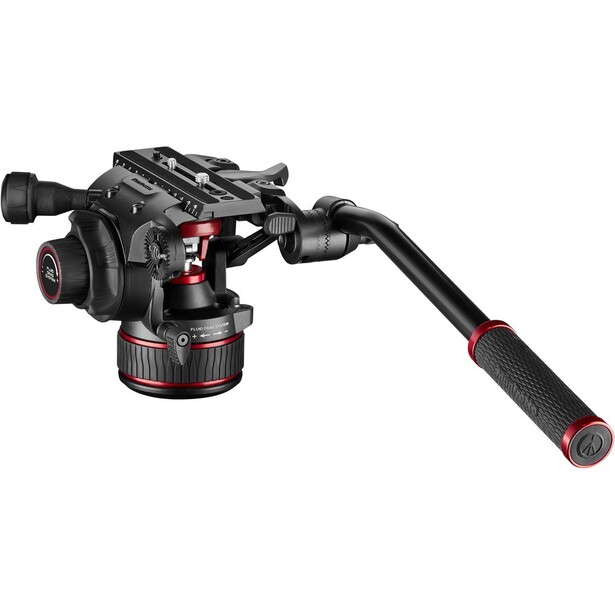
A ball head cannot pan a shot. Photographers moving into video discover this about four days in, usually while following a walking subject and producing something that looks like it was filmed on a boat. Fluid heads solve it with viscous drag on both axes, and the Nitrotech 608 adds the other half, a nitrogen piston that counterbalances the camera continuously from 0 to 8 kg rather than in fixed steps.
That continuous range is what makes this the right video tripod for a photographer rather than a dedicated operator. A mirrorless body with a small zoom might weigh 1.5 kg; the same body caged, with a monitor, a mic, and a cine lens, might weigh 5 kg. A stepped counterbalance forces you to pick the nearest setting and live with a camera that flops forward or springs back. The Nitrotech dials to the exact weight, so you can let go of the pan bar mid-tilt and the camera stays where you left it.
The 645 FAST Twin legs underneath are twin-tube carbon fiber with a mid-level spreader, the configuration that keeps the legs from splaying under a moving load, and the FAST lever locks open all three sections of a leg in one pull. The head itself has a flat 3/8 in base, and the tripod supplies the leveling: a 100 mm half ball, with a 75 mm adapter in the box for heads that want the smaller bowl. Loosen one handle and the head levels against uneven ground in seconds instead of forcing you to fiddle with leg lengths, which is the single biggest workflow difference between a video tripod and a photo tripod.
This is a big, heavy, expensive rig, and that is the tradeoff. It weighs 5.8 kg complete and folds to 89.5 cm, so it goes in a car, not a backpack, and its 43.5 cm minimum height makes low-angle work awkward. It is also more tripod than a photographer who shoots the occasional interview clip needs, and if that is you, a smaller Manfrotto Befree Live fluid head kit costs far less and does the job. For anyone getting paid for video, check the current price of the Manfrotto Nitrotech 608 With 645 FAST Twin Carbon at B&H. If you are still figuring out the transition, Fstoppers' Introduction to Video: A Photographer's Guide to Filmmaking covers what changes when you start moving the camera.
What We Like
- Continuous 0 to 8 kg counterbalance covers a bare body and a fully rigged one
- Genuine fluid drag on both pan and tilt, with independent locks
- The 100 mm half ball levels the head on uneven ground without moving a leg
- Twin-tube carbon legs with a spreader stay planted under a moving load
What Could Be Better
- 5.8 kg and 89.5 cm folded, so it is a car tripod, not a hiking one
- 43.5 cm minimum height makes low angles difficult
- Far more head than an occasional video shooter needs
Best Compact and Tabletop: Sirui 3T-35K
- Material: forged aircraft-grade aluminum alloy
- Legs: single-section folding legs, no leg locks, plus a removable two-section center column
- Max height: 34 cm (13.4 in) with the column extended
- Min height: 11.4 cm (4.5 in), column removed and the head mounted straight to the legs
- Folded length: 24 cm (9.5 in)
- Weight: 431 g (15.2 oz)
- Load capacity: 4 kg (8.8 lb), manufacturer rating
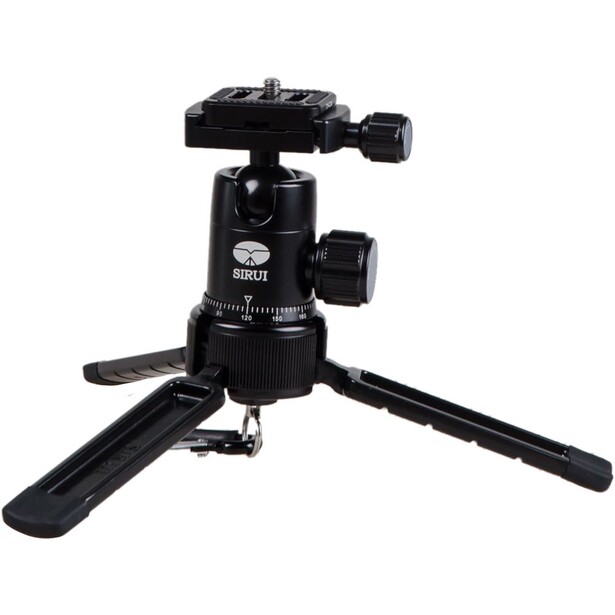
- Head: Arca-type compatible ball head with a 90-degree portrait notch
- Price: $76 (B&H)
Not every stabilizing job needs a tripod you can stand behind. Long exposures from a bridge parapet, food shots on a table, night shots braced on a car roof: all of these want something small, dense for its size, and instantly deployable. The 3T-35K has been the default answer for years, and nothing has come along to unseat it.
It is forged aluminum rather than cast, which is what lets something this small carry a 4 kg rating at all. The legs fold flat against the column so it slips into a jacket pocket, and it deploys in a second because there are no leg locks to undo. The included ball head takes an Arca-type plate, the same one your big tripod uses, and has a 90-degree notch for shooting vertical. A two-section center column lifts the camera to 34 cm, and it unscrews completely so the head sits directly on the legs at 11.4 cm. Fold the legs back on themselves and the column becomes a handgrip for handheld video and low-angle stills.
The limits are what you would expect from something this size. The legs do not extend at all, so every centimeter of height above 11.4 cm comes from the center column, and a tabletop tripod with its column run all the way out to 34 cm is exactly as steady as that sounds. On soft ground the small feet sink. While 4 kg is a generous rating for the class, a heavy body with a long lens sits high enough above the base that the assembly gets tippy well before you reach the rated load, so keep the center of mass low.
Nobody buys a tabletop tripod as their only tripod. Buy it as the one that lives in your bag permanently, so you always have something. Check the current price of the Sirui 3T-35K at B&H.
Also consider the Leofoto MT-03 with LH-25 head if you want something smaller and lighter still, with three selectable leg angles.
What We Like
- Forged rather than cast aluminum, which is where the rigidity comes from
- 4 kg rating is generous for a tabletop tripod
- Deploys instantly, with no leg locks to undo
- Arca-type clamp takes the same plate as your main tripod
- Doubles as a video handgrip with the legs folded
What Could Be Better
- Legs do not extend, so all the height you get comes from a raised center column
- Gets tippy with a tall lens well before the rated 4 kg
- Small feet sink on soft ground
How to Choose a Tripod
Work backward from your heaviest lens, not your camera. A tripod's job is to hold a lever arm still, and a 400mm lens on a light body is a far harder problem than a heavy body with a 35mm on it. A tripod's top leg-section diameter tells you more about its real rigidity than its published load rating: 32 mm and up handles serious telephoto work, 26 to 28 mm suits a general full frame kit, and anything under 25 mm is a travel tripod that will complain under a big lens. Manfrotto and Gitzo publish load figures against the UNI/PdR 105:2021 standard, which is comparable across their lines. Most other brands publish a number describing what the tripod will physically support without collapsing, which is not the same as what it will hold steadily in wind.
Then decide what you are willing to carry. Weight is the spec everyone optimizes, but folded length decides whether the tripod actually comes with you, because a 47 cm tripod fits inside a carry-on and a 60 cm one rides on the outside of the bag. Carbon fiber earns its premium on foot and saves you nothing in a studio.
Get the head right. A ball head is the correct default for stills, and the two things that matter are separate friction control (so the camera does not flop when you loosen the lock) and an Arca-Swiss compatible clamp (so your plates and L-brackets work with everything). A geared head is better for architecture and product work, where you nudge one axis at a time. A fluid head is not optional for video, and no ball head substitutes for one. If you buy legs without a head, budget properly for it.
Two specs matter more than people expect. The first is the height you reach with the center column down, because a raised column turns any tripod into a monopod with training wheels. The second is minimum height: landscape and macro photographers spend more time near the ground than they plan to, and a tripod with a 40 cm floor will quietly stop you taking shots you wanted. Two matter less. A built-in bubble level is redundant when your camera has a better one, and the leg-lock argument is mostly noise, since twist locks seal better against grit, flip locks are faster, and both are fine when well made.
What We're Looking For
We weigh rigidity per gram, the quality of the leg locks (the first thing to fail on a cheap tripod), minimum and maximum working height, folded length, the head in the box, and whether the load rating comes from an independent standard or a marketing department. Every specification here was checked against the manufacturer's current published figures and a live retailer listing at the time of writing, not carried over from an older review. Most picks here are built from verified published specifications and documented design rather than our own hands-on testing, and we describe what the specification actually delivers.
Frequently Asked Questions
Is a Carbon Fiber Tripod Worth the Extra Money?
Yes, if you carry it. Carbon fiber is roughly 20 to 30 percent lighter than aluminum at equivalent stiffness and settles faster after you touch it, which produces sharper frames on exposures between a fraction of a second and a couple of seconds. If your tripod lives in a studio or a car, aluminum saves real money and gives up very little.
How Much Load Capacity Do I Actually Need?
Roughly three times the weight of your heaviest camera and lens. Published ratings describe what a tripod will support without failing, not what it holds rock steady in wind, so the headroom is not wasted. A full frame mirrorless body with a 70-200mm f/2.8 comes to roughly 2 kg before you add a head and an L-bracket, so a 9 kg rating is a sensible floor and 15 kg leaves room for a longer lens later.
Is a Kit Head Good Enough, or Do I Need a Separate One?
A kit head is fine for a first tripod and becomes the bottleneck surprisingly quickly. The tell is creep: you frame a shot pointing slightly downward, lock the ball, and the camera settles a degree or two. When that starts happening with your normal lens, upgrade the head rather than the legs.
Are Travel Tripods Stable Enough for Long Exposures?
They can be, with two conditions. Keep the center column down, since a raised column is the largest source of movement on any tripod, and hang your bag from the center hook to load the legs. A 1.5 kg travel tripod handling a 30-second seascape exposure is reasonable. The same tripod with a 400mm lens in wind is not.
What Is the Difference Between a Ball Head and a Fluid Head?
A ball head locks the camera in a fixed position and is designed for stills. A fluid head uses viscous drag to make controlled pans and tilts smooth while the camera is moving, and adds counterbalance so the camera does not tip when you release it. If you shoot video, you need a fluid head; a ball head will not produce a usable pan no matter how carefully you turn it.
Fstoppers may earn a commission from purchases made through links in this article. Our picks are made independently by our editorial team.