
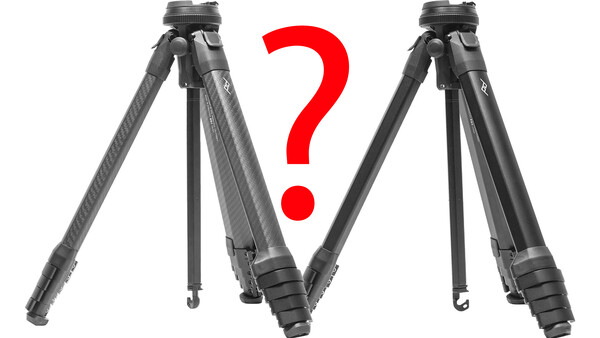
Choosing the correct tripod is essential, and there’s nothing worse than spending too much money only to discover you’ve made the wrong decision. Here, examine Peak Design’s Travel Tripods, which are great for highlighting what we should look for.
I own four tripods, and I choose the one that suits my needs for the task at hand. However, most commonly, people own just one, and that is likely to be a travel tripod because, by definition, they are lighter and smaller and therefore easier to transport. It will also be stable enough for most situations.
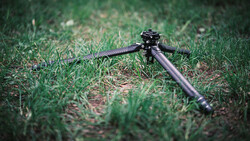
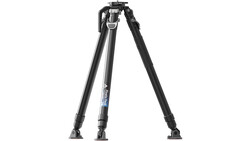
Peak Design’s Travel Tripod is often copied for good reason. The company put thought and effort into creating the definitive model, which is widely acclaimed. The two versions of the tripod look and function similarly, but there are big differences.
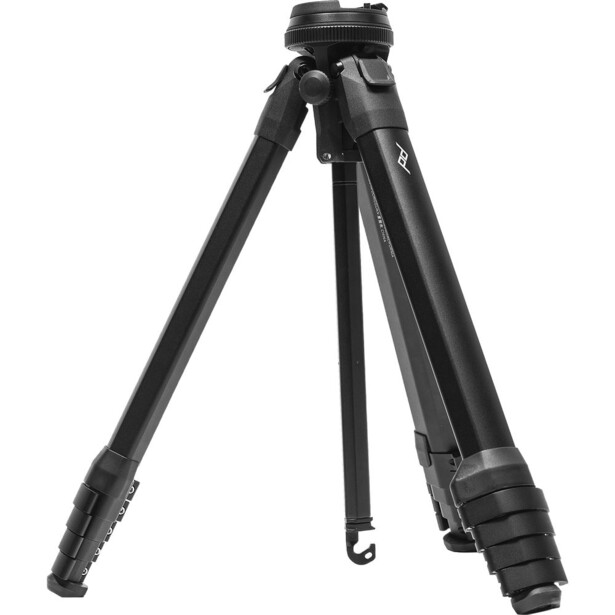
Standing them side by side, they look pretty similar. They are the same height and design, have the same ball head, and fit in the same bag. The only visible difference is the build material. One is made from aluminum and the other from carbon fiber. These two materials result in different behaviors, and that will influence your decision.
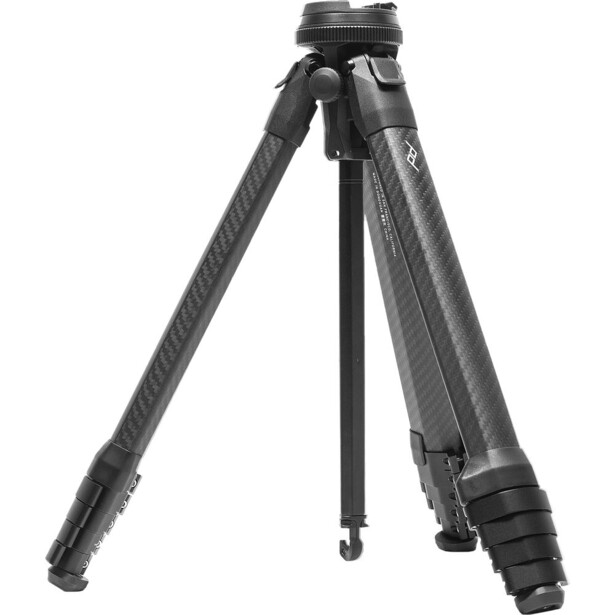
A Description of the Peak Design Travel Tripod
Before I look at the differences between the two manufacturing materials—differences that apply to most tripods of all manufacturers—here’s a description that applies to both Peak Design Travel models, considered by many to be the archetypal travel tripod.
Firstly, it is deliberately small. The design of the legs allows them to pack away to a narrow profile, only 8.3 cm (3.25") in circumference. They are not long either, measuring just 39.4 cm (15.5"). This makes them easy to hold and ideal for slipping into a rucksack or suitcase.
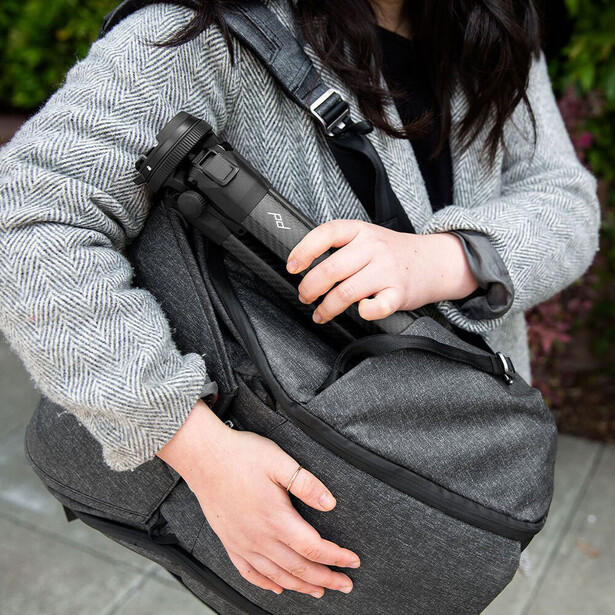
At the top is a low-profile ball head that holds an Arca-Swiss-style universal QR plate. Many different brands of tripods use Arca-Swiss-style attachments, which means you can interchange between stability devices without having to unscrew the plate from the bottom of the camera. Indeed, my four tripods and monopod, hailing from three different brands, all use that universal system.
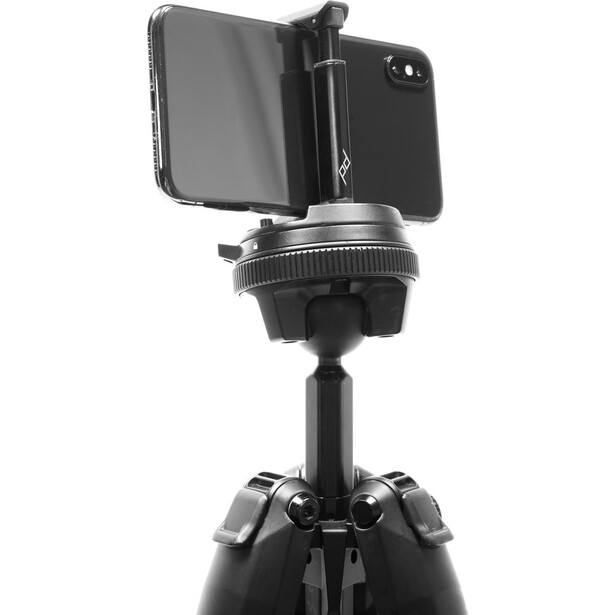
The ball head sits partly within the spider, the name for the central hub at the apex of the legs. Its low profile means the center column needs to be raised slightly before the ball head can be fully tilted. This is a simple matter of turning a deployable knob (it can be pulled away from the tripod to make it easier to grip) on the side of the spider, pulling the column upwards, and then re-tightening the knob to secure it. Most other tripods have the head sitting on top of the spider. Peak Design's ball head adaptation makes the tripod shorter for storage, but to use it, you don’t need to raise the center column.
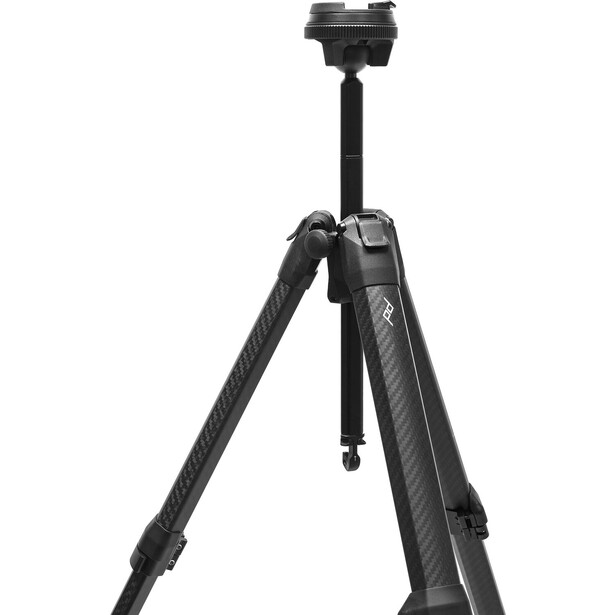
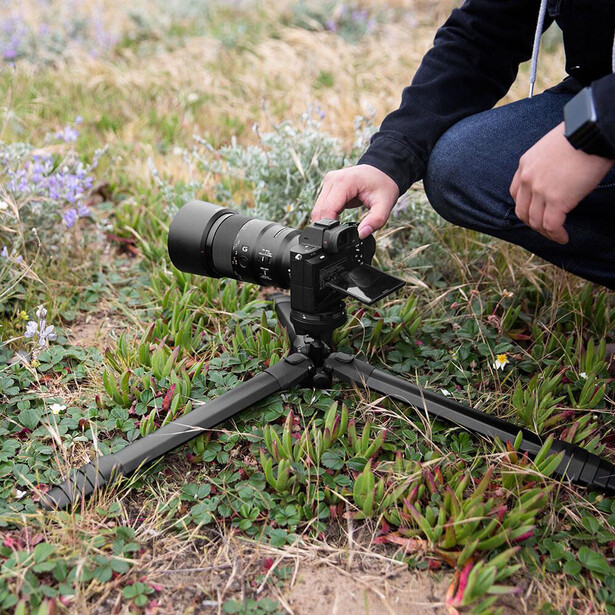
That center column can be shortened, which is something I do to all my tripods. I often shoot low, and a long center column can reach the ground, inhibiting the camera from getting as far down to the ground as I want. Furthermore, raising the column on any tripod is less stable than having the camera sitting on or immediately above the tripod's spider. One of my tripods doesn’t even have a center column.
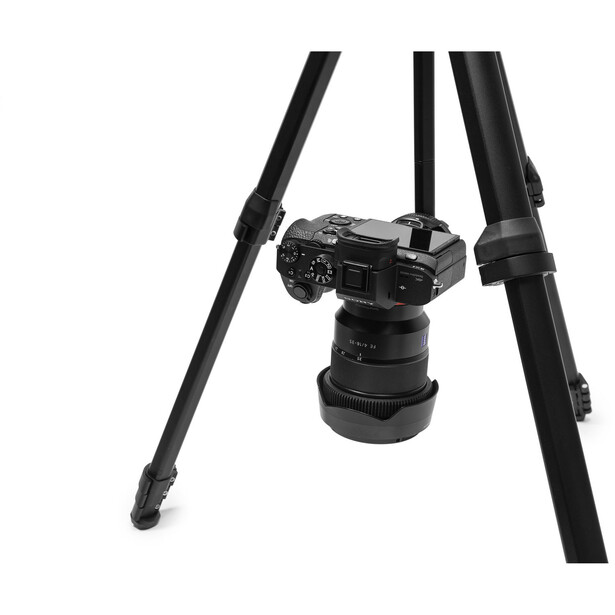
You can also reverse the center column and hang your camera below the tripod.
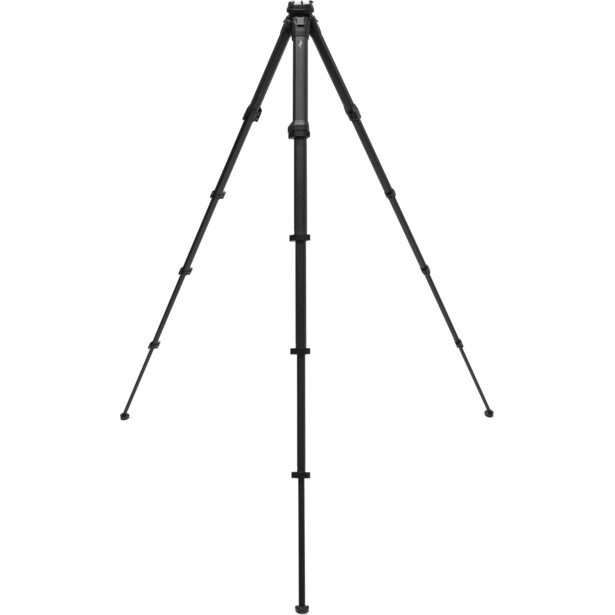
The legs themselves are tubular but do not have a circular profile, which would be stronger. Instead, they have a seamless isosceles hexagonal profile with rounded corners. This allows the tripod to fold away to a smaller profile than if it were circular. The legs’ five telescopic sections are extended by releasing cam levers. The levers on each leg are close enough so they can be released all at once with a single action.
At the bottom of the legs are rubber feet. These can be unscrewed using a hex key and replaced with spikes, which are available separately.
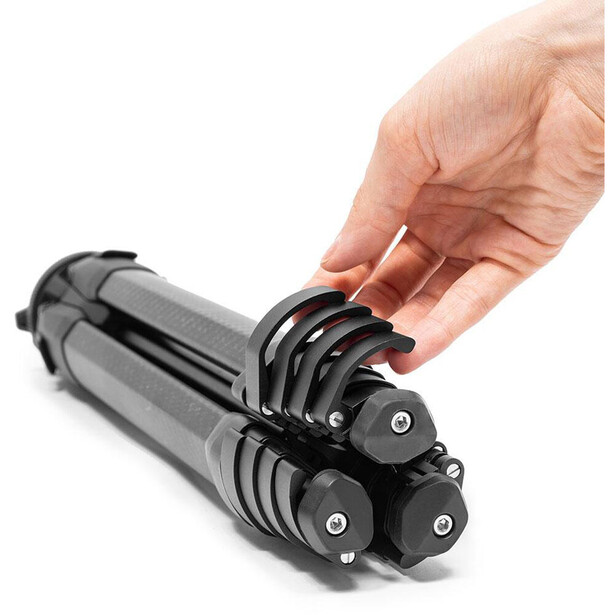
Clipped to the side of one of the legs is a holder for the hex key tool. However, I remove that and store the tool in the pocket inside the bag. Already in that pocket is a bush removal tool to remove the inner bushes from the leg for cleaning and maintenance. I shoot on beaches, and sand can ingress into the tripod legs.
The bag is well made, and the tripod fits extremely tightly within it.
Carbon Fiber Versus Aluminum
Peak Design’s two travel tripods come in either carbon fiber or aluminum. The choice of manufacturing material makes a difference to the weight of the tripod.
Carbon fiber has a superior weight-to-strength ratio compared to aluminum. However, it also brings other advantages. Firstly, carbon fiber has better vibration damping than aluminum. That means getting sharper images, especially with long exposures. Carbon fiber is also more corrosion-resistant. As I often shoot in or next to salt water, which is corrosive, that resistance is important to me.
Furthermore, carbon fiber is less affected by temperature changes and is more resilient to wear and tear over time, being less prone to bending and denting than metal.
However, there are disadvantages too. Carbon fiber is more expensive. Moreover, with extreme impacts, carbon fiber is more prone to shattering. It’s less environmentally friendly as its production is energy-intensive; the precursor material, PAN (polyacrylonitrile, a fossil fuel derivative), needs to be heated to 3,000°C, which leads to a high carbon footprint. The material is also difficult to recycle and produces significant waste in its production.
On the other hand, extracting aluminum from bauxite ore is also energy-intensive, but aluminum can be recycled indefinitely.
Despite that, Peak Design does have superb environmental credentials. The company has donated $4.6 million to grassroots nonprofit organizations since 2016, and its B Corp score is 106.4; on average, most businesses score 50.9. Certified B Corporations are those meeting the highest standards of verified social and environmental performance, public transparency, and legal accountability to balance profit and purpose.
Common Types of Head
Most commonly, people choose between a pan-and-tilt or ball head. But there are other types available.
Pan-and-tilt heads are bulkier and heavier, and there are more knobs to manage, so they are slower to adjust.
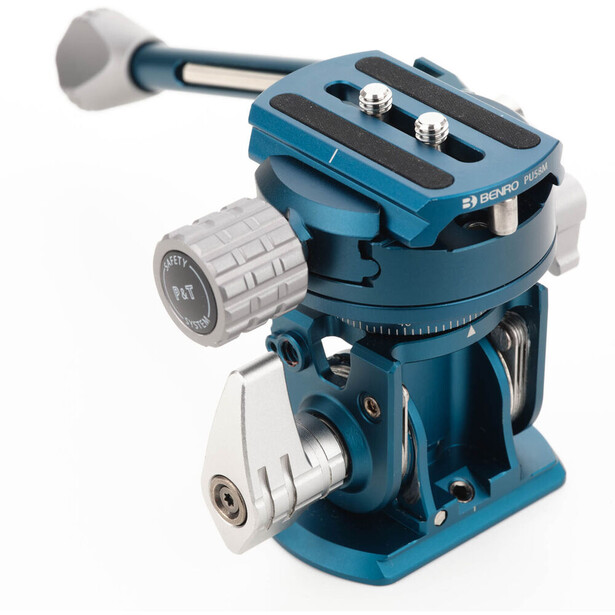
However, they have greater precision. With independent adjustments for horizontal (pan), vertical (tilt), and roll (rotate from landscape to portrait), they are considered better for video work as they provide more controlled movement. They are also best for studio work, as well as architectural photography. Some macro photographers prefer them as well.
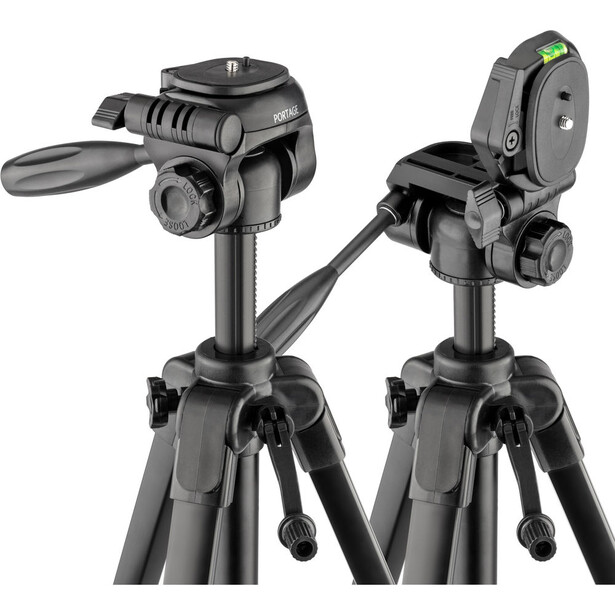
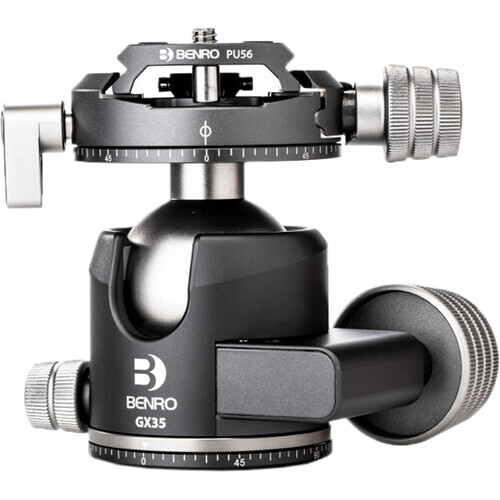
Ball heads are fast and more intuitive to use. They can be more compact and, usually, lighter. They are ideal for landscape and portrait photography. My favorite ball head has a panning adjustment above the ball. This means that using the ball, I can balance the camera so that it’s perfectly horizontal. Then, if I rotate it above the ball, the camera stays level.
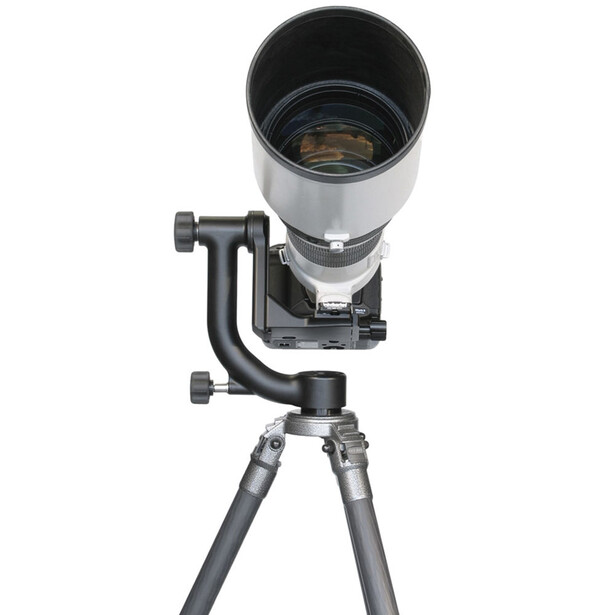
Gimbal heads are also popular and designed for big lenses. They require the lens and camera to be balanced by mounting the gear at the center of gravity. They allow for effortless, fluid movement in all directions, and the camera will stay in position without the head being locked. They are great for wildlife and sports photography.
Keeping Your Tripod in Good Condition
There is general maintenance information that applies to most tripods.
Clean and dry the tripod after exposure to wet, dusty, sandy, or salty environments. Try to remove dust and dirt from all moving parts, including the leg sections and leg locks, after each use. However, sometimes tripods may need washing. If so, keep the tripod upright to prevent dirty water from entering the legs. Use clean water or a mild soap solution with a soft cloth. Afterwards, rinse with fresh water and dry thoroughly using a soft towel. I leave mine standing and extended, or dismantled, to allow the legs to dry.
Try not to let the tripod stand in salt water if possible, although I do that regularly. Afterwards, I dismantle the legs to wash them inside and out.
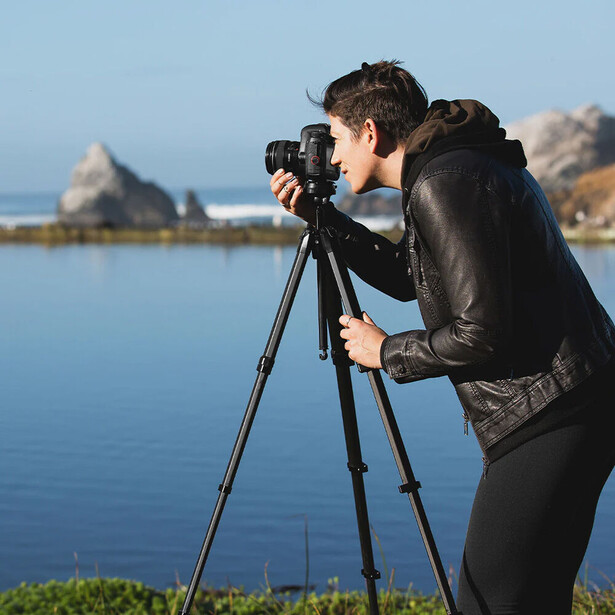
Check the tripod’s screws. You can usually adjust the leg hinge tension and the cam leg locks using a hex key.
Store your tripod in its bag to avoid it attracting dust.
Head Maintenance
The head should be cleaned regularly by wiping it down with a soft, lint-free cloth. You can use a soft brush or compressed air to blow dirt out of crevices. If necessary, loosen the knobs and rotate the mechanism gently to expose each surface.
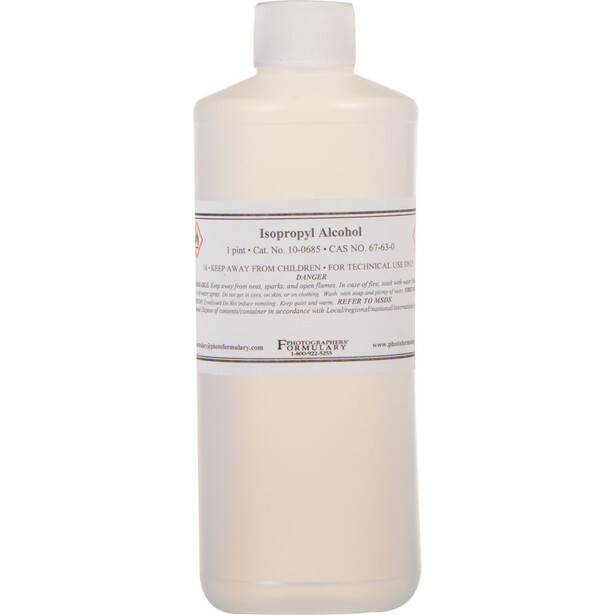
You shouldn’t use water or solvents to clean the head. However, if it’s unavoidable, then use a microfiber cloth dampened with isopropyl alcohol.
Most modern ball heads are self-lubricating; therefore, they do not require lubrication. Sometimes lubrication is needed. In that case, use a dry silicone-based lubricant very sparingly. Do not use grease or oil because it attracts dust and dirt.
Do periodically check and adjust any tension screws.
It’s worth noting that ball heads are not designed to be dismantled. If you try, you might not be able to reassemble it again.
General Safety Tips
Do not exceed the maximum load capacity and ensure all legs and the head are locked securely before attaching your camera. Try to avoid prolonged exposure to the sun or high temperatures, and remove your camera when transporting the tripod.
Although it’s obvious, remember to keep the tripod away from electrical sources. Also, be careful where you position your tripod. You cannot think of two things at once, and a photographer is often concentrating on the camera sitting on the tripod, not on where they are standing. Consequently, people have died when using them in hazardous terrain such as train tracks, clifftops, and by the sea.
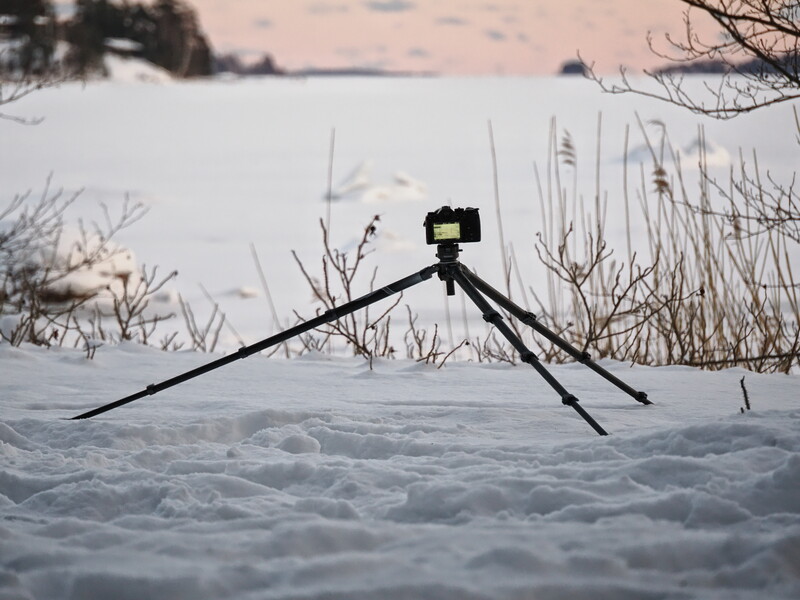
Buying Tips
There’s an old rule of thumb when buying a tripod: you must choose any two of the three things—price, stability, and weight. I usually add design features and build quality to that. As with most things in life, you get what you pay for.
Is it strong enough to hold your camera? Can you spread the three legs wide enough so that you can shoot very close to the ground? Is it tall enough so you can look through the viewfinder? If your camera does not have an articulated LCD screen, is the tripod tall enough so you can see the display? How smoothly does the head adjust, and does it stay in place or droop when you tighten it? Is it quick to deploy? Can you dismantle it to clean inside the legs?
As with cameras, I always recommend trying a tripod before purchasing one. When you do, think about the situations and the type of photography in which you will be using the tripod. For example, I live in a very windy county, so a bit more weight and stability are important to me. I often shoot long exposures from a pier, and I need my tripod to be tall enough to see over the railings.
Of course, some people don't have the budget to buy a high-quality tripod, and a budget one is better than none at all. However, investing in a high-quality tripod makes a lot of difference. Many years ago, I had a cheap tripod, and I managed to dive and catch my camera as it blew over in not-very-strong wind. That's not an issue I've had with better-quality tripods. If you are on a restricted budget, consider a used model instead of a new one. There are some great savings to be made.
There are dozens of manufacturers, and you can find models at all price points. Not every tripod will perfectly suit every photographer's needs. As I mentioned, I have four different tripods that I use depending on what and where I am shooting. There are many tripod reviews on Fstoppers worth reading.

Join the Fstoppers community for free
-
Post comments and join in the discussions
-
Browse the site ad-free
-
Share your work and get featured in the community
-
Compete in the photo contests for fun and prizes
5 Comments
I disagree that ball heads are ideal for landscape photography. I would instead say they are serviceable for landscape photography. They are fast but not very precise. What I mean by that is when you try to make a very small adjustment to one direction (like forward tilt) it is very easy to accidentally throw something else off (like your horizon line). A 3-way head or a geared head eliminate this problem and are much more ideal for landscape photography and make superior compositional tools because they isolate each axis of movement. Just my opinion but I find it is shared by most friends I have who shoot landscape, scenic, and macro.
That's a fair comment, thank you. I didn't include geared heads because I haven't come across anyone using one, so I didn't consider it common. But if they are popular where you are, then sorry for my omission.
I never have any issue with lining up a ball head precisely apart from years ago when I had a Manfrotto ball head that drooped when I tightened it. I find my Benro, Peak Design and Falcam heads perfect in that respect If it is an issue for you then I fully appreciate your need for one. They cost the equivalent of around $200 here in the UK, which isn't bad. Which model do you use?
I'm in the me2 movement. I use a gear head. I broke both hands in an accident. I can't be as precise with a ball head. Also, my gear head has lock levers that when loosened, the head moves as easly as a ball head. Quickly put it in position, then fine tune it. As for the price, mine costs about $500 US, with a discount. Even with the extra weight, it's always in my bag.
Last, it makes me cringe when people carry their camera around on top of the tripod. They just fold the legs and throw it over their shoulder. Stupid!
Thanks for the comment, Rich. There's only one tripod (and the same brand monopod) I have where I will carry the camera on the tripod. It has a failsafe mechanism that requires the tightening knob to be unscrewed half way, then the knob pulled hard outwards, and then turned some more. Until that second action is carried out, the QR plate won't detach from the head. It's a Benro.
However, I don't carry it over my shoulder.
You'll have to forgive me, I'm writing from a hospital bed. Here's my gear head, the Leofoto G4. Did I mention to you that I broke most of my fingers in an accident? Anyway, the G4 is not as fast, but easier to use than a ball. I can't tighten a ball enough. You might want to recommend gear heads, with large knobs, to people with hand problems.