
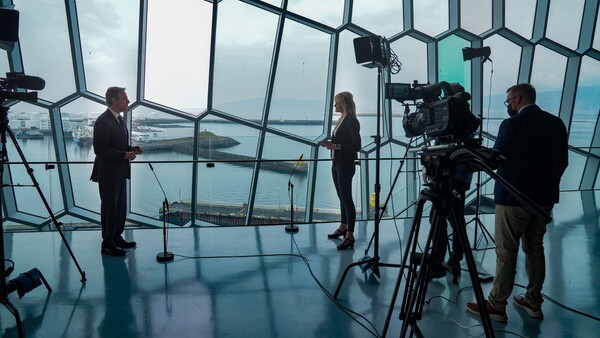
Twenty-four college students watched the same mock police interrogation end in the same confession, and came away with three different opinions about how hard the suspect had been pushed. The only thing that differed between them was where the camera sat. Students who saw the version framed on the suspect judged the confession barely coerced, and students who saw the version framed on the detective judged it heavily coerced.
Twenty-Four Students and Three Camera Positions
G. Daniel Lassiter and Audrey A. Irvine published that experiment in the Journal of Applied Social Psychology in May 1986. They staged one interrogation, a male detective questioning a female suspect over a shoplifting accusation, and recorded it three ways: with the camera focused primarily on the suspect, primarily on the detective, and on both equally. Every viewer heard identical words in an identical order. The suspect-focus group rated the confession as having been produced by a small degree of coercion, the equal-focus group called it moderate, and the detective-focus group called it large.
Camera position also shifted how viewers explained the suspect's behavior. Viewers of the suspect-focus tape made the most dispositional attributions, meaning they located the cause of the confession inside the woman who gave it. Viewers of the detective-focus tape made the fewest. Lassiter and Irvine argued that the coercion ratings followed from those attributions, and closed by warning that if interrogations are recorded with the camera on the suspect, judges and jurors may be biased toward seeing a confession as voluntary.
Twenty-four people split across three conditions is thin, and on its own that result would deserve a shrug. It has since been reproduced across two decades with full trial simulations, professional decision makers, and authentic police recordings.
Why the Frame Assigns the Cause
The effect Lassiter and Irvine were tapping already had a name: illusory causation, the tendency to hand causal credit to whichever stimulus happens to be the conspicuous one. Shelley Taylor and Susan Fiske gave it its first systematic demonstration in a social setting, in the Journal of Personality and Social Psychology in 1975, in a study where observers sat at different points around a casual two-person conversation and then rated how much causal influence each speaker had exerted. Whoever an observer happened to be facing looked like the one driving the exchange. Nothing about the conversation changed. Only the chairs did.
Michael Storms had run a sharper version two years earlier, also in the Journal of Personality and Social Psychology. Pairs of subjects held a short unstructured conversation while a matched pair of observers watched, and then everyone explained the actors' behavior in terms of personal disposition or situation. Some participants were shown a videotape replay before answering. When the replay simply repeated the vantage point they already had, the usual split held: actors leaned on the situation, observers leaned on disposition. When the replay came from a reversed vantage point, so that actors watched themselves and observers watched the other participant, the split flipped. Actors who saw their own faces started explaining themselves in terms of their own dispositions.
Later work went after where in the head this happens. In a 2006 paper in the Journal of Experimental Psychology: Applied, Jennifer Ratcliff, Lassiter, Heather Schmidt, and Celeste Snyder showed participants a photograph of the confessor's apparent victim before playing a simulated confession. One group was told to hold that image in mind while watching, and another was told to rehearse an eight-digit number instead. Only the visual task disrupted the camera perspective bias. Mental imagery and actual seeing compete for the same resources, so the result points at perception rather than at sloppy reasoning. That is a large part of why the bias is so hard to dislodge from the inside.
Judges and Detectives Fall for It Too
Undergraduates falling for a framing trick is one thing. People who evaluate confessions for a living, who know the law on voluntariness and have sat on both sides of it, ought to be harder to move. Lassiter, Shari Seidman Diamond, Schmidt, and Jennifer Elek tested that, and reported the result in Psychological Science in 2007. They recruited 21 judges who had previously served as both prosecutors and criminal defense attorneys, plus 24 law-enforcement officers with extensive experience conducting interrogations, and asked each to rate a videotaped mock confession for voluntariness on a nine-point scale.
Camera perspective moved the ratings, F(2, 39) = 3.46. The suspect-focus version was judged more voluntary than either the equal-focus or the detective-focus version, with an effect size of 0.70. The main effect of expertise was not significant, and neither was the interaction. Judges and detectives were pushed around by the frame in the same direction and to the same degree, and their expertise bought them nothing.
The bias also survives being taken to trial. In 2002, in the Journal of Applied Psychology, Lassiter and colleagues put the tapes inside a realistic trial simulation and added judicial instruction meant to correct for it. Neither the fuller context nor the instruction was enough, and camera perspective moved final verdicts. Instructions are not hopeless, though, and it appears to depend on how much the instruction actually explains. Elek, with Lezlee Ware and Jennifer Ratcliff, reported in Legal and Criminological Psychology in 2012 that of 156 mock jurors, those given an explicit instruction before viewing, one that named the bias, gave its direction, and explained why it happens, reached more lenient judgments of guilt on a suspect-focus recording than those who got none. The benefit came with a catch. It appeared only for false confessions and not for true ones, which is the direction you would want, though it means the instruction moved judgment rather than sharpening it across the board. In 2009, in Legal and Criminological Psychology, the group finally used authentic police recordings rather than staged ones. In one experiment, they took a real equal-focus recording and edited it into a suspect-focus version and an interrogator-focus version. Same room, same words, same confession, one original file. Viewers of the suspect-focus cut rated the confession more voluntary and the suspect more likely guilty.
What New Zealand's Rule Actually Says
The version of this story repeated in review papers and dissertations is that New Zealand read the 1986 experiment and wrote an equal-focus mandate into national policy, becoming the one country that got its camera placement from a psychology journal. That is substantially true, and New Zealand Police put it in writing themselves. Lassiter's own 2007 paper states that New Zealand has already adopted such a policy, and cites a survey of New Zealand judges who presided over cases involving equal-focus recording and reported that the practice improved procedures for prosecution and defense alike.
The confirmation is not locked inside a psychology department either. New Zealand Police's own 2005 review, Investigative Interviewing: The Literature, published by the Office of the Commissioner of Police, walks through Lassiter's findings and then says it plainly: "Given the unavailability of guidance from real juries or real trials, this research was the basis for the decision on camera angle made by New Zealand Police when introducing the videotaping of suspect interviews in 1991. The policy required the camera angle to be entirely neutral, with the interviewer and interviewee facing each other across a table and side on to the camera." The source it gives for that is Takitimu and Schollum, 1991, and Mary Schollum, who wrote the review, had worked for New Zealand Police since February of that year. This is the force in the story that the citation trail obscures. A national police service changed where it put its cameras because of a study of twenty-four undergraduates, and then said so in its own literature review fourteen years later.
The primary documents are harder to reach. The survey of judges that Lassiter's 2010 paper describes is sourced in its reference list to a letter dated November 3, 1993, from Lani Takitimu to Lassiter, which is unpublished. The New Zealand documents from that period do exist, and the New Zealand Law Commission lists them: Sir David Beattie's 1988 report to the Minister of Justice on electronic recording of police interviews, the police's 1991 report on the New Zealand Video Interview Project, and the police's Electronic Recording of Police Interviews: Policy and Procedural Guidelines of July 1992. None of the three appears to have been published online, and the Law Commission's own discussion of video recording, which endorses the practice warmly, says nothing at all about where to put the camera. The 2005 police review is the part of this record that anyone can actually read.
What is in force now is narrower than what 1991 required. The Chief Justice's Practice Note on Police Questioning, issued by Sian Elias on July 16, 2007, under section 30(6) of the Evidence Act 2006, says a suspect's statement should preferably be recorded by video unless that is impractical or the person declines, and is silent on framing. The framing instruction lives in the police manual. New Zealand Police's Investigative interviewing: Suspect guide, current at February 3, 2026, tells the interviewer to start the recording, explain that it is being made, then check everyone is visible in the recording and ask the suspect to speak clearly into the microphone. Where a lawyer is present, the room is to be set up so defense counsel is visible on camera throughout, with the seating arranged to reflect that the suspect is the person being interviewed. At least two discs are used, designated master and working copy, with a third available for the lawyers.
So the operative New Zealand requirement is that everyone in the room is visible in the recording, with defense counsel visible throughout. I could not find the phrase "equal focus," or any ratio specification, in the Practice Note, in the current police guide, or in the Law Commission's papers, and the 1991 and 1992 police documents are not published where they can be read. The 2005 review's "entirely neutral" is the closest thing to a stated standard anywhere in the public record, and it describes the 1991 policy in the past tense. The literature's description of the format is nevertheless precise about what it looks like: a 2009 study in Behavioral Sciences and the Law defines equal focus as suspect and interrogator each displayed in profile. In a small room with one wide camera and two people facing each other across a table, that is close to what "everyone visible" produces, though nothing in the guidance specifies it.

That same 2009 study is a caution against assuming the fix is more cameras. A dual-camera split screen showing both full faces did produce relatively unbiased voluntariness ratings, but it was among the worst formats tested for letting viewers tell a true confession from a false one. Fixing the attribution problem and improving accuracy are separate jobs, and a setup can do the first while quietly making the second worse.
New Zealand's current trouble is not the frame anyway. It is what happens outside it. In May 2025, the Independent Police Conduct Authority published an inquiry into a specialist interviewing method built for complex and cold cases, after a High Court judge ruled a murder suspect's statements inadmissible in September 2021. Among the failures the judge identified were three occasions when Police talked to the suspect without recording it: the initial approach at the prison, including the car ride to the station, and two breaks in the interview itself. The Police review that the Authority summarized recommended investing in new cloud-based recording technology and in purpose-built interview rooms. The Authority's own recommendation was narrower, that Police proceed with establishing a Manager of Investigative Interviewing to oversee training and standards.
A Two-Shot and a Single Are Two Different Claims
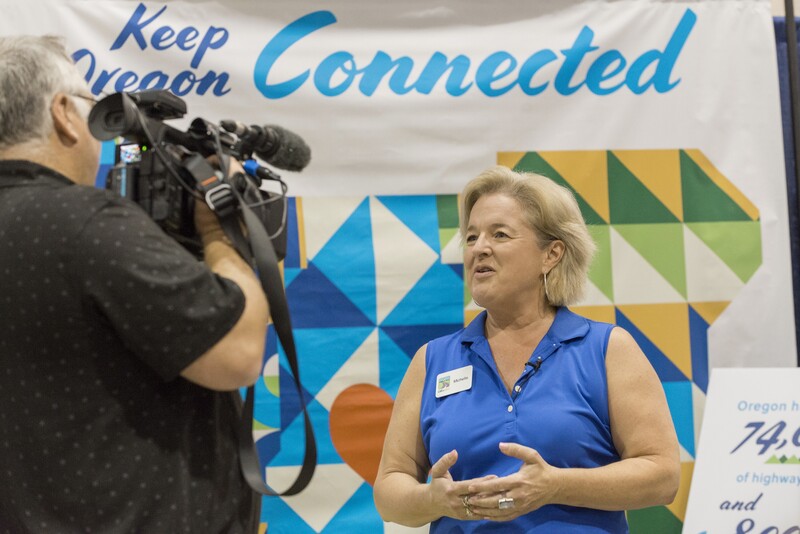
None of this stays inside a police station. Every interview you shoot makes the same decision, and you are probably making it for reasons of coverage rather than argument. A single on your subject, clean, eyes just off lens, is the most flattering and most portable frame available, and it is also a claim that the person in it is the author of what they are describing. Cut to a two-shot that includes the person asking the questions and you have made a different claim, that the exchange produced the answer.
Consider a subject describing how they were pressured into signing something. Shoot them alone and the story becomes a story about their choice. Include the interviewer, or the executive, or the room, and the pressure gets a body. Neither frame is dishonest. They are different assertions about causation, and your viewer will absorb whichever one you hand them without ever noticing that a choice was made. The 21 judges in the 2007 study were moved by it just the same.
Practically, this means the reverse angle is not B-roll. If you are shooting a confrontational or extractive interview and you only have one camera on the subject, your edit has no version of the scene in which the questioner acted. Put a second body on the interviewer, or shoot a genuine profile two-shot with both people at similar size in the frame, and you leave yourself the choice in post rather than making it by default on location. If two-camera coverage is new to you, the Fstoppers guide to shooting professional video interviews covers the mechanics of getting there without doubling your setup time.
The Lassiter result is unusually clean for a social psychology finding, and it holds when the trial context is realistic, when the viewers are experts, under ordinary judicial instruction, and when the tape is genuine. Before your next interview, sit in your subject's chair and look back at where you put the camera. If the person asking the questions does not appear in that frame anywhere, you have already decided who did the acting, and your audience will agree with you without knowing why.
Lead image by U.S. Department of State, public domain. Source.





Join the Fstoppers community for free
-
Post comments and join in the discussions
-
Browse the site ad-free
-
Share your work and get featured in the community
-
Compete in the photo contests for fun and prizes
1 Comment
The basic line should be: Any confession without an attorney is coerced.