If you have never looked into Gregory Crewdson’s approach to photography, this one is for you. Crewdson generally ditches the usual “capture the moment” process that many photographers might follow.
Most photographers working outdoors will work with, or work to improve upon, what’s already there—natural light, a cool location, that perfect split-second shot, and perhaps some supplementary lighting. Crewdson? He’s out there building entire worlds from the ground up, like a movie director trapped in a photographer’s body. Think David Lynch meets Edward Hopper, with a dash of Hitchcock’s suspense. He’s got film crews, cranes, fog machines, and weeks of planning to craft one single, haunting image that feels like a scene from an unsolved mystery. Want to see how he pulls it off? Check out Tatiana Hopper’s video.
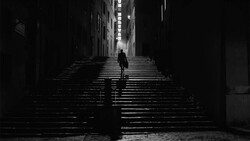
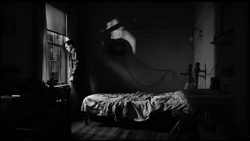
Hopper breaks down how Crewdson’s process flips photography on its head. He doesn’t simply stumble upon a scene; he constructs it, obsessing over every detail from composition, lighting, and set design to nailing a specific mood. His small-town American settings feel familiar but creepy, like something’s just off, leaving us wondering what happens next. Storyboarding, location scouting, and cinematic lighting (think soft glows or dramatic shadows) let him pack a whole story into one frame. For photographers, it’s a masterclass in planning, storytelling, and using light to stir emotions—proof you don’t need a Hollywood budget to think big.
To get the full rundown on Crewdson’s process, Hopper’s video is a great place to start. For a deeper dive into Crewdson's world, look no further than the documentary Gregory Crewdson: Brief Encounters, if you can view this in your country, which follows his work over the course of a decade.

Join the Fstoppers community for free
-
Post comments and join in the discussions
-
Browse the site ad-free
-
Share your work and get featured in the community
-
Compete in the photo contests for fun and prizes
3 Comments
Seems like an awful lot of trouble to go to in order to create a staged image. If you're going to do all that why not just create the "scene" using AI since the scene you created isn't real life anyway? Would be faster and less expensive.
I think he’s using the camera as an artist rather than a photographer; one could argue that he could paint the scene, or hire a painter to paint his vision. But the camera is his brush.
Personally I used to like crewdsons work better when I was younger, though lately I’ve found it repetitive and overdone because he always make the people appear sad and depressed (which I feel like is a shortcut/crutch). I feel like in large part the eeriness comes from the people looking so depressed in the world he creates. As if the characters want to escape their lives. It works to a point, after that it’s just becomes formulaic. Like a Bollywood movie but sadder.
Regardless of my opinion, he did change what photos are and can be. Before him, nobody thought about making million dollar pictures, and I think in doing so he really pushed photography into a new territory, and for that, he deserves all the respect. Plus, the hyper-reality of his image making and technical mastery is amazing, especially if you ever get a chance to see one of his prints in real life.
Also, your comment reminds me of the Calvino story, can’t remember which one, but it was about a photographer realizing he wanted to create a “camera-less” picture. Or a picture of a picture. I guess that’s what AI is doing anyways.
Also, your comment reminds me of the Calvino story, can’t remember which one, but it was about a photographer realizing he wanted to create a “camera-less” picture. Or a picture of a picture. I guess that’s what AI is doing anyways.