
Have you heard the buzz? Sony just unveiled the Sony a9 III, boasting the groundbreaking feature of being the first full frame camera equipped with a global shutter. This technological leap has sent shockwaves through the photography industry, but it's also sparked a flurry of questions, particularly regarding its compatibility with flash and whether it outperforms high-speed sync. But before we delve into that, let's demystify what a global shutter is and how it revolutionizes flash photography.
To understand the significance of the global shutter, we need to rewind a bit. In the realm of traditional photography, cameras relied on mechanical shutters, essentially moving parts that controlled the exposure by opening and closing to let light hit the sensor.
However, when it came to flash photography, the speed was limited by how quickly these physical shutters could operate. This is what's known as sync-speed. In order for light from a flash to expose the entire sensor, we need the first curtain to be fully open and the second curtain to have not started to close. Firing a flash with partially closed shutters results in the light being blocked.

Enter high-speed sync, a feature in some lights designed to surpass this limitation. Instead of one powerful burst of light, high-speed sync splits the light into rapid bursts to match the movement of the shutter. However, this comes at a cost: a decrease in power output as you raise the shutter speeds.
Enter electronic shutters, which eliminate the constraints of mechanical movements. With electronic shutters, we're not restricted by physical mechanisms, but rather by how quickly data can be extracted from the sensor. However, traditional electronic shutters suffer from a phenomenon called rolling shutter, where the sensor reads data line by line, resulting in distortion, particularly with fast-moving subjects, and rendering them incompatible with flash.
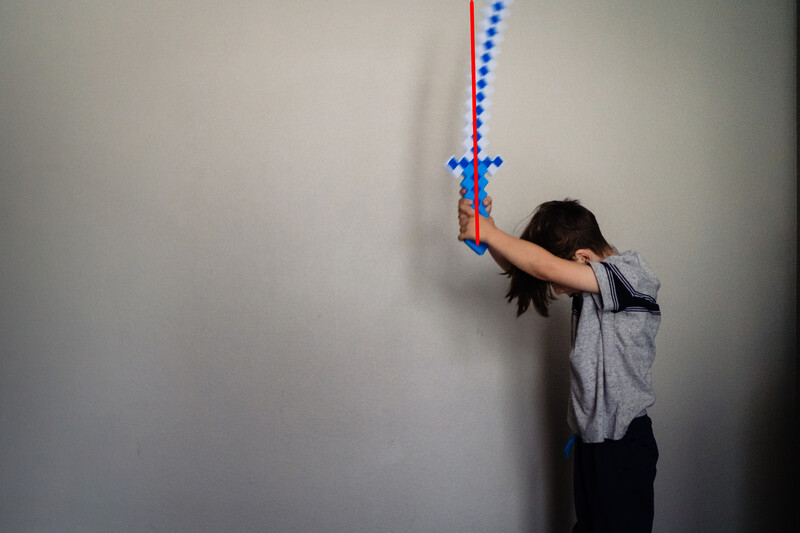
Here's where the global shutter steps in. Operating similarly to an electronic shutter but reading the entire sensor simultaneously, it allows for flash compatibility at any shutter speed. But, there's a catch. Flashes have what's called a flash duration. This is essentially how long it takes a flash to give you the amount of light you have set. For instance, at 1/128th power, a Godox AD600 Pro has a flash duration of 1/8260th of a second, while at full power, it takes 1/220th of a second to emit all its light.
With the Sony a9 III's global shutter, sync speed limitations are a thing of the past, enabling flash photography at speeds as high as 1/80,000th of a second. However, here's the challenge: while the shutter can operate at such fast speeds, it takes more time for the flash to emit the light output. This means we can only capture a small slice of the output when working with higher shutter speeds.
So, is flash with a global shutter superior to high-speed sync? High-speed sync sacrifices flash power by emitting a bunch of small bursts of light, while the global shutter enables synchronization at any speed but limits the amount of light captured due to flash duration.
In the studio, using the mechanical shutter on my Sony a9 II, I have the camera set to ISO 250, f/2.8, and 1/8,000th of a second shutter speed. From here, I have a Godox AD200 Pro set to full power and I am using high-speed sync. The results below show what this exposure result is.

Moving to the Sony a9 III with a global shutter, we have the exact same settings. The only difference is that we are now using the global shutter instead of high-speed sync. And as you can see below, the result is that we get about three stops more light.

Now as we move up the shutter speed on the a9 III, we capture less and less of the available flash duration. But even so, when we get to 1/80,000th of a second on the shutter while still using the same f/2.8 and ISO 250, we get the below exposure.

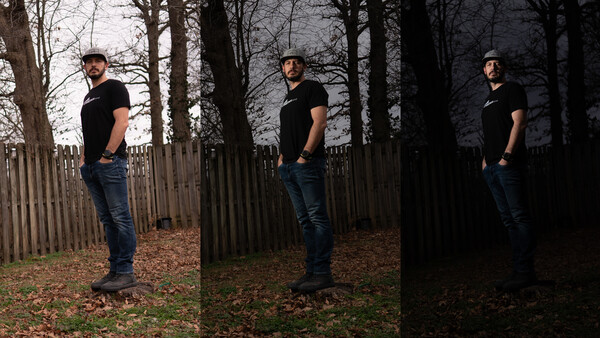
While the above examples are a good representation of how the different sync types gather light, the important factor here is how these settings can be used to control the ambient light. So, if we head outside, the below image shows what a neutral exposure looks like.

Now, trying to minimize the ambient as much as possible with the mechanical shutter of the Sony a9, and the flash set to full power with high-speed sync, I'm able to get the below exposure.
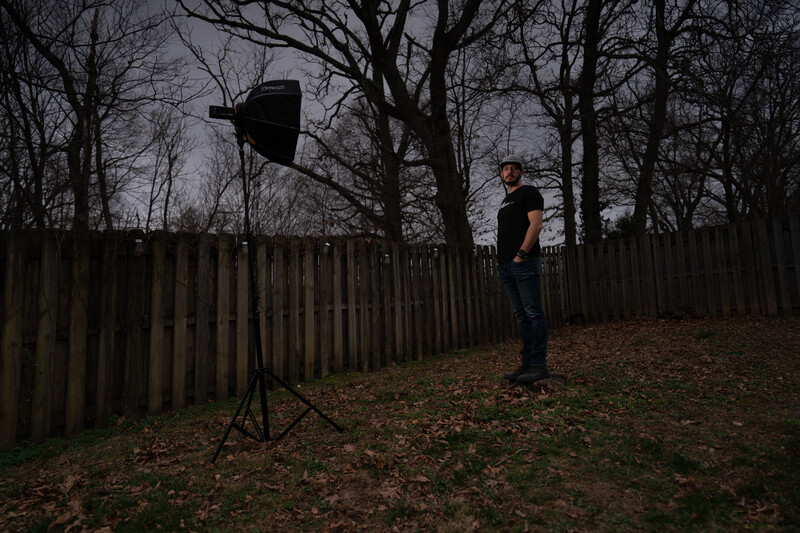
The above results leave us with not enough light on the subject. But we can squeeze out a bit more light if we drop to the camera sync speed of 1/250th of a second. Doing so, we need to compensate by raising our aperture to f/10. Because the light is now firing more efficiently, we get more output, but this comes at the cost of having a wider depth of field.

It's at this point we have maxed out our ability to minimize the ambient with the current gear setup. So now we move to the Sony a9 III. Although this camera has a base ISO of 250, we have a lot more range in our shutter speeds. So with ISO set to 250, f/1.8, and 1/80,000th of second on the shutter, we are able to get the below results with the flash set to full power.


In closing, the Sony a9 III's global shutter gives photographers way more control over ambient light, offering enhanced flexibility, efficiency, and creative possibilities. While there's much more to explore, it's clear that global shutter sync speeds outshine high-speed sync, opening a new chapter of possibilities with flash photography.





Join the Fstoppers community for free
-
Post comments and join in the discussions
-
Browse the site ad-free
-
Share your work and get featured in the community
-
Compete in the photo contests for fun and prizes
10 Comments
Great Job here Jason!!
Thank you!!
Thank you! I was waiting for this one! So by time cameras will be able to find max peak automatically and flash manufacturers have flashes build for this use. And it will be a bright and light future for flash photography.
Can you please make a tests vs Hyper sync as well.
he did!
FYI Hyper Sync and High Speed Sync are not the same, don't work the same. So no he did not compare.
I m pretty sure he did both tests resulting similar effective output on full power with High Speed Sync on the ad 200 and with 1/4th power on normal flash mode on the ad 200 and Hyper Sync in camera. Hope this helps
great work in experimentation and explaining how global shutter and high speed sync works
The Seconik L858-D give you the flash duration for the setting you use. A revivel for the light meters.
it will give you the flash duration, but what we would need is the timing for the peak of that flash duration.