Fstoppers Original Articles

Exclusive articles and expert opinions written by Fstoppers’ talented team of creative professionals. Here we cover everything from the latest photographic techniques to advice on running a successful photography business, to first hand accounts of working in the photography industry.

Many Working Photographers Are Buying the Wrong Camera

For roughly twenty years, the working photographer's purchase logic was simple. The flagship body was the right answer for demanding work, and the mid-range body was the right answer for everything else. Working pros bought flagships because their work demanded it. Wedding photographers shooting in dim churches, photojournalists in unpredictable conditions, sports photographers tracking fast subjects, wildlife photographers waiting for a single decisive moment, commercial photographers needing absolute reliability across long shoot days. All of them needed something the mid-range bodies could not deliver, and the flagship was where that something lived.

Why We Still Need Professional Models

In the age of being able to take care of a lot of production needs with AI, are professional models becoming irrelevant? And even beyond AI, why is using a professional model such a necessity for professional photo shoots, especially in the fashion space?

Why the 24-70mm f/2.8 Should No Longer Be the Default First Zoom Purchase

The 24-70mm f/2.8 has been the default first professional lens purchase for at least 25 years. Almost every working photographer has owned one. Every photography forum recommends one to every newcomer asking what to buy after the kit lens. Every wedding educator names it as the foundation of a working kit. Every camera store stocks it at eye level. The lens has been so culturally dominant within working photography that the question of whether it should still be the default has rarely been asked seriously. It should be asked now. 

The Lighting Secret: How to Create Epic Light Anywhere

The biggest hurdle many photographers face when jumping into off-camera flash isn't the gear or the settings; it's the "where." We often find ourselves in a beautiful location with boring light, and we struggle to know how to fix the issue. If you've ever looked at a scene and felt stuck because the lighting didn't match your vision, the solution isn't more gear. The solution is learning how to "see" light patterns and then recreating them from scratch.

There Might Just Be a Disconnect Between Camera Manufacturers and Market Demands

As with every fast-paced, tech-driven industry, the cycle time for each incremental update in photography equipment seems to get shorter and shorter. Though it has become better for the past few years, each product launch is still not given sufficient time to mature before the next iteration is shoved down our throats. While this might contribute to a better-looking balance sheet from a business standpoint, in the long run, it might lead to a massive disconnect between what camera manufacturers are building and what the market actually demands.

Why "Less Perfection, More Human" Is the 2026 Photography Trend That Will Last

Photography has spent most of its digital era chasing technical perfection. Sharp focus, clean files, controlled lighting, smooth skin, perfect exposure across the dynamic range. The pursuit was reasonable. Each generation of cameras and editing software made these standards more achievable, and working photographers who failed to meet them risked looking unprofessional. By 2020, a wedding photographer delivering a slightly soft image was apologizing for it. A portrait photographer leaving visible skin texture was risking client complaints. The technical-perfection ceiling kept rising, and the industry kept rising with it.

The Geometry of Indifference

There is a kind of photography that pretends to be neutral. Flat surfaces, clean lines, ordinary spaces. Nothing dramatic, nothing loud, nothing that asks to be looked at twice. It's often dismissed as cold, detached, even empty. But that reading is too easy. What we call indifference is rarely indifference. It is a position.

What Is Truth in a Post-Photography World?

In March 2026, the National Republican Senatorial Committee released an online ad featuring a minute-long video of Democratic Senate candidate James Talarico speaking into the camera, reading statements the real Talarico had not spoken on camera. The Talarico in the video was generated entirely by artificial intelligence, voicing content drawn from the candidate's old social media posts. The words "AI Generated" appeared in small text in the corner of the frame at the start, then faded into even smaller text that remained on screen while the fake Talarico continued to speak. 

Finding the Best Workflow for Real Estate Photo Editing

Artificial intelligence has quickly become part of the workflow for many photographers. From culling thousands of images to automating complex edits, there's now a tool for almost every part of the process. But not all AI is built for the same job.

Why Every Photographer Needs to Delete 90% of Their Portfolio

Most working photographers have a portfolio problem. The problem is not that the work is bad. The work is usually fine. The problem is that there is too much of it. Portfolios that should have 12 to 18 images contain 40 or 50 or 80. Websites that should load three galleries fast contain eight galleries that load slowly. Instagram grids intended to function as portfolios contain two years of inconsistent work that blurs the photographer's identity rather than sharpening it. The photographer has spent years building the portfolio and cannot bring themselves to remove anything from it.

Less is More: The Power of Simplicity in Landscape Photography

Discover the art of minimalism in landscape photography and learn how the deliberate removal of distractions can elevate your images. Join me as I share insights from my recent trip to Namibia, highlighting the beauty and purpose behind each frame.

Can Smartphones Replace Your Camera in 2026?

Nearly everyone has a smartphone in today's world. They have come so far, and the technology inside them is extremely impressive. When you think back 20 years ago, they had a small screen and could only be used to make calls. Now, you can use them for pretty much everything: to call people, to listen to music, use them as GPS to get around, and in a lot of cases as a camera.

Why Niching Down Is the Single Most Profitable Decision Many Photographers Never Make

The photography business has a strange relationship with specialization. Almost every working photographer starts as a generalist. The first few years of paid work are a scramble: weddings on weekends, headshots during the week, a real estate gig when a friend asks for a favor, some product work to pay for a lens upgrade, maybe a few corporate events when the calendar is thin. The logic is obvious and reasonable. Early in a career, any paying work is better than no paying work, and saying yes to every request builds both experience and cash flow. That first phase of generalist scrambling is not a mistake. It is how most photographers who become successful actually learn their craft. The mistake is staying there.

OM System Survived Its Split From Olympus: Who Expected This?

When Olympus sold its imaging division to Japan Industrial Partners on January 1, 2021, the new company was called OM Digital Solutions. The OM SYSTEM product brand arrived later, announced in October 2021 as the name the company would put on its cameras going forward. Most of the photography press wrote the obituary in advance of either event. The division had been unprofitable for years. Olympus itself, after more than eighty years of making cameras, was exiting the business. Micro Four Thirds had lost the sensor-size argument in the public imagination to APS-C and full frame. The buyer was a private equity firm, not a camera manufacturer. The standard expectation was managed decline: a few years of catalog padding, a thinning lens roadmap, and eventual fade.

Why I Still Use a Gimbal in 2026

It seems everybody is retiring their gimbals. Every time I look at social media, I hear people talking about: does anybody use a gimbal anymore? Or you'll see videos where people are talking about gear they regret buying, and a gimbal is usually on that list.

Why Fujifilm Is the Only Major Manufacturer That Understands Gen Z

The Fujifilm X100VI has been supply-constrained for more than two years. The camera launched in February 2024, and as of April 2026, availability remains spotty: Fujifilm's own US shop typically shows it as "Notify Me" rather than in stock, and major retailers list the camera as temporarily out of stock with rolling expected availability windows rather than steady inventory. The company raised the US price from $1,599 to $1,799, and the camera still moves for above MSRP on the secondary market. Two years of reported shortages is not a production problem that got solved. It is a demand problem that Fujifilm is openly uninterested in solving.

Your Video Workflow Is Probably Five Tools Duct-Taped Together and Vmake Is Betting You're Tired of It

If you produce short-form video for clients or your own brand, take a second and count the number of apps, browser tabs, and subscription logins sitting between the moment you have an idea and the moment you hit publish. There's the scriptwriting tool (or a blank doc you've been staring at for twenty minutes). The generation or editing platform. A separate captioning service you pay for monthly. Something for thumbnails, maybe a dedicated generator, maybe you're still screenshotting frames and adding text in Photoshop. A background removal tool. Possibly a video enhancer you bookmarked six months ago and keep forgetting to cancel.

A Love Letter to My Film Cameras

I sold my Mamiya 645AFD, and I regret it every time I think about it, which is more often than I would like to admit. The film got too expensive, and the scanning costs added up, and I told myself the rational thing to do was to let it go and put the money toward something more practical. I was right about the math. I was wrong about everything else. 

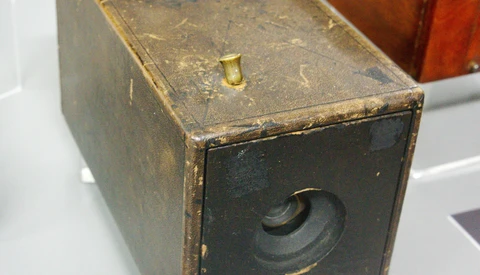
The Return of Camera Design as Identity

Somewhere around 2010, camera design stopped mattering to the photography industry. The DSLR era had produced bodies defined by ergonomics rather than aesthetics, and the first mirrorless wave carried forward the same logic. Cameras were tools, tools looked like tools, and any photographer who cared about how a camera looked was suspected of being a poseur. The mainstream press reinforced the assumption. Reviewers evaluated bodies by their grip comfort, control layouts, button feel, and weather sealing, and any discussion of aesthetics was treated as either irrelevant or faintly embarrassing.