
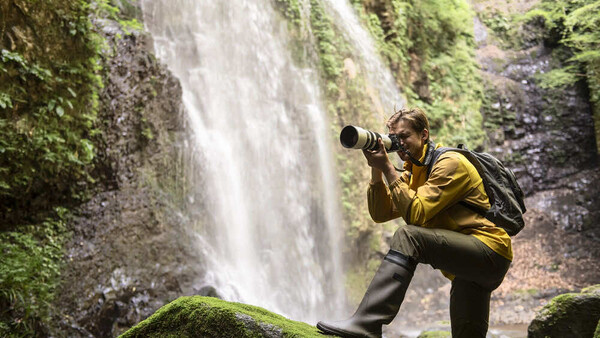
When Olympus sold its imaging division to Japan Industrial Partners on January 1, 2021, the new company was called OM Digital Solutions. The OM SYSTEM product brand arrived later, announced in October 2021 as the name the company would put on its cameras going forward. Most of the photography press wrote the obituary in advance of either event. The division had been unprofitable for years. Olympus itself, after more than eighty years of making cameras, was exiting the business. Micro Four Thirds had lost the sensor-size argument in the public imagination to APS-C and full frame. The buyer was a private equity firm, not a camera manufacturer. The standard expectation was managed decline: a few years of catalog padding, a thinning lens roadmap, and eventual fade.
Five years later, the verdict is more complicated than that forecast allowed for. OM System is still here. The OM-1 Mark II, released in February 2024, is widely regarded as one of the best wildlife cameras on the market. The OM-3, released in February 2025, brought genuinely admired retro design to Micro Four Thirds. The M.Zuiko 50-200mm f/2.8 IS Pro, released in September 2025, has earned uniformly strong reviews. The brand survived the transition, delivered a real product roadmap, and kept a loyal customer base.
But survival is not the same thing as thriving, and the honest reading of OM System in 2026 requires holding two things at once. The company has outlasted its obituaries, which is a genuine achievement. It has also struggled to reach profitability under private equity ownership, and the 2025 product year raised real questions about whether a specialty Micro Four Thirds brand can actually build a sustainable business at the scale OM System needs. The story is neither comeback nor collapse. It is something more interesting: a case study in what happens when a camera brand accepts it will not be everything to everyone and tries to build around that acceptance, with results that are neither uniformly successful nor obviously failing.
The Obituary the Industry Wrote in 2021
The context of the Olympus sale matters for understanding how far OM System has come, and how far it still has to go. Olympus had been bleeding money on cameras for years by the time the sale closed in January 2021. The imaging division had been propped up by the rest of the company through a long and accelerating decline, and the announcement that Olympus was selling was not a surprise to anyone who had been watching the numbers.
What did surprise people was who bought it. Japan Industrial Partners is a private equity firm, not a strategic acquirer. The firm's track record includes Sony's VAIO laptop division, which JIP spun out in 2014 and eventually stabilized as a niche Japan-focused brand. That history informed the camera industry's expectations for OM Digital Solutions. The assumption was that JIP would run the same playbook: cut costs, narrow the product range, focus on profitable niches, and either eventually sell the business to another player or let it wind down gracefully.
Most of the photography press quietly stopped recommending Olympus cameras in the 12 to 18 months after the sale. The reasoning was practical rather than hostile. A buyer considering an Olympus body in 2021 had to weigh the possibility that firmware updates might stop, lenses might disappear from the roadmap, and service support might deteriorate. None of those things ended up happening, but the caution was reasonable at the time, and the effect was real: Olympus got quietly pushed out of many review roundups and "what should I buy" lists during the period when it most needed the recommendations.
What OM System Actually Did
Rather than trying to be Olympus minus the losses, OM System narrowed its positioning deliberately and decisively. The brand stopped pretending to compete across all genres and focused on two specific buyer profiles: the wildlife and nature photographer who values long reach and weather sealing over sensor size, and the travel photographer who values size and weight above everything else.
The OM-1 Mark II is the clearest expression of this strategy. It launched at $2,399 with specifications built around the wildlife use case: a 20-megapixel stacked BSI Live MOS sensor, blackout-free burst up to 120 fps with AF and exposure locked from the first frame, 50 fps with continuous autofocus and exposure tracking, 8.5 stops of in-body stabilization, and IP53 weather sealing that is genuinely class-leading. The autofocus algorithm has been trained specifically for birds, with bird-eye detection that can distinguish between up to eight birds in a frame. The computational photography tools, including Live ND up to ND128 and Live Graduated ND, target the landscape photographer who would otherwise carry physical filters in a vest pocket. Almost nothing about the camera is aimed at a buyer who is cross-shopping against a Sony a7 IV or a Canon EOS R6 Mark II for general-purpose use. The camera is designed for a specific photographer doing a specific kind of work, and that clarity of purpose is what has given the OM-1 Mark II its reputation.

Critics who have spent two years with the body are unambiguous about what it does well. The 120 fps pre-capture mode (with AF locked from the first frame) lets the photographer react to a bird taking flight rather than anticipating it. The 2x crop factor combined with the 150-600mm f/5.0-6.3 IS gives an equivalent of 1,200mm reach in a package a mid-sized backpack can carry all day. The weather sealing is not aspirational. It is genuinely tested, and field photographers have documented the body continuing to work through conditions that would force a full frame body into a camera bag. None of this makes the OM-1 Mark II a universal camera. All of it makes the OM-1 Mark II a specialist's camera that does its specialty exceptionally well, which is exactly what OM System set out to build.
The Size and Weight Argument That Finally Became Decisive
The Micro Four Thirds size advantage has always been theoretical in marketing terms and blunted in practice by the focal length multiplier, the smaller sensor, and gaps in the lens lineup. For most of the 2010s, the size argument was offset enough by image quality concerns that it did not decisively win for any specific buyer. That changed in 2024.
Current-generation stacked sensors at Micro Four Thirds size have narrowed the image quality gap enough that, for wildlife and travel photographers working at reasonable ISO ranges, the noise and dynamic range differences between a Micro Four Thirds body and a full frame body have become defensible trade-offs rather than decisive ones. The OM-1 Mark II's 20-megapixel stacked sensor is not the equal of a Sony a1 II's 50-megapixel full frame sensor in the studio. It does not need to be. It needs to be good enough that a wildlife photographer carrying 1,200mm equivalent reach, in a rig that weighs roughly a quarter of what a comparable full frame setup would weigh, can produce publishable images from demanding shooting conditions. In 2026, it is.
The math has shifted permanently in OM System's favor for this specific buyer. A photographer carrying the OM-1 Mark II with the 150-400mm f/4.5 TC 1.25x IS Pro is working with 1,000mm of effective reach in a handholdable package. The Sony or Canon photographer with comparable reach is either on a tripod with a 600mm prime and a teleconverter or carrying significantly more weight and volume for less flexibility. For photographers who hike miles to shoot birds or who fly frequently with camera gear, this is not a close comparison. OM System has built the kit that these photographers actually need, and the brand loyalty among working wildlife photographers reflects that.
The OM-3 Retro Play and What It Actually Proved
The OM-3 launched in February 2025 at $1,999 as a retro-styled body referencing the original Olympus OM-1 film camera from 1972. The specifications are mostly borrowed from the OM-1 Mark II: the same 20-megapixel stacked sensor, the same TruePic X processor, the same subject detection. The body is smaller, the handgrip is reduced, and the viewfinder is a step down (2.36 million dot, 0.69x magnification) compared to the OM-1 Mark II's 5.76 million dot, 0.74x magnification EVF.
The reception was mixed in ways worth understanding. The design itself drew praise from almost every reviewer, with TechRadar calling it "the prettiest and outright funnest camera for 2025" and PetaPixel describing the shooting experience as genuinely joyful. The retro aesthetic hit a cultural moment, landing alongside the Fujifilm X half, the Nikon Zf, and the revived interest in film-era design vocabulary that has reshaped the photography market.
The pricing was where the OM-3 story got more complicated. At $1,999, the body sits directly against the Fujifilm X-T5 at around $1,700 and the Nikon Zf at around $2,000. The X-T5 offers a 40-megapixel APS-C sensor. The Zf offers a 24-megapixel full frame sensor. The OM-3 offers the OM-1 Mark II's 20-megapixel Micro Four Thirds sensor in a body that gives up the flagship's handgrip, its second SD card slot, and a significantly better viewfinder. Reviewers who liked the OM-3 loved it. Reviewers who evaluated it on a spec-sheet basis were much harder on it, with Admiring Light publishing a widely discussed critique that called out the viewfinder specifically as "a viewfinder that might have been acceptable in a camera 5 years ago" for a $2,000 camera in 2025.
The commercial result has been uneven. The OM-3 found a real audience among photographers who prioritized design identity and were already inside the Micro Four Thirds ecosystem. It did not pull the kind of cross-brand conversion that the Fujifilm X100VI has sustained. By late 2025, the body was already available at discount, which reviewers interpreted as OM System's pricing strategy rather than a demand signal, but either interpretation suggests a camera that is selling rather than selling out. The OM-3 is a success in that it exists and is well-regarded. It is not a commercial breakthrough in the way the retro cameras from Fujifilm have become.
The Financial Reality
The honest portion of this analysis, the one that matters most for understanding where OM System actually stands, is the financial picture. OM Digital Solutions has not returned to profitability under Japan Industrial Partners' ownership. According to figures cited from Nikkei's Industry Map 2026, the company's fiscal 2024 results showed sales of approximately ¥36.6 billion with an operating loss of approximately ¥1.2 billion, which reversed a trend of narrowing losses in earlier years. Sales grew, but losses deepened. The explanations cited include rising input and logistics costs outpacing product pricing improvements, increased marketing and sales-promotion spending to defend market share, and product investments that have not yet converted into revenue.
This is not the profile of a company that is winning. It is the profile of a company that is fighting to stabilize, investing in product development at a rate that is costing it money in the short term, and hoping that investment will translate to profitability in fiscal years that have not yet closed.

For photographers considering OM System gear in 2026, this matters less than it might sound. The company has in fact just undergone its most significant ownership change since the 2021 split from Olympus. On April 1, 2026, OM Digital Solutions announced that President and CEO Shigemi Sugimoto, a former Olympus executive who has led the company since its founding, had become the principal shareholder and assumed management control, replacing Japan Industrial Partners' OJ Holdings as the majority owner. The company framed the change as enabling "more agile and flexible decision-making." Photographers looking at the practical implications will find more reasons for confidence than for concern. The leadership is now someone who has spent 35 years in the Olympus and OM System business, whose personal wealth is directly tied to the company's success, rather than a restructuring-focused equity firm. The product roadmap is still delivering, with the 50-200mm f/2.8 IS Pro representing a genuinely important lens release and rumors already circulating about an OM-1 Mark III in development. The risk of firmware support ending or service disappearing is materially lower than it was in 2021, because the company has now been operating for five years with the same commitment to the camera business and has just transitioned to management-led ownership rather than winding down. But the financial data makes clear that OM System is surviving rather than thriving, and the strategic question of whether a specialty Micro Four Thirds brand can actually become consistently profitable is still open. Photographers trying to understand which parts of the camera market are genuinely growing and which ones are holding ground by running uphill may find The Well-Rounded Photographer useful for the cross-genre perspective on where working photographers are actually buying and what they are actually using.
What OM System Tells Us About the Future of Specialty Camera Brands
The temptation with a piece like this is to argue that OM System's narrow positioning is the model for specialty camera brands going forward. The reality is more nuanced. OM System's narrowing worked in the sense that it kept the brand alive, focused the product roadmap on defensible niches, and built genuine loyalty among wildlife and travel photographers. It has not yet worked in the sense that it has produced a profitable business, and that distinction matters.
The brand's survival is the relevant precedent for the rest of the specialty camera industry. Pentax is running a similar narrowing strategy around DSLRs and film. Ricoh is running it around the GR series. Sigma is running it around opinionated product design. Each of these brands has survived the convergence era by giving up the pretense of competing with Canon, Sony, and Nikon on broad market share. Each is finding a buyer who wants what they specifically make. None of them has proven yet that specialty positioning produces consistent profitability, and OM System's financial data is a useful reality check on the optimistic version of that story.
What can be said clearly is that OM System's survival has been better than the 2021 obituary predicted, that the OM-1 Mark II is a genuinely excellent camera for its intended use case, and that the brand has built a product roadmap and customer loyalty that would have been hard to imagine at the time of the sale. Whether that survival becomes thriving depends on the next two to three product cycles and on whether the financial picture improves under the new CEO-led ownership structure. The brand has earned the right to be taken seriously again. It has not yet earned the right to be called a winner. For a wildlife photographer in 2026 trying to choose a camera, that distinction matters less than it would for an investor. For the rest of the camera industry watching what specialty positioning can and cannot do, that distinction is the whole story.



Join the Fstoppers community for free
-
Post comments and join in the discussions
-
Browse the site ad-free
-
Share your work and get featured in the community
-
Compete in the photo contests for fun and prizes
41 Comments
The OM 1 Mark II is not a niche camera. It is excellent in virtually all use cases and is supported by a multitude of computational features unmatched in any other system. At a cost and system size well below FF and APSC systems. Larger systems are dinosaurs and the marketing canard they are the necessary standard needs to die an overdue death.
"At a cost...well below FF and APSC systems." Are you kidding? You are in denial. m43's advantage is size. Period. That's not nothing, but it hardly makes larger formats obsolete.
Sure it does. The actual use cases in which FF makes any discernible or meaningful difference are virtually non-existent. And yet equivalent m43 systems for all practical purposes perform in virtually all cases just as well and offer more. And the very limited uses cases where there is a discernible difference (eg uber low light noise) its correctible in post. The equivlent M43 systems are more affordable, they are significantly smaller overall and they have computational features FF doesnt. FF is a GIGANTIC expensive dinosaur, trading on BS marketing hype and little else.
“The equivlent M43 systems are more affordable, they are significantly smaller overall and they have computational features FF doesnt. FF is a GIGANTIC expensive dinosaur, trading on BS marketing hype and little else.“
you right about the more compact size and lower weight of the OM system. A Canon R6 II with a RF 24-105 F4L costs the same as a OM systems Om1 mk2 with a 12-40 2.8. The Canon misses the computational photography but is better in low light and has better autofocus. The R6 mk3 is slightly more expensive at the moment because it’s just released.
For my photography the Canon would be my choice.
The OM is a good camera but not the best camera for everything or everyone, nor is the Canon full frame.
Use the camera your comfortable with and suits your needs and don’t pretend that it is the greatest gift to mankind.
Missing the computational functions isnt minor. Its a massive difference in the two cameras; rendering the Canon products far less capable. And the slightly better noise performance is meaningless as post processing noise reduction entirely eliminates the difference. You're doing what every FF advocate does, you picked one lens and an older body comparison and conclude FF is the same cost and size. The current R6 mark III ... Is... more....expensive. And FF is not a comparable lens systems in cost or size. Go compare the 40-150 f2.8, 50-200 f2.8, 150-400 f4.5, 300 f4 to their FF equivalents... the Canon equivalents are far more expensive. And incidentally I wouldnt take either one of those cameras off shore, or anywhere else off grid either. Been doing that with Olynpus/OM products for years. Beat the living day lights out of those cameras and they dont seem to notice. The FF systems are far more expensive, GIGANTIC with minimal IQ advantages in very few use cases that ultinately are almost always indiscernible in any output media, print or digital. FF is a pointless investment for the majority of photographers.
Like I mentioned Full frame isn’t the holy grail but m43 isn’t either. M43 is far more compact (I mentioned that too) and due to the crop factor the reach is greater. But try and find an equivalent to an ultra wide 11mm for your OM…. Every system has its merits. There’s a reason most professional concert photographers shoot full frame ( and yes before you start, there are probably m43 concert shooters)
I have an old Canon EOS 6D and as I live on the coast it has been washed over with salt water so many times by rogue waves , still works like new.
For my landscapes and portraits, if I had the money, I would abandon full frame and go for medium format.
and yes I like big cameras, they feel comfortable to me, and although I appreciate the sturdy build of OM system cameras, it just doesn’t feel comfortable to me (and yes I have tried them.
so get of your high horse and show some respect for other cameras , they all have there strong and weak points
Laowa makes sharp 6mm and 7.5mm rectilinear lenses and they are ridiculously small and cheap. And OM makes a 7-14 f2.8 AF model. Its not hard. Waves? Lol. Im talking 7 days off shore in 6-7ft seas...2 days in storms with cameras fully exposed. Waves on the beach....lol.
I never said M43 doesnt have weak points. I said they are a far far far better system than FF is. Thats not sittin on a high horse. Its fact. I get that's difficult to process....it is for most FF users who eventually realize they bought into hype not substance.
Is there a 5mm m43 lens, don’t think so, there is a 10mm full frame lens (non fish-eye). But reading your comments your a very though guy standing in storms and water with your camera , I must have seen posters of you. All those full frame landscape shooters in the artic and chasing storms are all just whimps with outdated toy cameras. Your replies sound like a certain us president.
I wish you all the best with your cameras and hope you enjoy shooting images with them. I will just keep shooting my inferior full frame cameras like all the great landscape photographers I admire, although they are all retarded dinosaurs by your standards.
There you have it....you found the 2mm use case. Seems you've otherwise run out of substantive commentary.
Ill pass....
I’ll pass too. All the best
There is actually a 4.5mm Fisheye lens.
The four thirds movement was never about size. Go look at how it started, the bodies and lenses were not all that much smaller than the FF lenses.
The sensor size creates advantages the other brands simply do not have. There’s a reason nobody will try many of the computational modes the OM System cameras are doing, it’s simply because their bodies processing is not powerful enough for that and they would have to eat into their larger pixel count sensors to come close.
The stacked sensor and upgraded processor, when combined with the smaller sensor size, makes the OM Computational modes possible.
As for the lenses…
75 F/1.8 is an excellent lens for portraits (right about $300)
90 Macro is a 2:1 Macro out of the box, which makes it 4:1 when compared with FF sensors.
40 - 150 is the sharpest 80 - 300 F/2.8 on the market and it’s often found for $750.
The 300 is basically a 600 F/4 that can be found for under $2000.
Also, did you know that the MFT format, is the only format that can be mounted on a Microscope without a lens distorting element being placed in the adapter? Yeah it’s a straight 1:1 for distortion free microphotography.
The OM-1 Mark I can be found for around $860 used (Do you know any other stacked sensor, weather sealed bodies, that are this cheap?)
The truth is, these cameras are every bit as capable as their Full Frame counterparts, it most areas and more capable in others.
If FF & APS-C are dinosaurs, what would you call Medium Format? I wouldn't have used the word "niche." Cameras are tools to capture and create. The computational photography of OM System is exceptional. I've owned Nikon and/or Hasselblad since 1974. They each had their purpose. My 1959 500C had to be sent off twice for refurbishing. It's 80 Planar once. It was a real "dinosaur," but made exceptional pictures. My Nikons are amazing. Then I got an OM-5ii kit because of YouTube reviews. I loved it so much, I got the OM-3 and 3 more lenses. I haven't sold my Nikon Z8, Zf, or Z50ii, nor any of my 15 lenses that I have... But I have only grabbed my OM-3 and Leica Q3Monochrom for the last 6 weeks of travel. Different tools for different jobs. I doubt if I will ever travel to Europe with my Nikons again. I won't hike with my Nikons. I will probably shoot portraits and local sports with my Nikons. I'll travel and hike with OM equipment. I'm happy to have options. If I had to pick only one system to ever shoot with again... Probably OM because of weight and incredible Computational Photography settings. That doesn't make the rest of my gear dinosaurs. Paul Simon was singing to me. I do have a Nikon, but I LOVE TO TAKE Photographs! He didn't care if they took his Nikon, but he didn't want to give up his Kodachrome! They did however take our Kodachrome away. 😢
I think you're potentially missing demographic trends. It's true that Canon, Nikon and Sony currently have the marketing budgets to attract new photographers, but I'd suggest that the average age of photographers is increasing.
At the camera clubs and photography societies I'm a member of Full Frame users are starting to get into Micro Four Thirds. Not just for weight issues, but because it's genuinely less expensive and equally productive.
One aspect never mentioned is age related involuntary hand tremors, more than one friend still produce winning photographs that they admit they can no longer produce on the systems they're moving from.
One of those photographers also loves Macro work, a genre that MFT with its depth of field advantage excells at.
As photographers age, they're taking up MFT as every day carries and eventually their Full Frame kit usage drops.
OM Systemx will have a steady and stable market, that may grow as the proportion of the retired population grows.
Once you understand equivalence, you understand that there is no m43 DOF advantage. All else being equal, a FF camera shot at a smaller aperture and higher ISO will get you to the same DOF and same (or better) IQ.
As for the weight advantage, it is real. So are benign essential tremors (or in modern parlance, essential tremors) which I happen to experience. If m43 offers any advantage for these tremors, it is in m43's superior IBIS (which comes back to its smaller sensor size). Aside from the better IBIS, heavier cameras are actually easier to hold steady than lighter cameras. I'll get better results from my R5 than my OM-5 with stabilization off.
Until you put that weight with the sensor size, you realize there is an advantage and it’s been proven. As for equivalence, you sound like you don’t understand it.
I agree with you on the macro genre. If you want a camera with true macro capabilities and a selection of lenses that deliver great shots at a price that can be beat by any other format, M43 is the way to go and the Zuiko 60mm Macro lens is great lens for the genre. My first 60mm broke after falling on the concrete at a train station, but I'll be getting another (used) one in a few months. The OM-1 has built in focus stacking as well. Price out new APS-C or FF macro gear and compare that to a new OM-1 with the 60mm. Do the same with used gear as well. It seems to me that M43 is the clear winner in this arena.
Emperical evidence shows that it doesn't necessarily take a FF or APS-C camera to produce prize winning photos. These cameras only have advantages in certain use cases (including pixel peeping) but also have disadvantages.
Good article, thanks. In my experience with private companies, most care about revenue (decent 14% CAGR) and cash flow (not reported) and dismiss GAAP (or equivalent) earnings as irrelevant (skewed by buyout). P-E flipping to management owned is also a confidence builder. Maybe not setting the world on fire at the moment but seems that with photo equipment what goes around comes around. Hoping there is a bright future for MFT. Currently Lumix/Leica for some of these OM products are interesting.
I thought this article was well written and accurately describes the current status of OM System. For those of who have invested in the system the last couple of years have been an emotion rollercoaster. I am pleased to see that Mr. Sugimoto has taken up the reins and hoping to see his vision for the company in the near future.
I have no problem with OM remaining a niche brand - it's not a bad thing. But, I hope that OM can better market what these cameras can do beyond just wildlife and travel. The computational features are amazing. For example, I've recently started shooting still life photos and the copius M43 depth of field combined with in-camera focus stacking have produced some very pleasing shots - many of which were done hand held!
I recently spent a few days with both Nikon and Canon full frame cameras. Both were excellent and produced very nice images - but by the end of each day I felt like I had a kettle bell around my neck. I don't make a living with a camera so I'd much rather have someting that is light, comfortable, and that I can enjoy shooting with all day.
The predictions of OM's demise have been non-stop for the past decade that I've been using MFT. Is MFT at risk? Yes. But where the naysayers have continuously been wrong is where that threat comes from. The threat to OM and MFT does not come from larger sensors and other cameras like Fuji APS-C or full frame Sony. The threat comes from smaller sensor phones. MFT and OM specifically rely too heavily on computational magic. The latest 20mp stacked sensor is OK. But MFT desperately needs a much higher resolution sensor in the 33+ mp range to remain competitive.
Phone cameras are using smaller sensors with more extreme computational tricks to inch ever closer to MFT quality levels. It is really only the physical limitations of phone lenses that are keeping the wolves at bay.
I entered the system two decades ago when it was still the 4/3 system. There were predictions of doom even back then. Unfortunately, the system was touted as a truly viable competitor to FF. That didn't happen and the predictions we correct. However, out of the ashes of 4/3 rose m4/3. Having had experience with sensor cleaning, I was horrified that the mirrorless m4/3 system, left sensors completely exposed while swapping lenses. The issue never eventuated and here we are with m4/3, now 18 years old.
Shooting with both an R5 and an OM-5, I find myself willing to trade off IQ (i.e., DR, resolution, and noise) for the size and weight benefits of m43. What I have a harder time with is trading off AF prowess. The best OM Systems AF is not competitive with Sony and Canon in my experience and I don't know how OM Systems can ever close that gap. There are some use cases where this doesn't matter at all but it definitely does for mine. That said, the bar doesn't have to be "just as good". It just has to be "good enough". Maybe OM Systems can direct some engineering firepower in that direction.
You're not shooting with the best Om System camera.
I'm hoping you mean the OM-5 II because the straight OM-5 is now 8 years old.
Nevertheless the OM-1, OM-1 II, OM-3 are all a level up from the OM-5 II. If you like, you could also included the specialised OM-3 ASTRO.
It actually is! The OM-3 and OM-1 Mark II have solved the AF system issues and it tracks birds or other animals Extremely well.
If the 150-600 mm lens could be made as light as the Fujifilm 150-600 lens we would have one of the best combination for wildlife photography. There are many good things about the OM including the color science.
I hope you are aware that the OM System 150-600 f5-6.3 is far from the best OM System wildlife lens. It's less than half the price of the "Big White" and not even classed as a PRO lens. The 150-600 is actually a Sigma lens with a m4/3 mount and, I believe, some optical correction in the rear elements. Of course, what is "best" is a matter of opinion.
The Big White is the 150-400 f4. Yes, it's 275g heavier than the Fuji 150-600 f5.6-8. However, it's has a fixed max aperture, a built in 1.25x TC and is optically compatible with the OM System 1.4 and 2X TCs. I don't like talk FF equivalence, but taking into account the 2X crop factor of m4/3, I'll let you work out the maximum FF equivalent reach with the TCs. By all accounts, its optical quality deserves the PRO moniker.
Sadly, it's not viable for me.
That Fuji lens was horrifically long. 😂
I returned it for their 100-400.
OM cameras are simply the most innovative on the market. The author listed the various features—Live ND and GND, ProCapture, Focus Stacking and Bracketing, class-leading IBIS and Sync IS, Live Composite, Starry SkyAF—and all are true, industry-leading INNOVATIONS, not hokey gimmicks, and income-earning professionals are using them. The SoNiCan big three and the v/blogosphere, on the other hand, continue to rest on the laurels of their market inertia carry-over from a 3:2 format at a time when 90-95% of users waste 80-90% of the pixels they paid for. At some point, they might just wake up, brush off their egos and realize their folly.
Ibis of the Canon R6 mk3 is also 8,5 stops. So still very good but not class leading anymore
A good analysis. I’m not sure, though, about the Nikkei Industry Map. It’s meant to be guide to investors but privately owned business aren’t publicly traded. They are exposed to less scrutiny than publicly owned businesses are. Nikkei can only use the data that OM System/ JIP files with the Japanese equivalent of Companies House. This needs to be consistent with the taxes that OM System/ JIP pays to the Japanese Government. It doesn’t need to reflect reality. OM/ System may be making a loss or it might be an accounting method to reduce the tax burden for JIP, which I assume assigns profit and loss across its portfolio in the most tax efficient manner.
True! It's a private company. Reliable sales figures, if there is such a thing, is really the only criteria we have. Otherwise, the brand disappearing from shelves is a red flag.
“widely regarded as one of the best wildlife cameras on the market” is this some weird untrue truth?
Its literal objective fact.
And why is it when I look at the gear of top wildlife photographers ( like top 2025 Nat geo photographers) it is mostly Nikon z9 Z8 , Canon R5 and Sony’s. I get that OM makes cameras that are great for wildlife, but it’s not the objectively the top
There's a big elephant in the room that needs to be addressed when the question of whether or not OM Solutions will survive long term. Tariffs. The big four Japanese brands will definitely survive, Leica and Hasselblad as well (although now that Hassleblad is owned by a Chinese company, that's up for debate). Sigma, Pentax, OM System and Panasonic are in very questionable territory (although Panasonic's FF line makes them less vulnerable than OM System, IMHO). The guy in the White House wants to enact tariffs by any means that he can. If OM System starts doing everything it needs to do to grow into profitablity today, all that effort will be for naught if there's a 50 to 150% price increase with shipments to the USA and then other countries follow suit. Maybe OM Systems will play the perfect game, make no mistakes and still lose.
From little that can be gleaned of OM System's market share, it is most heavily invested in Japan, secondly Europe then the USA. So perhaps it's somewhat less dependent on the US market that the big players. To give some idea of how invested it is in Japan, there they sell an OM System dehydrated curry. It's to do with the outdoorsy image :-) https://jp.omsystem.com/outdoor/product/omsystem_curry.html
“Really informative article and very easy to understand. The content was explained clearly and shared some useful insights. Thanks for sharing such valuable information, looking forward to reading more posts like this.”
Uhh, this OM-3 was at the top of the sales charts for several months in Japan. It did quite well.
The part where you’re pointing out the 40MP Fuji sensor as an advantage and the ZF FF sensor as an advantage is great, but them omitting the “Stacked” part of the OM-3 sensor as an advantage, to make your financial point see, credible. That’s ridiculous.