Choosing between the OM System 100-400mm and the OM System 50-200mm f/2.8 is one of the more genuinely difficult calls in the Micro Four Thirds wildlife kit. Both cover similar ground in terms of size and weight, but they get to their results in completely different ways, and picking the wrong one for how you actually shoot will cost you.
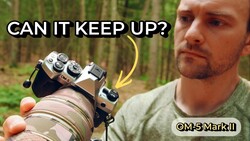
Coming to you from Todd DeWald, this thorough real-world comparison puts both lenses through about a month of field testing across forests, wetlands, grasslands, and coastlines, mounted to the OM-1 Mark II. DeWald shot everything from black bears to spring warblers and brought both lenses into a controlled studio test to compare sharpness at matched focal lengths, including pairing the 50-200mm with both the 1.4x and 2x teleconverters to give it the same reach as the 100-400mm. The 100-400mm offers a full frame equivalent of 200-800mm in one package with no swapping required, which is a genuine advantage when you're moving between mammals and small birds in the same session. But its variable aperture, ranging from f/5 to f/6.3, forced DeWald to push ISO higher or drop shutter speed in low-light forest and overcast conditions more often than he would have liked.
The 50-200mm f/2.8 delivered more consistent autofocus performance, a higher keeper rate, and slightly sharper images across most of the focal length comparisons, even with teleconverters attached. DeWald tested focus acquisition speed directly, timing both lenses pulling focus from minimum distance to a subject 5 meters away, and the 50-200mm was noticeably faster. Adding the 1.4x teleconverter brought the effective reach to around 560mm equivalent with no measurable hit to autofocus speed or image quality. At f/4 with the 1.4x attached, it still outperformed the 100-400mm in several of the low-light sequences, including piping plover shots along the coast and songbirds in dense canopy. The 50-200mm also has programmable function buttons on the barrel that let you set a focus distance preset, so if the camera hunts to the background, one button press snaps it back. The 100-400mm has no equivalent feature.
The studio comparison tells an interesting story. At 5 meters, the 50-200mm with the 1.4x teleconverter was sharper than the 100-400mm at 280mm. At 300mm, the 100-400mm edged ahead. At 400mm equivalent, the 50-200mm with the 2x teleconverter won at 12 meters by a visible margin, which is a surprising result given that the 100-400mm is covering that range natively. Where the 100-400mm earns its place is pure convenience. One lens, no accessories, full zoom range available instantly, and stabilization good enough to handhold at 400mm. That is a real advantage, and DeWald is clear about it. The trade-off is that you'll be working harder with your camera settings in anything less than ideal light. The 50-200mm is the more expensive option, and you'll need to carry and swap teleconverters in the field if you need reach beyond 400mm equivalent.
Check out the video above for the full studio comparison results, the complete side-by-side field photo breakdowns, and DeWald's final verdict on which lens fits which type of shooter.





Join the Fstoppers community for free
-
Post comments and join in the discussions
-
Browse the site ad-free
-
Share your work and get featured in the community
-
Compete in the photo contests for fun and prizes
2 Comments
Isn't 100-400 a rebadged Sigma lens? I wish you tried the Panasonic 100-400 lens instead.
I have had the Panasonic 100-400mm, but sold it because I found it to be fairly soft above 300mm. Also, the zoom ring is quite stiff to turn.