An 800mm equivalent lens that fits in a hand and a 1,000mm equivalent monster share the same day out on the Welsh coast. That kind of reach used to mean carrying gear you could barely lift, and the shift toward smaller sensors covering it is one of the more interesting developments in wildlife photography right now.
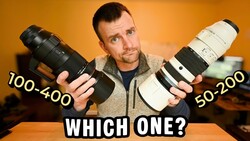
Shooting along the cliffs of northwestern Pembrokeshire, Ian Worth puts the OM System 150-400mm f/4.5 up against his own OM System 50-200mm f/2.8 fitted with a 2x converter. Both are micro four thirds lenses on the OM-1 Mark II, which means you double the focal length for full frame equivalency. The 150-400mm carries a built-in 1.25x converter, pushing its 400mm reach to 1,000mm equivalent. Worth uses that extra reach on razorbills nesting on Needle Rock, and the results are sharp enough to make the case on their own.
The comparison is the part worth paying attention to. Worth is upfront that this is not a scientific test, and that suits how most people actually shoot. He takes the same subject at 400mm on the big white, then again on the 50-200mm with the 2x converter, which lands at the same 800mm equivalent. Adding the 2x converter drops the 50-200mm from f/2.8 to f/5.6, so you lose a little light and depth of field, but the images hold up. The 150-400mm resolves a touch more detail, though at that distance the gap is smaller than the price difference between the two lenses would suggest.
If you have never leaned on micro four thirds for reach, the reason this setup works comes down to the crop factor doing something photographers usually fight against. A smaller sensor multiplies focal length, so a physically compact 200mm behaves like an 800mm on full frame once you stack a converter. Full frame shooters chasing the same reach end up with lenses that cost more, weigh more, and pin them to a tripod. Worth walks the entire headland with his gear, switches subjects on a whim, and reacts to birds gliding past the cliffs, which is the practical payoff of the format. This is also why he keeps three custom settings ready on the camera: C1 for landscapes, C2 for static birds, and C3 for birds in flight. His birds-in-flight setup runs around 1/2,500 of a second with auto ISO, and the bird detection on the OM-1 Mark II kept pace as herring gulls swept along the cliff edges.
The day is not only wildlife. Worth swaps to the OM System 12-40mm f/2.8 for landscapes and leans hard on the camera's computational features. The live graduated ND lets him drag a darkening filter over a moody sky, balancing a bright horizon against a foreground of twisted gorse and dead bracken without bracketing. He runs strength four with a soft graduation and pulls the whole exposure together in a single frame. The wind is strong enough to nearly knock him over during one shot, and the live ND gets a mention for moving water down at the beach, where a fast-rising tide cuts his shooting time short on some dramatic reef rocks.
What comes through by the end is how differently these two lenses fit into a day. Worth frames the 50-200mm as the opportunistic, do-everything option that covers landscapes, wildlife, and the small details you stumble onto. The 150-400mm is the specialist, the lens he would reach for when wildlife is the sole plan and reach is the priority. He does not name a loser, and given how close the image quality runs at overlapping focal lengths, that honesty is more useful than a forced verdict.
Give the video above a watch to see the razorbill shots, the side-by-side comparison frames, and how close the tide got before he made it off the rocks.

Join the Fstoppers community for free
-
Post comments and join in the discussions
-
Browse the site ad-free
-
Share your work and get featured in the community
-
Compete in the photo contests for fun and prizes
No comments yet