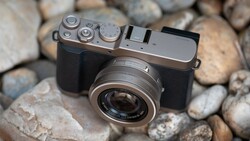
The Canon V1 and Panasonic Lumix L10 are two of the most interesting cameras in recent memory, and not because they're pushing sensor size upward. They're doing the opposite, and making a case that a Four Thirds sensor might be exactly what most people actually need right now.
Coming to you from Jimmy Cheng (RED35), this thought-provoking video makes an argument for a camera category Cheng calls the "creator camera," filmed on location near Big Ben in London. Cheng's core point is that terms like "hybrid camera" and "vlogger camera" have never really held up, because you can't shoot stills and video simultaneously in any meaningful way, and cameras marketed as hybrids have often delivered little more than basic continuous autofocus. The creator camera framing is different: a compact, Four Thirds sensor camera that handles stills, video, and self-facing content without the bulk of a larger system. Cheng shoots the entire video handheld on the V1 (which is pretty darn close in size to micro four thirds), and the footage itself functions as a live demonstration of his argument.
One of the more practical points Cheng raises is the noise performance gap between Four Thirds and full frame sensors, and why it matters less for video than most people assume. When you're shooting at a standard shutter speed for 25p video, like 1/50 of a second, you simply don't need to push ISO the way you might for stills. Modern noise reduction in post-production has also narrowed the gap considerably, even at ISO 6,400 or higher. Cheng shoots professionally for paying clients and says he uses Micro Four Thirds regularly in that context. He also points to the portability advantage: a smaller sensor means smaller lenses, a smaller body, and a genuinely pocketable kit. The DJI Pocket series cameras, which Cheng has used extensively, fall short here because they're locked to 16:9 and don't give you full-resolution stills across multiple aspect ratios. The V1 and L10 do.
Cheng also touches on the broader Micro Four Thirds ecosystem and why he thinks it's healthier than many assume. Chinese camera manufacturers joining the Micro Four Thirds Alliance, the strong reception of the OM System OM-3, and the arrival of cameras like the V1 and L10 all point in the same direction. Full frame still has real advantages in low light, and Cheng doesn't pretend otherwise. But for someone who wants a single, capable camera for travel, social content, and occasional professional-quality stills, the size and cost tradeoffs of full frame stop making sense. In the bonus section, Cheng notes the V1 held around 50% battery after an hour of continuous shooting, which is a genuinely useful data point if you're deciding between the smaller Canon battery and the larger professional-grade battery in the L10.
Check out the video above for the full breakdown from Cheng, including his hands-on impressions of the V1's autofocus, color science, and the specific shortcomings he noticed that he's saving for a dedicated review.





Join the Fstoppers community for free
-
Post comments and join in the discussions
-
Browse the site ad-free
-
Share your work and get featured in the community
-
Compete in the photo contests for fun and prizes
1 Comment
Maybe the biggest benefit of MFT sensors for small manufacturers is that they can actually buy them. As a small manufacturer making small batches of cameras, you simply can't go buy APS-C or full-frame sensors. So the choice isn't necessarily technical, but logistical... but once logistics force a particular choice on you, naturally, you'll market the benefits of the system.