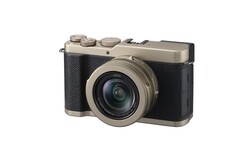
Compact cameras are making a serious comeback in 2026, and the Panasonic Lumix L10 is one of the most compelling arguments for why that matters. It pairs a 26.5-megapixel Micro Four Thirds sensor borrowed from the Lumix GH7 with a 24–75mm f/1.7–2.8 equivalent zoom lens in a body that's genuinely pocketable.
Coming to you from William Svrček of the The Hybrid Shooter, this thorough real-world video covers the L10 from sensor performance to handling quirks to video specs. Svrček notes that the L10 revives the multi-aspect ratio concept from the original Lumix LX100 series, where the lens image circle doesn't cover the full sensor. Instead, the camera selects which pixels to use depending on your chosen aspect ratio, landing at 20.4 megapixels in 4:3. That design keeps the body compact while still giving you a sensor that's roughly twice the size of a 1-inch chip. The sensor's dynamic range is described as the best available in a camera of this size, which is a meaningful claim given the competition from Sony's RX-series and Ricoh's GR IV.
The autofocus system is one of the more surprising parts of this camera. Panasonic pulled the 779-point phase detection system and processing pipeline directly from the Lumix S1R, which puts it in a different league from most compact cameras. Svrček reports a 100% hit rate tracking a subject walking toward the camera, and subject recognition performs at the level you'd expect from recent Lumix bodies. On the video side, the L10 shoots up to 5.6K 17:9 and 4K at up to 120p, with V-Log available and no recording time limit. That's a spec sheet that would have seemed unreasonable in a jacket-pocket camera even two years ago.
Image quality lands closer to a Fujifilm X100VI or Ricoh GR IV than to a smartphone or 1-inch compact, with strong center sharpness wide open and good corner performance once you stop down to around f/2.8 or f/4. Panasonic also introduced three new picture styles with the L10, including L Classic Gold, which Svrček singles out as a personal favorite across all cameras currently available. Flare is a real weakness when shooting directly into the sun, and there's no weather-sealing, but neither of those is unusual for this category. The body is available in black, silver, and a limited titanium gold edition, the latter of which adds a threaded shutter button and a matching gold menu color scheme. It uses the same BLK22 battery as the Lumix S5 II, rated at 420 shots, and Svrček got through a full day of travel on a single charge.
Check out the video above for the full rundown from Svrček including handling details, OIS performance, and how the Lumix Lab 2.0 app fits into the workflow.





Join the Fstoppers community for free
-
Post comments and join in the discussions
-
Browse the site ad-free
-
Share your work and get featured in the community
-
Compete in the photo contests for fun and prizes
2 Comments
The pricing of these cameras is just nuts. I can see something in the 3 digits but 1500 is way too much.