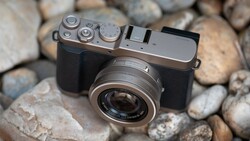
The Panasonic L10 lands in a genuinely narrow space: a compact camera with a large sensor, a zoom lens, and serious video features. If you've wanted something between a Ricoh GR IV and a full-blown mirrorless kit, this camera makes a real case for itself.
Coming to you from Lok Cheung, this hands-on video puts the Panasonic L10 through its paces across photo and video, comparing it directly to the Ricoh GR IV, the Fujifilm X100VI, and the Panasonic S9. The L10 uses a Micro Four Thirds sensor, which Cheung puts at the practical minimum for a camera that actually outperforms a smartphone in dynamic range. Its 10.9–34mm lens covers a 24–75mm equivalent range at f/1.7–2.8, a genuinely fast zoom for a camera this size. One surprise: Apple already supports the L10's raw files in the latest macOS and iOS, which Cheung notes is unusually fast for a brand-new camera.
Panasonic's autofocus history is a real factor here, and Cheung doesn't skip past it. The L10 has phase-detection autofocus, which is a meaningful upgrade over older Panasonic bodies, but AF tracking still behaves inconsistently without subject detection turned on. On most competing cameras, you can rely on continuous AF tracking without enabling subject detection separately. On the L10, Cheung found that tracking works well when you combine it with subject detection and manually place the focusing square on your subject first. That's a workable approach, but it's an extra step that other cameras don't require. The subject detection itself covers faces, eyes, animals, birds, vehicles, and bikes.
The L10 is the spiritual successor to the LX100 II, though Panasonic chose not to carry the LX100 name forward. The design is nearly identical, including the aspect ratio selector switch that lets you shoot in 4:3, 3:2, 16:9, or 1:1 without cropping in post. Cheung finds the quirk more charming than useful, since he prefers to crop later, but the switch on the L10 can now be reassigned to other functions like subject detection mode, photo style, or a zoom preset. That last option turned out to be more practical than expected: snapping between a 24mm and 35mm preset while shooting is genuinely fast. On the video side, the L10 shoots 5.6K in V-Log with a mic input, which the old LX100 never had. The stabilization is lens-based only, with no in-body sensor shift, and Cheung has real reservations about whether that's enough for handheld video work. The camera also carries a large battery shared with Panasonic's full frame and GH-series bodies, which pushed the SD card slot to an unconventional position on the body.
Check out the video above for the full rundown from Cheung, including his direct video comparison between the L10 and the full frame S9, and his take on whether the stabilization holds up for walk-and-talk shooting.




Join the Fstoppers community for free
-
Post comments and join in the discussions
-
Browse the site ad-free
-
Share your work and get featured in the community
-
Compete in the photo contests for fun and prizes
No comments yet