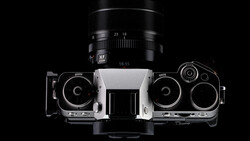
The Fujifilm X-T5 has been on the market for nearly four years, and the question of whether it still holds up is worth asking seriously. At 40 megapixels in an APS-C body priced well below full frame alternatives, it sits in an unusual spot.
Coming to you from John Branch IV Photography, this detailed long-term review covers Branch's nearly four years of shooting the Fujifilm X-T5 as a working wedding photographer. Branch has been shooting Fujifilm since around 2016, starting with the X-T2, and has stayed in the ecosystem through every generation since. He breaks down the X-T5 across several categories: size and price, image quality, ergonomics, reliability, and battery life. One of the more compelling points early on is the cost of the full system. Branch notes he was able to sell his Canon gear and buy two bodies and four lenses for roughly the same price, and he walks through his current kit, which includes the Fujinon XF 18mm f/1.4 R LM WR, the Fujinon XF 33mm f/1.4 R LM WR, and the Fujinon XF 56mm f/1.2 R WR, among others. The difference between paying roughly $900 for a lens versus $3,000 to $4,000 adds up fast when you're running a business.
The image quality discussion is where things get interesting. The jump from 26 megapixels on older X-series bodies to 40 megapixels on the X-T5 gives Branch meaningful cropping flexibility in post, which matters when you're shooting weddings and don't always have time to reframe. He also addresses the ISO question directly. On the X-T3, he was uncomfortable pushing past 2,000. On the X-T5, he's shooting confidently up to 6,400. Branch also uses the in-camera crop function at weddings, pairing a pancake lens with a punch-in to get a tighter composition while retaining the full raw file. He even pairs the X-T5 with the Fujifilm GFX system at weddings and says the output holds up well side by side.
The ergonomics section covers how Branch actually has the camera configured for fast-moving situations, and it's a different setup than most people expect from an X-series body. Rather than leaning on the classic film-style top dials, he works primarily with the front and back dials for shutter speed and ISO, and has reprogrammed several buttons for functions like TTL lock and in-camera punch-in. He's also added a Fujifilm metal grip and a soft shutter release button. The camera separates photo and video settings independently, so switching between modes doesn't scramble your exposure values. Branch has also never sent either of his X-T5 bodies in for repair, and when his Fujifilm GFX 100RF failed on a job, the X-T5 was the backup that kept him working.
Check out the video above for the full rundown from Branch, including his complete button layout, how he uses slow-shutter handheld shots during wedding receptions, and his take on whether you should still buy the X-T5 in 2025.





2 Comments
This camera is dedicated to the losers who think 24 MP in full-frame is ok.
This was my first camera after leaving Nikon. I really wanted to get into Fuji but didn't want to get into medium format but I ended up in medium format anyway but I can only speak highly of the XT5 and it made me a lot of money selling landscape photos and doing events as well. I only just sold it about three weeks ago actually after purchasing a Q3 camera which I've always wanted but I can only speak highly of the XT5 great image quality but you do need to put good glass on it. You need the red badge lenses or Viltrox lenses