
If you only had one bag that can fit your camera gear comfortably, can let you bring it every day, can withstand less-than-ideal environments, and can adapt to other things when you don’t need your camera, this might be one to consider.
The WANDRD PRVKE backpacks have been well loved for their versatile designs that can fit low-key, minimalist-loving photographers and those who love standout colors that have distinct personality. The fourth generation of the PRVKE backpack offers the same durable build but now with more efficient features that prioritize your on-the-go workflow.
The Wandrd Prvke V4
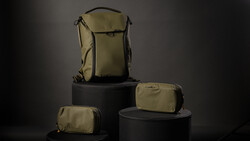
The Prvke backpack line is probably the most expansive one in the market, with the most size/capacity options and color options as well. It comes in four sizes, namely 15 L, 21 L, 31 L, and a massive 41 L option. With Version 4 of the bag, it now comes in seven different color options, with “Rhone Burgundy” and “Atacama Clay” joining the original five color options. Personally, I picked the 21-liter version, as it seems to be the most comfortable size for a day hike but can still carry a lot of camera gear.

The exterior is covered in P900D tarpaulin fabric surrounded by N840D ballistic nylon that makes the bag nearly impenetrable to rain and dust. This is in combination with weather-resistant zippers and heavy-duty pullers. Of course, it is not a bag that would protect your gear from being submerged in water, but light to moderate rain should be no problem at all.

The entire bag comes in at 17 x 11 x 5.5 inches with the top rolled entirely to its minimum capacity. This rolltop is secured by a large metal hook that latches onto a ladder of loops, allowing for multiple options for height and capacity. One of the new features of the PRVKE V4 is a new quick-access zipper at the back of the rolltop that allows for easily reaching into the top section without having to open the entire top. This is right by the smaller zipper that serves as a “hidden” pocket for small personal items that might need to be reached quickly. All these, of course, are under the large top handles that magnetically latch above the rolltop and give the PRVKE backpacks their iconic form.

On one side of the backpack is a side zippered access that allows the user to easily reach into the bottom part of the bag and can be aligned with the camera cube so that it gives quick access to a camera or lens that was intentionally placed by the zipper. On the inner surface of the access door is also a smaller zippered pocket that can be used to store batteries and/or memory cards. On the other side is an external pocket that can fit either a large water bottle or the bottom part of a travel tripod. This pocket has an elastic mesh that allows it to expand once the bottom zipper is opened to make more room. It is notable, though, that one can only carry either a water bottle or a tripod and not both at the same time unless you have accessory straps that can hold the tripod on the front surface of the bag. Perhaps another mesh pocket can be on the external surface of the side door just in case one would want to make use of both sides.

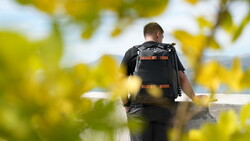
On the posterior part of the bag is a heavily padded, breathable surface that provides comfort for the user even during long hours of carrying. This padded surface is surrounded by the large zipper that opens up the main access to the bag, giving full view of the entire compartment. In the middle of this padded rear panel is a nylon strap that allows the user to stow the backpack onto the handles of a roller bag whenever necessary. The shoulder straps are lined with the same padding as that of the rear surface and come with multiple loops for accessory hooks and carabiners. On the distal end of the shoulder strap is a small rail where the adjustable chest strap can be attached on both sides to provide a better weight distribution. However, it is apparent that when the bag gets quite heavy, the chest straps can slide down. This can probably be improved if the attachment points had more friction or fixed anchors to keep them in place.

Once the main zipper is opened, on the inner surface of the rear panel are two sleeves that can fit both a 13.5 x 9.75-inch laptop and a 12.5 x 9.75-inch tablet. They can technically be used at the same time; however, it would still depend on the thickness of whatever is in the main compartment. On top of the said sleeves are zippered pockets of different sizes that can be used to store smaller accessories or small personal items.

The main compartment is an open-layout compartment that can either be used on its own when carrying non-fragile items like clothes or can be used with any kind of bag insert or cube for carrying camera gear and other fragile objects. WANDRD offers a variety of camera cubes that line up with the side access points; however, other options in the market are also compatible as long as they fit inside the compartment. Since I got the photography bundle, it came with the WANDRD Essential Camera Cube that can hold 1–2 camera bodies and 2–3 lenses, depending on the size. Personally, this is a perfect fit already for quick hikes while still leaving room on top for some extra clothes, other accessories, and a filter pouch. If you’re using a larger camera cube, then the thin sheet on the upper part of the main compartment can be opened using a zipper that would widen the view into the entire compartment while still keeping the bag’s form.
User Experience

The WANDRD PRVKE V4 is definitely one of the most comfortable camera bags I’ve used, not just because of how comfortable the rear and shoulder padding are but also because of the reliability of the fabric when it comes to being exposed to moisture and dirt. The 21L version carries a comfortable amount of gear and personal items but can still be expanded using the rolltop to bring more if necessary. The addition of the quick-access zipper on the rolltop compared to the V3 is an example of a small detail making big, impactful changes, as it makes sense that one doesn’t always need to fully open the bag, especially when just reaching in for a small object.
The size of the 21 L version also makes it a backpack that still makes sense to use for everyday carry even when commuting in the city. Whether or not one is carrying camera gear, the backpack can be a comfortable option to bring around a laptop, tablet, extra clothes, or even some work documents if necessary. The large top handle also comes in handy when an alternative carrying method is necessary or when on a train or subway where one has to remove their backpack for the sake of space.

Even with its conservative size, it can fit a camera body, a standard lens, and a 200-600mm telephoto lens inside.

Overall, this versatile backpack that comes in many sizes and colors proves to be more than just a (slightly) shiny, colorful bag but instead a feature-packed, all-around carrying solution.
What I Liked
- Highly durable and weather-resistant exterior
- Intuitive pocket and access placement
- Abundance of color and size options
What Can Be Improved
- Dual side pockets
- Improved chest straps


Join the Fstoppers community for free
-
Post comments and join in the discussions
-
Browse the site ad-free
-
Share your work and get featured in the community
-
Compete in the photo contests for fun and prizes
3 Comments
Another good "cold climate" bag, but useless for warm climates. They put foam on the back, cover it with open mesh and call it "breathable". Hello... skin doesn't breath. Skin sweats to cool the body by evaporation. Sweat will evaporate only if there is a free flow of fresh air. External framed backpacks were the best for this but they have disappeared. Suspended mesh backpacks come close. The best I've seen is the Deuter AC system.
I judge the integrity of a review of these packs by whether it reveals that "tarpaulin" is not a canvas construct, but a large molded panel of what appears to be vinyl -does not breathe. I bought one under the incorrect impression that I was going to have a bag which was more or less flexible, but stout. I challenged to their support line the misleading use of the term tarpaulin which they apparently have adopted without reference to any other similar use of the word. Until I bought this, I had never seen a "tarpaulin" which wasn't canvas, sometimes woven plasti mesh.
I bought mine a few years baxck and the design may have evolved. If so, it owuld be good for Wandrd to explain.
I can see how this may actually be a good design for the right user, but not for me. It's gimicky, has features which look good unitl you actually get out in the field and try to use them.
Maybe this review needs a PS.
I have had the V1 31L for almost 10 years and it's been old reliable the whole time. Super durable. It's only got one tiny worn spot on the lower corner where I guess it was rubbing against my belt. Used it for international travel and as EDC. As some folks mentioned, it's not as flexible as a typical bag but I think that's the tradeoff for durability. Yes, the back could be more breathable, but I lived in Chicago for most of that so it wasn't a huge issue.