

Every Leica shooter has a dream lens they would love to buy. Price is usually the obstacle, but sometimes that lens is not only expensive but rare as well. Perhaps no other Leica lens is more sought after than the Summilux-M 35mm f/1.4 with the word “Aspherical” written in full on the rim. It is unlikely you will ever own this lens, but there is an alternative option in the form of the Light Lens Lab 35mm f/1.4 Aspherical “11873”.
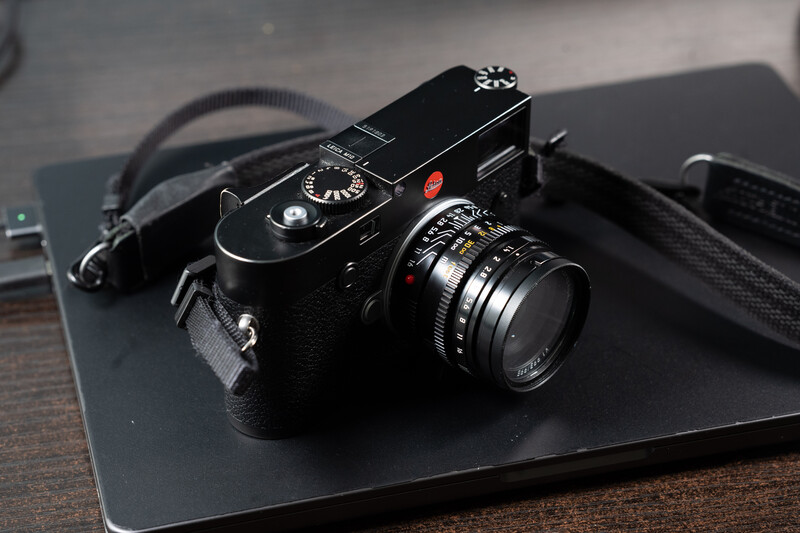
Recently, Light Lens Lab has been producing recreations of classic Leica lenses. Among these recreations are a 35mm f/2 and a 50mm f/1.2 ASPH “1966” recreation. Of most interest to me was the release of the Light Lens Lab 35mm f/1.4 Aspherical Lens, which is a recreation of a famous Leica 35mm Summilux f/1.4 commonly known as the 35mm Double Aspherical. This lens is legendary among Leica fans, and like all legendary tales, the true story may differ a bit from commonly shared lore. But since the lore is more interesting, we will stick with that for this article.
The Leica 35mm Double Aspherical was produced for about 4 years, beginning in 1990, and featured 2 aspherical elements. I’ve been a Leica shooter for 13 years now, and I still can’t explain the purpose of an aspherical element, but I know Leica lenses that have aspherical elements indicate this in writing on the lens rim, and users expect these lenses to have superior performance to lenses that don’t have an aspherical element. The 35Lux with 2 aspherical elements was produced for about 4 years beginning in 1990. Leica has long been known for creating outstanding optics in a small form factor. Aspherical elements were particularly difficult and expensive to produce at the time, and the elements used in this lens were hand-ground. One likely apocryphal tale claims that there was only one Leica master technician capable of grinding these elements correctly, which made the double-aspherical-element lens expensive and slow to produce. Leica later replaced it with a design using a single aspherical element. Roughly 2,000 examples of the double-aspherical version are generally reported to have been produced, making surviving examples highly collectible and capable of commanding five-figure prices on the used market. The double-aspherical version is the only 35Lux to have the word “Aspherical” written out in full, with later versions displaying “ASPH” in its place. This information may be useful should you ever come across an unknowing seller with a vintage 35mm Summilux at a yard sale.

When Light Lens Lab announced that they were recreating this lens, there was intense speculation on Leica forums about how close Light Lens Lab could come to recreating the look of the original Leica version. Fortunately, perhaps, for Light Lens Lab, the original is so rare that hardly anyone has access to it to perform a side-by-side comparison. Therefore, this article will not address that most basic question. I will instead compare the Light Lens Lab 35mm f/1.4 to my beloved Leica Summilux-M 35mm f/1.4 ASPH that I use for about 90% of my Leica photographs.


Photography by John Ricard. Leica M10 Monochrom
When I am evaluating a lens, my first concern is: how sharp is it? Or, more specifically, how sharp is it wide open, as I tend to shoot just about all of my Leica lenses wide open. The first time I heard a Leica shooter mention their love of shooting everything wide open, it sounded illogical to me. Why would you use the same aperture for every photograph rather than determining what setting makes sense for the scene you are photographing? My mindset changed when I acquired the 35mm Summilux (hereafter referred to as the 35Lux). I love the 3D pop and shallow depth of field of the 35Lux, and I am fine with having that look on virtually all of the photos I capture on my M10.


Photography by John Ricard. Leica M10 Monochrom
It is worth noting that my Leica cameras are used for my personal work. And while I try to incorporate these cameras into my professional work whenever possible, the bulk of my professional work is captured on a pair of Nikon Z9s. For my paid work, I use whatever camera settings are best suited to that scene. When I am shooting for myself, however, I love the challenge of nailing focus wide open on my manual-focus Leica rangefinder. I miss focus regularly in my personal work, but that only serves to make me appreciate the images where I do nail focus. So although 90% of my Leica shots are captured at f/1.4 on my 21mm Summilux and 35Lux, only a fraction of the total images I take each year are captured wide open.


Photography by John Ricard. Leica M10
You pay substantially more for a Leica lens that opens to f/1.4 than you pay for one that opens to f/2. If you will not be shooting the lens wide open most of the time, there isn’t much point in spending the extra money for that setting. I expect every Leica lens to excel when shot wide open, and those expectations carry over to third-party lens offerings like those from Light Lens Lab. The technical quality of my personal work is of importance only to me. These photographs are posted on my Instagram account where they generate little to no traction. But it’s called personal work for a reason, and if I want those images to be super sharp, then that is my prerogative.


Photography by John Ricard. Leica M10.
Over 90% of my Leica photos are captured on the 35Lux, despite owning the aforementioned 21mm Summilux, a 75mm Leica Summarit, a 135mm f/3.4 APO-Telyt lens, an adapted Helios 44-2, and an adapted Nikon 58mm f/1.4. My lens is about the fifth version of Leica’s 35Lux, depending on how you count the iterations. I am so fond of this focal length that I am planning on buying Leica’s recreation of the first iteration, commonly known as the 35mm Steel Rim, which I reviewed in an earlier article. The lens was recreated as part of the Leica Classic Line, which also includes a recreation of the first version of the 50mm Summilux and the first version of the 50mm Noctilux.

Although I spent over 2 weeks with the LLL 35mm AA, the question I never resolved was: am I looking for the LLL lens to render the images the same or differently than my 35Lux? My 35Lux costs $6,900, while the LLL 35mm AA sells for $1,399. If the lenses are indistinguishable, that is a great thing, right? But should we consider the LLL 35mm AA to be a recreation of Leica’s 35mm AA if it renders scenes just like my contemporary 35Lux? So I focused on the simple question: do I like how images look when they are created using the LLL 35mm AA?

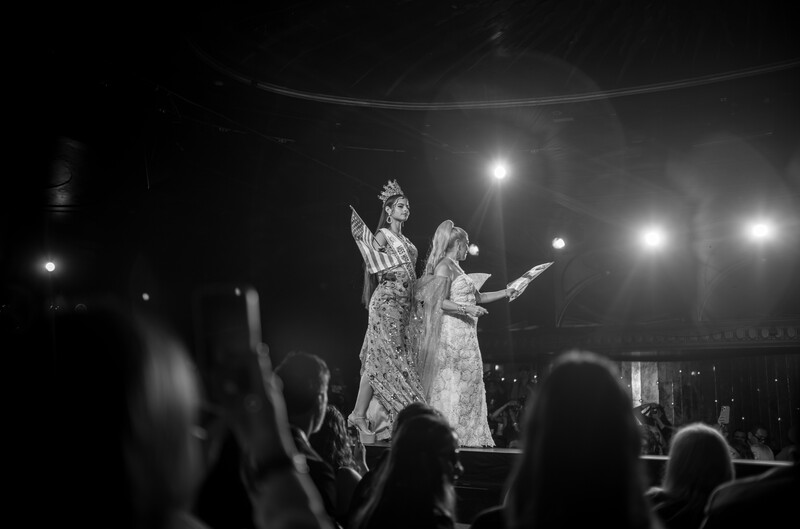
I took the lens to a few NYFW events, and when time permitted, I did some back-to-back shots with the LLL and Leica lenses. These tests are of questionable value since the lighting, position of my subject, or the scene itself had changed slightly in the time it took me to change lenses. The M10 is a manual-focus camera, and when shooting wide open, it is always possible that a focus error is the reason for how the subject or background has been rendered. I usually shoot in auto white balance, and as I pointed out in my article on the M11-D, Leica's white balance often varies from shot to shot, so you can't attribute color differences in my image samples to the characteristics of the lenses. I’m not interested in doing more formal testing, nor am I willing to use my add-on Visoflex EVF to ensure precise focus, because that isn’t how I normally use the M10. I am not one to examine chromatic aberration or seek out MTF charts, nor am I willing to photograph a brick wall to test field curvature. I am a portrait photographer, and I judge images subjectively by how they look.

My assessment is that the LLL 35mm AA is outstanding. Sometimes the images are indistinguishable, and sometimes they are not. When there is a difference, the LLL 35mm AA has a more dramatic falloff between the in-focus and out-of-focus elements in a scene. At times, there is a slight glow to images from the LLL 35mm AA, but not as dramatic as that from the 35mm Steel Rim. The LLL lens also focuses to 0.7 m, which is closer than the 1 m focusing distance of the Steel Rim. While I see the 35mm Steel Rim as a nice addition to a kit that contains the 35Lux, I see the LLL 35mm as a lower-cost replacement for the 35Lux since it draws a scene more like a 35Lux than the 35mm Steel Rim.

There are quite a few images accompanying this article, but I caution you against reading too much into these images—even the ones that show a direct comparison of the same scene photographed by the LLL 35mm AA lens and the 35Lux. Some images have been processed using David Farkas' Leica M10 Monochrome preset, which adjusts several elements, including sharpness, texture, and clarity. Other images may have had a slight brightness or cropping adjustment. When I'm photographing people, things like camera-to-subject distances and lighting may change between the time I take the first photo with one lens and the second photo with a different lens. You will have to look elsewhere for a more scientific comparison. It is best to view the images holistically and ask yourself: do you like the look of the shots taken with the LLL lens? And if you can’t see a difference between two lenses when one costs almost five times as much as the other, then the answer about which one you should purchase should be obvious.

When David from LLL reached out to me about reviewing this lens, I told him that I chose to shoot only Leica lenses on my M9, M10, and M10 Monochrom and that I’m willing to write about the lens, but my article is likely going to say that I don’t plan on buying the lens. He sent it anyway, and I saw that as a show of faith in the product. The LLL 35mm AA looks and feels great and has the same font, coloring, size, and operation as a Leica lens. At times, it even renders the scene in a way that is more pleasing to my eyes than my 35Lux. Logically speaking, if you are in the market for an M-mount 35mm f/1.4 lens, the Light Lens Lab offering is the way to go. But if you’re like me and you like seeing the letters “L-E-I-C-A” on your lens in the same manner that you like seeing a red dot on your camera body, then pick up a 35Lux instead.
Or, you can wait and see whether Leica eventually recreates the 35mm Double Aspherical lens as part of its Classic Line.









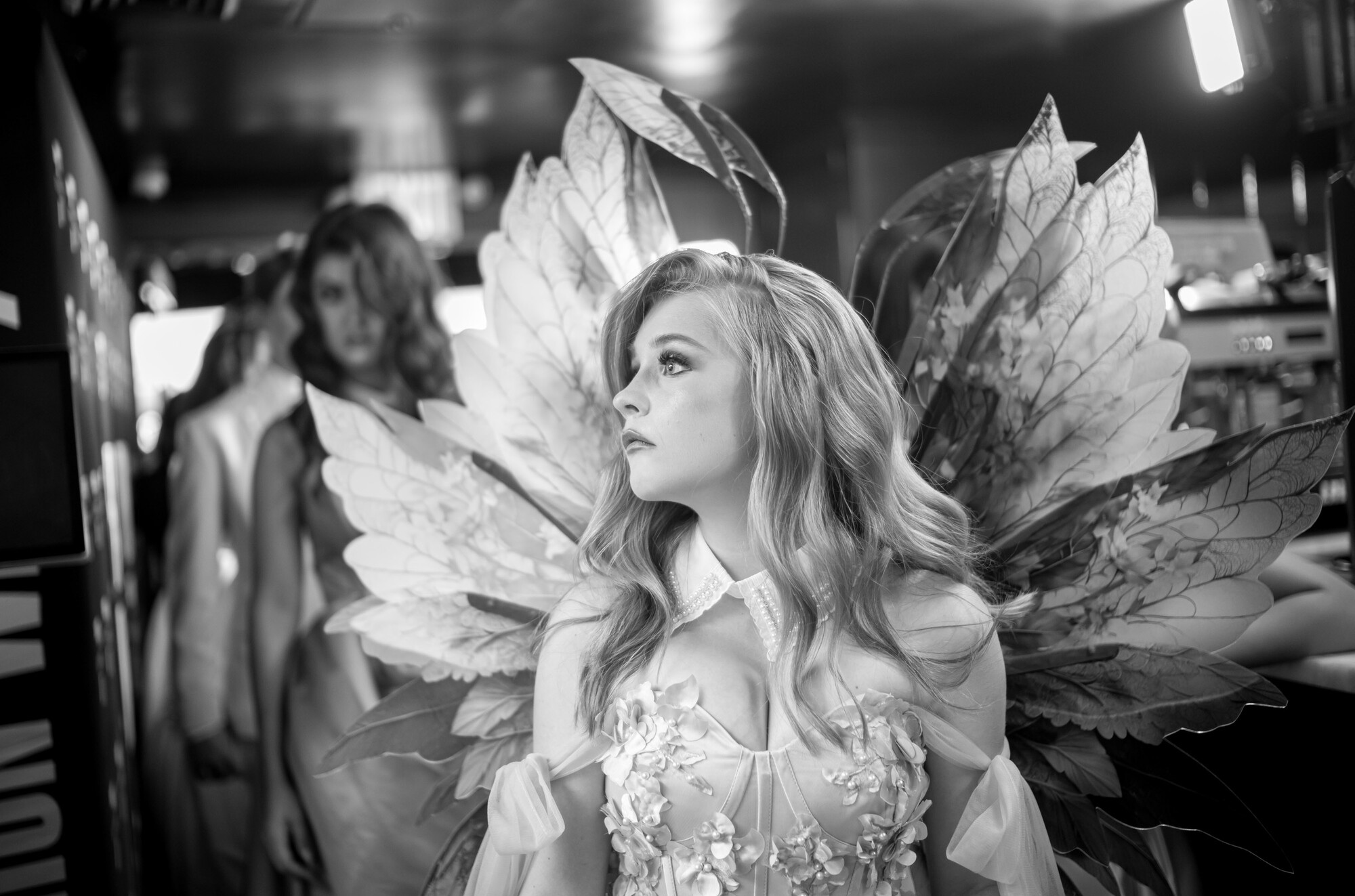


Photography by John Ricard. Leica M10 with Light Lens Lab 35mm AA




Join the Fstoppers community for free
-
Post comments and join in the discussions
-
Browse the site ad-free
-
Share your work and get featured in the community
-
Compete in the photo contests for fun and prizes
No comments yet