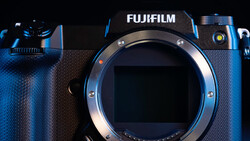
The Fujifilm GFX100RF medium format camera aims to put medium format power into a smaller, lighter body. It’s a camera built to bridge the gap between professional and compact, but its design choices leave many questioning which side of that line it really sits on. You get incredible resolution and build quality, but with limitations that can make real-world use tricky in certain situations.
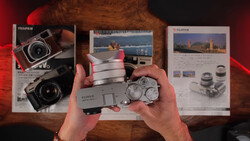
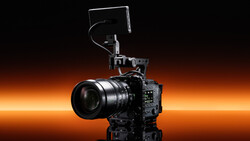
Coming to you from Dylan Spitz, this thoughtful video puts the new Fujifilm GFX100RF medium format camera through an extended field test on a four-day trip across Washington’s Olympic Peninsula. Spitz pushes the camera through fog, rain, sunsets, and long drives, testing how it performs beyond a studio setup. The body feels familiar if you’ve used the X100 series, and surprisingly compact for a medium format system. The image quality, as expected, is exceptional: sharp, clean, and full of dynamic range. But the lack of in-body stabilization limits it for handheld video. Spitz uses a Sony a7S III and a DJI Osmo Pocket 3 for video instead, showing how the GFX100RF is clearly still focused on still photography.
One interesting addition is the aspect ratio dial, a physical control to switch between formats. It’s a smart touch, except it only works in JPEG mode. Shoot in raw, and it becomes cosmetic. You can enable raw plus JPEG to make it function, but that means filling your SD cards with massive dual files. The crop lever has a similar limitation, previewing alternate focal lengths like 35mm or 50mm but not saving them to the raw file. These quirks raise questions about who this camera was designed for. At nearly $6,000, features like these should integrate fully into a raw workflow. Spitz’ frustration feels justified.
Key Specs
-
102 MP 43.8 x 32.9 mm CMOS sensor
-
Digital image stabilization (video only)
-
35mm fixed lens (28mm equivalent), f/4 to f/22
-
Native ISO 80–12,800 (expandable to 40–102,400)
-
DCI 4K and UHD 4K recording at up to 720 Mb/s
-
Dual SD/SDHC/SDXC (UHS-II) card slots
-
3-way tilting 3.2" touchscreen LCD
-
Wi-Fi 5 and Bluetooth 4.2 connectivity
-
1.6 lb body weight (with battery and media)
-
Weather-sealed when the included hood and adapter are attached
Later in the trip, Spitz tests low-light performance, noting that even ISO 3200 files are impressively clean. The f/4 lens, though sharp, forces compromises in dim light without stabilization. You either raise ISO or bring a tripod, something that cuts against the idea of portability. The GFX100RF includes what’s needed for weather-sealing in the box, but even with that, it’s not a camera you’d want to push too far into rough conditions without extra care.
Autofocus performance holds steady with Fujifilm’s X100 line: accurate for everyday use but not for fast action. Animal eye detection works well in calm settings, and the ergonomics encourage slow, intentional shooting. In short, the camera’s technical capability is unmatched, but it demands a deliberate pace. Spitz’s verdict lands somewhere between admiration and confusion: incredible image quality, but an unclear purpose. It’s not quite the small carry-anywhere camera it appears to be, nor the full professional tool its price implies.
Spitz questions whether Fujifilm aimed the GFX100RF at the right audience. Its size and simplicity suggest it’s for enthusiasts, yet its cost and limitations make it impractical for most nonprofessionals. The missing in-body stabilization, slow f/4 aperture, and reliance on JPEG for some controls don’t align with what working professionals expect from a $5,600 body. It’s a beautiful piece of engineering, but one that leaves you wondering if it’s designed more for admiration than practicality. Check out the video above for the full rundown from Spitz.



Join the Fstoppers community for free
-
Post comments and join in the discussions
-
Browse the site ad-free
-
Share your work and get featured in the community
-
Compete in the photo contests for fun and prizes
1 Comment
It's so tiring to hear the same, sometimes incorrect and useless statements about the GFX100RF over and over again. And then there's the completely unnecessary fuss about the price. Of course, the latter doesn't just apply to the GFX100RF. No one is forced to buy this camera. If you decide to buy it, you pay the asking price – that's it. No influencer has the knowledge to determine whether the asking price for the camera is too high or too low.
The GFX100RF has a 102 MP sensor. That's neither good nor bad, it's just the way it is. And when you use this camera, you're dealing with 16-bit RAW files of 100–120 MB. JPGs are a minimum of 1–2 MB in size. If you're overwhelmed by the amount of data, then you shouldn't bother with the GFX100RF; you know that beforehand.
When I use the GFX100RF and take a shot with RAW using the digital teleconverter, I see exactly this section in Capture One. The rest of the image is darkened but still there. It's also nice that inexpensive SD cards can still be used instead of expensive CFexpress cards.
People keep harping on about the fact that no IBIS and/or lens with an aperture of 2.8 has been built in. I didn't know how many influencer engineers there are out there who know better than Fuji engineers what is possible. Fuji is well aware of this shortcoming. If it had been technically possible at the moment, Fuji would have done it. It's a shame that it's not yet possible, but that's no reason why the camera shouldn't deliver impressive image quality.
Who is this camera suitable for? For those who buy it!