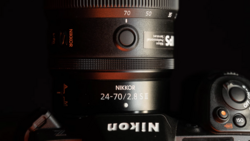
A 24-70mm f/2.8 is the lens that ends up on your camera when the job has no margin for mistakes. If a new version changes how it handles, focuses, and holds up in rough weather, that affects what you bring, what you leave behind, and what you trust when the light gets weird.
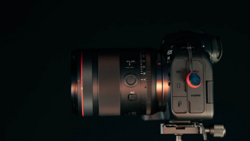
Coming to you from Dustin Abbott, this practical video puts the Nikon NIKKOR Z 24-70mm f/2.8 S II lens under pressure. Abbott starts with what usually feels boring about this range, then points out what actually changed: internal zoom, less weight, and a new focus motor that Nikon has mostly kept for longer lenses. He also frames the central problem fast: the lens is priced at $2,800, which puts it above several direct rivals. The internal zoom alone changes how the lens behaves on a gimbal, and that affects whether a “standard zoom” stays standard once video work enters the mix.
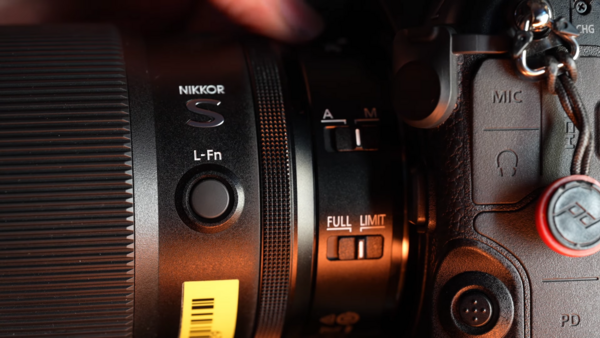
Abbott spends real time on physical design choices that you will notice immediately in daily use. The lens drops the OLED display from the earlier version and replaces it with another function button, which matters more than it sounds if you switch between horizontal and vertical shooting. Nikon also adds a click and de-click option for the control ring, so aperture changes can be stepped for stills or smooth for video without hacks. He flags a focus limiter that works in an unusual way, limiting close focus behavior rather than giving a simple near/far cutoff, and he is blunt about not finding much value in it. You also get a hood access window for rotating filters, which is the kind of small change that saves time when you are adjusting a variable ND mid-take. There is one handling complaint worth hearing: the zoom action can feel tighter and less even than expected, especially near 70mm.
Key Specs
-
Focal length: 24 to 70mm
-
Maximum aperture: f/2.8
-
Minimum aperture: f/22
-
Mount: Nikon Z
-
Format coverage: full frame
-
Minimum focus distance: 9.4 in (wide) to 1.1 ft (tele)
-
Maximum magnification: 0.32x (1:3 reproduction ratio)
-
Optical design: 14 elements in 10 groups
-
Aperture blades: 11, rounded
-
Focus: autofocus
-
Image stabilization: none
-
Filter size: 77 mm
-
Weight: 1.5 lb (675 g)
Autofocus is where Abbott’s report gets interesting, because it is less about charts and more about behavior in annoying conditions. He describes Nikon’s SSVCM system as essentially instantaneous and essentially silent, then backs that up with examples that mirror real work: eye detect holding through snow, quick jumps from near to far, and clean transitions during touch-to-focus pulls. He also calls out focus breathing as basically nonexistent, which is a quiet win if you do any rack focusing where framing shifts are unacceptable. The lens does not include lens-based stabilization, so if the camera body lacks in-body stabilization, you will feel that gap quickly.
The pricing section is where you will want Abbott’s full take, because he does not pretend the number is easy to swallow. He compares it against alternatives like the Canon RF 24-70mm f/2.8 L IS USM and the Sony FE 24-70mm f/2.8 GM II, then shifts to the more uncomfortable question: what you give up when you spend less. He also brings up value-minded range substitutes like the Tamron 28-75mm F/2.8 Di III VXD G2 and the Tamron 35-150mm F/2-2.8 Di III VXD, and that comparison lands differently if this is the one lens that stays on the camera most days. There is also a revealing stretch on optical behavior, including distortion that stays more linear than some competitors like the Sigma 24-70mm F2.8 DG DN II | Art, and where sharpness shifts across the frame at different focal lengths. Check out the video above for the full rundown from Abbott.
Join the Fstoppers community for free
-
Post comments and join in the discussions
-
Browse the site ad-free
-
Share your work and get featured in the community
-
Compete in the photo contests for fun and prizes
1 Comment
I got a stellar 1 week old deal ($1450) on a Z 24-70 mk1 a couple of years ago. Nikon have really started gouging its users and for me that became noticeable when I had to grab a Z 35mm 1.2 which cost $500 more than the Z 85mm 1.2 and since then it has not let up. Unless I have to absolutely have a specific lens for a paid job I will wait until I can pick up a faultless secondhand copy of whichever lens I need from nikon.
Most of my work in 2025 was shot on primes so $2800 for a 24-70 2.8 gets a hard pass from me.
Now if nikon would bring out a 35-150 2.0 or a 200 2.0/1.8 I would definitely be interested and price in these cases could take a back seat.