A lens like the Sigma 35mm f/1.2 DG II | Art isn’t just about getting more light, it changes the way depth and perspective sit together in a single frame. If you shoot people, street, or any scene where the background needs to fall away without turning into mush, 35mm at f/1.2 can be the difference between a photo that feels ordinary and one that has bite.
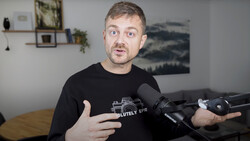
Coming to you from Alex Barrera, this opinionated video puts the Sigma 35mm f/1.2 DG II | Art under real use instead of lab charts. Barrera has shot it on Sony E and L Mount, and he talks about why the “rendering” looks different than most 35mm primes when you stay wide open. A big part of the pitch is that you get a wide angle view without giving up the shallow depth of field that usually pushes you toward longer focal lengths. He also spends time on how it handles on a modern L Mount body like the Leica SL3-S, including how the lens feels in day-to-day carry, not just on a tripod.
The price talk is where the video gets useful, because it’s not framed as “cheap or expensive,” it’s framed as tradeoffs you actually live with. He also calls out the Viltrox AF 35mm f/1.2 LAB FE as the lower-cost alternative he hasn’t personally used, while still noting the size and weight question. On Sony E mount, the comparison gets sharper, because the Sony FE 35mm f/1.4 GM is smaller, easier to live with, and often far cheaper on the used market. If you’ve been tempted to chase f/1.2, this is the kind of decision tree that saves you from buying twice.
Where things get more interesting is image behavior you can’t solve with spec sheets, like what you accept and what you correct. Barrera says the lens is sharp at f/1.2, sharp enough that he compares it favorably even when the GM is at f/1.4, but he doesn’t pretend it’s flawless. The big “depends on you” point is vignetting wide open and how profile corrections can change the character of the frame in Adobe Lightroom, especially if you’re used to flattening everything to neutral. He claims distortion is basically a non-issue. You’re mostly deciding how much corner falloff you want, not fixing bent lines. He also gets into why this lens can stop down and hang with more traditional premium primes. Check out the video above for the full rundown from Barrera.

Join the Fstoppers community for free
-
Post comments and join in the discussions
-
Browse the site ad-free
-
Share your work and get featured in the community
-
Compete in the photo contests for fun and prizes
No comments yet