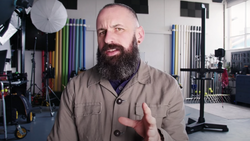
AI has caused a ton of excitement and controversy in the last year, and the photo industry has not been immune to it. This has led to many creatives wondering how the role of the professional photographer will evolve under the shadow of AI. This insightful video essay features an experienced commercial photographer discussing his thoughts on the topic.
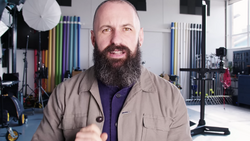
Coming to you from Scott Choucino of Tin House Studio, this interesting video essay discusses the future of professional photography with the evolution of AI. I think Choucino makes some interesting points regarding other groundbreaking technologies, such as the Brownie camera and the shift from film to digital. All of these were seen as death knells for the industry by many, but, as we know, photography continued to grow and thrive. Now, that is not to say that these did not have an impact, and surely, they even put some professionals out of business. However, the photography industry is not unique in that sense, and the onus is on professionals to read the industry and adapt as needed. While not to diminish the impact AI will have on the industry, there will always be the need for photographers in many capacities. Check out the video above for the full rundown from Choucino.
Join the Fstoppers community for free
-
Post comments and join in the discussions
-
Browse the site ad-free
-
Share your work and get featured in the community
-
Compete in the photo contests for fun and prizes
2 Comments
Whilst I like Scott and his videos, and I applaud his optimism... I think he's got the wrong end of the stick.
The previous "photography-ending" worries of the past were quite different to the perils of AI. Those earlier things were designed to make photography cheaper, faster, more accessible. But AI isn't here to do that. It is here to replace photography in its entirety.
Scott works in a narrow filed which offers him good fortune of well funded clients, and that market will no doubt shelter him more than other photographers.
Where AI will sneak in, is with clients who struggle to find funding for quality photography. They'll weigh up the current limitations with AI (and they're reducing every day), against the costs of a photographer, props, post production, licencing and years of skill... and AI suddenly starts to be attractive.
We've seen this already. Clients will choose the "good enough" is good enough approach with their iPhones, and whilst we'll be horrified of their results, they will decide the cost benefits are worth it. And let's face it, there are now far too many "pro" photographers doing a rubbish job, that our collective image as talented artists has diminished.
But with AI getting better and better, I'm seeing images produced that exceed what many photographers could achieve - particularly when you need to add in locations, lighting, models etc. So AI offers price advantages and it's starting to look very good indeed.
Now there will be areas where AI will struggle to compete. Things like weddings, events, sport, news etc. But (certainly in the UK), these are already areas that are having to compete against keen amateurs and weekend warriors.
But wait there's more... We've seen how AI creates headshots (I'm not a fan), based on less than perfect snapshots of a person. Now imagine AI's ability to scan an image from a wedding, and now it "re-draws" that image, but with photographic style and perfection. Maybe feed it some images of the bride and groom for guidance, maybe snaps of the guests for reference - and now it can do the same as we've seen AI do for product shots.
I'm a pro photographer and although I love some of the images that I've seen AI create, I do fear there will be a time where photography will be seen in the same way that oil paintings are seen today - artistic luxuries that can be appreciated but rarely commissioned.
We'll have people taking snap shots and then popping them into an AI "perfector" which will generate a picture-perfect version. Sure, to the purists this will be awful, but the commercial world and the buying public aren't by and large, purists. It is why people buy mass produced prints from IKEA. And after enough time, the purists will fade away to make way for a new generation who don't understand.
For commercial success there is a balance. We don't need ALL the work to fade away to become cost-ineffective. We just need enough business to disappear for that all-important break-even point to tip over. A business can lose just 10-20% of its turnover to collapse.
I'd like to think that the art form of photography will continue, but over the long term, I wonder if it will. The costs, the learning cycle, and the limitations of what we can produce - against the enticing options of unlimited AI "art" may be too enticing for a future generation.
I can honestly expect AI to have a real and major impact on commercial photography in the next 10 years. I can see it having an impact on events / wedding photography in the same way we see product photography benefitting, but maybe over a longer time frame.
One day we may have people looking back on our art form in the same way as we view wet plate photography. People may marvel at the effort we had to go through when all they have to do is make a few suggestions into a voice-activated box of tricks, and wonder why we bothered with so much grunt work.
This is about AI as it is now. We dont know how it looks like in 5 or 10 years.
At the moment there is enough space for pro photographers but there is no space for typesetters. This jobs are gone forever.