
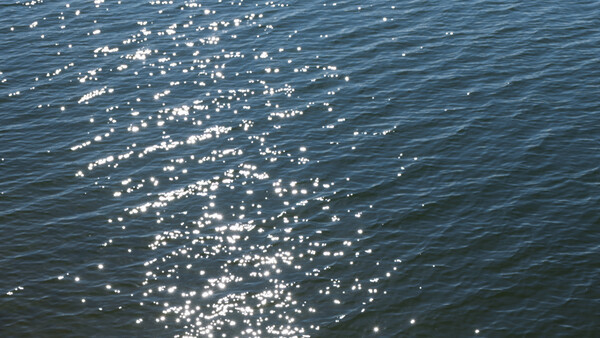
You press the shutter once. A raw file can contain more than one admissible photograph, and the camera shows you only the version it chose.
You shot the scene once, but the digital file came back with several photographs inside it. You have seen one: the JPEG preview the screen handed you when the button went down. The others are in the same file, equally valid, equally yours, and most photographers discard them without ever knowing they were there.
That is not a processing tip. It changes where your work actually happens.
We still talk as if the photograph is made at the shutter. Light reaches the sensor, the exposure is recorded, and everything after is treated as cleanup. For most of photography's history, that was close enough to true. It stopped being true of a raw file, and the reason is not the one usually given.
Interpretation was never new, and neither was cropping. Darkroom printers adjusted contrast, density, paper grade, and the final borders of the frame long after the negative left the camera, and the same negative could produce different prints in different hands. The difference is that the film committed far more of the photograph at exposure. Color response, grain, tonal behavior, and contrast were largely fixed before printing began. A raw file postpones far more of those decisions. Tone, highlight recovery, shadow structure, color relationships, local contrast, the crop, the balance of the frame—all of it stays open after the shutter. The capture holds more unresolved photographic information than any single rendering can show.
This does not mean anything is possible. The file has limits, and they are real. It means one exposure now yields several coherent photographs, each derived from the same encounter with light.
Take a figure standing at a window. From one file, you can bring the street outside into full daylight and let the room fall to a dark edge around it, or you can open the room and let the window burn to white. Both come from the same exposure. Neither is more honest than the other. They are two photographs, and the file held both before you touched it. Nothing about the recorded scene changed. Only the photograph did. None of this is technically surprising. Every experienced raw shooter knows these adjustments are possible. What is easy to miss is what they change.
Here is the part that matters. You are not uncovering the one true image the file was hiding, because there is no single hidden image. There are several admissible ones, and the work is choosing which realization becomes the photograph.
Selection, not recovery—that is where the photographer's primary creative decision increasingly happens today.
The camera will make that choice for you, instantly, and hand you the result as if it were the photograph. A JPEG is already an interpretation, and so is a profile, and so is a preset, each one a verdict on color, tone, contrast, and emphasis settled before you decide anything. Accepting it is legitimate. It also means the photograph was finished according to someone else's defaults.
The default rendering is already an editorial decision. Accepting it simply means delegating that decision, unless, of course, that rendering was itself a deliberate creative choice made before the shutter.
That used to be a private question of taste. It is now the question that decides whether your work is distinguishable from anyone else's.
AI pushed technically correct images close to a commodity. Clean exposure, sharp detail, balanced color, and even tonal contrast are available to everyone now, through better cameras at one end and image generation at the other. Technical execution has become the baseline, not the achievement.
You can see it in any feed. The images scroll past clean, sharp, correctly lit, and almost interchangeable, and the polish that would have marked a professional a decade ago now marks nothing in particular.
When you accept the camera's rendering, you turn in the same kind of polished file the software already produces on its own, and your photograph settles into a field of images that all look decided by the same hand. They were.
What stays yours is not recording the scene. It is deciding which photograph the recorded information should become. The photographer who takes the default contributes what automated systems already do well. The photographer who shapes one realization out of what the file allows contributes the one thing software cannot supply on its own: judgment.
So before the next lens or the next body, open your last raw file and ask a colder question than whether it is sharp. How many different photographs are admissible inside it? And of those, which one did you choose on purpose? The rest, the camera chose for you while you looked at the back of the screen. The decision is no longer simply about technical optimization. In the age of automated competence, it has become a question of authorship.
The scene is fixed the moment the button goes down. The photograph is not. It remains undecided until someone chooses which admissible version becomes the photograph.
One question remains. We discuss cropping and grading, but do we treat them as part of an author's visual language? And if a photograph can now be normalized algorithmically, should departure from that algorithmic average be treated as part of style and authorship?
Join the Fstoppers community for free
-
Post comments and join in the discussions
-
Browse the site ad-free
-
Share your work and get featured in the community
-
Compete in the photo contests for fun and prizes
1 Comment
I submit that Ansel Adams said the same thing 50 years ago in his forward to Portfolio VII. “The negative is comparable to the composer's score and the print to its performance. Each performance differs in subtle ways.”
It seems that this is the gist of the article. The image is the image. It’s how we decide to interpret and process the image that is important. No need to overthink it.