A strobe gives you one frozen instant and a guess. A continuous light gives you the picture before you press the shutter, which is why so many photographers who swore they would never shoot video now own three LEDs and one dusty monolight. The 2026 market has made that switch easy: a 360 W full-color COB fixture now costs less than a mid-range flash did five years ago, color accuracy that used to demand a rental house is standard, and the good lights run quietly enough to sit two feet from a microphone. The decisions that remain are about output, color engine, and how the light will be shaped once it leaves the fixture.
Three axes decide almost every purchase here. The first is raw output, measured in lux at 1 m, and it matters most once you put a softbox in front of the light, because a 3-foot octabox can eat two thirds of what a fixture produces. The second is the color engine: daylight, bi-color, or full-color RGBWW, a choice that changes what you pay by a factor of three. The third is how the light gets its power, since an AC-only monolight is a studio tool and a battery-capable one is a location tool.
This guide is organized by the job you need done, not by wattage. Every specification below was verified against the manufacturer's current spec sheet and a live retailer listing, and where a fixture has not come through Fstoppers for a hands-on review, the entry says so plainly and works from the published numbers instead. If you shoot people and need to freeze motion or overpower the sun, a strobe is still the right tool, and our flashes and strobes guide covers that side of the room.
At a Glance
- Best Overall COB: amaran Ray 360c
- Best Panel: Nanlite PavoSlim 60C
- Best RGB: Aputure LS 600c Pro II
- Best Budget: Godox SL60IIBi
- Best Portable COB: Zhiyun MOLUS X100
- Best On-Camera Light: Aputure MC Pro
- Best Tube Light: Nanlite PavoTube II 30X
- Best for Video Interviews: SmallRig RC 220B Pro
Best Overall COB: amaran Ray 360c
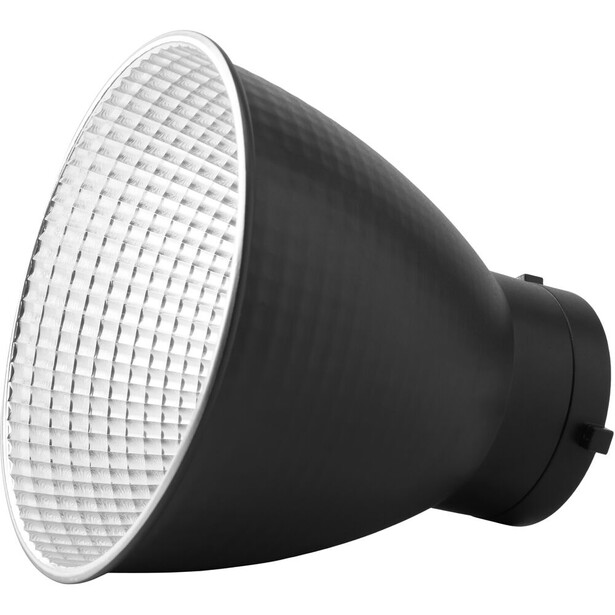
- Light engine: 360 W full-color RGBWW COB (OmniColor)
- Color temperature: 2,300 to 10,000 K, extending to 1,800 to 20,000 K in CCT+ mode
- Color accuracy: CRI 95 or higher, TLCI 95 or higher, SSI 87 (P3200) and 80 (D56), TM-30 Rf 94 and Rg 100
- Output: 17,130 lux at 1 m bare, 45,000 lux at 1 m with the included reflector
- Mount: Bowens
- Power: 410 W maximum draw, single AC cable, all-in-one monolight body
- Weight: 3.3 kg (7.3 lb)
- Price: $429 (B&H)
The Ray 360c is the light that made most of the 2025 buying advice obsolete. Announced in November 2025 as part of amaran's Ray family, it puts 360 W of full-color output into a self-contained monolight with no external ballast to hang on the stand, and amaran rates it at more than 80% more output than the amaran 300c it effectively replaces. It will punch through a 4-foot softbox at portrait distance and still leave dimming range to spare.
We have not had one in for an Fstoppers review, so nothing here is a shutter count of our own. The published numbers are unusually strong for the price: CRI 95, TLCI 95, and an SSI of 87 at tungsten, the figure that predicts how a light will mix with practicals and other fixtures. The IP54 rating is the specification most people overlook and then wish they had, because a light drizzle at an outdoor portrait shoot becomes an inconvenience rather than a catastrophe. amaran lists fan noise at 28 dBA at maximum output.
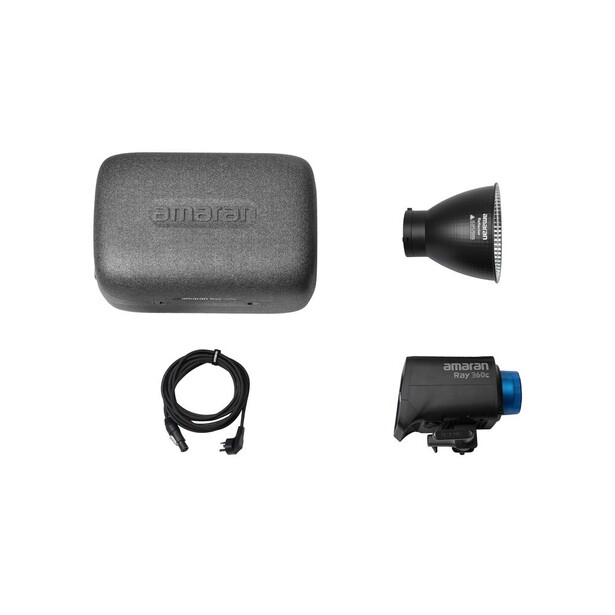
The compromises are all on the control side. DMX runs through a USB-C adapter that costs extra, so a fixture destined for a DMX set needs an accessory before it can join the network. There is no battery plate on the body, the price of the all-in-one design, so location work means an outlet or an inverter. The CCT+ mode that stretches the range to 1,800 K and 20,000 K is doing color mixing rather than a true white balance shift, and output drops at the extremes.
For a photographer building a first serious continuous kit, or a hybrid shooter who wants one light that can key a portrait on Tuesday and turn a wall deep cyan on Wednesday, this is the fixture to beat, so check the current price of the amaran Ray 360c at B&H. Also consider the amaran Ray 660c if you light large interiors and need close to double the output from the same body design.
What We Like
- Full-color output at a price that used to buy a bi-color fixture
- All-in-one monolight body with no ballast to rig
- IP54 rating and 28 dBA fan noise at full output
- Strong SSI and TM-30 scores, not just a marketing CRI number
What Could Be Better
- No battery plate, so it is an AC fixture by design
- DMX requires an adapter sold separately
- Extended CCT+ range costs output at the extremes
- Bowens modifiers are an extra purchase and add up quickly
Best Panel: Nanlite PavoSlim 60C
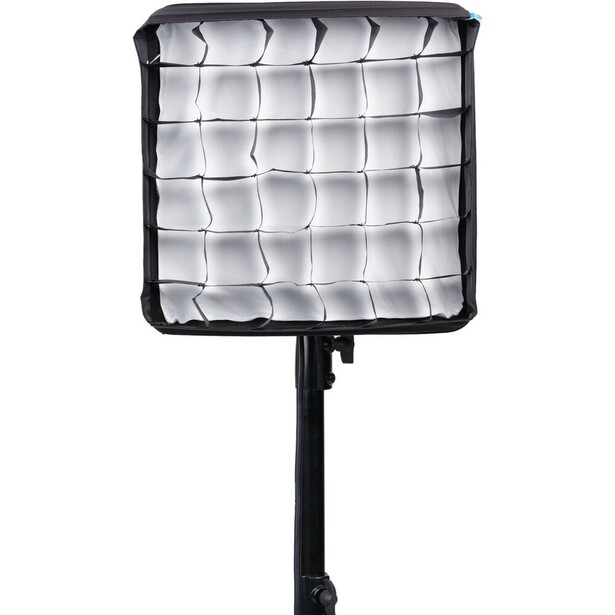
- Light engine: 72 W RGBWW LED soft panel, 1x1 format
- Color temperature: 2,700 to 7,500 K with ±150 green-magenta adjustment
- Color accuracy: CRI 96 average, TLCI 97 average
- Output: 7,074 lux at 1 m at 5,600 K
- Mount: swivel and baby-pin holders, pop-up softbox and eggcrate included
- Power: AC, plus two NP-F plates and one V-mount plate on the control unit
- Weight: 0.94 kg (2.07 lb) head
- Price: $599 (B&H)
Panels lost the spotlight to COB fixtures for a few years, and then people remembered why they bought them: a panel is already a soft source, so it works in a low-ceilinged apartment where a Bowens light plus a softbox will not fit. The PavoSlim 60C is the cleanest version of that idea on sale now. The head is 0.73 inches thick and weighs just over 2 lb, so it hangs off a C-stand arm without a sandbag ritual, and the pop-up softbox and eggcrate come in the box rather than as an afterthought.
The color hardware is the reason to buy it over a cheaper panel. CRI 96 and TLCI 97 are the headline figures, and Nanlite also publishes TM-30 Rf of 94 with Rg of 100, which is the pair of numbers that tells you skin will not go flat or oversaturated. LumenRadio CRMX is built in, along with DMX/RDM through a locking port, Bluetooth, and 2.4 GHz, so it scales from a one-person YouTube setup to a small set without a second purchase. Two NP-F plates and a V-mount plate mean it runs off batteries you already own.
What you give up is output. At 7,074 lux at 1 m, the PavoSlim 60C is a beautiful soft key at 3 to 4 feet and a fill light at 8 feet, and it will not compete with a window on a bright afternoon. It is also a two-piece design, with the control unit tethered to the panel, which is one more thing to velcro to a stand. We have not tested this one at Fstoppers, but the numbers tell a clear story: outstanding quality of light, modest quantity of it. If you shoot portraits, product, or talking heads in small rooms, that trade is worth making, so check the current price of the Nanlite PavoSlim 60C at B&H. Also consider the Aputure NOVA II 1x1, which began shipping in February 2026 with a 500 W BLAIR-CG engine and an IP65 rating, if you need a panel that can key a room rather than a face.
What We Like
- Soft out of the box, with softbox and grid included
- CRI 96 and TLCI 97 with published TM-30 figures to back them up
- CRMX, DMX, Bluetooth, and 2.4 GHz control all built in
- Runs on NP-F or V-mount batteries you likely already own
What Could Be Better
- Output is modest and falls off fast past 6 feet
- Separate control unit to rig and cable
- Not weather-rated, so it stays indoors
- Saturated colors dim considerably, as on every RGBWW panel
Best RGB: Aputure LS 600c Pro II
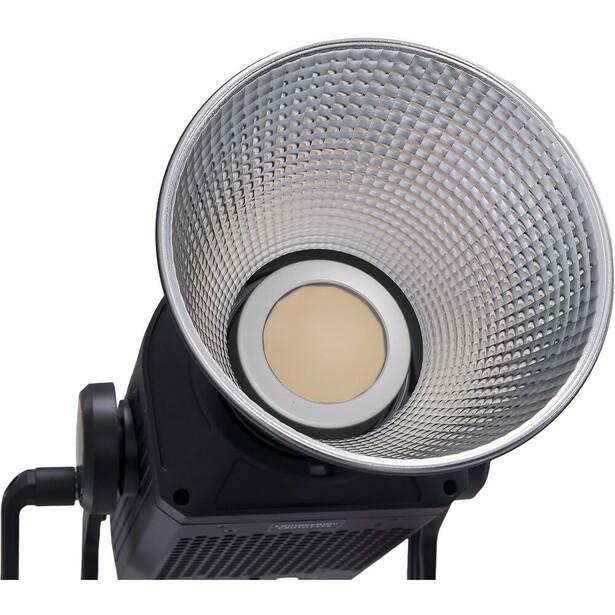
- Light engine: 600 W RGBWW COB point source
- Color temperature: 2,300 to 10,000 K with full green-magenta control
- Color accuracy: CRI 95 or higher, TLCI 98 or higher, SSI 85 (tungsten) and 74 (D56)
- Output: 21,610 lux at 1 m bare, 91,500 lux at 1 m with the Hyper Reflector
- Mount: Bowens
- Power: 720 W maximum draw, AC or two V-mount/Gold-mount batteries
- Weight: 5.9 kg (13 lb) head with yoke, plus a 5.4 kg (11.9 lb) control box
- Price: $1,490 (B&H)
Color is cheap now, but color with output behind it is not, and that gap is where the LS 600c Pro II lives. Professionals reach for it when the RGB has to survive a 5-foot octabox, a layer of diffusion, and a subject standing 10 feet back, and its 91,500 lux at 1 m with the Hyper Reflector is a number no other light here approaches. The whole assembly is IP54 rated, including the control box, which is why these turn up on exterior night shoots in weather that would send a panel back to the van.
Sidus Link handles the phone-app side, but the fixture also speaks DMX, CRMX, Art-Net, sACN, and Ethernet, so it drops into a console setup without an interface box. Aputure rates the fan at 24.0 dBA in silent mode and 32.9 dBA in smart mode, and silent mode is usable for dialogue, though it costs output. We have not run one through an Fstoppers review, but the tradeoff is plain from the design: you buy this light for its ceiling, not its convenience.
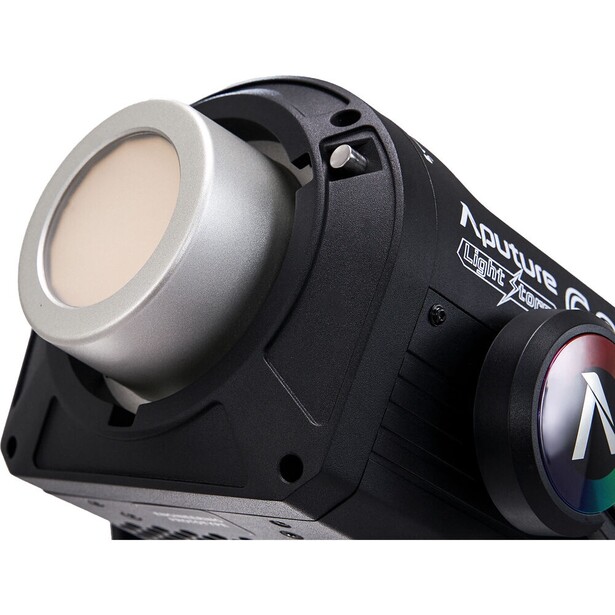
The inconvenience is substantial. This is a two-piece fixture that weighs 11.3 kg before you add a stand, a modifier, or two V-mount batteries, and it needs those two batteries in series to reach full output on location. It is the most expensive pick in this guide by a wide margin, and if your work is portraits in a garage studio, the amaran Ray 360c above gives you most of the color for a fraction of the outlay. For a working commercial or narrative shooter who needs full-color control that does not collapse behind heavy diffusion, check the current price of the Aputure LS 600c Pro II at B&H. Also consider the Aputure STORM 80c, an IP65 80 W point source with a 1,800 to 20,000 K range that runs off a USB-C power bank, if you want the same color science in something you can carry up a hill.
What We Like
- Output that survives heavy diffusion and long throws
- IP54 rating across the head and the control box
- DMX, CRMX, Art-Net, sACN, and Ethernet without an interface
- 24.0 dBA silent mode for dialogue scenes
What Could Be Better
- Heavy, two-piece, and slow to rig
- Needs two batteries in series for full output on location
- Far more money than most photographers need to spend
- Silent fan mode reduces available output
Best Budget: Godox SL60IIBi
- Light engine: 75 W bi-color COB
- Color temperature: 2,800 to 6,500 K
- Color accuracy: CRI 96 or higher, TLCI 97 or higher
- Output: 25,100 lux at 1 m with the standard reflector
- Mount: Bowens
- Power: AC only, 100 to 240 V
- Weight: 1.5 kg (3.3 lb)
- Price: $169 (B&H)
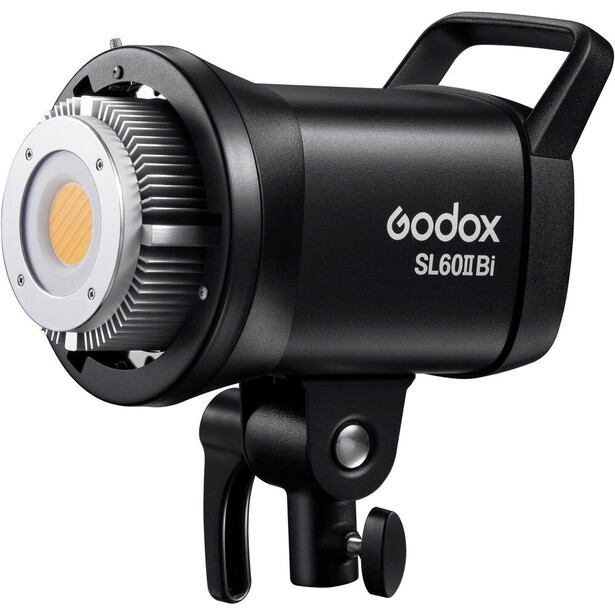
Nothing in continuous lighting has aged better than the case for a cheap, accurate, Bowens-mount COB, and Godox has been quietly winning it for years. The SL60IIBi is the current version of that light: 75 W, bi-color from 2,800 to 6,500 K, and a claimed CRI of 96 or better with TLCI of 97 or better, which is the same color specification bracket that fixtures costing five times as much publish. Put it in a 90 cm softbox and it keys a headshot at 4 feet with room to dim, which is why it ends up on so many first light stands.
The version II designation earns itself in two places. Bluetooth and 2.4 GHz control let you dim from the Godox app rather than walking to the stand, which matters when the light is on a boom over a table, and the version II's cooling was redesigned around the original SL60W's most-complained-about weakness, its fan. Godox does not publish a dBA figure for it. The 11 lighting effects are mostly a novelty for photographers.
The gaps sit where you would expect at this price. It is AC only, with no battery plate, so it never leaves a room with an outlet. There is no DMX and no green-magenta adjustment, which means matching it to an unpleasant office fluorescent involves gels rather than a knob. We have not reviewed this light in house, so the color performance rests on Godox's published CRI 96 and TLCI 97 figures. Buy two, put them on cheap stands, and you have a working two-light kit for the price of one mid-range fixture, so check the current price of the Godox SL60IIBi at B&H. Also consider the Neewer CB60B, a 70 W bi-color Bowens fixture with a claimed 34,000 lux at 1 m, if you want more punch for similar money.
What We Like
- Professional-grade color claims at an entry-level price
- Bowens mount, so every modifier on the market fits
- App and 2.4 GHz dimming, which the original SL60W lacked
- Light enough for a cheap stand and a small softbox
What Could Be Better
- AC only, with no battery option
- No DMX and no green-magenta correction
- Modest output once heavy diffusion goes on
- No RGB, so creative color means gels
Best Portable COB: Zhiyun MOLUS X100
- Light engine: 100 W bi-color pocket COB
- Color temperature: 2,700 to 6,500 K
- Color accuracy: CRI 95 or higher, TLCI 97 or higher
- Output: 3,881 lux at 1 m bare, 17,317 lux at 1 m with the standard reflector (4,300 K)
- Mount: Zhiyun native mount, Bowens adapter included with the Combo and Pro kits
- Power: AC adapter, USB-C PD, or the 57.72 Wh grip battery (about 30 minutes at full output)
- Weight: 385 g (13.6 oz) for the light head
- Price: $319 (B&H)
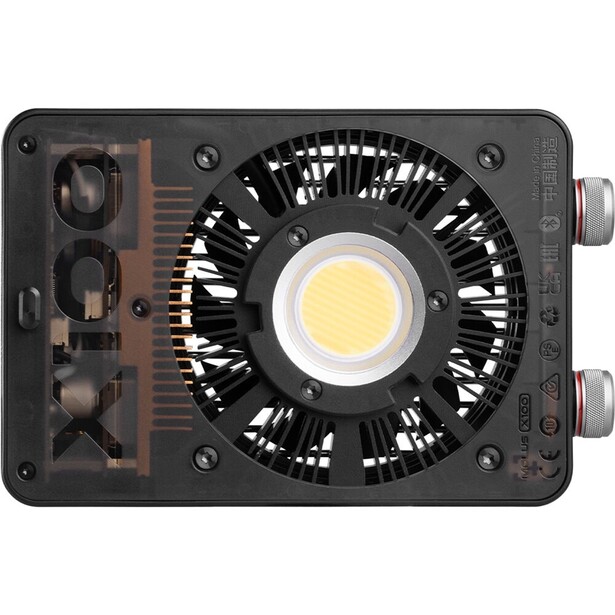
Portability in lighting used to mean accepting a weak light. The MOLUS X100 broke that assumption by fitting a genuine 100 W COB into a 385 g body roughly the size of a paperback, with a screw-on grip battery that turns it into a self-contained handheld source. Set it on a table beside a subject, spin the dial, and you have a key light in a hotel room or the back of a car, neither of which has an outlet where you need one.
Zhiyun rates it at CRI 95 or higher and TLCI 97 or higher across a 2,700 to 6,500 K range, and its 17,317 lux at 1 m with the standard reflector puts it in the same conversation as fixtures three times its size. Power comes from an AC adapter, a USB-C PD source, or the grip battery, and the last of those is the reason to own it. The limitation the spec sheet implies is runtime.
Thirty minutes at full power from the grip battery is not a shooting day. In practice you dim to 50%, roughly double that, and carry a USB-C power bank as insurance. The cooling fan is audible with a shotgun microphone within a couple of feet, and Bowens modifiers need the adapter that ships with the Combo and Pro kits rather than the bare light. Buy it as a second light for travel, not as your only one, so check the current price of the Zhiyun MOLUS X100 at B&H. Also consider the Zhiyun MOLUS X200 if you want twice the output in a body that is still small enough for a backpack.
What We Like
- 100 W of real output from a 385 g body
- Grip battery makes it a truly self-contained location light
- USB-C PD input, so a power bank keeps it alive
- Strong CRI and TLCI figures for a pocket fixture
What Could Be Better
- About 30 minutes of runtime at full output
- Fan noise is noticeable at close microphone distances
- Bowens compatibility requires the bundled adapter
- Bi-color only, with no RGB and no green-magenta control
Best On-Camera Light: Aputure MC Pro
- Light engine: 5 W RGBWW pocket LED, 563 lumens
- Color temperature: 2,000 to 10,000 K
- Color accuracy: CRI 96, TLCI 96, CQS 95
- Output: 396 lux at 1 m and 1,585 lux at 0.5 m (5,600 K, bare)
- Mount: built-in magnets, plus baby pin and articulating arm adapters
- Power: 4,200 mAh (15.5 Wh) internal battery, about 120 minutes at maximum, USB-C charging in roughly 90 minutes
- Weight: 247 g (0.54 lb)
- Price: $199 (B&H)
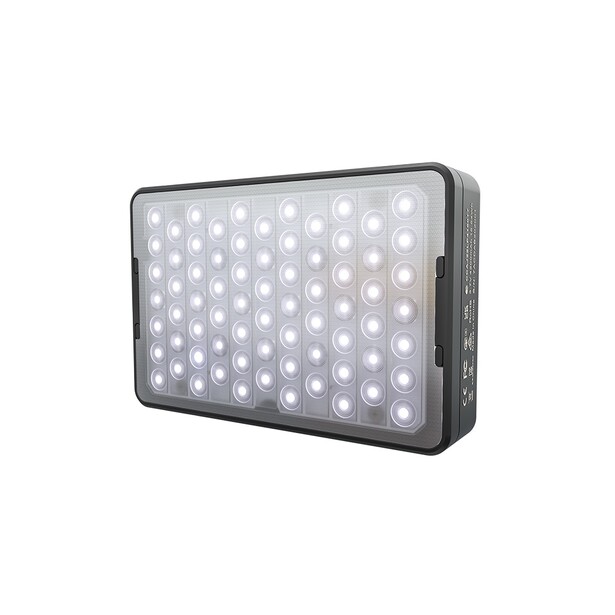
Small lights are usually where color accuracy goes to die, and the MC Pro is the exception that justifies the category. It is a 247 g slab with neodymium magnets in the back, a 2,000 to 10,000 K range, and CRI and TLCI both rated at 96, so the tiny light you stick to a refrigerator matches the big one keying your subject. Passive cooling means no fan and no noise.
Two features push it past the older MC that many photographers already own. The IP65 rating means rain, salt spray, and dust stop being reasons to leave it behind, which is unusual at this size. It also carries LumenRadio CRMX alongside Bluetooth and 16-bit DMX, so eight of them run from a console as easily as from a phone. Internal power is a 4,200 mAh cell rated at 120 minutes at maximum output, recharging over USB-C in about 90 minutes. This one has not come through Fstoppers for a review, so the figures here are Aputure's published photometrics rather than ours.
Understand what 5 W buys: 396 lux at 1 m is an accent, an eye light, or a colored kick on a background, and it is not a key for a face unless that face is close and the room is dark. Mounting is magnet-first, elegant on metal and useless on drywall until you add the included adapters. Buy it in pairs, because a single tiny light rarely finishes a scene, so check the current price of the Aputure MC Pro at B&H. Also consider the Hobolite Micro, an 8 W bi-color light from the company now trading as Harlowe, if you want something built to be seen in the frame rather than hidden outside it.
What We Like
- CRI and TLCI of 96 in a pocket-sized fixture
- IP65 weather protection, which is rare at this size
- Completely silent, with no fan
- CRMX and 16-bit DMX for multi-light control
What Could Be Better
- 5 W means it is an accent light, never a key
- Magnet mounting needs adapters on non-metal surfaces
- Two-hour runtime drops fast in cold weather
- You will want more than one, and the cost doubles
Best Tube Light: Nanlite PavoTube II 30X
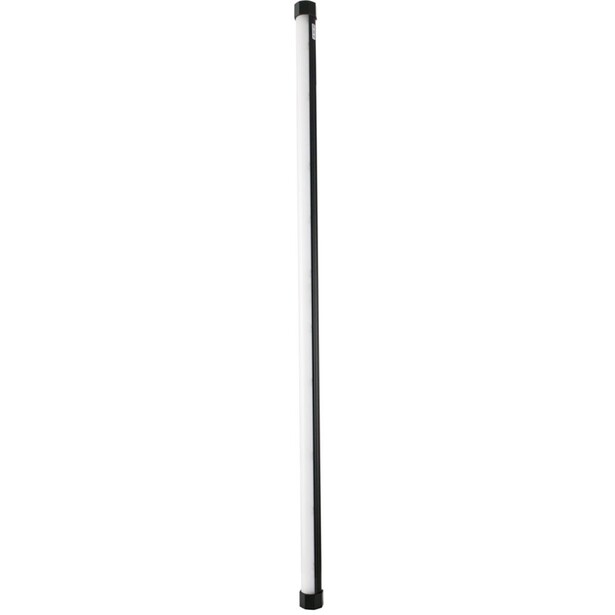
- Light engine: 70 W 4-foot RGBWW LED pixel tube with 16 individually addressable zones
- Color temperature: 2,700 to 12,000 K with green-magenta adjustment
- Color accuracy: CRI 97 average, TLCI 98 average
- Output: 746 lux at 1 m at 5,600 K
- Mount: integrated end caps with 1/4"-20 threads and magnets
- Power: internal 4,400 mAh battery, 1 hour 36 minutes at full output, or AC
- Weight: 1.56 kg (3.44 lb)
- Price: $758.95 (B&H)
Tubes solve a problem no COB can: they are a long, thin source, which is what you want for a rim on a standing subject, a streak in a car window, or a fake fluorescent overhead in an office scene. The PavoTube II 30X has been the reference point in the category for a while, and the reason is the pixel engine. The tube divides into 16 independently addressable zones, so one fixture can run a color gradient down its length or chase an effect end to end.
Nanlite rates the color at CRI 97 and TLCI 98 on average, the highest published pair in this guide, and the CCT range runs to 12,000 K for matching deep shade or a blue-hour sky. The internal 4,400 mAh battery gives 1 hour 36 minutes at full output, and since the working level for a tube is rarely 100%, most owners get a shooting day from it. Control is onboard, through the NANLINK app over Bluetooth, or by DMX, and the 30XR variant adds built-in CRMX.
Its weakness is inherent to the form. A tube throws a soft, diffuse 746 lux at 1 m, so it is an accent, a practical, or a very close soft source, and it will never key a subject across a room. It is also a 4-foot object, so transport is a real consideration, and these lights work in pairs and quads rather than alone. We have not put one through an Fstoppers review. If you shoot portraits with a color-driven look, or you make video where a scene needs a source in the shot, check the current price of the Nanlite PavoTube II 30X at B&H. Also consider the amaran PT4c, which offers 16 pixel zones and a 77 Wh battery good for about 170 minutes if runtime is your priority.
What We Like
- Individually addressable pixel zones for gradients and chases
- CRI 97 and TLCI 98 average, the best published figures here
- 2,700 to 12,000 K range covers deep shade and blue hour
- Runs on its internal battery for 1 hour 36 minutes at full output
What Could Be Better
- 746 lux at 1 m makes it an accent, not a key
- A 4-foot tube is awkward to travel with
- CRMX requires stepping up to the 30XR
- One tube is rarely enough, and the cost multiplies
Best for Video Interviews: SmallRig RC 220B Pro
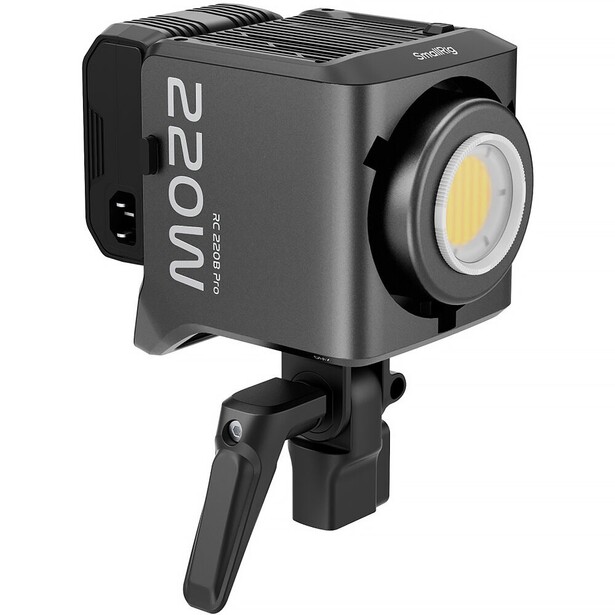
- Light engine: 200 W bi-color COB
- Color temperature: 2,700 to 6,500 K
- Color accuracy: CRI 95 or higher, TLCI 96 or higher
- Output: 9,180 lux at 1 m bare, 84,500 lux at 1 m with the included hyper reflector
- Mount: Bowens
- Power: AC adapter, V-mount, or NP-F970 (adapter required)
- Weight: 1.65 kg (3.64 lb)
- Price: $369.99 (B&H)
An interview does not need color effects. It needs a key that can push through a big softbox, a fan quiet enough that the microphone does not hear it, and a price low enough that you can buy two or three, because a good interview is a key, a back light, and something on the background. The RC 220B Pro hits all three. SmallRig rates it at 84,500 lux at 1 m with the included hyper reflector, from a fixture that weighs 1.65 kg and runs on a V-mount battery when the room has no convenient outlet.
The Pro revision is the one to buy. SmallRig redesigned the optics to cut power draw by about 10% at the same brightness, dropping the fixture to 200 W, and added app and DMX control alongside the physical knobs. When we reviewed it, our reviewer found the app intuitive enough to dim and adjust the light without walking to the stand, and reached the same apparent brightness at lower power settings than the previous version required. It takes V-mount and NP-F970 batteries, unusually flexible for a 200 W COB, and it accepts a standard C13 power cable rather than a proprietary brick. If you are new to lighting a sit-down interview, Fstoppers' Tips for Shooting Professional Video Interviews tutorial covers the setup this fixture is designed to serve.
The caveats are smaller than the spec sheet suggests. SmallRig rates the fan at 28 dB at 1 m at full output, and the fixture drops to passive, fanless cooling at or below 20% brightness, so true silence costs most of the output. In our review, though, the fan was barely noticeable even at maximum brightness, which is the behavior a talking-head setup actually needs. A well-placed directional microphone, of the sort covered in our wireless microphones guide, hears far less of a fan than a camera-top mic does. The real annoyance our reviewer landed on is that running the light on NP-F970 cells requires an adapter sold separately. Bi-color also means no green-magenta shift, so mixing with fluorescent office lighting takes a gel. Neither is a reason to pass on it for talking-head work, so check the current price of the SmallRig RC 220B Pro at B&H. Also consider the Nanlite Forza 300B II, a 350 W bi-color fixture rated at CRI 96 and TLCI 97 with 43,480 lux at 1 m from its 55-degree reflector, if you need to drive a 5-foot softbox rather than a 3-foot one.
Read our full review: SmallRig’s RC 220B Pro LED Video Light Reviewed: Smart Features and Flexibility
What We Like
- Serious output for the money, especially with the hyper reflector
- Fan noise stayed barely noticeable at full output in our testing
- Runs on V-mount or NP-F970 batteries, with a standard C13 power cable
- Only 1.65 kg, so it lives on a lightweight stand
- App, DMX, and onboard control all included
What Could Be Better
- NP-F970 batteries need an adapter that is sold separately
- Fanless operation only happens at or below 20% output
- No green-magenta adjustment for mixed-lighting rooms
- Bi-color only, with no creative color
- Effects are a novelty for most interview work
How to Choose an LED or Continuous Light
Start with CRI and TLCI, because they are the two numbers everyone quotes and the two that are most often misunderstood. CRI measures how faithfully a light renders a set of reference color samples compared to a reference illuminant at the same color temperature (a blackbody curve below 5,000 K, a daylight spectrum above it), and TLCI runs a similar comparison weighted for how a video camera sees color rather than how a human eye does. Both run to 100. Anything at 95 or above is safe for skin, and the difference between 95 and 97 is invisible on most jobs. Below 90 is where you start fighting magenta skin and dead reds in post. The more revealing number is SSI, which compares a light's actual spectrum against a reference, along with the TM-30 figures, Rf for fidelity and Rg for saturation. A light claiming CRI 98 with an SSI in the 60s passes the test while still mixing badly with daylight and tungsten, which is exactly the situation you meet on location.
Then choose your color engine, which is the biggest lever on price. A daylight-only COB is the cheapest way to buy output, and it is the right call if your work is always shaped through a softbox and matched in post. Bi-color adds a second chip set so you can dial 2,700 K to 6,500 K in camera, which is what most portrait and interview shooters actually need, at a modest efficiency cost. Full-color RGBWW fixtures add red, green, and blue emitters, giving you saturated color, gel emulation, and green-magenta correction for mixed rooms, and they lose significant output when you crank saturation, so a 360 W RGB light at deep blue may put out less than a 60 W daylight fixture at full. Buy RGB if you light backgrounds and want in-camera color; buy bi-color if you light faces.
Read output numbers with suspicion. Manufacturers publish lux at 1 m with the reflector that produces the largest number, so a 45,000 lux claim and a 17,130 lux claim can describe the same fixture depending on whether a reflector is attached. Compare bare-bulb figures where you can, and expect a large softbox with a grid to eat between half and three quarters of what the fixture makes.
Finally, decide where the power comes from and how loud the light is allowed to be. An AC-only monolight is lighter, cheaper, simpler, and useless in a field. A fixture with a V-mount plate costs more and buys you a location kit. Fan noise, quoted in dBA, matters the moment a microphone enters the frame, and most current fixtures publish it. Buy the light for the room you actually shoot in, and if you have never lit a subject deliberately, Fstoppers' Lighting 101: Foundation and Light Shaping tutorial will do more for your photos than any upgrade on this page.
What We're Looking For
Our picks weigh color accuracy (CRI, TLCI, and the SSI and TM-30 figures behind them), usable output once a real modifier is attached, mount ecosystem, power flexibility, fan noise, and how honestly each fixture is priced against what it delivers. Every specification here was verified against the manufacturer's current spec sheet and a live retailer listing at the time of writing, and two candidates were dropped during that check because they had been discontinued or superseded. Where an entry rests on published measurements and manufacturer specifications rather than on our own shooting, it says so rather than implying a history we do not have. Most picks across our buying guides come from gear our writers have used and reviewed hands-on; where we haven't, we say so in the entry.
Frequently Asked Questions
What Is the Difference Between CRI and TLCI?
CRI scores how accurately a light renders reference colors as a human eye perceives them; TLCI runs a similar test weighted for how a video camera's sensor and processing see color. A light can score well on one and poorly on the other. For photography and video both, look for 95 or higher on each, and treat SSI or TM-30 figures as the tiebreaker, since they compare the actual spectrum rather than a color patch.
Should I Buy Bi-Color or RGB?
Buy bi-color if your lights point at faces and RGB if they point at walls. Bi-color fixtures give you 2,700 K to 6,500 K, which covers every skin-tone job, and they cost less and put out more light per watt. RGBWW fixtures add saturated color, gel emulation, and green-magenta correction, and they lose substantial output at high saturation. Most working kits end up with bi-color or daylight keys and one RGB light for background color.
Can LED Lights Replace Strobes for Portraits?
For studio portraits at moderate ISO, yes, and increasingly they do, because you see the lighting before you shoot. Strobes still win in two places: freezing motion, since a flash duration is far shorter than any usable shutter speed, and overpowering the sun outdoors, where a 600 Ws strobe delivers energy in a burst that no continuous fixture can match. Our flashes and strobes guide covers those cases.
How Much Output Do I Actually Need?
Less than the marketing suggests. A 60 to 100 W COB in a softbox at 3 to 4 feet keys a portrait at ISO 400 comfortably. You need 300 W or more when the light is far away, heavily diffused, gridded, or fighting a bright window. Since a large softbox with a grid can absorb three quarters of a fixture's output, buy for the modifier you will use rather than the bare-bulb number.
Fstoppers may earn a commission from purchases made through links in this article. Our picks are made independently by our editorial team.