Every camera in this guide was discontinued before most of the people now buying them started shooting. That is the strange, wonderful state of medium format film in 2026: the best tools for it are decades old, sold used, and often worth more today than when the last one rolled off the line. A big negative still does something a sensor cannot, and a 6x7 frame holds a smoothness in the tones and a separation between subject and background that no amount of resolution replicates. The catch is that you are buying a mechanical or early-electronic object that has already lived a full life, and the purchase turns on three questions that have nothing to do with megapixels.
The first is format. Medium format is not one thing. A square 6x6 negative, a chunky 6x7, and a compact 645 frame each shoot differently, crop differently, and cost differently to feed, and picking the aspect ratio you actually like matters more than any spec. The second is handling. Some of these are svelte cameras you can walk a city with all day, and some are tripod anchors built to live in a studio. The third is the used-market reality that governs all of them: condition, whether the electronics still work, whether a repair tech will still touch it, and whether it needs a battery that no longer exists in a friendly form.
The picks below are organized by format and by the job you want the camera to do. Because none are sold new, every pick here is a used-market buy, and every pick gets the same three flags: battery dependence, repair outlook, and its honest weakness. For a smaller negative and a cheaper habit, start with our 35mm film cameras guide; for the format without the darkroom, our digital medium format guide covers the sensor side.
At a Glance
- Best Overall: Hasselblad 500C/M
- Best 6x6 TLR: Rolleiflex 2.8F
- Best 6x7: Pentax 67II
- Best 645 System: Pentax 645N
- Best for Portraits: Contax 645
- Best for Studio Work: Mamiya RZ67 Pro II
- Best for Travel: Fujifilm GF670
- Best Budget Entry: Bronica SQ-A
Best Overall: Hasselblad 500C/M
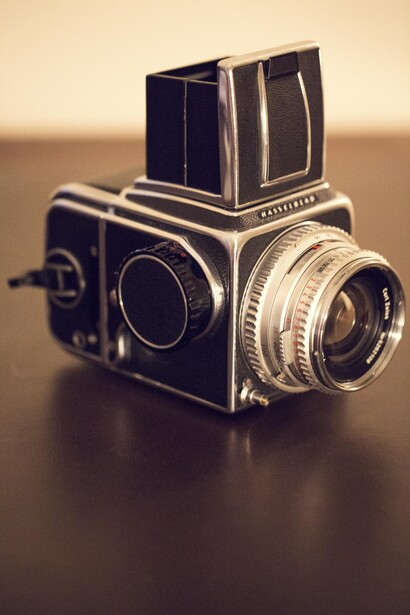

- Format: 6x6 on 120 roll film, 12 frames per roll via A12 back
- Lens: Interchangeable Hasselblad V bayonet, standard Carl Zeiss 80mm f/2.8 Planar
- Shutter: Leaf shutter in each lens, flash sync at all speeds to 1/500 second
- Metering: None in body; add a metered prism or use a handheld meter
- Viewfinder: Interchangeable waist-level, plain prism, or metered prism
- Power: None; fully mechanical, no battery required
- Price: Used-market pricing varies (B&H Used / MPB)
The Hasselblad 500C/M is the camera most people picture when they picture medium format, and it earns the overall pick for a plain reason: it is the most complete, most repairable, most expandable film system you can still assemble, and it is entirely mechanical, so nothing depends on a battery that stopped being made 20 years ago. Introduced in 1970 and built into the early 1990s, it is a modular cube of a camera. The lens, the film back, and the finder all swap in seconds, so you can change from color to black and white mid-roll by pulling one back and clicking on another.
Shooting it is a deliberate, quiet ritual. You look down into the finder at a laterally reversed image, which takes a day to stop fighting and then becomes part of the appeal, and the leaf shutter in the Zeiss lens makes a soft click rather than the mirror-slap thud of an SLR this size. Flash syncs at every speed up to 1/500 second, which is why studio and wedding photographers leaned on these for decades. We have not put a 500C/M through an Fstoppers review, so take this as an assessment built on verified specifications and a 50-year service record, not a test bench. The 80mm f/2.8 Planar is one of the great normal lenses ever computed.
The honest weaknesses are the ones you inherit with any system this old. There is no meter unless you buy a prism for one, the film backs use a dark slide you will eventually forget to pull, and a body or back that has not been serviced can show up with a light leak or a lazy shutter. Prices have climbed hard, so a clean, recently serviced kit is no longer the bargain it was five years ago. On repairs, this is the safest bet in the guide: independent Hasselblad technicians are still working and parts still circulate. For a photographer who wants one film system to keep for life, check the current price of the Hasselblad 500C/M at MPB. If you want the same camera with a brighter screen and a gliding-mirror update, the later 501CM and 503CW are worth the premium.
What We Like
- Fully mechanical, so no battery and no dead electronics to fear
- Truly modular: swap lenses, backs, and finders in seconds
- The 80mm f/2.8 Zeiss Planar is a reference-grade normal lens
- Leaf-shutter flash sync at every speed
What Could Be Better
- No metering without a separate prism or handheld meter
- Prices have risen sharply for clean, serviced examples
- Dark-slide and film-back workflow invites beginner mistakes
Best 6x6 TLR: Rolleiflex 2.8F
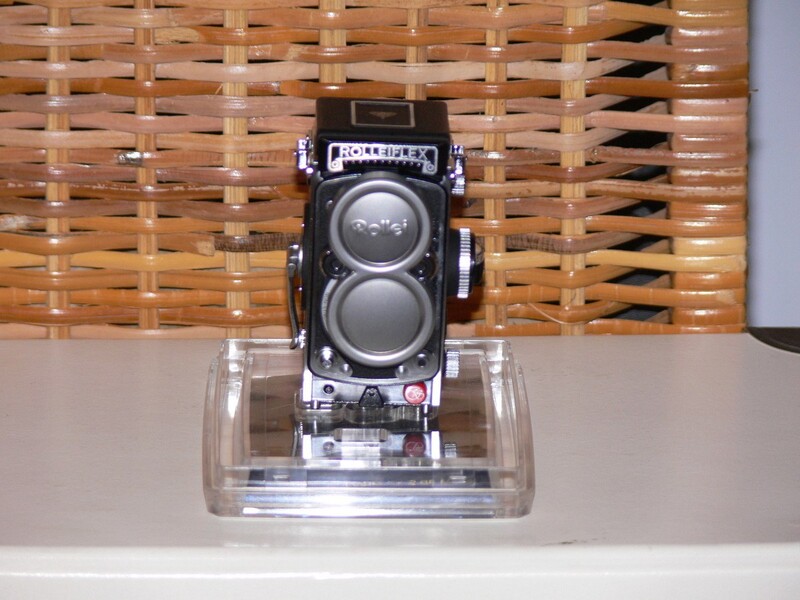

- Format: 6x6 on 120 roll film, 12 frames per roll
- Lens: Fixed 80mm f/2.8, Carl Zeiss Planar or Schneider Xenotar
- Shutter: Synchro-Compur leaf shutter, flash sync at all speeds to 1/500 second
- Metering: Uncoupled selenium meter, often dead on surviving bodies
- Viewfinder: Waist-level with flip-up magnifier
- Power: None; fully mechanical, no battery required
- Price: Used-market pricing varies (B&H Used / MPB)
A twin-lens reflex is a different animal from an SLR, and the Rolleiflex 2.8F is the one that has never been bettered. Two lenses sit stacked vertically, the top one for viewing and the bottom one for taking the picture, so the mirror never moves during the exposure. There is no blackout, no slap, and almost no vibration, which is why you can hand-hold it at shutter speeds that would blur an SLR. It is smaller and lighter than it looks in photos, and it hangs flat against your chest, which is why street and documentary photographers have carried Rolleis for the better part of a century.
The fixed 80mm lens is the point rather than a limitation. Both the Zeiss Planar and the Schneider Xenotar versions are superb, and because the designers only ever had to optimize one focal length for one camera, the results are exquisitely corrected wide open. This is another camera we have not reviewed at Fstoppers, so the assessment rests on published specifications and the model's long documented record. The big ground glass and the downward viewing angle slow you into seeing squares. There is a parallax quirk to learn at close range, and the finder compensates for it.
The catches are specific to the model's age. The built-in selenium meter is uncoupled and, on most surviving bodies, inaccurate or dead, so plan to meter with a phone app or a handheld unit. You cannot change the lens, so this is a one-focal-length camera by design, and clean 2.8F bodies now sell for serious money. It needs no battery, and repair prospects stay good, with Rollei specialists still overhauling shutters. If the price gives you pause, the f/3.5 Rolleiflex models and the interchangeable-lens Mamiya C330 offer most of the TLR experience for less. Otherwise, check the current price of the Rolleiflex 2.8F at MPB.
What We Like
- No moving mirror, so it is sharp hand-held at slow speeds
- The fixed 80mm Planar or Xenotar is exceptional wide open
- Compact, quiet, and unintimidating for candid work
- Fully mechanical operation with no battery
What Could Be Better
- Selenium meter is usually dead or inaccurate
- Single fixed focal length by design
- Collector demand keeps clean bodies expensive
Best 6x7: Pentax 67II
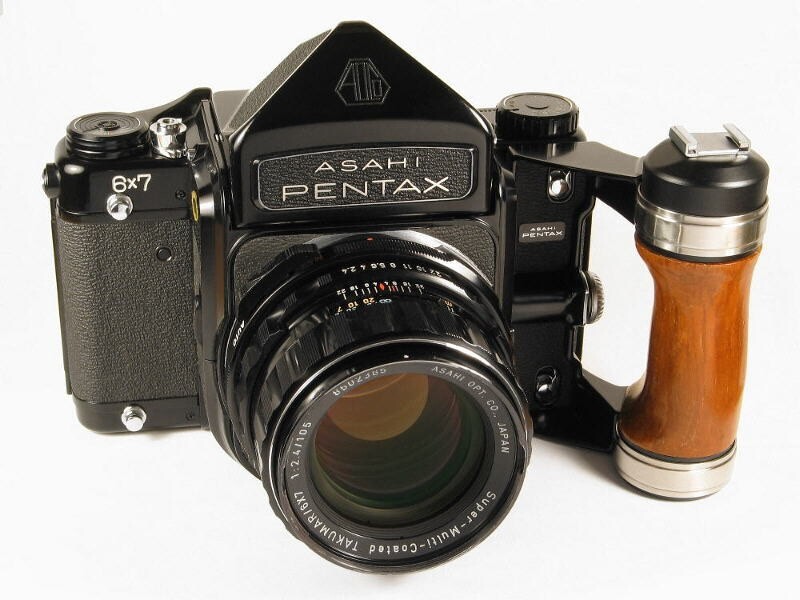

- Format: 6x7 on 120 or 220 roll film, 10 frames per 120 roll
- Lens: Interchangeable Pentax 6x7 bayonet, standard SMC 105mm f/2.4
- Shutter: Electronic focal plane, 1/1000 to 30 seconds, flash sync 1/30 second
- Metering: TTL via the AE prism: center-weighted, spot, and multi-segment
- Viewfinder: Interchangeable AE prism, plain prism, or folding focusing hood
- Power: Two 3 V CR123A lithium batteries
- Price: Used-market pricing varies (B&H Used / MPB)
Scale a 35mm SLR up until the negative is a 6x7 rectangle and you get the Pentax 67II. It handles like an enormous film SLR, which is exactly the point: a real handgrip, a proper meter in the AE prism, aperture-priority automation, and a shooting rhythm any DSLR shooter understands instantly. Released in 1998 and made until 2009, the 67II is the final version of a line that goes back to the late 1960s, adding the grip, an LCD panel, and much better metering to a formula photographers already loved.
The reason people chase the 6x7 negative is tonal quality, and the SMC 105mm f/2.4 standard lens is one of the most beloved portrait lenses in any format because of how it renders skin and falls off into the background. We have not tested a 67II ourselves, so what follows comes from Ricoh's published specifications and the camera's documented design: a well-exposed 6x7 chrome holds detail and gradation that reward hauling the body up a mountain, and unlike the studio-bound 6x7 SLRs, this one is genuinely shootable hand-held.
Now the honesty. This camera has a focal-plane shutter and a mirror the size of the negative, so it produces a genuine thwack and enough vibration that shots between roughly 1/30 and 1/8 second can suffer unless you brace it or lock the mirror up. It flash-syncs at only 1/30 second, which rules out much daylight fill flash, and the rig with the 105mm and a prism is heavy enough to notice on a long day. It runs on two CR123A cells, so a dead battery is a dead camera, and repair is shaky: Ricoh no longer services the line and independent 67II technicians are scarce. For big-negative quality in a body that shoots like a familiar SLR, check the current price of the Pentax 67II at MPB. The earlier Pentax 6x7 and 67 save money if you can live without the refined meter and grip.
What We Like
- Handles like a scaled-up SLR, so the learning curve is short
- The 105mm f/2.4 is a legendary portrait lens
- Excellent AE-prism metering with spot and aperture priority
- Portable enough for genuine field and landscape use
What Could Be Better
- Heavy mirror and shutter cause vibration at slow speeds
- Flash sync limited to 1/30 second
- Most expensive of the 6x7 SLRs, and battery dependent
Best 645 System: Pentax 645N
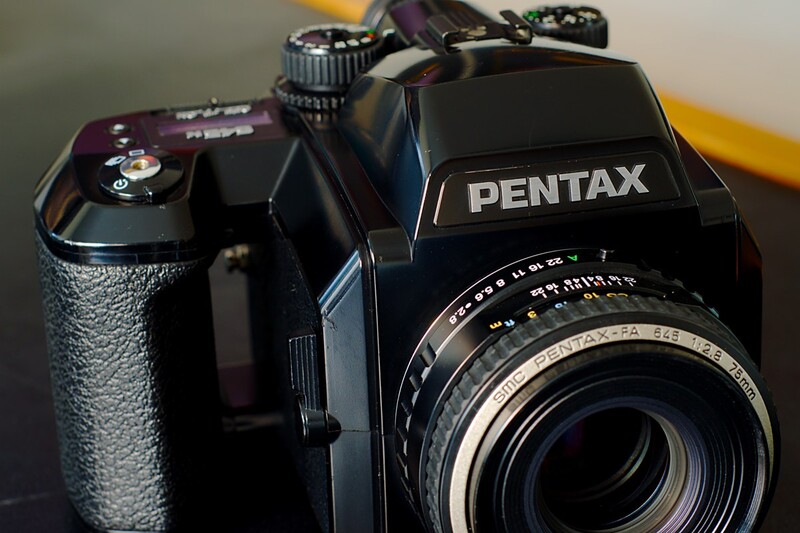

- Format: 6x4.5 on 120 or 220 roll film, 16 frames per 120 roll
- Lens: Interchangeable Pentax 645AF mount, standard SMC FA 75mm f/2.8
- Shutter: Electronic focal plane, 1/1000 to 30 seconds, flash sync 1/60 second
- Metering: TTL six-segment matrix, center-weighted, and spot
- Viewfinder: Fixed pentaprism with in-finder data display
- Power: Six AA batteries
- Price: Used-market pricing varies (B&H Used / MPB)
If your goal is to shoot medium format the way you shoot a modern camera, and to do it without a second mortgage, the Pentax 645N is the smartest system buy on this list. It arrived in late 1997 with autofocus, a good matrix meter, motorized film advance, and an information display in the finder, and it runs on six AA batteries from any gas station. It is the rare classic medium format camera a beginner can operate correctly on the first roll.
The 645 negative is smaller than 6x6 or 6x7, which is the tradeoff, but it is still nearly three times the area of a 35mm frame, and it buys you 16 shots per roll. We have not run a 645N through an Fstoppers review, but the specifications and the used-market record point the same way: the FA autofocus lenses are sharp and inexpensive by medium format standards, and a full kit of wides, the 75mm normal, and a portrait tele costs a fraction of a Hasselblad or Contax setup. Pentax built this one for outdoors, and it shrugs off light rain and cold better than most film bodies of its era.
The compromises are real but mild. Autofocus is single-point and slow by any digital standard, so treat it as a focus aid rather than an action tool, and the plastic-clad body feels less special than the all-metal cameras above it. The 645N cannot swap film backs mid-roll the way a Hasselblad or Bronica can, because the insert-style magazine is not a true interchangeable back. It depends on those six AAs, and an electronic fault means finding an independent Pentax specialist. For an affordable, reliable medium format system that behaves like a camera made this century, check the current price of the Pentax 645N at MPB. Spend a little more for the 645NII if you want mirror lock-up for long exposures.
What We Like
- Autofocus, matrix metering, and motor drive make it beginner-friendly
- Runs on common AA batteries
- Sharp, affordable FA lens lineup
- 16 frames per roll and weather-resistant handling
What Could Be Better
- Smaller 645 negative than the 6x6 and 6x7 picks
- Autofocus is single-point and slow
- No true interchangeable film backs
Best for Portraits: Contax 645
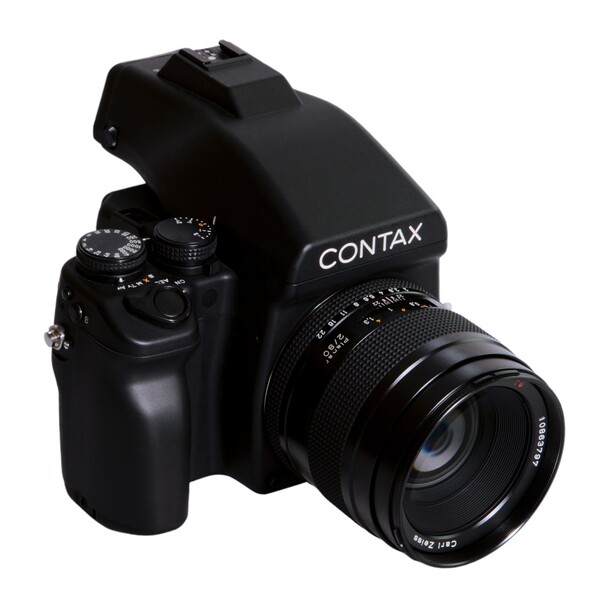
- Format: 6x4.5 on 120 or 220 roll film, 16 frames per 120 roll
- Lens: Interchangeable Contax 645 mount, standard Carl Zeiss 80mm f/2 Planar T*
- Shutter: Electronic focal plane, 1/4000 to 32 seconds, flash sync 1/125 second
- Metering: TTL center-weighted and spot, with aperture-priority auto
- Viewfinder: Interchangeable prism or waist-level finder
- Power: MP-1 grip holder with six AA cells, or a rechargeable battery pack
- Price: Used-market pricing varies (B&H Used / MPB)
For a decade the Contax 645 has been the film camera wedding and portrait photographers covet above all others, and the reason is a single lens. The Carl Zeiss 80mm f/2 Planar T* is the fastest normal lens in any medium format system, and wide open on a 645 negative it renders subjects with a creamy, three-dimensional separation that has become a whole aesthetic. Photographers buy this camera for what that glass does to skin, not for its spec sheet, and the demand has pushed used prices to the top of the market.
This is the pick here we have lived with longest. Our reviewer shot a Contax 645 professionally for roughly two decades, from when it was still a current product, and his long-term verdict tracks the reputation: introduced in 1999 by Kyocera and dropped around 2005, it is the most modern-feeling camera in this guide, with autofocus, a proper meter, aperture-priority automation, 1.6 fps film transport, mirror lock-up, and TTL flash. For a portrait shooter working with a moving subject and natural light, autofocus plus the f/2 Zeiss lens removes the friction that makes manual medium format slow. Once the gear stops fighting you, the Fstoppers course Perfecting the Headshot is a useful companion for directing the subject.
The weakness is impossible to ignore: this is aging electronics with no manufacturer support. If the mainboard or the shutter fails, there is no factory repair, parts come from donor bodies, and the pool of technicians who will service one shrinks every year. The battery grip and its contacts are a known failure point, and the camera is fully dependent on them. You are buying the most expensive body here, in the most fragile long-term condition, for one glorious lens. If that lens is the reason you shoot, it is worth it, so check the current price of the Contax 645 at MPB. If you love the look but not the risk, a Pentax 645N with the 75mm gets you a durable autofocus 645 for far less.
Read our full review: The Contax 645 AF: A Very Longterm Review
What We Like
- The Zeiss 80mm f/2 Planar is the fastest, most coveted medium format normal lens
- Autofocus, metering, and a motor drive in a 645 body
- Mirror lock-up and TTL flash
- The rendering that launched a wedding-photography aesthetic
What Could Be Better
- Aging electronics with no manufacturer repair support
- Battery grip and contacts are a known failure point
- The most expensive camera in this guide
Best for Studio Work: Mamiya RZ67 Pro II
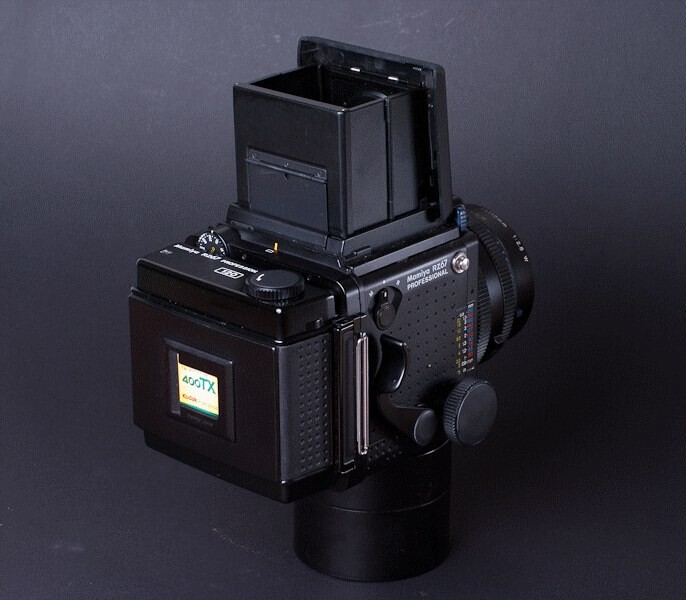

- Format: 6x7 on 120 or 220 roll film, 10 frames per 120 roll, revolving back
- Lens: Interchangeable Mamiya RZ mount, standard Sekor Z 110mm f/2.8 W
- Shutter: Electronic leaf shutter in each lens, 1/400 to 8 seconds, flash sync at all speeds
- Metering: None in body; add the AE prism finder
- Viewfinder: Interchangeable waist-level or AE prism
- Power: One 6 V battery in the body
- Price: Used-market pricing varies (B&H Used / MPB)
The Mamiya RZ67 Pro II is a studio camera in the purest sense, and it does two things no other camera here does as well. The film back revolves, so you flip from a horizontal to a vertical composition by rotating the magazine instead of turning the whole rig on the tripod, which matters when you are shooting tethered and alternating orientations. And it focuses with a bellows, which lets the standard 110mm f/2.8 focus much closer than a helicoid lens would, so it doubles as a product camera.
On a 6x7 negative the 110mm f/2.8 is a superb portrait lens, and the leaf shutter in every RZ lens flash-syncs at all speeds, which is exactly what you want under strobes. We reviewed the RZ67 in 2021 and found its lenses sharp and contrasty. The value case rests on the published specifications and current used-market pricing: a body, a lens, a back, and a finder together often cost less than a Contax 645 body alone, which puts a professional 6x7 studio system within reach of a serious hobbyist. An AE prism is available if you want metering.
The tradeoff is that this is not a walk-around camera. It is large, heavy, and slow to operate, and it wants a tripod, so carrying it far fights the design. It relies on a 6 V body battery for the electronic shutter, and while there is a mechanical backup speed, a dead cell cripples it in the field. Mamiya is gone, though RZ bodies and backs are plentiful enough that independents can cannibalize parts. For a portrait, fashion, or product photographer building a film studio around strobes, check the current price of the Mamiya RZ67 Pro II at MPB. If you want the same studio strengths with zero electronics, the fully mechanical Mamiya RB67 Pro-SD is the battery-free alternative.
What We Like
- Revolving back switches orientation without moving the camera
- Bellows focusing enables close-ups the others cannot manage
- Leaf-shutter flash sync at all speeds for strobe work
- Exceptional value as a complete used studio kit
What Could Be Better
- Large, heavy, and slow: a tripod camera, not a carry camera
- Electronic shutter depends on a working body battery
- Not suited to fast or candid shooting
Best for Travel: Fujifilm GF670
- Format: Switchable 6x6 or 6x7 on 120 or 220 roll film
- Lens: Fixed 80mm f/3.5 EBC Fujinon, six elements in four groups
- Shutter: Electronic leaf shutter, 1/500 to 4 seconds, flash sync at all speeds
- Metering: Center-weighted, with aperture-priority auto and full manual
- Viewfinder: Coupled rangefinder, 0.7x magnification, automatic parallax correction
- Power: One 3 V CR2 lithium battery
- Price: Used-market pricing varies (B&H Used / MPB)
Almost every medium format camera asks you to choose between image quality and portability. The Fujifilm GF670 is the rare one that does not. It is a folding rangefinder: the lens and bellows collapse into the body and the whole thing flattens into something you can carry in a large coat pocket, then springs open into a full 6x7 camera. Fujifilm built it with Cosina around 2008, also selling it as the Voigtländer Bessa III, and it was the last new film camera of its kind.
The fixed 80mm f/3.5 EBC Fujinon is outstanding, sharp across the frame and beautifully coated, and a switch on the body sets the frame to a 6x7 rectangle or a 6x6 square, so you pick the aspect ratio for each roll you load. Our 2016 review of the GF670 found that it performed flawlessly on the street. The rest of the case comes from Fujifilm's published specifications and the camera's folding-rangefinder design: a quiet leaf shutter, an accurate center-weighted meter, and aperture-priority automation make it fast to shoot for its size, and with no mirror to slap, hand-held sharpness at slow shutter speeds holds up when you are traveling without a tripod.
The compromises follow from the folding design. The maximum aperture of f/3.5 is a stop or more slower than the SLR normals here, and the shutter tops out at 1/250 second wide open, so it is less of a shallow-depth portrait tool. The collapsing bellows and struts are delicate, and a knock can throw the rangefinder out of alignment. It needs its CR2 cell to fire at all, Fujifilm repair support has ended, and because the camera was made in limited numbers, clean copies command a premium. For medium format quality in something you will actually bring on a trip, check the current price of the Fujifilm GF670 at B&H Used. If you need interchangeable lenses in a compact rangefinder, look at the Mamiya 7 II instead.
What We Like
- Folds flat enough to travel with a full 6x7 camera
- Switchable 6x6 and 6x7 formats on the fly
- The 80mm Fujinon is sharp and superbly coated
- Rangefinder design means no mirror slap and steady slow shots
What Could Be Better
- f/3.5 lens is slower than the SLR normals for shallow depth
- Folding bellows and struts are relatively delicate
- Scarce and expensive on the used market
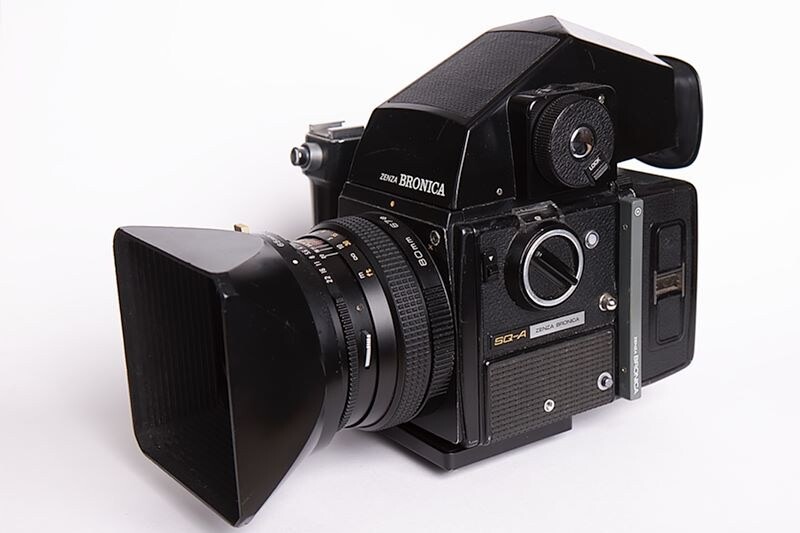
Best Budget Entry: Bronica SQ-A
.jpg)
- Format: 6x6 on 120 or 220 roll film, 12 frames per 120 roll
- Lens: Interchangeable Bronica SQ mount, standard Zenzanon-S 80mm f/2.8
- Shutter: Seiko electronic leaf shutter, 1/500 to 8 seconds, flash sync at all speeds
- Metering: None in body; add a metered prism
- Viewfinder: Interchangeable waist-level or metered prism
- Power: One 6 V PX28 battery
- Price: Used-market pricing varies (B&H Used / MPB)
The cheapest honest way into a real 6x6 SLR system is the Bronica SQ-A, and it delivers most of what a Hasselblad does for a fraction of the price. Zenza Bronica built the SQ series in Japan from the early 1980s as a direct challenger to the 500-series Hasselblad, copying the good ideas: interchangeable lenses, film backs, and finders around a square negative. A complete SQ-A kit with a body, an 80mm lens, a back, and a waist-level finder routinely costs less than a single clean Hasselblad lens.
The Zenzanon-S 80mm f/2.8 gives up nothing important to the Zeiss on the Hasselblad for most work, and because the leaf shutter lives in the lens, flash syncs at every speed up to 1/500 second. We have not tested one at Fstoppers, so the specification sheet is doing the arguing here, but the mechanics are not in dispute: swapping a film back mid-roll works just as it does on the Hasselblad, and a metered prism is cheap and plentiful. For a photographer curious about medium format who does not want to gamble a fortune on the experiment, this is the low-risk on-ramp.
The differences from the pricier square SLRs are what you would expect. The SQ-A depends on a 6 V PX28 cell for its electronic shutter, so a dead battery stops it cold, and the build, while solid, feels a notch less refined than the all-mechanical Hasselblad. Bronica is long gone, so servicing depends on independent techs and donor parts, the weakest repair outlook here next to the Contax. None of that changes the value. For a budget-minded shooter who wants a modular 6x6 system that takes the same kinds of pictures as cameras costing five times more, check the current price of the Bronica SQ-A at MPB. The 645-format Bronica ETRSi is an even cheaper way in if you prefer the rectangular frame.
What We Like
- Full modular 6x6 system for a fraction of Hasselblad money
- The Zenzanon-S 80mm f/2.8 is a very strong standard lens
- Leaf-shutter flash sync at all speeds
- Cheap, plentiful metered prisms and accessories
What Could Be Better
- Electronic shutter needs a working battery
- Build feels less refined than the all-mechanical rivals
- No manufacturer support; servicing relies on independents
How to Choose a Medium Format Film Camera
Start with format, because it shapes everything else. A 6x6 square, like the Hasselblad, Rolleiflex, and Bronica shoot, never needs to be turned on its side and forces a way of composing many photographers find liberating. A 6x7 negative, from the Pentax 67II or the Mamiya RZ67, is the largest common roll-film frame and gives the smoothest tones and the most enlargement headroom, at the cost of 10 shots per roll and a bigger camera. A 645 frame, from the Pentax 645N and Contax 645, is the smallest of the three but still dwarfs 35mm, runs 16 shots per roll, and lives in the most compact bodies. Pick the shape and the frame count you want to live with before you compare anything else.
Then be honest about handling and where you will shoot. A Rolleiflex or a GF670 disappears on a strap; an RZ67 is a tripod instrument that punishes you for walking far. The spec that trips up newcomers is flash sync. Leaf-shutter cameras (the Hasselblad, Rolleiflex, Bronica, Mamiya RZ, and GF670) sync flash at every speed, a real advantage for daylight strobe and studio work, while the focal-plane cameras (the Pentax 67II at 1/30 second, the Contax 645 at 1/125) limit fill flash in bright light.
Two used-market realities matter more than any feature. First, battery dependence: the fully mechanical cameras (the Hasselblad 500C/M, the Rolleiflex, and the Mamiya RB67) will fire forever, while the electronic ones are only as reliable as their aging circuits. Second, serviceability: a Hasselblad or a Rollei can still be professionally overhauled, whereas a Contax 645 with a failed board is often unrepairable. Buy from a dealer who tests and warranties film gear, ask when the body was last serviced, and budget for a clean-lube-adjust on anything that has sat unused. If you are weighing a used film body against a used digital one, our used cameras guide runs the same condition checks for sensors and shutters.
What We're Looking For
We chose these cameras on the negative format and rendering they deliver, the depth and affordability of their lens ecosystems on the used market, how reliably they still operate decades on, and how well each suits a specific job rather than how it reads on a spec sheet. Most picks in our digital guides come from gear our writers have used and reviewed hands-on. Here, three do: our reviewer has shot the Contax 645 professionally for two decades, and that entry links to his long-term review, while the Mamiya RZ67 and Fujifilm GF670 entries link our reviews of those cameras. Every other pick is written from verified manufacturer specifications, current used-market listings, and the documented record of these systems, and we say so in the entry rather than imply testing we have not done.
Frequently Asked Questions
Is Medium Format Film Worth It in 2026?
Yes, if you want the specific look and process rather than convenience. A medium format negative holds tonal smoothness and subject separation smaller formats cannot match, and the deliberate pace changes how you shoot. It is slower and costlier per frame than digital or 35mm, so it rewards photographers who value the result and the ritual over speed.
What Is the Difference Between 6x6, 6x7, and 645?
They are negative sizes on 120 roll film. 6x6 is a square that yields 12 frames per roll, 6x7 is a larger rectangle that yields 10 and gives the most enlargement quality, and 645 is a smaller rectangle that yields 16 and fits the most compact bodies. All three dwarf a 35mm frame, and the choice comes down to aspect ratio, frames per roll, and camera size.
Do These Cameras Have a Built-in Light Meter?
It varies, and it matters. The Pentax 645N, the Pentax 67II with its AE prism, and the Contax 645 have good working meters. The Hasselblad 500C/M, the Bronica SQ-A, and the Mamiya RZ67 have none unless you add a metered prism, and the Rolleiflex 2.8F's selenium meter is usually dead on surviving bodies. For any camera without a reliable meter, a handheld meter or a phone metering app solves the problem cheaply.
Where Should I Buy a Used Medium Format Film Camera?
Buy from a dealer that tests, grades, and warranties film gear, such as B&H Used, KEH, or MPB, rather than an unknown seller. Ask when the camera was last serviced, confirm the shutter fires accurately at all speeds, and check the film back for light leaks. A tested, guaranteed body is almost always cheaper than repairing a bargain that arrives broken.
Is Medium Format More Expensive to Shoot Than 35mm?
Yes, noticeably. You get 10 to 16 exposures per roll instead of 24 or 36, so your cost per frame for film and developing is several times higher. That economy is part of the appeal for many shooters, because it forces you to slow down and commit to each frame, but budget for it before you commit to the format.
Fstoppers may earn a commission from purchases made through links in this article. Our picks are made independently by our editorial team.