

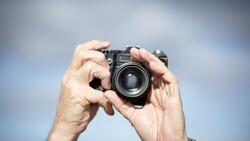
The viewfinder isn't just how you see before shooting. It's how you think. Every viewing technology, from ground glass to electronic viewfinders, created a different kind of photographer with a different way of seeing. Some compositions only exist because of how the photographer had to look at the world through their particular viewfinder. Maier's intimate street portraits wouldn't exist without waist-level viewing. Adams's formal landscapes required the contemplation of ground glass. The viewfinder shaped the photograph before the shutter ever opened.
Ground Glass: Seeing Exactly What the Lens Saw
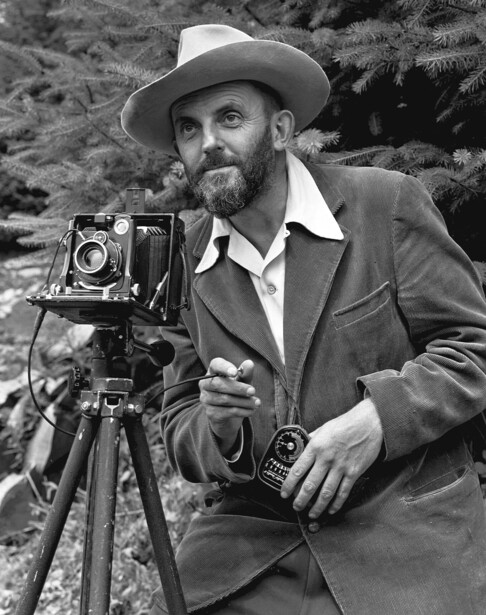
Large format view cameras used ground glass focusing screens. You draped a dark cloth over your head and stared at an upside-down, reversed image projected through the lens. The lens projects the image this way because of how optics work, not because of anything the ground glass does. What you saw was literally what the film would capture, just darker and backwards. No approximation, no parallax, pure optics.
Waist-Level: Looking Down Changed the Relationship
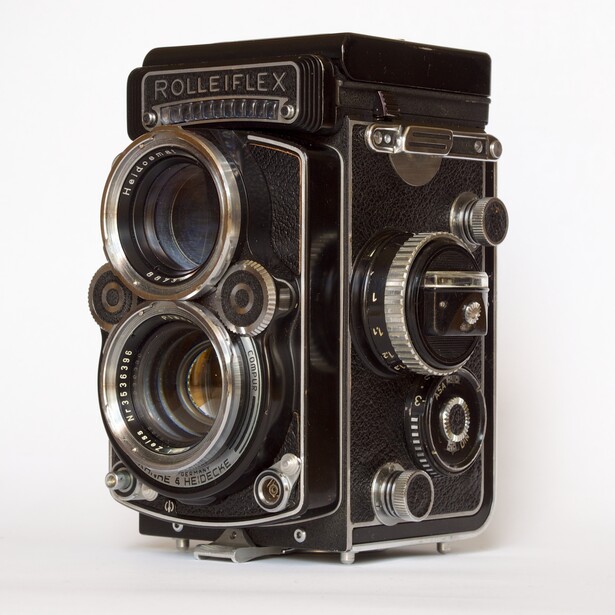
Twin-lens reflex cameras like the Rolleiflex and medium format SLRs with waist-level finders flipped everything. You looked down at a small screen, usually around 2.5 inches square. The image was right-side up but reversed left to right.
This viewing angle transformed how photographers related to their subjects. You weren't hiding behind a camera pointing it at someone's face. You were looking down, less confrontational, more intimate. Subjects didn't feel aimed at. Maier shot most of her iconic work this way with her Rolleiflex, though she also used 35mm cameras and color slide film later in her career. That specific intimacy and lack of confrontation in her most famous portraits exists because of waist-level viewing. Portrait photographers found subjects relaxed more when they weren't staring directly into a lens pointed at their face. The photographer's posture was more open, less aggressive. Children especially responded differently. Instead of a large black box blocking the photographer's face, subjects could see the photographer's eyes and expressions. This created a collaboration rather than a capture. Street photographers loved waist-level finders because they could compose while appearing to be doing something else entirely, looking down at their camera as if adjusting settings while actually framing a shot.
Pentaprism: Eye-Level and the Decisive Moment
The pentaprism solved the reversal problem through internal reflections in a solid glass prism to deliver a right-side up, correctly oriented image at eye level. Some cameras use a pentamirror assembly instead, which achieves the same result with mirrors rather than a solid prism. This was the SLR revolution that built Canon, Nikon, and Pentax into empires. For the first time, photographers could see exactly what they'd get while holding the camera like pointing a gun, with the stability of pressing it against their face.
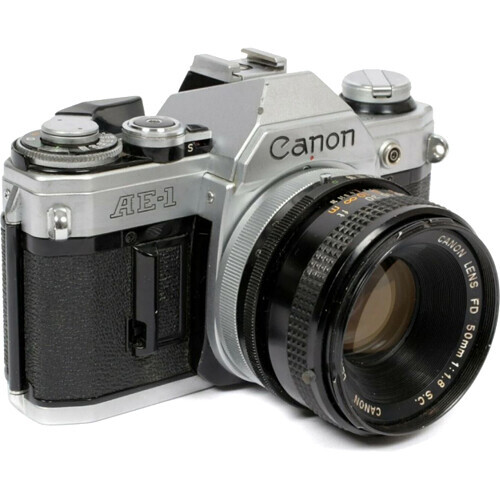
The limitation was the blackout. During exposure, the mirror flipped up and you saw nothing. That fraction of a second blindness meant you could miss the peak action. But it was still faster and more intuitive than any viewing method that came before. The pentaprism was optically perfected by the 1960s. Later improvements in the 1980s and 1990s focused on faster mirror return mechanisms, brighter viewfinders through better prism coatings, and more sophisticated information displays.
Rangefinders: Seeing Beyond the Frame
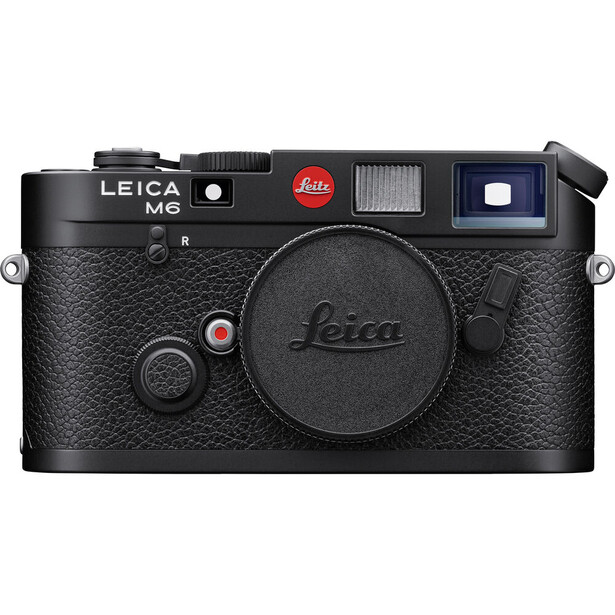
Rangefinders like the Leica M-series took a completely different approach. They don't show you through the lens at all. You look through a bright, clear window with frame lines overlaid. What you see approximates what you'll get, but parallax error exists at close distances.
This created a different kind of photographer. No blackout during exposure. No mirror slap. Quieter operation. Most importantly, you could see beyond the frame lines, watching what was about to enter your composition. Street photographers loved this anticipatory quality. You weren't just seeing what you'd capture. You were seeing what might happen next. A subject walking into frame from the left was visible before they entered your composition, giving you a split second to prepare. This peripheral awareness made rangefinder shooters think differently about timing. They composed with negative space, knowing what would fill it before it happened. The Leica M6 remains a sought-after camera because this way of seeing can't be replicated with other viewing systems.
When Viewfinders Became Computers
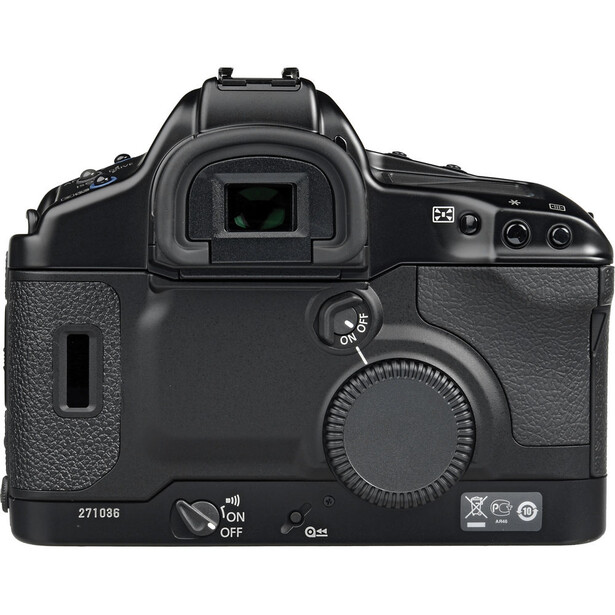
Optical viewfinders started showing more than just the image in the 1980s and 1990s. Focus points lit up. Exposure information appeared. Grid lines, level indicators, spot metering circles. The Canon EOS-1V showed 45 AF points. The Nikon F5 displayed an entire heads-up display of shooting data.
The Rear Screen Revolution
Digital cameras brought LCD screens, and with them, an entirely new viewing posture. For the first time since ground glass, photographers could hold the camera away from their face and compose on a screen. But unlike ground glass, this was bright, backlit, and showed a live preview.
Early digital shooters developed "chimping," constantly checking the rear LCD after each shot. The Canon D30 and Nikon D1 had tiny 1.8-to-2.5-inch screens. Photographers would shoot, pull the camera away, check exposure and focus, adjust, shoot again. The rhythm changed from continuous shooting to shoot, check, adjust, repeat. This feedback loop accelerated learning. Film photographers had to wait hours or days to see their mistakes. Digital photographers saw them immediately and could correct course in real time. Wedding photographers could guarantee they got the shot. Portrait photographers could show clients previews during the session. But the constant checking also interrupted flow. The moment between photographer and subject broke every time the camera came away from the face to check the screen. Some photographers discipline themselves to shoot without checking. Others embrace the immediate feedback as a fundamental advantage of digital.
Live View seemed like a gimmick at first. Why use the rear screen when there's a perfectly good optical viewfinder? But macro photographers adopted it immediately. The magnification for critical focus beat any optical finder. Video shooters who were moving from traditional camcorders to DSLRs needed it for the familiar screen-based shooting they were used to. Low angle and high angle photographers could finally see what they were getting instead of shooting blind. Product photographers shooting flat lays could see their composition from directly overhead. Architecture photographers could hold the camera above their head to avoid converging verticals while still seeing exactly what they were capturing. Live View turned the rear screen from a review tool into a composition tool.
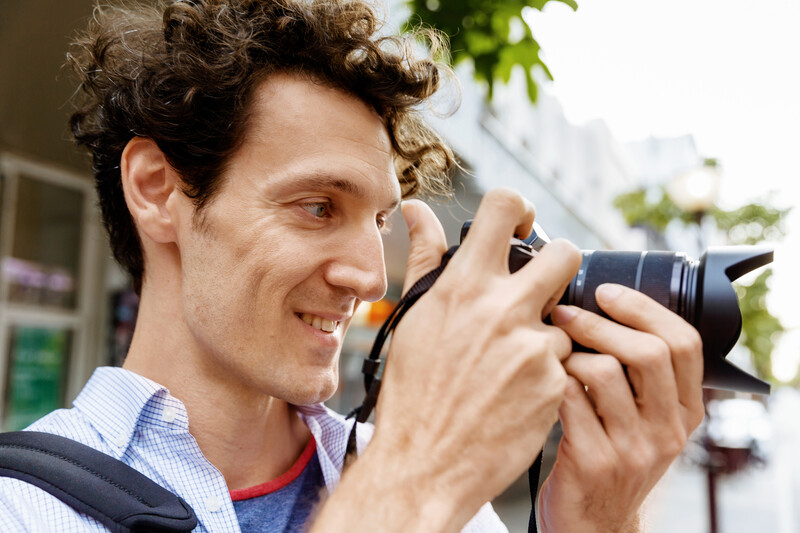
The posture matters. Arms extended, camera held away from your body. Less stable than eye-level shooting but also less intimidating. Portrait photographers discovered that shooting on the rear screen, especially at chest height, made subjects more comfortable. You could maintain eye contact while composing. The interaction felt more human than hiding behind a camera pressed to your face. Commercial photographers working with nervous subjects or children found rear screen shooting reduced anxiety. The subject could see the photographer's face and reactions, creating a more collaborative feel to the session. Some wedding photographers shoot entire ceremonies this way, appearing less intrusive while still getting their shots.
Touch to focus transformed the rear LCD from passive display to active control surface. Point at what you want sharp, tap, shoot. Canon's Dual Pixel AF combined with touch screens meant you could rack focus by sliding your finger across the screen while shooting video. The rear screen became the primary interface. An entire generation learned photography on phone screens. For them, composing at arm's length isn't a compromise. It's the default. When these photographers pick up cameras like the Sony a7 IV or Canon EOS R6 Mark II, many never use the viewfinder. They compose on the rear screen exclusively, treating the camera like a larger, more capable version of their phone. This works until they try to shoot in bright sunlight or need the stability of eye-level shooting for longer lenses.
EVF: Seeing the Photograph Before It Exists
Electronic viewfinders don't show you the world. They show you a digital preview of what the sensor is capturing. Exposure preview, white balance preview, depth of field preview, focus peaking, zebras, false color, histograms, all in real time before you press the shutter.
This is the first time in photographic history where you see a close preview of the photograph before you take it. Very few surprises. The EVF shows you a processed preview based on your camera's JPEG settings, which means what you see is very close to what you'll get, though raw files may retain more information in highlights and shadows than the preview suggests. You're not photographing reality and hoping. You're confirming a digital preview that shows approximately what the file will look like. If your exposure is too dark, the EVF shows you a dark image before you shoot. Adjust your settings and watch the preview brighten in real time. White balance is wrong? You can see it and correct it immediately. This eliminates much of the technical guesswork that plagued film and early digital photography. Wedding photographers don't have to hope they got the exposure right in challenging mixed lighting. They can see it with reasonable certainty before pressing the shutter.
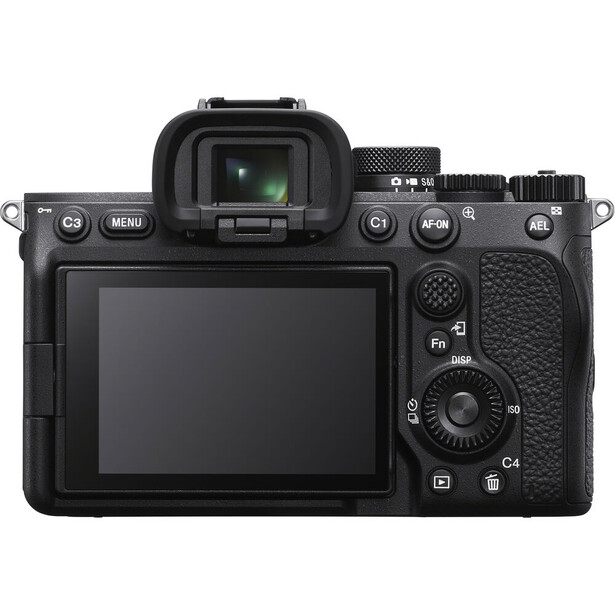
But the philosophical divide remains. EVF shooters value certainty and control. They want to know exactly what they're getting. Optical viewfinder holdouts talk about seeing the actual world instead of a screen, about the immediacy and brightness that electronics can't quite match. Some photographers still prefer the optical finder on their old Nikon F3 over the EVF on their new mirrorless body. They argue that seeing through glass and mirrors connects them more directly to the scene. The EVF, no matter how good, introduces a layer of digital processing between eye and reality. This bothers some photographers at a fundamental level. Others think it's romantic nonsense. The EVF shows you more information more accurately. Why would you want less?
This isn't about which is better. It's about what kind of photographer you are. Do you want to discover the photograph or confirm it? That question defines your relationship with the viewfinder and with photography itself. Optical viewfinder shooters embrace uncertainty. They use their technical knowledge and experience to predict what the exposure will look like, and they're occasionally surprised. Sometimes that surprise is delightful, a happy accident that wouldn't have happened if they'd been able to preview everything perfectly. EVF shooters see this as inefficient. They have the technology to eliminate uncertainty, so why not use it? Both approaches are valid. Both create good photographs. But they come from fundamentally different philosophies about what photography is and how it should feel.
The Interface That Shaped Vision
Each viewfinder technology created different kinds of images because it made photographers see differently. Ground glass enforced contemplation and formality. Waist-level viewing enabled intimacy and reduced confrontation. Pentaprisms allowed speed and reaction. Rangefinders let you anticipate what would enter the frame. Rear screens changed the physical relationship between photographer and subject. EVFs removed uncertainty but also removed surprise.
The viewfinder isn't neutral. It's not just a window on the world. It shapes thought, influences composition, and determines what's possible. Maier couldn't have made her photographs with a pentaprism pressed to her face. Adams needed ground glass to think the way he did about landscape. The viewing technology writes itself into the aesthetic. When you look at a photograph, you're seeing not just what the photographer saw but how they saw it, mediated through whatever viewing technology they used. The waist-level street photograph has a different feel than the eye-level SLR shot because the photographer's relationship to the subject was different. The ground glass landscape carries the weight of contemplation in a way that a quick mirrorless capture might not.
We're living through another transition now. EVF technology improves every year. Optical viewfinders appear on fewer cameras. The Fujifilm X-Pro3 offers both optical and electronic viewfinders in a hybrid system, letting photographers choose their viewing method. Rear screen shooting becomes more common as younger photographers come up through smartphones. But the underlying question remains the same it's always been. How do you want to see before you shoot? That choice still matters more than most photographers realize. The viewing technology shapes the vision, and the vision makes the photograph.


Join the Fstoppers community for free
-
Post comments and join in the discussions
-
Browse the site ad-free
-
Share your work and get featured in the community
-
Compete in the photo contests for fun and prizes
3 Comments
The aspect of EVFs that I appreciate, that wasn't mentioned, is that it can be an identical experience to using the rear screen live view. If you become a regular user of the rear screen, as I am being an architectural photographer, it's incredibly nice to be able to pick up the camera and use the viewfinder and have a seamless working experience. This is main reason I switched to mirrorless.
“ What you saw was literally what the film would capture, just darker and backwards.”
No, it is exactly what the film sees - the film image is reversed, and the brightness is the same as the film sees.
Interesting and thought provoking article, well done and much appreciated by this veteran amateur photographer.
One more way of previewing images is via tethering i.e. live viewing images on a computer monitor.
As for the rangefinder frame-lines allowing to see beyond the picture frame, I suppose one could simulate this on a high (40+) megapixel camera and choosing a lens with a wider angle of view than needed, and then cropping the image for the desired composition.