Buying a 35mm film camera in 2026 is a stranger decision than buying a digital one, because the market is split cleanly in two. On one side sit a handful of genuinely new cameras, more of them than at any point since the early 2010s, from a plastic panoramic shooter that costs less than a few rolls of film to a hand-assembled Leica. On the other sits a vast used market of bodies built between the 1970s and the 1990s, many now selling for more than they cost new, in condition ranging from serviced-and-perfect to seized-and-worthless.
Three things decide the purchase. The first is how much control you want, from a fixed-focus point-and-shoot that asks nothing of you to a fully manual rangefinder that asks for everything. The second is whether you buy new, with a warranty and a guarantee the shutter fires, or used, where you accept risk in exchange for glass and build quality no inexpensive new camera can match. The third is running cost, because the camera is the cheap part once a roll of color film plus developing runs real money per frame.
New cameras carry a settled retail price. The classics sell on the used market, where the number swings with condition and seller. Each entry says plainly whether we have run that camera through an Fstoppers review or whether the case rests on published specifications and the camera's documented design. If you are shopping the classics more broadly, our used camera guide covers buying secondhand without getting burned.
At a Glance
- Best Overall New: Pentax 17
- Best Classic SLR: Nikon FM2n
- Best for Beginners to Film: Canon AE-1 Program
- Best Premium Point-and-Shoot: Contax T2
- Best Premium Rangefinder: Leica M6
- Best New Autofocus Compact: Rollei 35AF
- Best for Creative Experimentation: Lomography LomoApparat
- Best Budget: Reto Pano
Best Overall New: Pentax 17
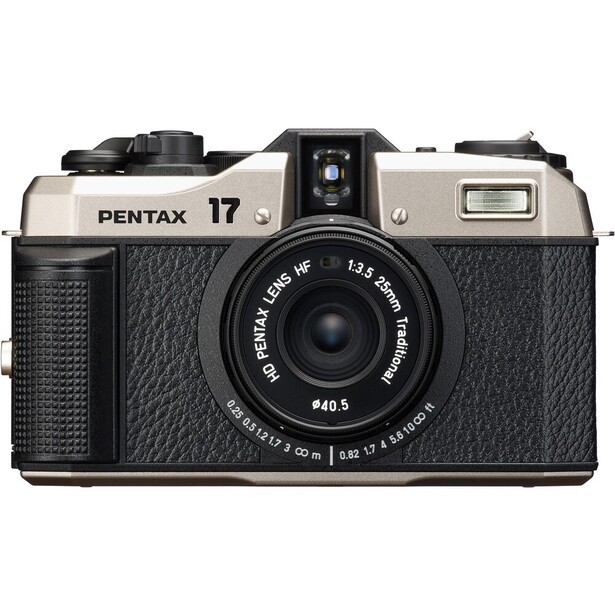
- Type: Half frame compact, zone focus
- Format: Half frame, 24x17mm, 72 frames from a 36-exposure roll
- Lens: Fixed 25mm f/3.5, 3 elements in 3 groups (37mm equivalent)
- Focus: Zone focus, six presets from 0.25 m to infinity
- Shutter: 1/350 to 4 seconds, plus Bulb
- Exposure: Seven modes including full auto and aperture-priority; ISO 50 to 3200, set manually
- Battery: One CR2 lithium
- Weight: 290 g without film and battery
- Price: $496.95 (B&H)
The Pentax 17 is the most important film camera of the decade for one plain reason: it is the first all-new film camera engineered from scratch by a major manufacturer in roughly 20 years. We have not run one through a full Fstoppers review, so what follows is a read of Ricoh's published specifications and the camera's documented design. Ricoh could have put a lens on a plastic box and cashed in on the trend. Instead it built a real camera, with a metal chassis, a proper helicoid focus ring lifted from Pentax's lens-making history, and a hand-wind advance lever. It shoots half frame, splitting each 35mm exposure into two vertical images, so a 36-exposure roll yields 72 shots. That halves your per-frame cost, which in 2026 is the number that actually keeps people shooting.
The design splits the difference between point-and-shoot ease and enough control to learn on. Focus is set by zone, choosing among six distances on a pictographic ring rather than by measuring, and exposure runs through seven modes, from full auto to a genuine aperture-priority setting. The vertical frame suits the way people shoot and share now, and at 290 g it is small enough to carry daily. You get a warranty and no gamble on 40-year-old lubricant.
Zone focus means you are guessing distance rather than confirming it, and close subjects at wider apertures will miss if you misjudge, so this is not a camera for shallow-depth portraiture. The half frame negative shows grain sooner and enlarges less cleanly than a full frame one. And at nearly $500 it costs more than plenty of excellent used SLRs that give you more control. For a new shooter who wants a warranty, a camera that will not need servicing, and the lowest running cost in film, this is the body to start with, so check the current price of the Pentax 17 at B&H.
What We Like
- The only new-from-scratch film camera from a major brand, with a warranty
- Half frame format doubles shots per roll and halves per-frame cost
- Real metal build and a proper focus helicoid, not a toy
- Seven exposure modes give room to grow, including aperture-priority
What Could Be Better
- Zone focus guesses distance instead of confirming it
- Half frame negative shows grain sooner and enlarges less cleanly
- Costs more than many capable used SLRs
- We have not tested it ourselves, so the verdict rests on its published specs and design
Best Classic SLR: Nikon FM2n
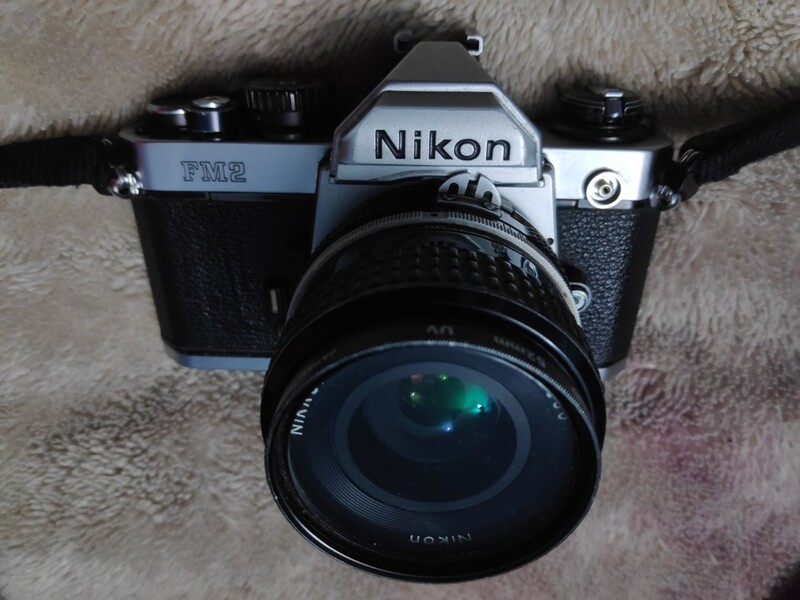

- Type: Fully mechanical 35mm SLR
- Format: Full frame 35mm, 24x36mm
- Lens: Interchangeable, Nikon F mount, works with most manual-focus Nikkors
- Focus: Manual, split-image and microprism focusing screen
- Shutter: Mechanical, 1 second to 1/4000, Bulb, 1/250 flash sync
- Exposure: Manual only, center-weighted TTL meter; ISO 12 to 6400
- Battery: Two LR44 cells (or one 3V CR-1/3N) for the meter only; the shutter fires with no battery
- Weight: Approximately 540 g, body only
- Price: Used-market pricing varies
If you want one film camera to keep for the rest of your life, buy the Nikon FM2n. Nikon stopped making it in 2001, long before Fstoppers existed, so there is no review of ours to point you at; the case rests on the design itself and on four decades of these bodies still turning up in working order. It is fully mechanical, which means the shutter is timed by springs and gears rather than a circuit, so the camera fires and exposes correctly whether or not there is a battery inside. The cells power nothing but the light meter, which is why photojournalists carried them into places where a dead battery meant a missed story. The shutter tops out at 1/4000 second, fast for a mechanical body.
Handling is the other half of the appeal, and it sits at the far end of the control question. The classic trio of a shutter-speed dial on top, an aperture ring on the lens, and a match-LED display in the finder is the fastest way to actually understand exposure, because nothing is decided for you. The Nikon F mount opens the door to one of the largest and cheapest catalogs of manual-focus glass ever made, from the everyday 50mm f/1.8 to specialist lenses that still command respect.
The tradeoffs are the flip side of its purity. There is no autofocus and no autoexposure at all, so every frame is fully manual, which is the point for some buyers and a wall for others. Prices have climbed hard as film returned, and the black bodies in particular now cost real money, so this is not the bargain it was five years ago. Any unserviced example may need foam light-seal replacement and a meter calibration. Buy a tested one and it will outlast you, so check the current price of the Nikon FM2n at MPB, where the bodies are graded and warrantied. Also consider the Olympus OM-1 if you want the same mechanical reliability in a noticeably smaller and lighter body.
What We Like
- Fully mechanical shutter fires without a battery
- 1/4000 top speed, rare among manual SLRs
- Huge, affordable Nikon F manual-focus lens catalog
- Built to survive decades of hard use
What Could Be Better
- No autofocus and no autoexposure of any kind
- Used prices have risen sharply, especially for black bodies
- Unserviced bodies often need new light seals and meter calibration
- No warranty unless you buy from a dealer who offers one
Best for Beginners to Film: Canon AE-1 Program
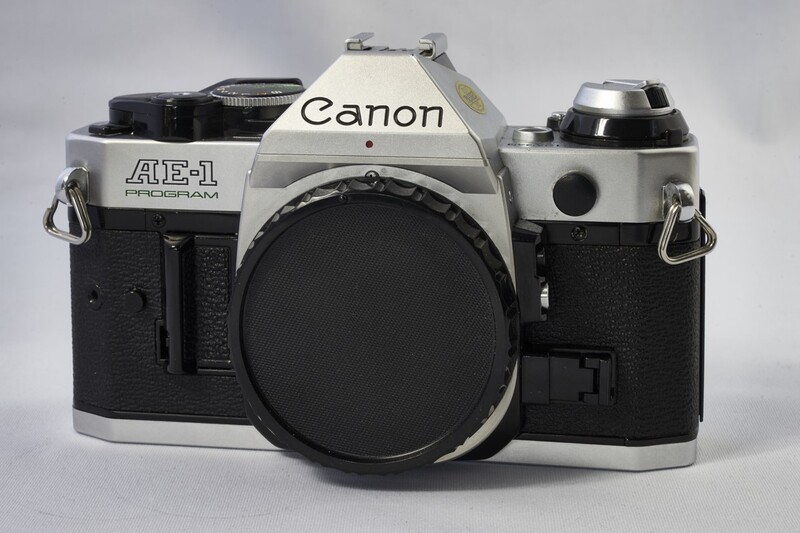

- Type: Electronically controlled 35mm SLR
- Format: Full frame 35mm, 24x36mm
- Lens: Interchangeable, Canon FD mount
- Focus: Manual, split-image rangefinder with a microprism collar
- Shutter: Cloth focal-plane, 2 seconds to 1/1000, Bulb, 1/60 flash sync
- Exposure: Program AE, shutter-priority AE, and manual; center-weighted TTL, ISO 12 to 3200
- Battery: One 6V 4LR44, required for the camera to fire at all
- Weight: Approximately 565 g, body only
- Price: $399 (B&H)
More people learned photography on the Canon AE-1 Program than on almost any other camera, and it is still the friendliest on-ramp into film. Canon discontinued it in 1987 and we have never reviewed one, so read this as a case built on the camera's design and documented behavior. The reason it works for beginners is the program mode in its name. Set the lens and shutter dial to their automatic marks and the camera picks both aperture and shutter speed, so a beginner can load a roll and get well-exposed pictures on the first outing. When you are ready to learn, you step down into shutter-priority, then into full manual. Few cameras walk you up that ladder as gently.
It is also cheap and plentiful, which matters for a first film camera you might drop, leave in a hot car, or decide is not for you. Canon sold these by the million, so clean bodies are easy to find, and the FD catalog behind it is enormous and inexpensive, with the 50mm f/1.8 that usually comes attached being genuinely sharp. Running cost is the standard 36 frames a roll, and B&H sells graded used bodies with a warranty, which takes most of the risk out of buying one.
Know its weaknesses going in. Unlike the mechanical Nikon above, the AE-1 Program is electronic, so it needs a working 6V cell to fire at all, and a dead battery means a dead camera in the field. These bodies are also famous for developing a shutter squeal, the so-called Canon cough, from dried-out lubrication, which is fixable but worth listening for before you buy. The FD mount is a dead end for anyone hoping to adapt the lenses to a modern mirrorless body, so treat the glass as film-only. For a beginner who wants automatic help now and room to learn later without spending much, check the current price of the Canon AE-1 Program at B&H. Also consider the Pentax K1000 if you would rather learn on a fully manual body with no automatic crutches at all.
What We Like
- True program auto mode makes the first roll easy
- Clear path from auto to shutter-priority to full manual
- Cheap, plentiful, and backed by a huge FD lens catalog
- Comfortable handling and a bright viewfinder
What Could Be Better
- Electronic shutter will not fire without a battery
- Prone to the well-known shutter squeal when lubrication dries out
- FD lenses do not adapt cleanly to modern mirrorless cameras
- Nearly 40 years old, so condition varies wildly between examples
Best Premium Point-and-Shoot: Contax T2
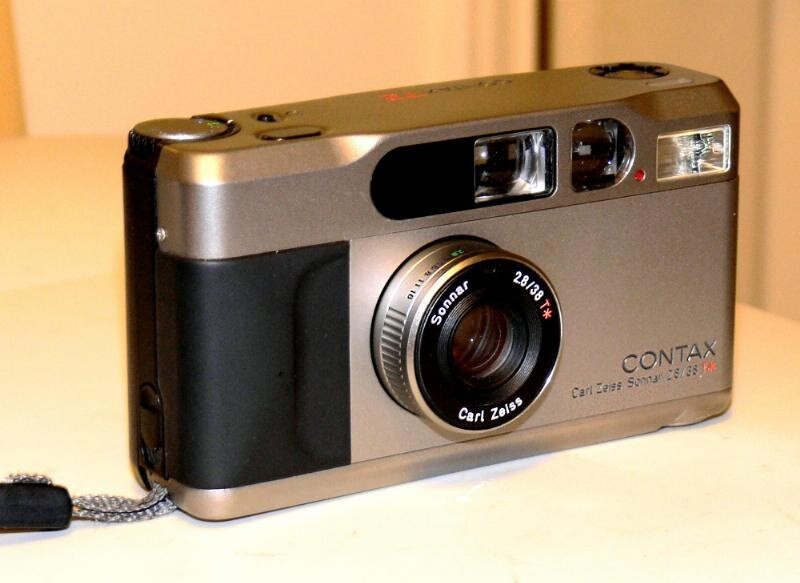

- Type: Premium autofocus compact with a titanium shell
- Format: Full frame 35mm, 24x36mm
- Lens: Fixed Carl Zeiss Sonnar 38mm f/2.8 T*, 5 elements in 4 groups
- Focus: Autofocus with manual override, 0.7 m to infinity
- Shutter: 8 seconds to 1/500
- Exposure: Program AE and aperture-priority; ISO 25 to 5000 via DX
- Battery: One CR123A
- Weight: 295 g without battery
- Price: Used-market pricing varies
Nothing else did more to create the premium-compact obsession than the Contax T2. Kyocera stopped building these in the 1990s and there is no Fstoppers review of one, so this entry is written from the published specs and the camera's documented design. The heart of the camera is the Carl Zeiss Sonnar 38mm f/2.8 T*, a lens that resolves with a clarity most fixed-lens compacts cannot approach, wrapped in a titanium body that weighs 295 g and feels heavier in the hand than its size suggests. An aperture ring on the lens barrel gives you aperture-priority, and a thumb dial takes over focus when the autofocus is not sure, which is a lot of control for a camera this size.
What makes it prized in daily use is that it disappears. It lives in a jacket pocket, wakes fast, and is quiet enough not to announce itself, which is why it became the tool of choice for candid, snapshot-style shooting, automatic when you want it and adjustable when you do not.
The problem is the price, and it is a serious one. Celebrity association and film's revival made the T2 the most expensive point-and-shoot on the used market, and you are paying a heavy premium over what the camera objectively delivers. Worse, these are aging electronics with no new-old-stock safety net, so a fault in the autofocus or metering can be difficult and costly to repair, and a dead T2 is an expensive paperweight. Buy only from a seller who has tested and, ideally, serviced the camera, then check the current price of the Contax T2 at MPB, where every body is graded and comes with a warranty. Also consider the Yashica T4, which pairs a similar Zeiss Tessar lens with a plastic body for a fraction of the cost.
What We Like
- Carl Zeiss Sonnar lens with standout sharpness and rendering
- Titanium body that pockets easily and feels premium
- Aperture-priority and manual focus, rare in a compact
- Fast to wake and quiet to shoot
What Could Be Better
- Prices are inflated well past the camera's objective value
- Aging electronics are hard and expensive to repair
- No weather-sealing and a viewfinder that is small by modern habits
- Fully dependent on a working CR123A, with no mechanical fallback
Best Premium Rangefinder: Leica M6
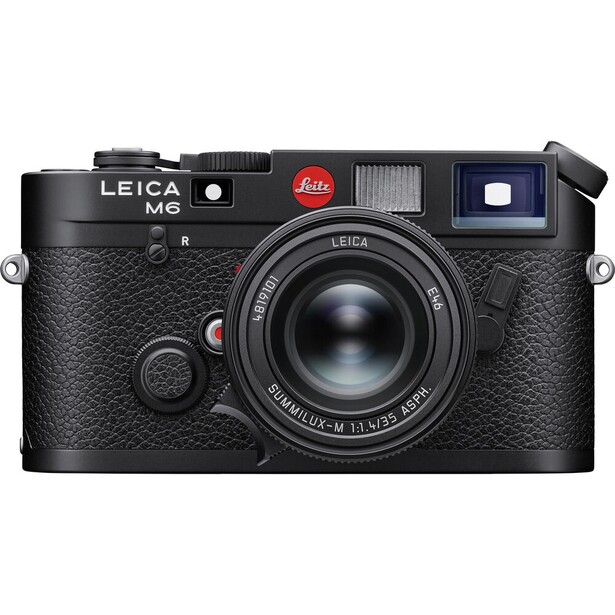
- Type: Mechanical 35mm rangefinder, reintroduced new in 2022
- Format: Full frame 35mm, 24x36mm
- Lens: Interchangeable, Leica M mount
- Focus: Manual, 0.72x rangefinder with bright-line frames
- Shutter: Mechanical cloth focal-plane, 1 second to 1/1000, Bulb
- Exposure: Manual only, center-weighted TTL with a three-LED readout in the finder; ISO 6 to 6400
- Battery: Two SR44 cells or one CR 1/3 N, for the meter only
- Weight: Approximately 575 g, body only
- Price: $7,000 (B&H)
Here is a category of one: the Leica M6 is a mechanical film rangefinder that Leica reintroduced brand new in 2022, so you can buy it with a warranty rather than gamble on a 30-year-old body. We have not shot the reissue for a review, and the specs tell a clear story on their own. It is built to the tolerances of the modern MP, with brass top and bottom plates and the 0.72x viewfinder that shows bright-line frames for composing. The only battery it needs runs the light meter, and the shutter is fully mechanical, so it will still fire in a cold field with a dead cell.
A rangefinder is a fundamentally different instrument from an SLR. You focus by aligning a small patch in the viewfinder rather than looking through the lens, and you can see outside the frame lines as a subject walks into the picture. The camera is nearly silent and accepts M-mount lenses that are among the finest optics ever produced, and the three-LED meter tells you when the exposure is right, then gets out of the way. If medium format is what you are actually chasing at this budget, read our medium format film camera guide before you spend.
The obvious weakness is cost. The M6 is a serious four-figure purchase before you buy a single lens, and Leica raised prices across the M line in 2026, so the number is a moving target at the top of this guide. It is also manual in every sense, with no autoexposure and a focusing method that takes practice, so it rewards a deliberate shooter and frustrates anyone who wants to grab and go. Rangefinders also struggle with long lenses and close macro work by design. For the photographer who wants the best-built film camera money can buy new and intends to keep it forever, check the current price of the Leica M6 at B&H. Also consider the Leica MP, or the fully mechanical Leica M-A if you want the same body without a built-in meter.
What We Like
- Sold brand new with a warranty, unlike most film rangefinders
- Mechanical shutter with the battery powering only the meter
- Excellent 0.72x rangefinder and access to legendary M glass
- Near-silent operation and a build meant to be inherited
What Could Be Better
- Extremely expensive before you add a lens, and prices rose in 2026
- Rangefinder focusing has a real learning curve
- Poorly suited to long telephoto and macro work
- No autoexposure, so every frame is on you
Best New Autofocus Compact: Rollei 35AF
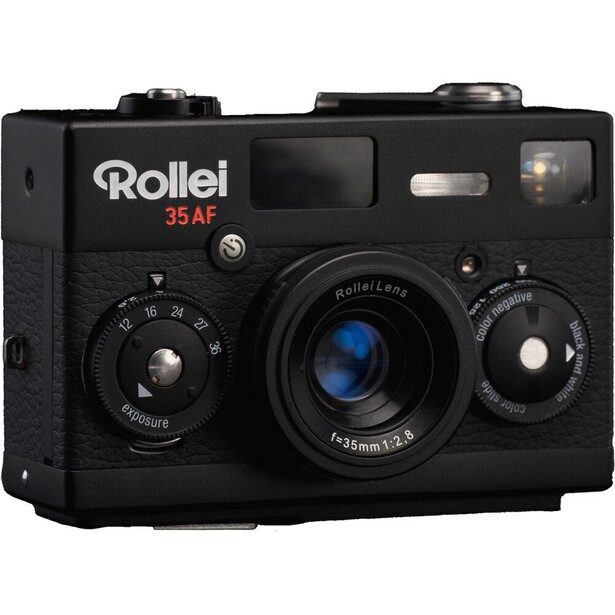
- Type: New autofocus compact
- Format: Full frame 35mm, 24x36mm
- Lens: Fixed 35mm f/2.8, five elements, f/2.8 to f/16
- Focus: LiDAR autofocus, 0.7 m to infinity
- Shutter: 1 second to 1/500, with long exposure to 60 seconds
- Exposure: Automatic with exposure compensation, plus a manual mode; ISO 25 to 3200 via DX
- Battery: One CR2, built-in flash
- Weight: 242 g without battery
- Price: $828 (B&H)
Want the pocketable compact experience without paying the Contax T2's collector tax, and with a warranty behind it? That is the Rollei 35AF. We have not tested one ourselves, so this rests on the published specifications and the camera's documented design. Built by MiNT, now several production runs deep, it is a modern homage to the classic Rollei 35 of the 1960s, roughly the same tiny size at 242 g, but with autofocus added through a LiDAR sensor that measures distance and sets the five-element f/2.8 lens for you. It reads DX codes to set film speed, has a built-in flash, and adds exposure compensation and a manual mode for when you want to override it.
The pitch is a new camera in a category otherwise dominated by fragile vintage electronics. Nothing here is 30 years old, nothing needs a CLA, and if the shutter fails you have someone to call. Autofocus removes the guesswork that trips people up on zone-focus compacts, and the 35AF lands where most people want a compact to land: automatic by default, with a manual override within reach.
The rough edges are real and you should know them. The viewfinder is poor, the autofocus can be unreliable at close distances, the focus motor is audible, and the mechanical fit and finish sits a step below the vintage cameras it imitates. There is no filter thread, and the lens, while good, is not the Zeiss optic that defined the originals. None of that ruins the camera, but it keeps the 35AF from being the effortless jewel its price implies. For a shooter who wants a new, warrantied, autofocus film compact and can live with a few quirks, check the current price of the Rollei 35AF at B&H.
What We Like
- New and warrantied in a category full of aging vintage electronics
- Real autofocus via LiDAR, no zone-focus guessing
- Genuinely pocketable with a sharp five-element lens
- Automatic exposure plus compensation and a manual mode
What Could Be Better
- Poor viewfinder and an audible focus motor
- Autofocus can miss at short distances
- No filter thread and mechanical finish below the vintage bar
- We have not tested it ourselves, so these caveats reflect its documented design rather than our own rolls
Best for Creative Experimentation: Lomography LomoApparat
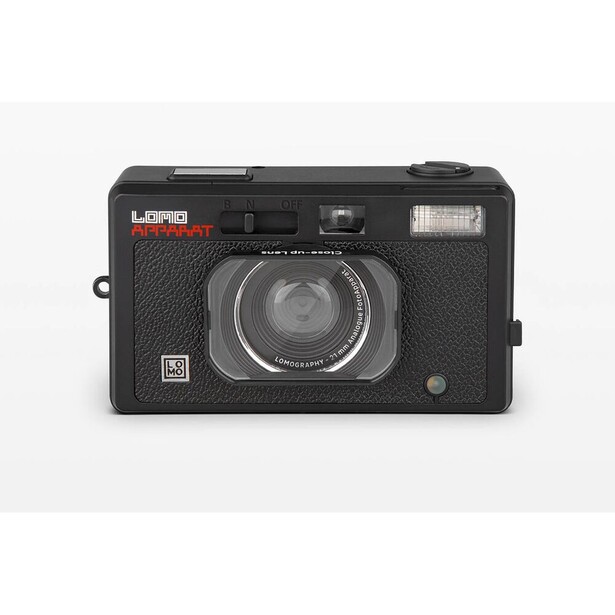
- Type: Fixed-focus wide angle point-and-shoot
- Format: Full frame 35mm, 24x36mm
- Lens: Fixed 21mm, f/10
- Focus: Fixed focus, 0.5 m to infinity (0.2 m with the close-up attachment)
- Shutter: 1/100 and Bulb
- Exposure: Fixed, with a multiple-exposure switch and a flash with color gel filters
- Battery: One AA, for the flash only
- Weight: Not published by Lomography
- Price: $89 (B&H)
Not every film camera is about getting the technically correct shot, and the Lomography LomoApparat is proudly the opposite. We have not run this one through a review, and the spec sheet is essentially the entire pitch. It is built around a 21mm lens at a fixed f/10, wider than almost anything else at this price, which produces a punchy, vignetted, slightly distorted look people either love or hate. Lomography leans into that with tools most cameras would never include: a switch for stacking multiple exposures on one frame, colored gel filters that slide in front of the flash to tint your light, and three snap-on lens attachments that add kaleidoscope splits and other effects.
The appeal is creative freedom. Exposure and focus are fixed, so there is nothing to fiddle with and nothing to get wrong. The close-focus distance of 0.5 m, dropping to 0.2 m with the bundled macro adapter, lets you shove that wide lens right up against a subject for exaggerated perspective. It is new, costs $89, and carries a warranty, which makes it the cheapest low-risk entry to film after the Reto. If this is the corner of photography you are drawn to, our retro and fun cameras guide goes deeper on the toy-camera end of the shelf.
Manage your expectations and it delivers. The plastic lens is soft, the vignetting is heavy, and there is no exposure control at all, so results in tricky light are a gamble and low light needs the flash. Anyone expecting clean, sharp, predictable images will be disappointed. Judged as what it is, an inexpensive engine for happy accidents, it is the most fun on this list per roll, so check the current price of the Lomography LomoApparat at B&H.
What We Like
- 21mm lens with a bold, distinctive wide angle look
- Multiple-exposure switch and colored gel flash filters built in
- Three lens attachments for kaleidoscope and other effects
- Cheap, durable, and endlessly playful
What Could Be Better
- Soft plastic lens and heavy vignetting
- No exposure control, so tricky light is a gamble
- Not the camera for clean, sharp, predictable results
- We have not tested it, and Lomography does not publish a weight
Best Budget: Reto Pano
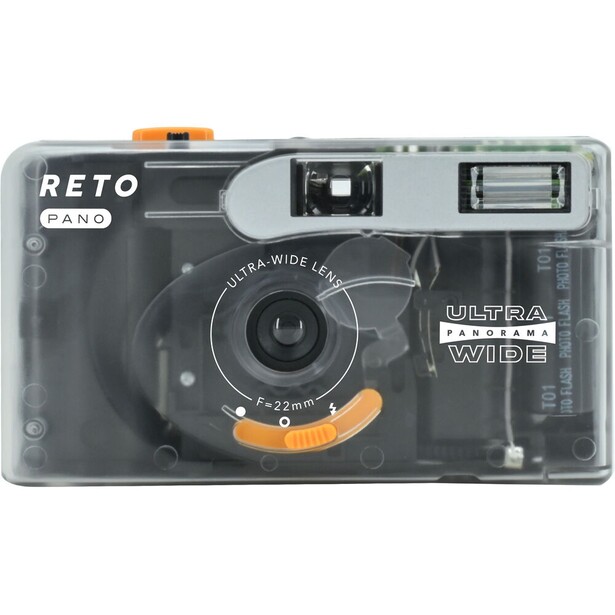
- Type: Reloadable point-and-shoot with a panoramic mode
- Format: Standard 35x24mm or panoramic 35x14.9mm, switchable mid-roll
- Lens: Fixed 22mm f/9.5, two-element acrylic
- Focus: Fixed focus
- Shutter: Single speed, 1/100
- Exposure: Fixed, with a built-in flash
- Battery: One AAA
- Weight: 93 g
- Price: $34.99 (B&H)
Getting into film does not require spending real money, and the Reto Pano is the proof. This is the one pick here we have actually shot: we ran rolls through it and came away calling it the poor man's XPan, which is both a compliment and a warning. It is a simple reloadable plastic camera with a fixed 22mm wide lens and a single shutter speed, but it has one genuinely clever trick. A switch on top masks the frame to a letterboxed panoramic ratio, and you can flip between standard and panoramic shots in the middle of a roll, which is unusual at any price.
For $34.99 you get the simple pleasure of film with almost nothing to learn. Load, wind, shoot; the fixed focus and single shutter speed mean there are no settings to get wrong in daylight. Because the camera is reloadable rather than disposable, you keep using it roll after roll, and at 93 g it is the kind of thing you throw in a bag for a festival and do not think about again. It asks nothing of you, and it is new, warrantied, and cheaper than two rolls of film with developing.
The compromises are exactly what you would expect at the bottom of the market, and shooting it made them plain. The acrylic lens is soft and the f/9.5 aperture is slow, so you need bright light or the flash for anything sharp. There is no focusing and no exposure control, so it will never approach the quality of the cameras above it. The panoramic mode is a crop of the full frame rather than a true wide negative, so you gain shape, not resolution, which is the honest difference between this and the Hasselblad XPan it evokes. For the cheapest legitimate entry into 35mm, check the current price of the Reto Pano at B&H. Also consider the Kodak Ektar H35 if you would rather shoot half frame for more images per roll than panoramic crops.
Read our full review: Reto Pano Review: Poor Man's XPan
What We Like
- The cheapest genuine way into shooting 35mm
- Switchable standard and panoramic framing mid-roll
- Reloadable, not disposable, so it lasts
- Light and cheap enough to take anywhere
What Could Be Better
- Soft acrylic lens and a slow f/9.5 aperture
- No focus or exposure control, so it needs bright light
- Panoramic mode is a crop, not a true wide negative
- Plastic build that feels every bit of its price
How to Choose a 35mm Film Camera
Start with the new-versus-used decision, because it shapes everything else. A new camera (Pentax 17, Rollei 35AF, Leica M6, LomoApparat, Reto Pano) works out of the box and carries a warranty, worth a lot in a category where the alternative is a machine built before some buyers were born. A used classic (Nikon FM2n, Canon AE-1 Program, Contax T2) gives you build quality and lens options no affordable new camera can match, but you take on risk. Buy from a dealer who tests and warranties film cameras rather than an untested private listing, and budget for a service on anything mechanical that has not been touched in years. Sticky shutters, foam light seals that have turned to goo, and dead meters are the three problems that turn a bargain into a repair bill.
Next, decide how much control you want, because that maps almost perfectly onto camera type. Point-and-shoots and toy cameras like the Reto Pano and LomoApparat ask nothing of you. Autofocus compacts like the Rollei 35AF and Contax T2 add sharpness and a little control while staying pocketable. SLRs like the Canon AE-1 Program and Nikon FM2n give you full manual command, interchangeable lenses, and a through-the-lens view, which is how you actually learn the craft. Rangefinders like the Leica M6 are their own discipline, quieter than an SLR but with a focusing method you have to practice. If exposure is the part that intimidates you, Photography 101 covers the fundamentals a manual film camera will demand from the first frame.
Then weigh running cost, which is the spec people forget. Every frame costs money now once you add film and developing, so a half frame camera like the Pentax 17 that doubles your shots per roll materially changes what a year of shooting costs. The underrated spec is the lens, and the overrated one is the shutter's top speed: 1/4000 looks impressive as a number, but almost nobody shooting ISO 400 film in daylight needs it, while the difference between a good prime and a mediocre one shows in every frame. On the SLRs and the Leica, the body is a light-tight box and the lens does the real work. On the fixed-lens cameras, the built-in lens is the whole camera, which is why the Zeiss optic on the Contax commands what it does.
What We're Looking For
Our picks weigh build quality and reliability, the character and sharpness of the lens, how well the controls suit the intended shooter, and running cost per frame, rather than spec-sheet bragging rights that mean little on film. Most picks across our buying guides come from gear our writers have used and reviewed hands-on. Film is the exception, because most of these cameras were discontinued before Fstoppers existed, so where we have not tested one we say so plainly in its entry and write from verified specifications and documented design. The Reto Pano is the one pick here we reviewed ourselves. Every specification was verified against current manufacturer and retailer sources at the time of writing.
Frequently Asked Questions
Should I Buy a New or Used Film Camera in 2026?
Buy new if you want a warranty and a guarantee it works, which the Pentax 17, Rollei 35AF, and Leica M6 all offer. Buy used if you want build quality and lens choices no affordable new camera matches, but only from a dealer who tests and warranties the camera, and budget for a possible service on anything mechanical.
Is the Pentax 17 Worth It?
Yes, for a new shooter who values a warranty and low running cost. It is the only all-new film camera from a major brand in about two decades, it is built from metal rather than plastic, and its half frame format doubles your shots per roll. If you want full manual control or large, ultra-sharp negatives, a used SLR is the better spend.
Why Are Old Film Cameras So Expensive Now?
Film's revival created more demand than the fixed supply of vintage cameras can meet, so prices on sought-after bodies like the Contax T2 and black Nikon FM2n now exceed what they cost new. Nothing new is being made in those exact models, condition keeps degrading, and celebrity association inflated the premium compacts in particular.
What Is the Difference Between Half Frame and Full Frame 35mm?
A half frame camera like the Pentax 17 splits each standard 35mm exposure into two smaller vertical images, so a 36-exposure roll yields 72 shots and your per-frame cost is cut roughly in half. The tradeoff is a smaller negative, which shows more grain and enlarges less cleanly than a full frame 35mm shot.
Do I Need a Light Meter to Shoot Film?
Not always. Cameras with automatic exposure or a built-in meter, like the Canon AE-1 Program and Leica M6, handle it for you. Fully manual cameras without a working meter require you to judge exposure yourself, using a handheld meter, a phone app, or the sunny 16 rule, which is easier to learn than it sounds.
Fstoppers may earn a commission from purchases made through links in this article. Our picks are made independently by our editorial team.