

Nikon shooters face a unique challenge that Canon and Sony users simply don't encounter: a lens ecosystem so sprawling and historically layered that even longtime Nikon photographers routinely get confused about what works with what. Here's everything you need to know.
Canon abandoned its FD mount decisively in 1987 and started fresh with EF, then did it again with RF. Sony built its E-mount from scratch for mirrorless. But Nikon? Nikon kept the same basic F-mount for 65 years while quietly changing how lenses communicate with cameras across dozens of iterations. Now add Z-mount mirrorless to the mix, and you have a compatibility puzzle that can make buying used glass feel like defusing a bomb.
This guide will cut through the confusion. Whether you're trying to figure out if your father's old Nikon lenses will work on your new Nikon Z6 III, or you're buying used glass and want to know exactly what you're getting into, this is the reference you need. By the end, you'll understand the differences between all the major Nikon lens types, know exactly what works on which cameras, and be able to make smart purchasing decisions without second-guessing yourself.
The Two Mounts That Matter
Let's start with the big picture. Nikon currently has two lens mount systems, and understanding the basic distinction between them is the foundation for everything else.
F-mount launched in 1959 and became one of the longest-running lens mounts in photographic history. The physical bayonet connection remained essentially unchanged for over six decades, which meant that in theory, you could mount a lens from 1960 on a camera from 2020. In practice, things got complicated because while the physical mount stayed the same, the way lenses communicated with camera bodies evolved dramatically. Mechanical linkages gave way to electronic contacts. Autofocus motors moved from camera bodies into lenses. Aperture control shifted from physical rings to electronic commands. Each of these changes created new lens categories with different compatibility profiles, and Nikon never fully abandoned the old ways, just kept adding new ones on top.
The F-Mount Alphabet Soup
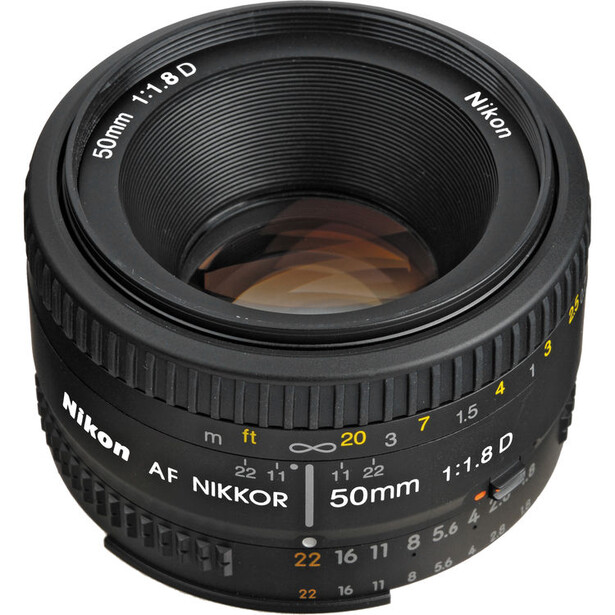
Here's where things get genuinely confusing, and where most compatibility questions originate. F-mount lenses fall into several distinct categories based on when they were made and what technology they use. Understanding these categories is essential for buying used glass or figuring out what your existing lenses can do on different bodies.
Pre-AI lenses were made from 1959 through 1977. These lenses have no electronic communication and use a mechanical aperture indexing system that can damage modern cameras. The issue is a metal prong on the aperture ring that collides with the AI indexing tab on higher-end Nikon DSLRs. Nikon officially lists pre-AI lenses as incompatible with FTZ adapters and warns that forcing attachment can damage the adapter or lens. Unless a pre-AI lens has been professionally converted to AI specifications, avoid mounting it on modern Nikon bodies. These lenses are only safe on the earliest manual focus Nikon bodies or after professional conversion.
AI and AI-S lenses came next, spanning roughly 1977 through the mid-1980s as the primary lens type. "AI" stands for Automatic Maximum Aperture Indexing, a mechanical system that let the camera meter without manual coupling. AI-S lenses added a linear aperture mechanism for programmed auto exposure modes. Both types are fully manual focus, communicating through mechanical linkages. On DSLRs with AI indexing support (models like the Nikon D780, Nikon D850, D500, and D7200), these lenses provide accurate metering. Note that the D7500 removed the AI indexing tab, so it cannot meter with these lenses despite being a mid-range body. On entry-level DSLRs, you lose metering. On Z-mount bodies via FTZ, they work for manual focus with full metering because mirrorless cameras meter off the sensor. Entering lens data in the menu is optional, helping with EXIF and IBIS optimization.
AF and AF-D lenses introduced autofocus to the Nikon system starting in 1986. These lenses rely on a mechanical coupling called a screwdriver drive: the camera body contains an autofocus motor that physically turns a shaft in the lens to achieve focus. The "D" designation indicates distance encoding, which transmits focus distance information to the camera for improved flash metering. The critical limitation: these lenses only autofocus on camera bodies with the built-in screwdriver motor. That includes enthusiast and professional DSLRs like the D7500, D500, D780, and D850, but excludes entry-level bodies like the D3500 and D5600. Mount an AF-D lens on an entry-level DSLR and you're stuck with manual focus. On Z-mount cameras via FTZ, AF and AF-D lenses are manual focus only because no Z-mount body contains the screwdriver motor.
AF-S lenses solved the autofocus motor problem by putting the motor inside the lens. The "S" stands for Silent Wave Motor, Nikon's ultrasonic motor technology. Because these lenses don't rely on a camera body motor, they autofocus on every Nikon DSLR ever made, from the entry-level D3500 to the professional D6. This is the most common lens type you'll find on the used market, and it's the type that transitions most gracefully to Z-mount. Through the FTZ adapter, AF-S lenses provide full autofocus, full metering, and full aperture control on any Z-mount body. The autofocus might be slightly slower than native Z lenses and may hunt a bit more in challenging conditions, but the performance is genuinely good for most purposes.
AF-P lenses represent the newest F-mount autofocus technology, using a pulse motor (stepping motor) rather than the ultrasonic motor in AF-S lenses. These motors are faster, quieter, and better suited to video. Nikon introduced AF-P lenses starting around 2016. The catch is that AF-P compatibility varies by specific lens. The DX AF-P kit lenses are unusable on many older cameras like the D90 or D3100. The FX AF-P 70-300mm has broader compatibility and can focus on bodies like the D700 and D300s, but with a significant limitation: focus is lost when the camera's meter times out, requiring you to refocus for every shot. This makes it impractical for tripod or landscape work on those legacy bodies. Always check Nikon's compatibility chart. On Z-mount via FTZ, AF-P lenses work with full autofocus.
DX vs. FX: The Sensor Size Question
Layered on top of all these lens types is another distinction that confuses many photographers: DX versus FX. These designations refer to the image circle the lens projects, which relates to sensor size.
FX lenses are designed for full frame sensors (what Nikon calls FX format). They project an image circle large enough to cover the entire 35mm-equivalent sensor. FX lenses work perfectly on both full frame and crop-sensor (DX) Nikon bodies. When you use an FX lens on a DX body, you're simply using the center portion of the image circle. This effectively gives you a 1.5x crop factor, so a 50mm FX lens on a DX body frames like a 75mm lens would on full frame. There's no quality penalty; you're just using less of what the lens projects.
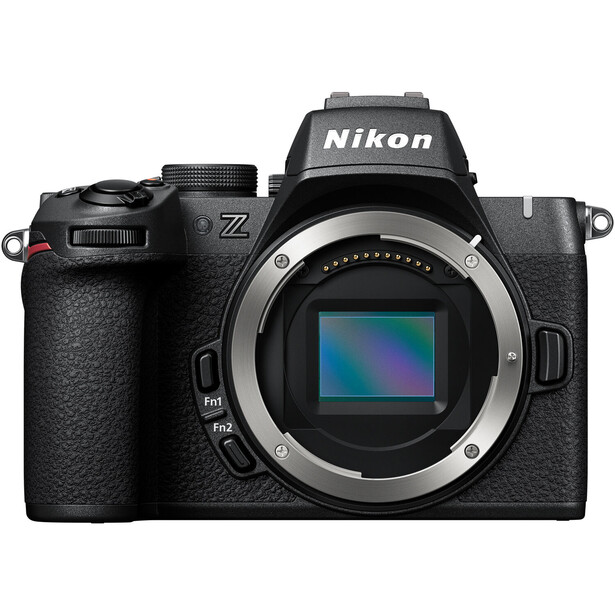
The practical advice here is straightforward: if you might ever upgrade to full frame, buy FX lenses when possible. They'll work on your current DX body and remain useful if you move up. If you're committed to DX format, the DX lenses offer size and cost advantages worth leveraging.
Z-Mount: The Simpler System
After wading through the complexity of F-mount, Z-mount feels refreshingly straightforward. Nikon designed it from scratch for the mirrorless era, and the naming conventions are far more logical.
All Z-mount lenses are designated Nikkor Z, making them immediately identifiable. S-line lenses are Nikon's premium optical designs, identifiable by a gold ring and an "S" in the name. These prioritize optical quality above all else. Non-S lenses emphasize compactness or affordability while still delivering very good performance. The Nikkor Z 28mm f/2.8 and Nikkor Z 40mm f/2, for example, are non-S lenses that provide excellent quality in small packages at reasonable prices.
The DX designation carries over from F-mount, indicating lenses designed for APS-C Z-mount cameras like the Z30, Z50, Z50 II, and Zfc. Z DX lenses work on full frame Z bodies with an automatic crop, and full frame Z lenses work perfectly on DX Z bodies with the expected 1.5x crop factor.
VR (Vibration Reduction) appears in some Z lens names, but the situation is simpler than it used to be because every full frame Z-mount body includes in-body image stabilization. When you pair a VR lens with a stabilized body, the two systems work together for maximum effectiveness. Some Z lenses omit VR entirely because the body's stabilization handles the job adequately. For DX Z-mount bodies, which lack in-body stabilization, lens-based VR remains important.
Third-party support for Z-mount has expanded significantly. Tamron, Sigma, Viltrox, and others produce native Z-mount lenses with full autofocus. One caveat: as of early 2026, Nikon has filed legal action against Viltrox over Z-mount patent and licensing disputes. While Viltrox lenses remain available and functional, buyers should be aware of this ongoing litigation and the theoretical risk of future firmware compatibility issues. Tamron and Sigma operate without such concerns.
The FTZ Adapter: Bridging Two Worlds
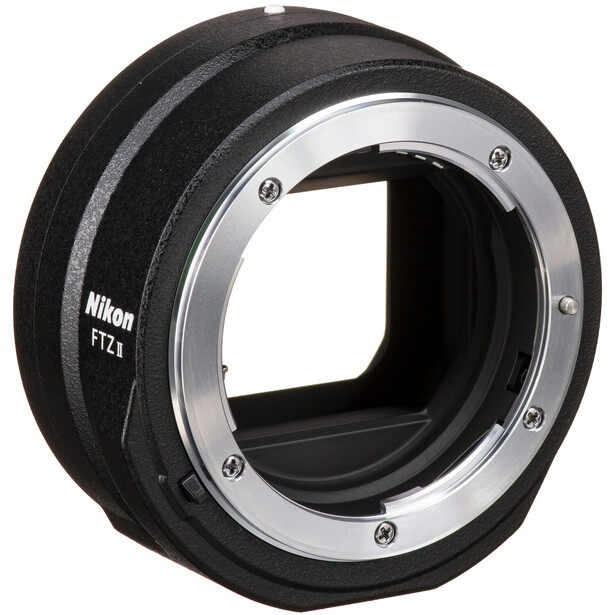
Nikon's FTZ adapter (and its smaller successor, the FTZ II) lets you mount F-mount lenses on Z-mount camera bodies. Understanding what works well through this adapter versus what doesn't is crucial for anyone transitioning from DSLR to mirrorless or inheriting F-mount glass.
The adapter is essentially a mechanical spacer with electronic passthrough. It doesn't contain optical elements, so there's no image quality penalty. The 30 mm of additional length makes up the difference between F-mount's 46.5 mm flange distance and Z-mount's 16 mm flange distance. Electronic communication passes through unchanged for lenses that support it.
AF-S and AF-P lenses work beautifully through the FTZ adapter. You get full autofocus, full metering, complete aperture control, and VR functionality. Many photographers continue using favorite AF-S lenses on Z bodies for years without feeling urgently compelled to replace them.
AI and AI-S manual focus lenses work through the adapter with full metering support because Z cameras meter off the sensor directly. You can optionally input the lens's focal length and maximum aperture through the menu for accurate EXIF data and optimized IBIS, but metering works without this step. These old manual lenses can be surprisingly enjoyable on Z-mount because EVF focus peaking and magnification make precise manual focus far easier than on a DSLR. Pre-AI lenses should not be mounted on FTZ adapters per Nikon's official guidance.
The original FTZ and the newer FTZ II are functionally identical. The FTZ II simply removes the tripod foot, making it smaller and lighter. If you already own the original FTZ, there's no reason to upgrade.
Compatibility Reference
Here's a straightforward breakdown of what works where. I'll cover each major lens type and how it behaves on different camera categories.
- For AF-S FX lenses: These work with full autofocus on all Z-mount bodies via FTZ, with full autofocus on all full frame DSLRs, with full autofocus on all DX DSLRs including entry-level models, and maintain full functionality across the board. This is the most universally compatible F-mount lens type.
- For AF-S DX lenses: These work with full autofocus on all Z-mount bodies via FTZ (with automatic crop on full frame Z bodies), with full autofocus on all DSLRs (with automatic crop on full frame DSLRs), and are fully compatible everywhere with the crop factor consideration on full frame bodies.
- For AF-D lenses: These become manual focus only on Z-mount bodies via FTZ with no autofocus capability. On full frame DSLRs and enthusiast/professional DX DSLRs with the screw-drive motor (D7500, D500, etc.), you get full autofocus. On entry-level DX DSLRs without the screw-drive motor (D3500, D5600), these are manual focus only.
- For AF-P lenses: These work with full autofocus on all Z-mount bodies via FTZ. On DSLRs, compatibility varies by lens model: the DX AF-P kit lenses are incompatible with many older cameras, while the FX AF-P 70-300mm works on more bodies (including D700, D300s) but loses focus when the meter sleeps, making it impractical for tripod work. Check Nikon's chart.
- For AI and AI-S lenses: These work on Z-mount bodies via FTZ with manual focus and automatic metering (no menu setup required for metering, though entering lens data improves IBIS and EXIF). On DSLRs with AI indexing (D780, D850, D500, D7200, but not the D7500), you get manual focus with metering. On entry-level DSLRs and the D7500, you get manual focus without metering.
- For native Z-mount lenses: These work on all Z-mount bodies with full functionality. They are physically incompatible with any F-mount DSLR and no adapter exists to make them work.
Practical Advice for Common Situations
If you're switching from Nikon DSLR to Nikon mirrorless and own AF-S lenses, the transition is painless. Buy the FTZ adapter and keep shooting. Your AF-S glass will work excellently on any Z-mount body. Over time, you can replace lenses with native Z-mount versions as budget allows. There's no urgency to dump all your F-mount glass immediately.
If you own AF-D lenses you love, the calculus changes. These become manual focus only on Z-mount, which may or may not matter depending on how you shoot. For deliberate work like landscape or studio photography, manual focus on a Z-mount body is pleasant thanks to focus peaking and magnification. For action, events, or anything requiring fast autofocus, those AF-D lenses lose their primary advantage. Consider selling AF-D glass when transitioning and putting the money toward native Z lenses or AF-S alternatives. If you're looking to develop your landscape photography skills with your new Z-mount system, Fstoppers offers an excellent resource in Photographing the World: Landscape Photography and Post-Processing.
If you're inheriting or buying old manual focus Nikon glass, Z-mount bodies are an excellent home for AI and AI-S lenses. The combination of short flange distance (allowing easy adaptation), excellent EVF-based manual focus aids, and in-body stabilization makes vintage Nikon glass more usable on Z-mount than it ever was on DSLRs. Pre-AI lenses require professional AI conversion before use on any modern Nikon body.
If you're buying into the Nikon system fresh today, go Z-mount without hesitation. There's no compelling reason to start with F-mount DSLRs in 2026 unless you find an exceptional deal on used gear. The Z-mount lens lineup is now comprehensive enough to cover virtually any need, and Nikon's development resources are entirely focused on this system. For those just starting out, Photography 101 provides a solid foundation for understanding your new camera and editing workflow.
When shopping for used lenses, always verify exactly what type you're buying. Listings that just say "Nikon 50mm f/1.4" without specifying AF-S versus AF-D versus AI-S could be any of several very different lenses with very different compatibility profiles. Check the photos for the specific markings on the lens barrel that indicate the type.
Looking Ahead
F-mount is now essentially a legacy system. Nikon hasn't released a new F-mount camera in years, and the DSLR production lines are winding down. The vast F-mount lens library remains usable through adapters, but new development has stopped. If you're building a lens collection for the long term, Z-mount is the only sensible choice.
Z-mount continues receiving all of Nikon's optical engineering attention. The lens roadmap still has gaps, but the core focal lengths and zoom ranges are thoroughly covered. Third-party manufacturers are filling additional niches at various price points. The ecosystem is mature enough now that you can build a complete working kit without compromise.
The good news for existing Nikon shooters is that the FTZ adapter provides a genuine bridge. Your investment in quality F-mount glass, particularly AF-S lenses, isn't stranded. Those lenses remain useful for as long as you want to keep using them, giving you time to transition at whatever pace makes sense for your needs and budget. The Nikon lens ecosystem is complex because of its history, not because of any current design failure. But armed with the knowledge of what those layers actually are and how they interact, you can navigate the system confidently.


Join the Fstoppers community for free
-
Post comments and join in the discussions
-
Browse the site ad-free
-
Share your work and get featured in the community
-
Compete in the photo contests for fun and prizes
1 Comment
Just to correct your description of the Nikkor-Z range: lenses designated with an "S" do not all have a gold ring. The 24-120 f4 and 14-30 f4 are void of such luxury. And I'm not sure the new 24-70 f2.8 sports such extravagance.
Certainly the pro F-mount lenses once followed that rule, but it seems to have been retired with the Z-mount "S" range.
Here's Chat GBT's answer:
'These are currently the only recognised gold-ringed Z-mount lenses:
NIKKOR Z 400mm f/2.8 TC VR S
NIKKOR Z 600mm f/4 TC VR S
NIKKOR Z 600mm f/6.3 VR S
NIKKOR Z 800mm f/6.3 VR S
These are all high-end super-telephoto wildlife / sports lenses.'