A camera has not been a status object since the days of the chrome Leica, and then the Fujifilm X100VI sold out everywhere and started changing hands for more than its list price. Something shifted. A generation raised on phone cameras decided it wanted dials, a shutter that clicks, and a photo that looks finished the moment it leaves the card. The cameras in this guide answer that want in very different ways, from a full frame body dressed like a 1980s film SLR to a plastic screen-free box that costs less than a nice dinner. The camera you enjoy carrying is the camera you actually use.
Retro means two separate things here, and it helps to keep them apart. Some of these cameras are thoroughly modern machines wearing vintage clothes, with class-leading autofocus and 40-megapixel sensors hidden under knurled dials. Others are quirky on purpose, trading image quality for the joy of a constraint, whether that is a half-frame film advance lever or a camera with no screen to chimp on at all. This guide spans both, across every price tier, from a pocketable screen-free toy to a full frame flagship, and across five brands so no single company's marketing dominates the list. If you want a broader look at small cameras of every stripe, our compact and point-and-shoot cameras guide covers the category without the vintage styling filter.
Two ground rules for what follows. Prices are current B&H figures and move often, so treat them as a snapshot, and availability on a couple of these, the X100VI in particular, is genuinely unpredictable. And where we have put a camera through a full Fstoppers review, we link our hands-on coverage in its section. Where we have not tested one ourselves, we say so plainly in the entry and write from verified specs instead of pretending otherwise.
At a Glance
- Best Retro Full Frame: Nikon Zf
- Best Compact Retro: Fujifilm X100VI
- Best for Film-Look Digital: Fujifilm X-T50
- Best Retro APS-C on a Budget: Nikon Zfc
- Best Retro Micro Four Thirds: OM System OM-3
- Best Fun and Quirky: Fujifilm X half
- Best Fun Film Camera: Pentax 17
- Best Budget Fun: Camp Snap 2
Best Retro Full Frame: Nikon Zf
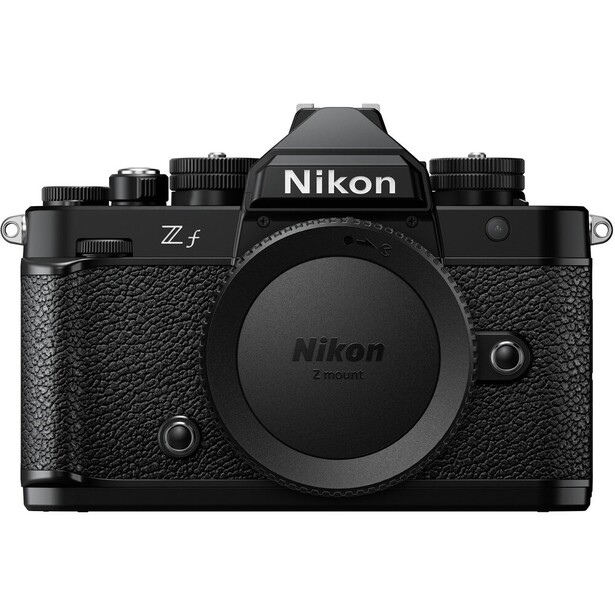
- Sensor: 24.5 MP full frame BSI CMOS
- Processor: EXPEED 7
- Mount: Nikon Z, full frame
- Stabilization: in-body, rated up to 8 stops
- Autofocus: 273-point hybrid AF with subject detection
- Continuous shooting: 7.8 fps mechanical, up to 14 fps in an expanded mode
- Video: 4K/30p oversampled from 6K, 4K/60p with a DX crop, 10-bit N-Log
- Viewfinder: 3.69m-dot OLED
- Weight: 710 g with battery
- Price: $2,196.95 (B&H)
The Zf is the rare retro camera that gives up nothing to earn its looks. Our month-long hands-on with the Zf found it a solid fit for nearly any job short of high-megapixel work, and the specifications explain why. Those specifications are unusual: Nikon put the same EXPEED 7 processor here that runs the Z8 and Z9, so the subject detection in a body dressed like a 1982 FM2 comes from the same engine professionals rely on for people, animals, and vehicles. That is not something the film cameras this thing imitates could dream of, and it is why the Zf reads as a daily camera rather than a shelf piece.
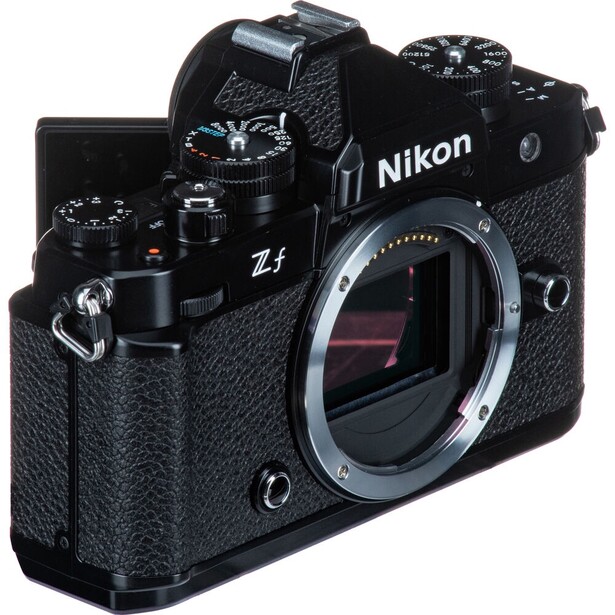
The physical experience is the draw. There are real machined dials for shutter speed, ISO, and exposure compensation across the top plate, a dedicated switch to flick between stills, video, and black and white, and a brass-feeling heft that the smaller Zfc does not have. The 8-stop in-body stabilization rating is among the highest Nikon publishes, and it turns the 24.5-megapixel full frame sensor into a low-light tool you can hand-hold in places you would normally reach for a tripod. Nikon also offers the Zf in a run of premium colors, including a teal and a cognac brown, if the standard black leatherette feels too sober.
The honest limitations are ergonomic. There is no meaningful front grip, so with a large lens like the 24-70mm f/2.8 mounted, the Zf becomes front-heavy and awkward to hold for a long day, and an accessory grip is close to mandatory to fix what the design left out. The single full-size card slot is paired with a slow microSD second slot, an odd choice on a body at this price, and 4K/60p crops into the sensor and tightens your field of view. It is also the most expensive camera in this guide, and if that number stings, the Zfc below buys much of the same design language for roughly half the money. If you want the most capable camera here and you want it to look like a classic, check the current price of the Nikon Zf at B&H.
Read our full review: Beautiful and Powerful: We Review the Nikon Z f
What We Like
- Flagship-grade autofocus and subject detection in a retro body
- Class-leading 8-stop in-body stabilization
- Real machined dials and a dedicated black and white switch
- Full frame image quality with the full Z lens catalog behind it
What Could Be Better
- Shallow grip makes larger lenses front-heavy
- Second card slot is a slow microSD
- 4K/60p crops into the sensor
Best Compact Retro: Fujifilm X100VI
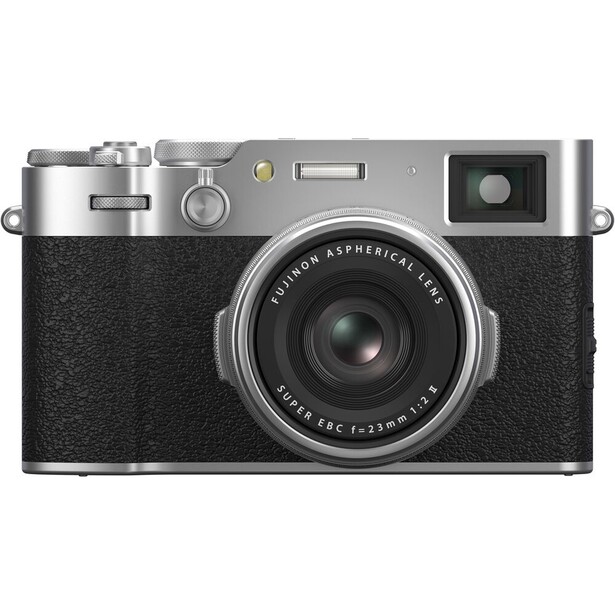
- Sensor: 40.2 MP APS-C X-Trans CMOS 5 HR
- Processor: X-Processor 5
- Lens: fixed 23mm f/2 (35mm full frame equivalent), 4-stop built-in ND
- Stabilization: in-body, rated up to 6 stops
- Autofocus: intelligent hybrid AF, phase detection with subject detection
- Continuous shooting: 11 fps mechanical, up to 20 fps electronic with a 1.29x crop
- Video: 6.2K/30p, 4K/60p
- Viewfinder: hybrid, optical plus 3.69m-dot OLED
- Weight: 521 g with battery and card
- Price: $1,799 (B&H)
Nothing else here has caused the kind of scene the X100VI caused. It is a fixed-lens compact with a 35mm-equivalent field of view, a 40.2-megapixel sensor, and a hybrid viewfinder that flips between a bright optical window and an electronic display with a flick of a front lever. You compose the way you would with a rangefinder, then confirm exposure and focus electronically when you need to. We have not run this generation through a full Fstoppers review, so what follows comes from Fujifilm's published specifications: a 521-gram body with that viewfinder is very hard to leave at home.
The specification that separates it from the X100V is in-body stabilization, rated up to 6 stops, which pairs with the f/2 lens to make dim interiors and evening streets workable without pushing ISO. A 4-stop ND filter sits inside the lens for shooting wide open in daylight. The 20 film simulations, including the newer REALA ACE profile, produce JPEGs that look finished straight out of camera, and that is most of why this thing went viral. You shoot, you get a color rendering that feels intentional, and you post it without touching an editor.
The catch is the same one it has had since launch: you may not be able to buy one. More than two years in, demand still outruns supply, listings flicker between in stock and back-ordered, and the street price frequently sits above Fujifilm's own figure. The fixed 35mm-equivalent lens is a real constraint, not a stylistic one, so if you want to zoom or shoot tight portraits, look elsewhere. And there is no weather-sealing unless you add the adapter ring and a filter. If you want one beautiful camera to carry everywhere and you are willing to pounce when stock appears, check the current price of the Fujifilm X100VI at B&H, and set a stock alert while you are there.
What We Like
- Excellent hybrid optical and electronic viewfinder
- 40 MP sensor and 6-stop stabilization in a pocketable body
- Film simulations produce finished JPEGs with no editing
- Built-in 4-stop ND filter for shooting at f/2 in daylight
What Could Be Better
- Chronically hard to find, often above list price
- Fixed 35mm-equivalent lens limits framing
- No weather-sealing without an added adapter and filter
Best for Film-Look Digital: Fujifilm X-T50
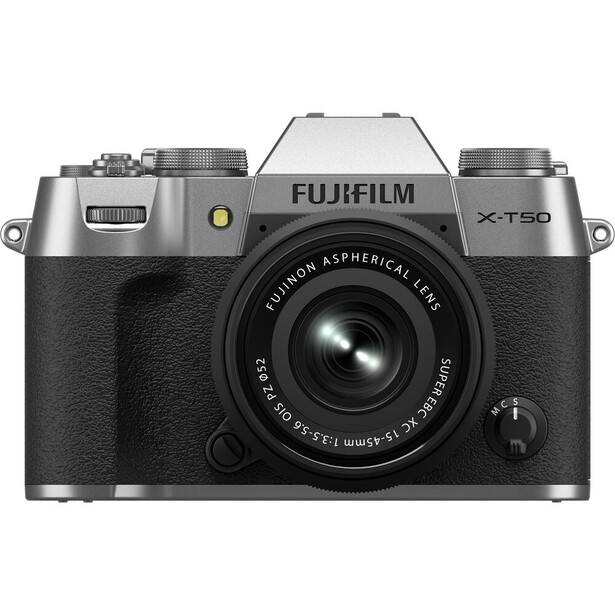
- Sensor: 40.2 MP APS-C X-Trans CMOS 5 HR
- Processor: X-Processor 5
- Mount: Fujifilm X
- Stabilization: in-body, rated up to 7 stops
- Autofocus: intelligent hybrid AF, phase detection with subject detection
- Continuous shooting: 8 fps mechanical, up to 20 fps electronic with a 1.29x crop
- Video: 6.2K/30p, 4K/60p, Full HD/240p
- Viewfinder: 2.36m-dot OLED, 0.62x magnification
- Weight: 438 g with battery and card
- Price: $1,699 (B&H)
Want the film-simulation color of the X100VI with interchangeable lenses behind it? That is the X-T50, and it makes the point literal. This is the first X Series body with a dedicated film-simulation dial on the top plate, so you can spin from a punchy Velvia to the softer Classic Negative or the new REALA ACE without opening a menu, all 20 of Fujifilm's looks under your thumb. Choosing the look becomes part of framing the shot rather than an afterthought at the computer. We have not given the X-T50 a full review, only a brief hands-on first look with a pre-production unit, so the case for it here rests mostly on Fujifilm's published specifications.
Those specifications are strong for the size. It carries the same 40.2-megapixel sensor and X-Processor 5 as the pricier X100VI and X-T5, adds up to 7 stops of in-body stabilization, and shoots 6.2K and 4K/60p video, all inside a 438-gram body that pairs naturally with Fujifilm's catalog of compact primes. This is the retro camera to buy when you want the Fuji color science and the shooting experience but you also want to grow a real lens kit around it.
The compromises are specific. The grip is shallow and the body is small, so photographers with large hands or heavy lenses will want to audition it in person first. Burst shooting tops out at a modest 8 fps with the mechanical shutter, and reaching 20 fps means switching to the electronic shutter and accepting a 1.29x crop, so this is not a sports or wildlife tool. Fujifilm also priced the X-T50 well above the outgoing X-T30 II, which stings if you remember the older camera as a bargain. If how a photo looks straight out of camera matters more to you than burst rate, check the current price of the Fujifilm X-T50 at B&H. Also consider the older Fujifilm X-T30 II if you want most of this character for meaningfully less money and can live without the newer sensor and the film-simulation dial.
What We Like
- Dedicated film-simulation dial makes color part of shooting
- Flagship 40 MP sensor and processor in a small body
- Up to 7 stops of in-body stabilization
- Pairs with Fujifilm's deep, characterful prime lineup
What Could Be Better
- Shallow grip and small body will not suit every hand
- Modest 8 fps mechanical burst
- Priced well above the camera it replaces
Best Retro APS-C on a Budget: Nikon Zfc
- Sensor: 20.9 MP APS-C (DX) CMOS
- Processor: EXPEED 6
- Mount: Nikon Z, DX format
- Stabilization: none in body
- Autofocus: 209-point hybrid AF with eye detection
- Continuous shooting: 5 fps mechanical, up to 11 fps in an expanded mode
- Video: 4K/30p, Full HD/120p
- Viewfinder: 2.36m-dot OLED
- Weight: 445 g with battery
- Price: $1,146.95 (B&H)
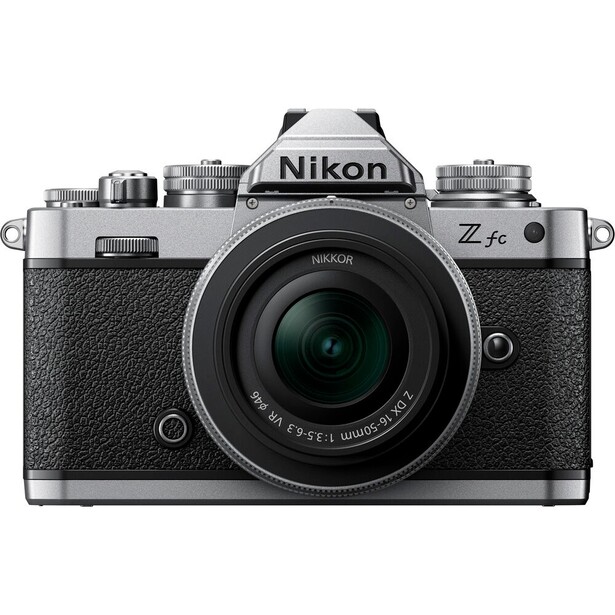
Retro dials, half the Zf's price. The Zfc carries the same silver-and-leatherette 1980s styling and the same top-plate shutter speed and exposure compensation dials, in a lighter 445-gram APS-C body with a vari-angle touchscreen the Zf's more traditional buyers pretend not to want. For a student, a second body, or anyone chasing the tactile shooting experience without a full frame budget, it delivers most of the charm for a fraction of the outlay. We reviewed the Zfc in 2021, and this entry pairs that hands-on time with its current specifications.
Be clear about what the lower price buys you, because the Zfc is older technology in a fashionable shell. The 20.9-megapixel sensor and EXPEED 6 processor go back to 2019, so autofocus and subject tracking, while competent for portraits, street, and casual work, sit a generation behind the Zf and today's best APS-C bodies. There is no in-body stabilization, which means low-light handheld work leans on a steady hand or a fast lens, and the native Z DX lens selection remains thin, though full frame Z lenses mount and work fine.
The other thing to weigh is timing. The Zfc launched in 2021, which puts it late in its product cycle with a successor likely, so you are buying a mature design rather than the newest thing. That is fine if you want a proven, charming camera at a settled price and do not care about owning the newest thing. If tracking fast action or shooting in the dark is central to what you do, step up to the Zf or a modern APS-C body instead. Newcomers should also read our guide to the best cameras for beginners before committing, since the Zfc's charm can distract from whether the lens lineup fits your work. If retro dials on a budget are the whole point, check the current price of the Nikon Zfc at B&H.
What We Like
- Genuine retro dials and styling at a low price
- Light, well-built, and pleasant to shoot
- Vari-angle touchscreen for low angles and selfies
- Full compatibility with Nikon's full frame Z lenses
What Could Be Better
- Sensor and processor are several years old
- No in-body stabilization
- Thin native DX lens selection, and a refresh may be near
Best Retro Micro Four Thirds: OM System OM-3
- Sensor: 20.4 MP stacked BSI Live MOS (Micro Four Thirds)
- Processor: TruePic X
- Mount: Micro Four Thirds
- Stabilization: up to 6.5 stops in body, up to 7.5 stops with Sync IS lenses
- Autofocus: 1,053-point Quad Pixel AF
- Continuous shooting: 50 fps with continuous AF, 120 fps with focus locked
- Video: 4K/60p
- Viewfinder: 2.36m-dot OLED
- Weight: 496 g with battery
- Price: $1,699.99 (B&H)
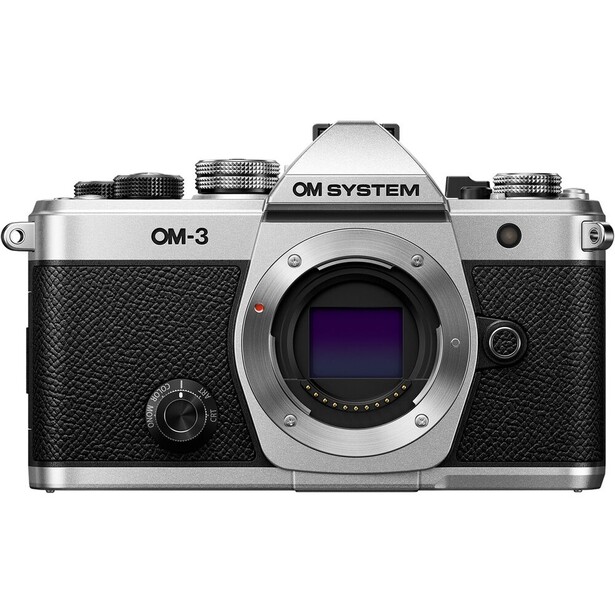
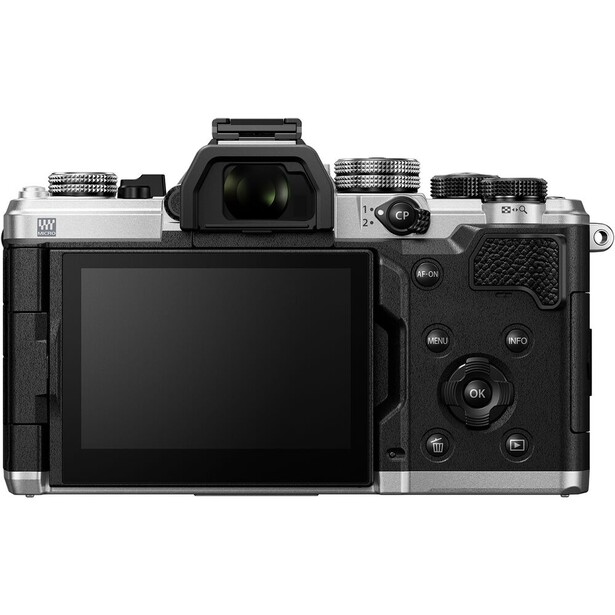
The OM-3 takes the styling of the 1972 Olympus OM-1 film camera and wraps it around some of the most capable computational photography hardware you can buy. We reviewed this one in full at Fstoppers, and the body was the first thing that got us: machined metal, clean lines, and a dedicated creative dial on the front that switches between four film-like color profiles and four monochrome looks, with quick access to the camera's signature computational modes. It is the retro camera for the photographer who wants toys, in the best sense.
What kept our reviewer's attention was everything the stacked sensor and TruePic X processor unlock once you stop admiring the dials. Live ND simulates a long exposure for silky water without a physical filter, Live Composite builds a light-painting or star-trail image in real time so you can watch it develop on the screen, and in-camera focus stacking and high-resolution multi-shot capture are here too. The IP53 weather-sealing rating is a tested figure rather than a vague marketing claim, so this camera goes out in rain and dust without a second thought. Stabilization runs up to 7.5 stops with the right lens, and the entire Micro Four Thirds system stays small and light.
The tradeoff is sensor size. At 20.4 megapixels on a Four Thirds chip, the OM-3 gives up low-light headroom and shallow-background potential to the full frame and APS-C cameras here, and it costs nearly as much as the full frame Zf, which is a hard sell if you are judging on image quality alone. That is the wrong lens for this camera. You are buying a tough, light, endlessly playful body loaded with features that cost extra elsewhere. If you are a traveler, a hiker, or a tinkerer who would rather have Live ND than another stop of dynamic range, check the current price of the OM System OM-3 at B&H.
Read our full review: The Sexy OM-3: So Much More Than a Body to Die For
What We Like
- Beautiful metal build styled after the original OM-1
- Creative dial and deep computational modes like Live ND and Live Composite
- True IP53 weather-sealing
- Small, light system with strong stabilization
What Could Be Better
- Smaller sensor gives up low-light and background blur
- Priced alongside full frame rivals
- No front grip to speak of
Best Fun and Quirky: Fujifilm X half
- Sensor: 1-inch vertical, 17.7 MP
- Lens: fixed 10.8mm f/2.8 (32mm full frame equivalent)
- Viewfinder: optical tunnel-type
- Screen: 2.4-inch touchscreen plus a second control display
- File format: JPEG only, no raw
- Video: Full HD up to 48 fps, shot vertically
- Notable: film-winder lever, 2-in-1 diptych mode, film-simulation looks
- Weight: 240 g with battery
- Price: $649 (B&H)
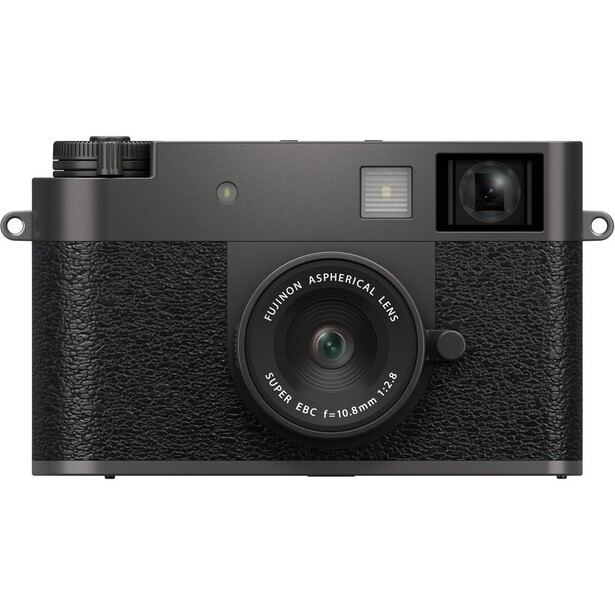
Fujifilm has not made a camera this deliberately strange in years. The X half borrows the idea of a half-frame film camera, where each frame is a tall vertical slice, and builds a tiny digital version around a vertically mounted 1-inch sensor and a fixed lens. It weighs 240 grams, shoots portrait-orientation images made for a phone screen, and leans fully into constraint. There is no raw file, only JPEG, and the optical viewfinder is a simple tunnel with no overlays, so you frame, guess, and shoot the way you would with a point-and-shoot from decades ago. We reviewed the X half after several weeks of carrying it on ordinary days, and our reviewer had more fun shooting it than any camera in years.
The gimmicks are the reason to buy it. A physical film-winder lever advances between shots, and a 2-in-1 mode pairs two frames side by side into a diptych the way a half-frame negative naturally would. There is a "film camera" mode that hides your images until you finish a virtual roll and use the app to develop them, which reimposes the delayed gratification that made film feel special. Fujifilm's film-simulation looks are baked in, so the output arrives with that finished color, and a second small control screen on the back handles settings without cluttering the main display.
This is a toy in the affectionate sense, and you should buy it knowing that. The 1-inch sensor and JPEG-only pipeline put image quality closer to a good phone than to the other cameras here, and the fixed wide lens and absent raw file rule it out as a serious tool. Fujifilm launched it at a price that felt steep for what it is, though it has since seen real discounts that make it far easier to justify, so check the current price of the Fujifilm X half at B&H before you decide. Also consider the Fujifilm Instax Mini Evo if you want that same playful spirit but with prints coming out of the camera, and see our instant cameras guide for the rest of that field.
What We Like
- Genuinely novel half-frame vertical shooting
- Film-winder lever, diptych mode, and a delayed "film" mode
- Fujifilm color in a 240-gram pocket camera
- Made for sharing straight to a phone
What Could Be Better
- JPEG only, no raw
- 1-inch sensor image quality is closer to a phone
- Launch price was high for what it is
Best Fun Film Camera: Pentax 17
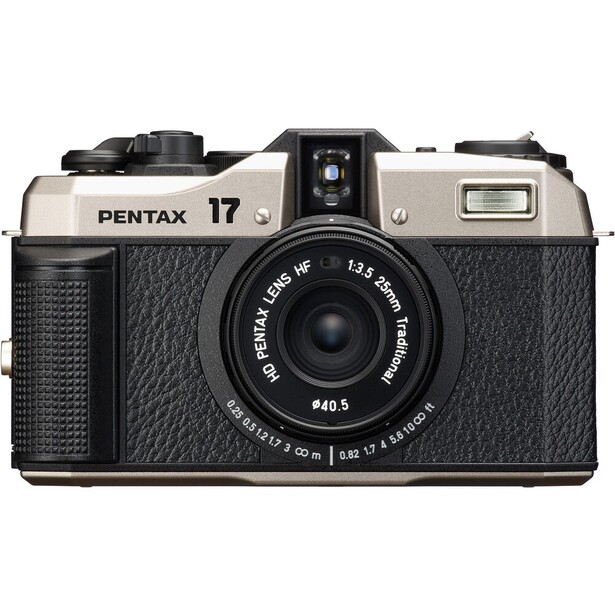
- Format: 35mm film, half-frame (17mm x 24mm, vertical)
- Lens: 25mm f/3.5 (37mm full frame equivalent)
- Focusing: zone focusing, six zones
- Film speed: ISO 50 to 3200
- Exposure compensation: plus or minus 2 EV in 1/3-stop steps
- Flash: built in
- Battery: single CR2
- Weight: 290 g without film and battery
- Price: $496.95 (B&H)
A brand-new camera that shoots actual film should not exist in 2026, and yet the Pentax 17 does. Ricoh's Pentax brand designed and built a fresh half-frame 35mm camera in an era when almost nobody makes new film cameras at all, and the result is a tactile object assembled from parts that echo Pentax's own history, including a film advance lever borrowed from the Auto 110 and a rewind knob styled after the LX. Because it shoots half-frame, a standard 36-exposure roll gives you 72 tall vertical images, which doubles your shooting and suits phone-screen sharing. We have not shot a full Fstoppers review roll through it, so the details below come from Ricoh's specifications rather than our own darkroom.
This is analog on purpose, and the constraints are the appeal. You focus by picking one of six zones based on distance, set exposure through the camera's program metering with the option to dial in compensation, wind the film by hand between frames, and wait to see anything until you develop the roll. It is a real film camera, so you are buying into the cost and ritual of film and developing, but that is precisely what its buyers want. The vertical half-frame look is distinctive, and the 37mm-equivalent lens is a natural everyday focal length.
Set your expectations correctly. Zone focusing is not autofocus, so you can miss focus if you misjudge distance, and half-frame negatives are half the size of a normal 35mm frame, so grain and softness show more once you scan and enlarge. This is not a precision instrument, and it is not cheap to feed. It is, however, the most accessible new film camera a major manufacturer has released in two decades. If you are curious about film but do not want to gamble on a 40-year-old body from a thrift shop, our 35mm film cameras guide covers the vintage route, and you can check the current price of the Pentax 17 at B&H for the new one.
What We Like
- A brand-new film camera from a major maker, beautifully built
- Half-frame doubles your shots and gives a distinctive vertical look
- Tactile hand-wound shooting with real controls
- The most accessible new film camera in years
What Could Be Better
- Zone focusing means you can miss focus
- Half-frame negatives show more grain and softness once enlarged
- Film and developing are an ongoing cost
Best Budget Fun: Camp Snap 2
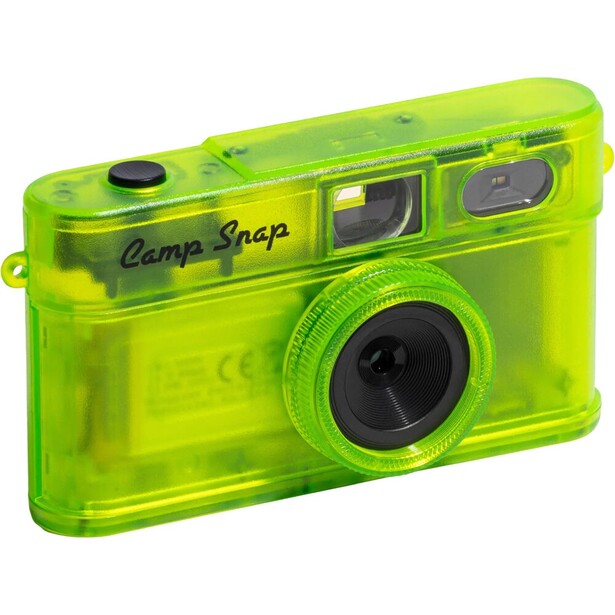
- Sensor: 8 MP
- Lens: fixed 26mm equivalent, f/11.5
- Screen: none, screen-free by design
- Flash: built-in dual-tone LED
- Filters: Standard, Vintage 1 to 3, Analog, and Black and White via a rear button
- Storage: 4 GB microSD included, roughly 2,000 photos
- Battery: 800 mAh, about 500 shots per charge
- Extras: 30.5mm filter thread for screw-in lens filters
- Price: $69.99 (B&H)
The Camp Snap 2 is the cheapest camera here and, for the right person, the most freeing. The entire idea is a digital camera with no screen at all. You point, you shoot, and you do not see the image until you get home and pull the files off the card. That constraint started as a solution for summer camps that ban phones, then turned into a small phenomenon, since it removes the compulsive chimping and instant sharing that make phone photography feel like work. Fstoppers has not reviewed it, so the specifications below come from Camp Snap.
The second-generation model keeps the 8-megapixel sensor and screen-free concept but slims the body down and adds the two things owners asked for. A dedicated filter button on the back cycles through Standard, Vintage, Analog, and Black and White looks, so you can bake a mood in at capture, and a 30.5mm filter thread lets you screw on cheap third-party lens filters for more effects. It ships with a 4 GB card that holds around 2,000 photos and a battery good for roughly 500 shots. It also costs about the same as a couple of disposable film cameras that you would throw away after one use.
Nobody should mistake this for a real camera. The 8-megapixel files are soft, the f/11.5 fixed lens needs good light, and low-light shots fall apart. That is the entire point. This is a camera for a kid, a festival, a camping trip, or an adult who wants to relearn shooting without a screen to second-guess every frame. If that describes someone in your house, check the current price of the Camp Snap 2 at B&H.
What We Like
- Screen-free design kills the urge to chimp and share instantly
- Built-in filters and a new filter thread for creative looks
- Tough, tiny, and cheap enough to hand to a kid
- Costs about the same as a couple of disposables but is reusable
What Could Be Better
- 8 MP files are soft and struggle in low light
- Fixed f/11.5 lens needs good light
- No screen means no framing confirmation until you get home
How to Choose a Retro or Fun Camera
Start by deciding which kind of retro you actually want, because the two are very different purchases. If you want a modern camera that happens to look vintage, you are shopping the Zf, the X100VI, the X-T50, and the OM-3, and you should judge them the way you would judge any serious camera: sensor, autofocus, stabilization, and lens system. If you want the fun of a constraint, the X half, the Pentax 17, and the Camp Snap 2 are asking you to trade image quality for joy, and that is a legitimate thing to buy on purpose. Do not cross the wires. A photographer who needs sharp files will be miserable with the Camp Snap, and a person who wants to slow down and play will find the Zf overkill.
Next, weigh whether you want a fixed lens or a system. A fixed-lens camera like the X100VI forces one field of view, and that limitation is exactly why people love it, because it teaches you to move your feet and see in a single focal length. A camera with a mount, like the Zf, X-T50, Zfc, or OM-3, lets you build a kit over years, and the health of that lens catalog matters more than any single spec. Fujifilm's X-mount and the Micro Four Thirds system both have deep, affordable, characterful lens lineups. Nikon's full frame Z glass is excellent but the native APS-C selection is thin.
Finally, be honest about whether you will feed a film habit. The Pentax 17 is a wonderful object, but every roll costs money to buy and develop, and you wait days to see results. That delay is the point for some people and a dealbreaker for others. The digital cameras here give you the retro shooting feel with none of the running cost, and Fujifilm's film simulations in particular get you a film-like look straight out of camera for free. One spec that matters less than people think on cameras at this level is megapixel count, since even the 20-megapixel bodies here out-resolve anything most people print. One that matters more than people expect is how the camera feels in your hands, because the whole reason to buy retro is that you want to pick it up.
What We're Looking For
We chose these cameras on how well each one serves its specific buyer rather than how it scores on a spec sheet, weighing build quality and the tactile shooting experience, the strength of each lens system where one exists, image quality relative to price, and, for the quirky picks, how much genuine fun the camera delivers for the money. We deliberately spread the list across five brands and every price tier so no single company's marketing shapes the outcome. Every specification here was verified against current manufacturer and retailer sources at the time of writing, and prices are the current B&H figure. Four picks in this guide, the Nikon Zf, the Nikon Zfc, the OM System OM-3, and the Fujifilm X half, come from cameras we have reviewed in full, and each of those sections links our hands-on coverage. The rest we have not put through a full Fstoppers review, and each of those entries says so rather than borrowing authority we have not earned.
Frequently Asked Questions
Are retro cameras worth it, or are you just paying for looks?
It depends entirely on the camera. Bodies like the Nikon Zf and Fujifilm X100VI pair vintage styling with genuinely current sensors and autofocus, so you pay for both looks and performance. Cheaper novelty cameras like the Camp Snap 2 are mostly about the experience and the fun, not image quality. Decide which you are buying before you spend.
Why is the Fujifilm X100VI so hard to buy?
The X100VI went viral on social media and demand has outrun Fujifilm's supply since launch. More than two years in, stock still appears and sells out quickly, and street prices often sit above the list figure. Set a stock alert at a reputable retailer and be ready to order the moment one appears rather than waiting for a permanent in-stock listing.
What is a half-frame camera?
A half-frame camera captures a tall, vertical image half the size of a normal frame, which on 35mm film doubles the number of shots per roll. The Pentax 17 does this with real film, and the Fujifilm X half recreates the idea digitally with a vertical sensor. The vertical format suits phone screens, at the cost of some image quality when enlarged.
Do film simulations really replace editing?
For a lot of shooters, yes. Fujifilm's film simulations apply a finished color rendering in camera, so the JPEG looks intentional the moment it lands on the card. It is not as flexible as editing a raw file, but if you dislike sitting at a computer, a camera like the X-T50 or X100VI lets you shoot, transfer, and post with no editing step at all.
Is a full frame retro camera better than an APS-C one?
Not automatically. Full frame bodies like the Nikon Zf pull ahead in low light and shallow depth of field, but APS-C cameras like the X-T50 and Zfc are lighter, cheaper, and more than good enough for most work. The better question is which lens system and shooting experience you want, since that will shape your photography far more than sensor size.
Fstoppers may earn a commission from purchases made through links in this article. Our picks are made independently by our editorial team.