An instant camera is the rare piece of gear where the running cost matters more than the sticker price. Every one of these cameras is cheap next to a mirrorless body, but you pay again every time you press the shutter, and a print you cannot delete is a very different thing to shoot than a memory card you can wipe for free. That single fact splits the market. Some of these cameras make the ritual as cheap and foolproof as possible; others hand you real control and a bigger print in exchange for film that costs roughly twice as much per frame. Knowing which camp you belong in decides almost everything else.
The other two questions are format and film family. Fujifilm's Instax line prints in three sizes, Mini, Square, and Wide, and its film is the cheapest and most widely stocked. Polaroid prints its larger, iconic square frame on i-Type film that costs more and behaves like the unpredictable stuff you remember, which is either the whole point or a dealbreaker. A third group, the hybrids, put a digital sensor and a screen in front of the printer so you choose what prints and never waste a shot.
We have organized this guide around who you are and how you want to shoot, from a foolproof camera for a seven-year-old to a full manual instrument that stops down to f/64. Every specification below comes from the manufacturer's current spec sheet, and every entry tells you plainly whether we have reviewed that camera hands-on at Fstoppers or are working from verified specs. If the analog ritual is what draws you rather than the print itself, our retro and fun cameras guide is the natural companion to this one.
At a Glance
- Best Overall: Fujifilm Instax Mini 99
- Best Premium: Leica Sofort 2
- Best for Manual Control: Polaroid I-2
- Best Hybrid (Digital and Print): Fujifilm Instax Mini Evo
- Best Wide Format: Fujifilm Instax Wide 400
- Best Square Format: Fujifilm Instax Square SQ40
- Best Classic Polaroid: Polaroid Now Generation 3
- Best Budget and Best for Kids: Fujifilm Instax Mini 13
Best Overall: Fujifilm Instax Mini 99
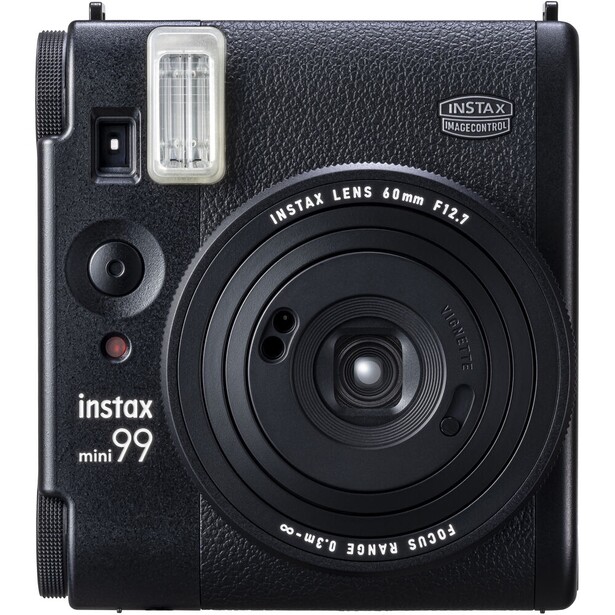
- Film and print size: Instax Mini, 62 x 46 mm image
- Lens: retractable 60mm, f/12.7
- Focus: manual three-zone, 0.3 to 0.6 m, 0.6 to 3 m, 3 m to infinity
- Exposure and modes: automatic (Lv 5.0 to 14.8 at ISO 800) with -5/3 to +1 EV compensation; color dial, vignette switch, Indoor, Sports, Double Exposure, Bulb, self-timer
- Battery: rechargeable NP-70S lithium-ion, approx. 10 film packs per charge
- Weight: 340 g without battery, strap, or film
- Price: $234.95 (B&H)
Most instant cameras give you a shutter button and nothing else. The Instax Mini 99 gives you a whole dashboard, and that is why it takes the overall slot. It runs on the cheapest and most available film in the category, then layers on the kind of control the rest of the analog field refuses to offer. A color-effect dial on the front swaps between six looks, from a warm tone to a light-leak effect, before the light ever hits the film. A separate brightness dial gives five steps of exposure compensation, from -5/3 EV to +1 EV, the single most useful control an instant camera can have. Instant film has almost no exposure latitude, and getting the exposure right in the moment is the difference between a keeper and a milky dud.
The rest of the camera is built for people who actually want to shoot, not just point. Two shutter buttons, one on the front and one on the side, let the camera sit naturally in your hand whether you are framing a vertical portrait or a horizontal group shot. Focus is a manual three-zone switch rather than autofocus, with a close range from 0.3 to 0.6 m, a middle range to 3 m, and a landscape setting beyond that: more thinking than a point-and-shoot demands, but fewer missed focus guesses. A manual vignette switch narrows the aperture to darken the corners for a moodier frame. Indoor and Sports modes bias the exposure program toward flash-lit rooms or faster action, and the shutter tops out at 1/400 sec, matching the quickest analog camera here.
We have not run the Mini 99 through a full Fstoppers review, so take the handling notes above as spec-based rather than tested. The honest limitation is the print itself. Instax Mini is the smallest format here, roughly the size of a credit card, so a group shot gets tiny fast and a landscape has nowhere to breathe. The camera is also priced well above the simple point-and-shoot Instax models, so a casual shooter who will never touch the dials is paying for control they will not use. For the person who wants one instant camera that can do a little of everything and grow with them, check the current price of the Fujifilm Instax Mini 99 at B&H.
What We Like
- Real exposure and color control, rare on an analog instant camera
- Cheapest, most available film format in the category
- Twin shutter buttons for vertical and horizontal shots
- Shutter to 1/400 sec, plus a rechargeable battery
What Could Be Better
- Smallest print size of any camera here
- Priced above the simple point-and-shoot Instax models
- Manual zone focus asks more of you than an autofocus camera
- No digital preview, so a mis-framed shot still costs a print
Best Premium: Leica Sofort 2
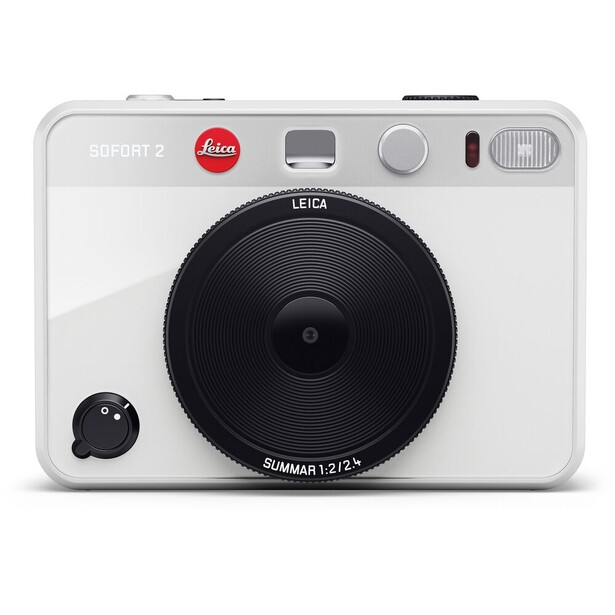
- Type: hybrid digital camera with built-in Instax Mini printer
- Sensor: 1/5-inch CMOS, 4.9 MP (2,560 x 1,920)
- Lens: 28mm equivalent f/2 Summar
- Screen: 3-inch TFT LCD, approx. 460,000 dots
- Creative effects: 10 lens styles and 10 film styles
- Storage: approx. 45 images internal, approx. 850 per 1 GB microSD
- Battery: built-in 740 mAh lithium-ion, USB-C, approx. 100 shots (CIPA)
- Weight: 320 g without film pack
- Price: $399 (B&H)
The Sofort 2 is the most approachable camera Leica makes, and it is a hybrid rather than a pure analog machine. A 4.9-megapixel sensor and a 3-inch screen sit in front of an Instax Mini printer, so you shoot digitally, review the frame, and print only the keepers, which quietly changes the economics of an expensive habit. It also doubles as a tiny digital camera you can offload to your phone through the Leica FOTOS app.
What you are paying the Leica premium for is the design and the color science. The body is clean and minimal in a way none of the plastic Instax cameras match, and at 320 g it feels like an object you would leave out on a shelf. Leica's 10 lens styles and 10 film styles are its own take on the hybrid effect system, and the standard color profile leans more restrained and filmic than Fujifilm's punchier defaults.
The catch is value, and we will be blunt about it. When we reviewed the Sofort 2, the biggest frustration was speed: the camera is deliberate to operate and slow to print, and the sensor is the same modest 1/5-inch chip used in far cheaper hybrids. Mechanically and optically, this is closely related to Fujifilm's own Instax Mini Evo, which costs roughly half as much and prints the same Instax Mini film. You are paying a large premium for industrial design, menu polish, and color rendering. If those things matter to you, this camera delivers them, so check the current price of the Leica Sofort 2 at B&H. If they do not, buy the Evo and spend the difference on film.
Read our full review: Leica SOFORT 2 Review: Instant Style, Slow Speed
What We Like
- Genuinely premium design that stands apart from plastic rivals
- Hybrid workflow means film goes only to shots you choose
- Restrained, filmic color profiles and clean menus
- Doubles as a small digital camera with app transfer
What Could Be Better
- Slow to operate and slow to print
- Modest 1/5-inch sensor shared with much cheaper cameras
- Large price premium over the mechanically similar Instax Mini Evo
Best for Manual Control: Polaroid I-2
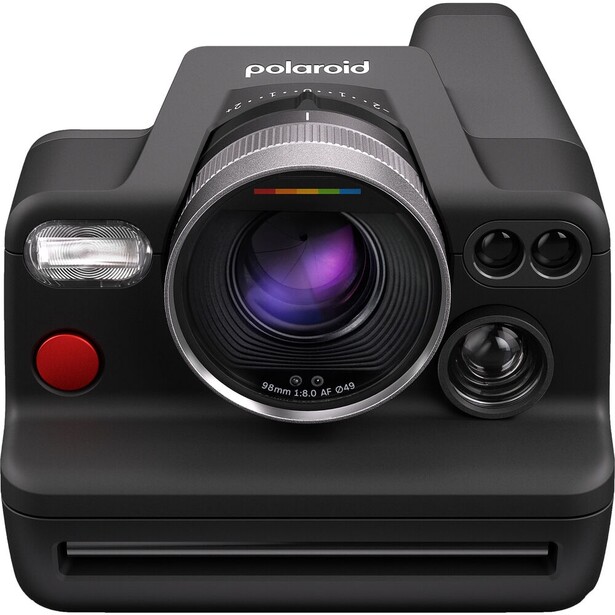
- Film and print size: Polaroid i-Type, 600, and SX-70; 79 x 79 mm square image
- Lens: 98mm three-element, f/8 to f/64 in six steps
- Focus: LiDAR-driven continuous autofocus
- Exposure and modes: auto, aperture priority, shutter priority, full manual; 1/250 to 30 sec plus bulb to 99 hours; multiple exposure up to four frames
- Battery: built-in USB-C rechargeable lithium-ion polymer, up to 28 film packs per charge
- Weight: 563 g without film pack
- Price: $499.99 (B&H)
Nothing else in the category asks you to think about aperture. The I-2 is the closest thing instant photography has to a serious photographer's camera, and it is priced accordingly. It was the first analog instant camera built around real manual controls: aperture priority, shutter priority, and full manual, set through a small OLED display on the top plate and a control ring that confirms exactly what the camera is about to do. The lens is the sharpest Polaroid has ever fitted, a three-element design driven by LiDAR autofocus, and it stops down from f/8 to f/64 in six steps, which on the large square format gives the depth of field to shoot deliberate, composed images rather than snapshots.
This is the camera for someone who already understands exposure and wants to apply it to instant film's beautiful, unpredictable chemistry. Shutter speeds run from 1/250 of a second down to 30 seconds, a bulb mode stays open for up to 99 hours for light painting and star trails, and a multiple-exposure mode layers up to four frames onto one sheet in camera. The prints are noticeably larger than any Instax frame, with the creamy, slightly soft look no Fujifilm film reproduces. Battery life is the quiet standout: Polaroid rates the built-in cell at up to 28 film packs per charge, nearly three times what the Mini 99 manages.
We have not reviewed the I-2 hands-on at Fstoppers, and two things keep it from being a pick for everyone regardless. The first is film. Polaroid i-Type comes eight shots to a pack and costs meaningfully more per frame than any Instax film, so the running cost of a camera you already paid a premium for is the highest here. The second is that Polaroid film remains less consistent, with more temperature sensitivity and more shot-to-shot variation, which is part of its charm and part of its frustration. If you want to bring exposure craft to instant film and print big, check the current price of the Polaroid I-2 at B&H.
What We Like
- True manual, aperture-priority, and shutter-priority control
- Sharpest lens Polaroid has made, with LiDAR autofocus
- Large square prints with the classic Polaroid look
- Up to 28 film packs per charge, the best of any rechargeable camera here
What Could Be Better
- Most expensive camera and most expensive film here
- Polaroid film is less consistent than Instax
- Overkill for anyone who will shoot it on auto
Best Hybrid (Digital and Print): Fujifilm Instax Mini Evo
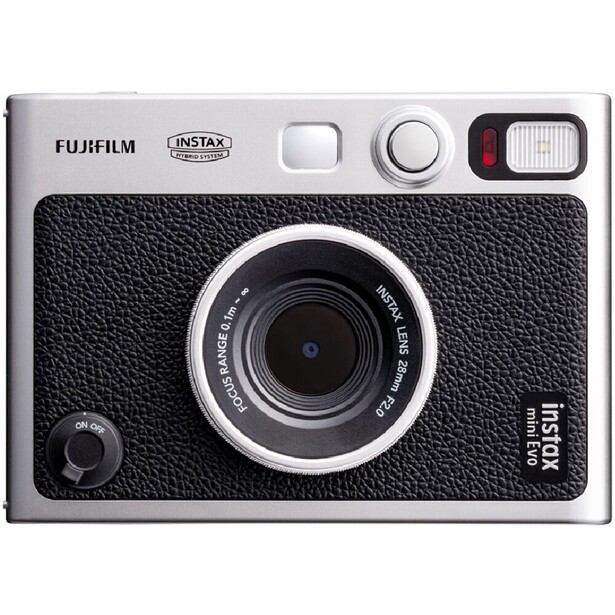
- Type: hybrid digital camera with built-in Instax Mini printer
- Sensor: 1/5-inch CMOS, 4.9 MP (2,560 x 1,920)
- Lens: 28mm equivalent f/2
- Screen: 3-inch TFT LCD, approx. 460,000 dots
- Creative effects: 10 lens effects and 10 film effects, 100 combinations
- Storage: approx. 45 images internal, approx. 850 per 1 GB microSD
- Battery: built-in lithium-ion, USB-C, approx. 100 prints per charge
- Weight: approx. 285 g
- Price: $234 (B&H)
Wasted film is the thing that stops most people from shooting instant seriously, and the Instax Mini Evo is the cheapest cure for it. It shoots to a small digital sensor first, shows you the frame on a 3-inch screen, and prints only the shots you deliberately choose, so a bad frame costs nothing but a second of your time. The body is styled like a miniature vintage rangefinder, with two physical dials, and at 285 g it is the lightest camera in this guide.
Its signature is the effect system. One dial cycles 10 lens effects, the other cycles 10 film effects, and the two multiply into 100 combinations you preview live before committing film to any of them. Most people settle on three or four looks and lean on them, which is how film simulations get used on Fujifilm's larger cameras too. Because everything is digital first, you can send any shot to your phone and keep a file alongside the print.
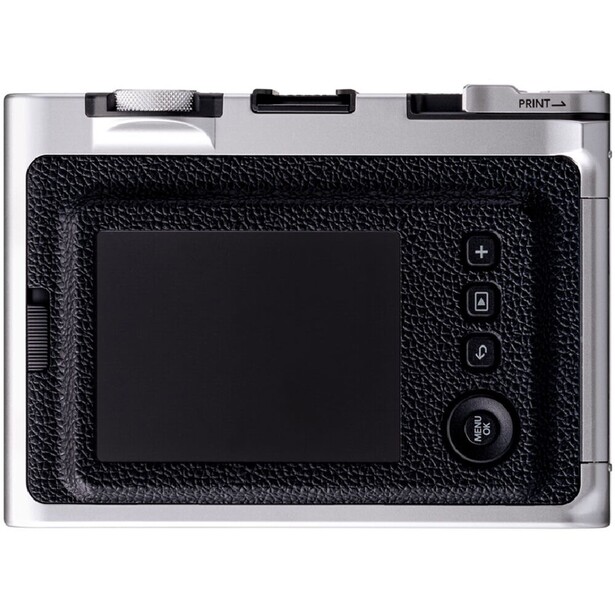
The Evo is not a camera we have reviewed at Fstoppers, and the limitation is plain from the spec sheet anyway. That 1/5-inch sensor is tiny, so low-light shots get noisy and the resolution is only ever good enough for a business-card print, never for cropping. This is a camera for the instant print as an object, not for building a digital archive. Fujifilm now also sells a pricier Instax Mini Evo Cinema, which arrived in early 2026 and adds short video clips that print as a still plus a scannable QR code, but it costs considerably more and the standard Evo remains the value sweet spot of the category. For the shooter who wants the fun of instant film without the guilt of wasted frames, check the current price of the Fujifilm Instax Mini Evo at B&H.
What We Like
- Print only the shots you choose, so no film is wasted
- 100-combination effect system with live preview
- Doubles as a digital camera with phone transfer
- Tactile dials, a vintage-rangefinder design, and the lightest body here at approximately 285 g
What Could Be Better
- Tiny 1/5-inch sensor struggles in low light
- Resolution suits printing only, not archiving or cropping
- No optical viewfinder, so you compose on the screen
Best Wide Format: Fujifilm Instax Wide 400
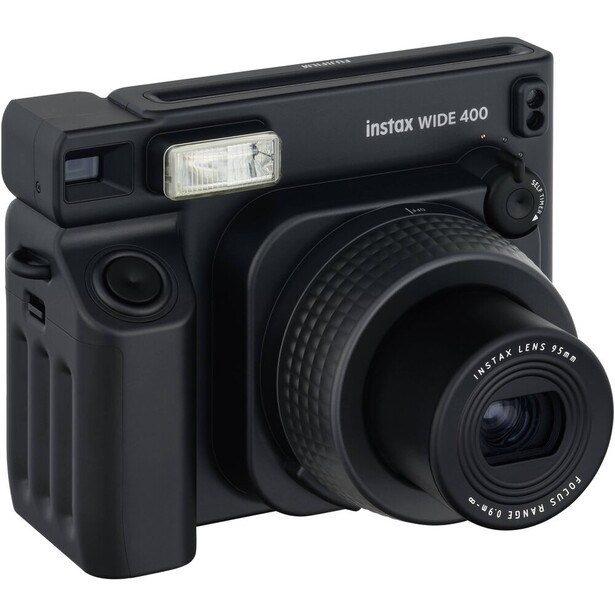
- Film and print size: Instax Wide, 99 x 62 mm image
- Lens: retractable 95mm, f/14 (roughly a 35mm equivalent field of view)
- Focus: manual two-zone, 0.9 to 3 m and 3 m to infinity
- Exposure and modes: automatic (Lv 10.5 to 15 at ISO 800), 1/64 to 1/200 sec; self-timer, tripod mount, close-up lens included
- Battery: four AA alkaline (LR6), approx. 10 film packs
- Weight: 616 g without batteries, strap, or film
- Price: $175.95 (B&H)
If the small Instax Mini frame is what is holding you back, the Instax Wide 400 is the fix. It prints Instax Wide film, roughly twice the width of a Mini frame at 99 x 62 mm, and that extra real estate transforms what the format is good for. Group shots stop feeling cramped, landscapes have room to open up, and a wide print pinned to a wall has presence a credit-card-sized Mini never will. It was the first new Instax Wide camera in a decade, modernizing the old Wide 300 without changing what the format does best.
Operation is simple by design. The 95mm lens gives roughly a 35mm equivalent field of view, wide enough for a group at arm's length, and focusing is a manual two-zone switch: 0.9 to 3 meters, or 3 meters to infinity. Exposure and flash are fully automatic, tuned for ISO 800 film. There is a self-timer and a tripod socket for group shots, and Fujifilm includes a close-up lens attachment in the box.
We have not put the Wide 400 through a full review, and the tradeoffs are structural rather than subtle. This is the biggest, heaviest camera here by a wide margin at 616 g before you add four AA batteries, and Instax Wide film costs more per shot than Mini. The metering range is narrow, rated only from Lv 10.5 to 15, which is a polite way of saying it wants decent light and leans on the flash when it does not get it. There are no creative dials, either. For anyone whose main frustration with instant photography is that the pictures are too small, none of that matters, so check the current price of the Fujifilm Instax Wide 400 at B&H.
What We Like
- Large Instax Wide prints with real presence
- Wide field of view suits groups and landscapes
- Simple two-zone focus and fully automatic exposure
- Self-timer, tripod mount, and a close-up lens in the box
What Could Be Better
- Big and heavy at 616 g, not remotely pocketable
- Wide film costs more per print than Mini
- Narrow metering range wants good light
- No creative or exposure controls at all
Best Square Format: Fujifilm Instax Square SQ40
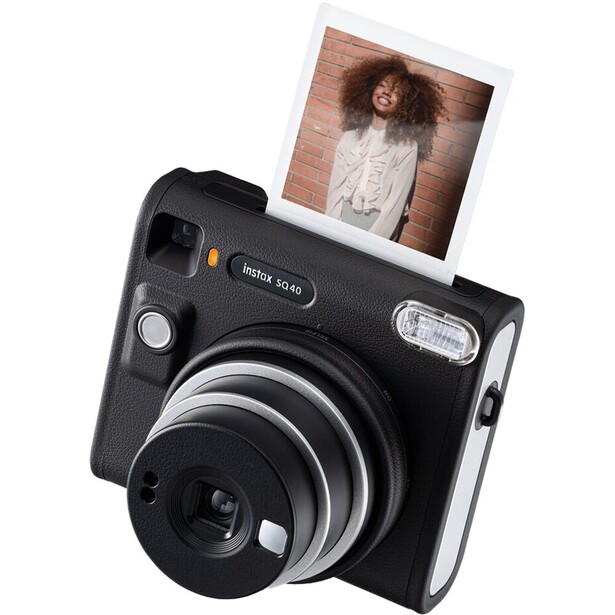
- Film and print size: Instax Square, 62 x 62 mm image
- Lens: retractable 65.75mm, f/12.6
- Focus: 0.3 m to infinity, with a selfie mode for 0.3 to 0.5 m
- Exposure and modes: automatic (Lv 5.0 to 15.5 at ISO 800), 1/2 to 1/400 sec with slow synchro; automatic flash
- Battery: two CR2 lithium, approx. 30 film packs
- Weight: 453 g without batteries, strap, or film
- Price: $234.95 (B&H)
The square print sits between Mini and Wide, and it is the best-looking format Instax makes. The Instax Square SQ40 is the simplest way into it. Its 62 by 62 mm image is bigger than a Mini frame and sits inside the balanced white border that made the square format iconic, suiting portraits, still lifes, and any shot that looks deliberate rather than snapped. The camera has a round, retro body that leans into the nostalgia without feeling like a toy.
This is a pure point-and-shoot, and it is honest about that. You twist the lens barrel to switch between the normal range and a selfie mode for close-ups at 0.3 to 0.5 m, and the automatic system sets shutter speed and flash for you. It covers Lv 5.0 to 15.5, the widest metering range of any analog camera in this guide, and slow synchro holds onto a dim background instead of dropping it to black. A pair of CR2 batteries lasts around 30 film packs.
What you give up is control. No Fstoppers reviewer has shot the SQ40 for a full review, but the spec sheet tells you what the experience will be: no exposure compensation, no creative dial, and no manual focus, so in tricky mixed light you are at the mercy of the meter, and instant film punishes a bad exposure. Fujifilm's pricier SQ6 and the square hybrids give you room to steer the image, at higher cost. For someone who loves the square print and wants the least complicated way to make one, check the current price of the Fujifilm Instax Square SQ40 at B&H.
What We Like
- Classic, well-proportioned square format
- Dead-simple automatic operation
- Widest metering range of the analog picks, and around 30 film packs per battery set
- Selfie mode for close-ups and detail shots
What Could Be Better
- No exposure or creative control of any kind
- Square film costs more per shot than Mini
- Fully dependent on the meter in tricky light
Best Classic Polaroid: Polaroid Now Generation 3
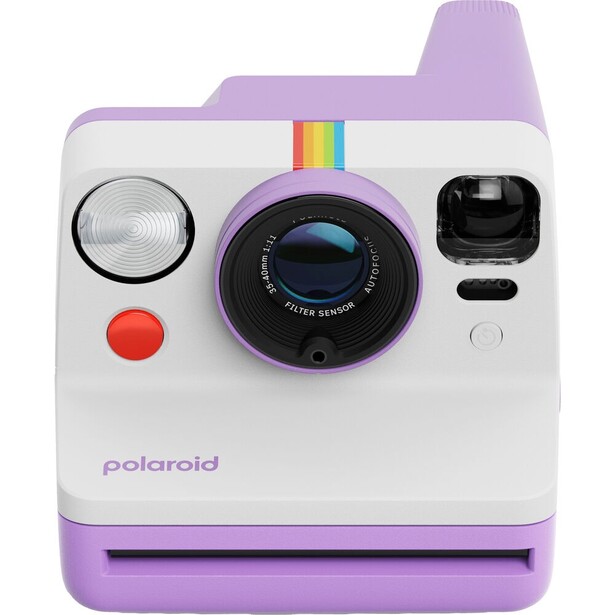
- Film and print size: Polaroid i-Type and 600; 79 x 79 mm square image
- Lens: coated two-lens system, six apertures from f/11 to f/64
- Focus: autofocus across two fixed zones, 0.4 to 1.3 m and 1 m to infinity
- Exposure and modes: automatic; self-timer, double exposure, tripod mount, filter compatible
- Battery: built-in USB-C rechargeable, up to 15 film packs per charge
- Weight: 448 g
- Price: $129.99 (B&H)
Some people do not want an instant camera. They want a Polaroid, the kind that makes the big square print with the fat white border and the dreamy, imperfect color, and for them the Polaroid Now Generation 3 is the buy. The Gen 3 update moved the light meter under the lens for more accurate readings and improved the ranging sensor that drives the two-lens autofocus, which yields sharper, better-exposed pictures across more lighting conditions than any recent Now. The gain is incremental rather than transformative, but it is real.
Living with it is easy in the ways that count. The battery is built in and charges over USB-C, good for up to 15 film packs, so you are not feeding it disposable cells. There is a self-timer and a double-exposure mode on the body itself, a tripod mount, and clip-on filter support. It prints the full-size 79 by 79 mm Polaroid square, larger and more striking than any Instax Mini frame, and the lens works through six apertures from f/11 to f/64, selected automatically, so the camera is quietly doing more exposure work than its single-button interface suggests.
We have not tested the Now Generation 3 for Fstoppers, and the cost of the aesthetic deserves stating plainly whether or not we had. Polaroid i-Type film is the priciest here per frame and the least forgiving, with more shot-to-shot variation and more sensitivity to cold. The autofocus is really two fixed zones rather than true continuous focus, so it is not as precise as the pricier I-2, and the near zone starts at 0.4 m, which rules out tight detail shots. For the shooter who wants the genuine Polaroid look and accepts the running cost, check the current price of the Polaroid Now Generation 3 at B&H. Also consider the Polaroid Now+ Generation 3 if you want app-based aperture priority on top.
What We Like
- The genuine, larger 79 x 79 mm Polaroid square print and look
- Gen 3 meter and ranging-sensor fixes improve exposure and focus hit rate
- Built-in USB-C battery, plus self-timer, double exposure, and filter support
What Could Be Better
- Polaroid film is the priciest and least consistent here
- Two-zone autofocus, not true continuous focus
- Minimum focus of 0.4 m rules out tight close-ups
- Eight shots per pack rather than Instax's 10
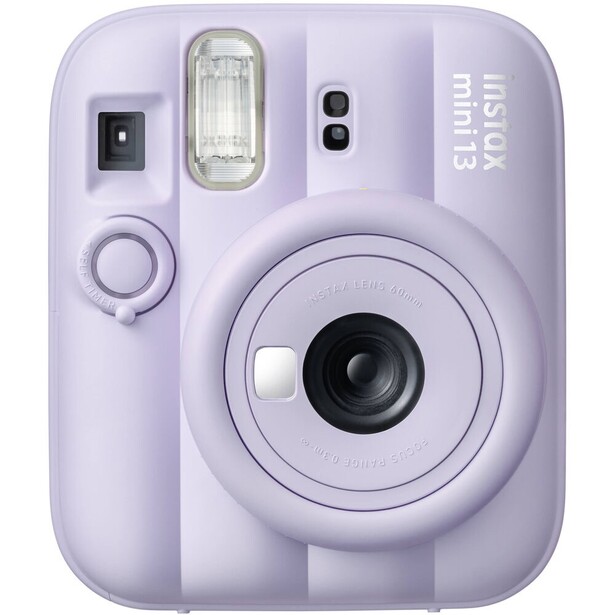
Best Budget and Best for Kids: Fujifilm Instax Mini 13
- Film and print size: Instax Mini, 62 x 46 mm image
- Lens: retractable 60mm, f/12.7
- Focus: 0.3 m to infinity, with a Close-Up Mode for 0.3 to 0.5 m and viewfinder parallax correction
- Exposure and modes: automatic (Lv 5.0 to 14.5 at ISO 800), 1/2 to 1/250 sec with slow synchro; automatic flash, 2- and 10-second self-timers
- Battery: two AA alkaline (LR6), approx. 100 exposures, or 10 film packs
- Weight: 327 g without batteries, with film loaded and strap attached
- Price: $93.95 (B&H)
Fujifilm replaced the long-running Instax Mini 12 with the Instax Mini 13 in late June 2026, and it is now the cheapest camera in this guide and the one to put in a child's hands without a second thought. It does exactly one thing and does it foolproof: twist the lens barrel to turn it on, twist one more click into Close-Up Mode for selfies at 0.3 to 0.5 m, and press the button. Exposure, flash, and viewfinder parallax correction are handled automatically, so there is nothing for a kid to get wrong, and a selfie mirror helps them frame their own face.
What is genuinely new over the Mini 12 is the self-timer, and it is the fix people asked for. The Mini 13 offers both a 2-second and a 10-second delay, so a family can actually get everyone into the frame, and Fujifilm ships a wedge-shaped angle-adjustment accessory in the box to prop the camera at a usable tilt on a table when you do. The body has been resculpted with softer curves and a metallic silver logo, in five colors. Everything else carries over intact: the 60mm f/12.7 lens, two AA batteries good for roughly 10 film packs, and an automatic flash rated to 2.2 m.
It runs on the cheapest film in the category, which is the real reason it wins on both budget and kids. When film is this affordable and comes 10 shots to a pack, you can let a seven-year-old burn through a pack learning what a photo is without wincing, and the freedom to shoot badly is how anyone learns instant photography. If you are shopping for a first camera more broadly, our guide to the best cameras for beginners covers what comes after the instant phase.
The Mini 13 is too new for us to have reviewed it, and its limits are the ones you would expect at this price. There is no exposure control and no creative mode, so a mixed-light room can fool the meter. The shutter tops out at 1/250 sec, slower than the Mini 99's 1/400, and the print is the smallest here. If you already own a Mini 12, the timer is not worth replacing a working camera, and while remaining Instax Mini 12 stock clears at a discount, that camera is the same thing minus the timers. For a first instant camera, a gift, or a kid-safe way into the hobby, check the current price of the Fujifilm Instax Mini 13 at B&H.
What We Like
- Cheapest camera and cheapest film in the category
- Twist-to-start operation is genuinely foolproof
- New 2- and 10-second self-timers, with a wedge accessory to angle the camera
- Selfie mirror, automatic close-up parallax correction, and AA batteries you can replace anywhere
What Could Be Better
- No exposure or creative control
- Shutter tops out at 1/250 sec, the slowest here
- Smallest print size in the guide
- A modest update if you already own a Mini 12
How to Choose an Instant Camera
Start with film, not the camera, because the film is what you will keep paying for. Fujifilm's Instax family is the cheapest to feed, the most widely stocked, and the most consistent, developing reliably across a range of temperatures. Polaroid's i-Type film costs meaningfully more per shot, comes eight frames to a pack rather than 10, and is less predictable. Work out how many packs a year you realistically expect to shoot and multiply. That number, not the price on the box, is what you are actually signing up for.
Then pick a format, because it is fixed for the life of the camera. Instax Mini is small, pocket-friendly, and cheap enough to shoot freely. Instax Square is the balanced middle, and its even proportions give it the widest appeal. Instax Wide makes the biggest prints in the biggest, heaviest body. Polaroid's 79 by 79 mm square is larger than any Instax frame and carries the iconic look, at the highest cost per shot. If you cannot decide, a square format is the safest choice.
Finally, decide how much control you want, and whether you want a hybrid. A pure point-and-shoot like the Mini 13 or SQ40 is the most fun to hand around, but instant film has almost no exposure latitude, so a camera with even a brightness dial, like the Mini 99, saves a lot of ruined frames once you start caring about your results. The spec that matters more than people expect is metering range: the SQ40 covers Lv 5.0 to 15.5 while the Wide 400 covers only Lv 10.5 to 15, and that gap is the difference between a usable indoor shot and a flash-blasted one. The spec that matters less is lens sharpness. Every lens here is soft by modern standards, the film resolves less than the lens does, and nobody has ever loved a Polaroid for its acutance. If you want negatives you can scan and print large, that is a different purchase, and our 35mm film cameras guide is the place to start.
What We're Looking For
Our picks weigh the real cost of ownership, film price per shot as much as camera price, alongside print quality, the creative control on offer, and how well each camera suits the person it is for rather than how it looks on a spec sheet. Every specification was verified against the manufacturer's current spec sheet at the time of writing, and prices are current B&H figures that will move. Most picks here come from gear our writers have used and reviewed hands-on; where we have not tested a camera ourselves, we say so in the entry rather than imply testing we have not done.
Frequently Asked Questions
Is Instax or Polaroid Better in 2026?
For most people, Instax is the more practical choice. The film is cheaper, comes 10 shots to a pack, and develops more consistently. Polaroid makes larger square prints with a more distinctive look and more ambitious cameras like the manual I-2, but you pay more per shot and accept less predictable results. Pick Instax for value, Polaroid for the classic aesthetic.
What Is a Hybrid Instant Camera?
A hybrid instant camera has a small digital sensor and a screen, so you shoot digitally, review the image, and print only the frames you choose. No film is wasted, and you can save digital copies to your phone. The Fujifilm Instax Mini Evo and Leica Sofort 2 are hybrids. A pure analog camera exposes the film directly, with no preview and no second chance.
How Much Does Instant Film Cost per Print?
Instax Mini is the cheapest per print and comes 10 shots to a pack. Instax Square and Instax Wide cost somewhat more per frame at the same 10 shots per pack. Polaroid i-Type is the most expensive, running close to twice the per-shot cost of Instax Mini and coming eight frames to a pack. Film cost, not camera price, is the real long-term expense.
Which Instant Camera Is Best for a Child?
The Fujifilm Instax Mini 13 is the best choice for kids. It is the cheapest camera with the cheapest film, so a child can shoot freely without the cost stinging, and its twist-to-start operation and automatic exposure mean there is nothing to get wrong. A selfie mirror and new 2- and 10-second self-timers make self-portraits easy for small hands.
Do Instant Cameras Take a Memory Card?
Pure analog instant cameras like the Instax Mini 13 or Polaroid Now do not. The film is the only output. Hybrid models like the Instax Mini Evo and Leica Sofort 2 accept a microSD card and store roughly 45 images internally, because they capture a digital file before printing. If keeping digital copies matters, choose a hybrid.
Fstoppers may earn a commission from purchases made through links in this article. Our picks are made independently by our editorial team.