

There is no camera more synonymous with "learning" than the Pentax K1000. For nearly 50 years, it has been arguably the best-known student film camera ever made. But in 2026, it's time to stop looking at the K1000 as a "beginner" camera and start appreciating it as a masterclass in "three-dial" simplicity. It does exactly three things: shutter speed, aperture, and focus. In an era of "feature creep" and menu bloat, that simplicity is a professional asset.
The K1000 is a purely manual instrument. It has no "Program" mode, no "Shutter Priority," and no "Auto ISO." It forces a direct, physical connection between the photographer and the light. This forced intentionality is why many professionals still reach for a K1000 when they need to "recalibrate" their exposure instincts. It is a rugged, "go-anywhere" companion that doesn't care about firmware updates or battery life.
In this Fstoppers Original, we revisit the K1000 through the lens of modern analog storytelling. We'll look at the legendary SMC Pentax lenses and why the sturdy construction of early examples makes the camera a reliable choice for documenting the "Quiet Geographies" of the Oklahoma landscape. If you want to refine your craft, sometimes you have to strip away the automation and get back to the three dials that actually matter.
A Camera Built to Outlast Its Own Company
The K1000 wasn't designed to be legendary. It was designed to be cheap, simple, and hard to break — and that combination is exactly what made it last. Asahi Optical, the company behind the Pentax name, introduced the K1000 in 1976 as a simplified member of the K-series family, sharing much of its design with the KM. It had no bells, no whistles, and — crucially — no built-in reasons to fail.
What happened next is the part of the story that actually matters: the K1000 stayed in production, largely unchanged, until 1997. Twenty-one years. In camera-industry terms, that's not a product cycle; that's a geological era. Manufacturing shifted over the decades — Japan first, then Hong Kong, then eventually China — and the body was quietly simplified further along the way, but the core formula never moved. Shutter speed dial. Aperture ring. Focus. A center-the-needle meter to keep you honest.
That two-decade production run is why the K1000 became the default "student" camera at art schools and community colleges across the country. It wasn't chosen because it was the best camera available — the Nikon FM2 and Canon AE-1 were legitimate contemporaries, and both have their own devoted followings. It was chosen because it was affordable in volume, nearly impossible for a nervous 19-year-old to break, and simple enough that an instructor could teach exposure theory on it without fighting the camera for control. Millions of units later, it's still doing that job.
The Optical Argument: SMC Pentax Glass
The K1000's reputation rests as much on its lenses as its body. The bundled SMC Pentax-M 50mm f/2 is a "nifty fifty" in the truest sense — a lens built during a period when Pentax's Super-Multi-Coating process was widely regarded as one of the industry's finest multicoating systems. That coating cuts flare and holds contrast in a way that still surprises photographers who assume "vintage" means "soft." It doesn't. Stopped down to f/8, that 50mm resolves detail that remains impressively sharp even by modern standards, and wide open at f/2, it renders a falloff that digital shooters spend money trying to emulate in post.
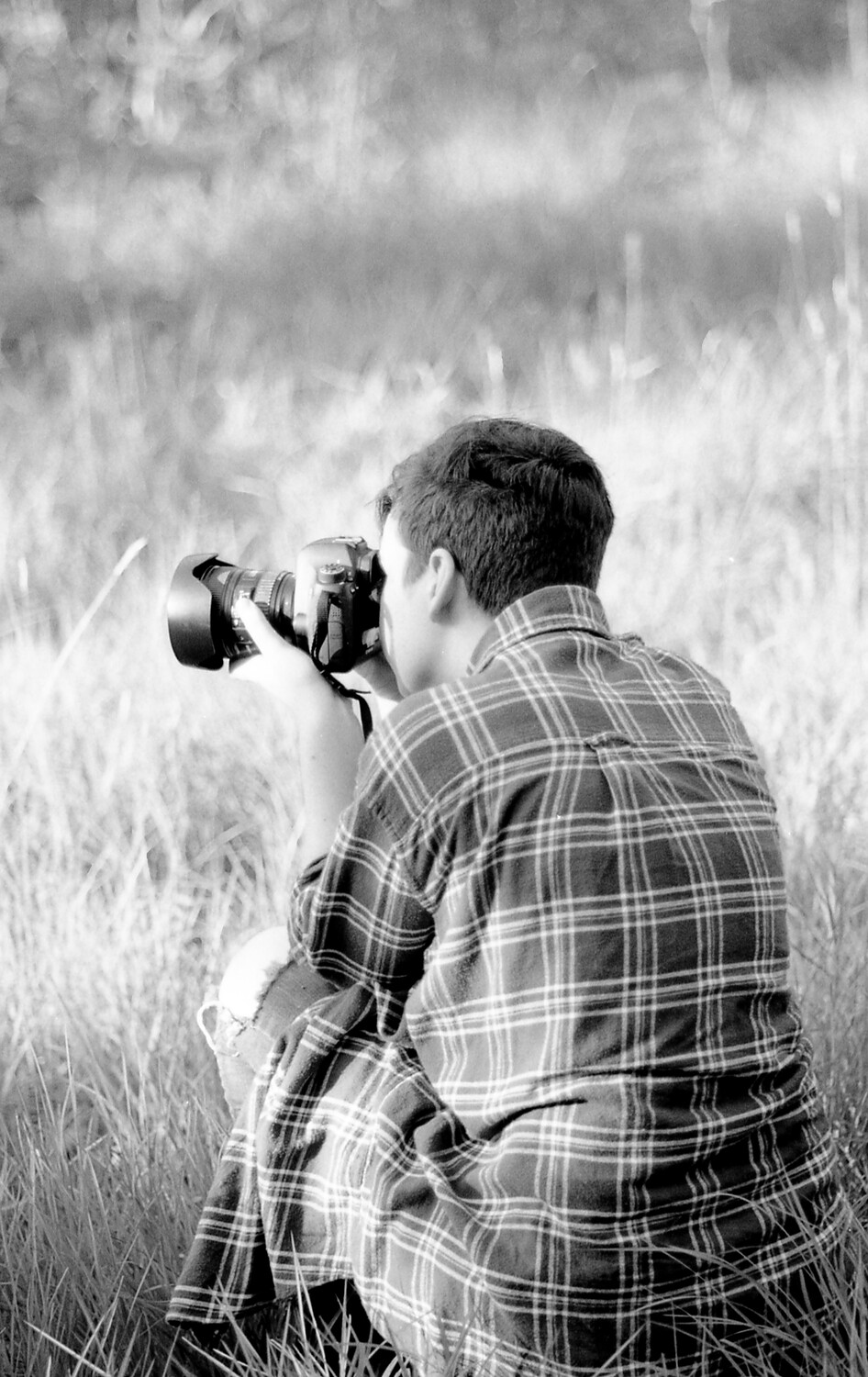

Photos taken by Steven Van Worth at Fstoppers. Shot with the Pentax K1000 and 105mm f/2.8 lens on Ilford HP5+ film.
The K-mount itself is the other half of the argument. It's a mechanical bayonet with broad compatibility across generations — you can pair a functioning K1000 body with many aperture-ring-equipped K-mount lenses produced decades apart and retain normal manual operation. Later lenses without aperture rings and some digital-only designs are not fully suitable, but the range of compatible lenses remains unusually broad. That kind of cross-generational continuity doesn't happen by accident. It happens because Pentax built a mount, not a marketing cycle.
Beyond the standard 50mm, the SMC Pentax-M line gives a K1000 shooter a genuinely capable kit without much money changing hands:
- 28mm f/3.5 — the workhorse wide lens for landscape and environmental work, small enough to disappear on the body
- 35mm f/2 — a favorite for documentary and street shooters who want speed without the size of faster glass
- 55mm f/1.8 — the earlier, slightly warmer sibling to the 50mm f/2, prized for its rendering
- 105mm f/2.8 — a short telephoto with beautiful subject separation and a smooth falloff into the background; for portrait and environmental work, this is the lens that gets reached for most
- 135mm f/3.5 — a compact telephoto that punches well above its low secondhand price
- 200mm f/4 — the reach option for anyone extending into wildlife or compressed landscape work
None of these lenses are expensive by today's standards. That's part of the point. A full K1000 kit — body, 50mm, and a second focal length — can still be assembled for less than the cost of a single modern mirrorless lens, and every piece of it is mechanically serviceable rather than disposable.
Built Like a Tank, Runs Without One
Pull the battery out of a K1000, and it still fires. The shutter is entirely mechanical — a horizontal-travel, cloth-curtain, focal-plane design that tops out at 1/1,000 second — and the battery exists for exactly one job: powering the CdS light meter. That's a meaningful distinction from most film SLRs of its era, and it's the reason the K1000 shows up in "go-bags" for photographers heading somewhere the nearest battery is a long drive away.
Early K1000 bodies are known for their substantial metal construction. They have dents in them in many secondhand listings, and they still work. That's not nostalgia talking — it's a design philosophy that treated "durable" as a feature specification, not a marketing line. Later Chinese-made bodies used plastic top and bottom covers as part of a series of cost-saving production changes. The K1000 SE was a separate variant distinguished primarily by trim and focusing-screen differences, rather than simply being the plastic-bodied version. Collectors often prefer the earlier examples if given the choice. The weight difference is real, and so is the perceived solidity in your hands.
Understanding the Meter (and Why Its Limits Are a Feature)
The K1000's metering system is a match-needle design powered by a single silver-oxide or alkaline button cell, an SR44 or LR44, depending on preference. Look through the viewfinder, and you'll see a needle on the right side that swings up or down against a fixed marker. Center it, and the meter believes your exposure is correct. Push it high, and you're overexposing. Let it sag low, and you're underexposing.
That's the entire interface. There's no exposure-compensation dial, no spot-versus-matrix toggle, and no highlight-weighted mode. The CdS system averages light across the entire viewfinder, with slightly greater emphasis at the center, and it is up to the photographer to know when to trust it and when to override it — backlit portraits, snow scenes, and high-contrast interiors will all fool it if you follow the needle blindly.
That limitation is precisely why the K1000 remains a useful teaching tool decades after it stopped being cutting-edge. A photographer who learns to read a scene and consciously override a dumb meter develops an instinct that survives the transition to any camera, digital or film. Modern metering systems are extraordinary, but they're also opaque — you rarely know exactly what assumptions they're making about a scene. The K1000 has no such secrets. What you see on the needle is the whole story, and understanding when the whole story is wrong is the actual skill being taught.
Recalibrating in Oklahoma Light
Part of what makes the K1000 a useful "recalibration" tool is how unforgiving its match-needle meter is. There's no matrix metering smoothing out a scene for you — you read the needle, you decide what "correct" means for the frame, and you commit. Working the plains and river bottoms of Oklahoma for the "Quiet Geographies" project, that discipline matters. Big sky, flat horizon, and light that shifts quickly at golden hour punish a lazy exposure decision. The K1000 doesn't let you be lazy.
Shooting Sunny 16 as a baseline and adjusting from the meter rather than trusting it blindly is a habit the K1000 teaches almost by force. Late afternoon on the plains, when the light goes long and orange and the meter starts arguing with what your eyes are telling you, that's exactly the moment the camera is doing its job — forcing a decision instead of offering an automated compromise. Once that habit is built, it travels. It shows up in how you meter a scene on a digital body too, even with all the automation turned back on, because you've trained your eye to distrust convenient answers.

Photo taken by Steven Van Worth of Fstoppers. Shot with the Pentax K1000 and 105mm f/2.8 lens on Ilford HP5+ film.
Landscape work in particular rewards this kind of deliberate pacing. There's no burst mode on a K1000 and no chimping a histogram to check your work. Every frame costs money and darkroom time, so every frame gets considered before the shutter fires. That constraint changes how you move through a scene — slower and more attentive to where the light is actually falling rather than where you assumed it would be.
Film Stock Pairings for the K1000
Because the K1000 has no metering smarts beyond a basic averaged reading, film stock choice does a lot of the heavy lifting in determining a final image's character. A few pairings are worth knowing:
- Kodak Tri-X 400 — the classic black-and-white choice, with forgiving latitude and gritty grain that suits documentary and street work
- Ilford HP5 Plus — a slightly softer, more versatile black-and-white alternative to Tri-X, excellent for push processing in low light
- Kodak Ektar 100 — saturated, fine-grained color, well suited to the kind of wide, graphic landscape compositions the Oklahoma plains offer
- Kodak Portra 400 — the standard for color work where skin tones or subtlety matter more than punch
- Kodak Gold 200 — an inexpensive, warm-toned option for casual shooting and testing a newly acquired body before committing to more expensive stock
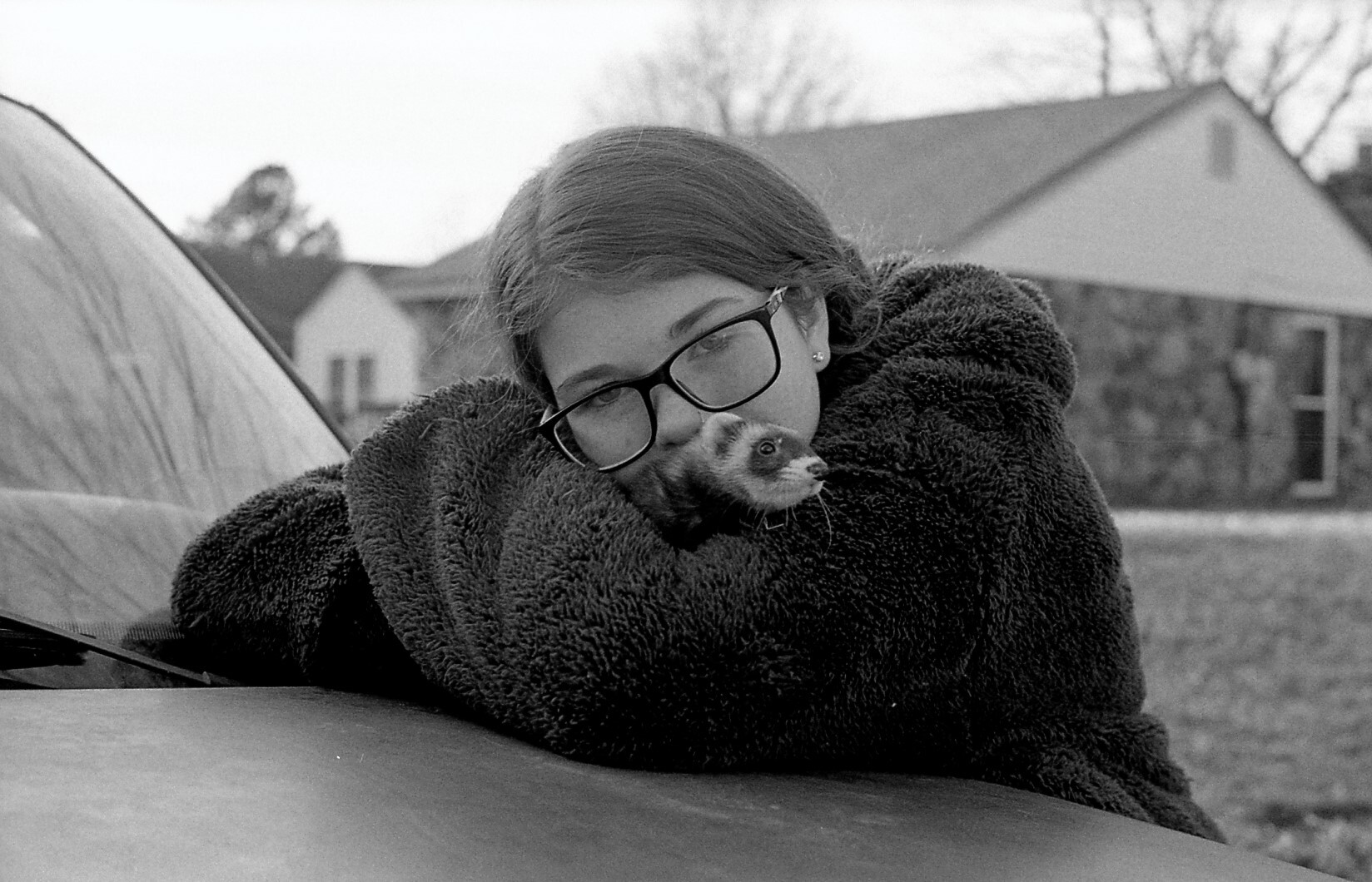
Photo taken by Steven Van Worth of Fstoppers. Shot with the Pentax K1000 and 50mm f/2 lens on Kodak Tri-X film.
Pairing a slower, fine-grained stock like Ektar with the K1000's mechanical precision tends to produce the kind of flat-horizon, big-sky landscape work that photographers chasing that "quiet geography" aesthetic are usually after — deliberate compositions with nothing hiding in the grain to distract from them. Photographers interested in developing this kind of deliberate landscape workflow may also find Photographing the World: Landscape Photography and Post-Processing useful.
Why Art Schools Still Choose It
Ask any photography instructor why the K1000 remains a syllabus staple, and you'll get some version of the same answer: it removes every excuse. A student can't blame a missed exposure on autofocus hunting because there is no autofocus. They can't blame a blown highlight on the camera's algorithm making a bad call because there is no algorithm — just a needle they either read correctly or didn't.
That accountability is uncomfortable in a way that's genuinely useful pedagogically. A camera that does everything for you also lets you avoid learning anything. The K1000 doesn't offer that escape hatch, and instructors have known this for going on five decades now.
Digitizing and Working the Negatives
For photographers pairing the K1000 with a home darkroom workflow, the work doesn't end at the shutter click. Consistent exposure from frame to frame can make a roll easier to evaluate and process, but the quality and predictability of the final scan depend just as much on development, film flatness, scanner setup, and the lens used to make the photograph. The camera provides the negative; the rest of the workflow determines how cleanly that negative becomes a finished image.
That consistency matters when you're working through a backlog of rolls. Using a familiar camera, meter, lens, development process, and scanning setup reduces the number of variables from one roll to the next. It doesn't eliminate correction work, but it makes problems easier to identify and results easier to repeat.
What to Check Before You Buy One
A K1000 with four decades behind it isn't guaranteed a clean bill of health. Before buying used:
- Meter needle: Confirm that it moves and roughly agrees with a known-good reading — CdS cells drift over time, and some bodies will have a meter that must simply be worked around with a handheld light meter instead.
- Mirror and shutter curtain: Look for pinholes in the curtain and check the mirror for foam deterioration, a common failure point. The foam mirror bumper disintegrates with age and needs replacing.
- Light seals: Original foam seals almost always need replacing by now; factor that into the price, since it's a cheap and common DIY fix.
- Film advance and shutter speeds: Run through the full speed range, confirm that the advance lever isn't binding, and listen for a consistent shutter sound at each speed.
- Battery compartment: Check for corrosion from an old, forgotten cell — a common and sometimes costly issue on bodies that sat in storage for years.
None of this is a dealbreaker — it's routine maintenance on a camera built to be maintained, not replaced. Most of these issues are inexpensive to fix through independent camera repair shops that still service classic mechanical bodies.
What It Costs Today
Part of the K1000's enduring appeal is that it has resisted the price inflation that's hit other "cult classic" film cameras. Bodies in clean, functional condition typically sell in a range that most beginners can actually afford, especially compared with the Leica and Contax bodies that have become speculative collector items. Reputable used dealers — KEH, B&H's used department, and MPB among them — regularly stock tested, guaranteed K1000 bodies, which is a safer route than an untested eBay listing if you're buying your first one.
That accessibility is worth protecting. Plenty of once-affordable student cameras have been priced out of their original audience by collector demand. The K1000 has largely avoided that fate because so many were made and because its reputation was built on being a workhorse rather than a rarity. I picked up mine through B&H for $115 with a 50mm lens.
The Takeaway
The Pentax K1000 isn't respected because it's simple for simplicity's sake. It's respected because each of its three controls requires a decision from the person holding it. That's a discipline worth returning to, whether you're a student picking one up for the first time or a working photographer who wants to remember what it feels like to actually think about a frame before you take it.
All photos belong to the author, Steven Van Worth.



Join the Fstoppers community for free
-
Post comments and join in the discussions
-
Browse the site ad-free
-
Share your work and get featured in the community
-
Compete in the photo contests for fun and prizes
3 Comments
Excellent piece, Steven. The K1000 is a workhorse; somehow relatively underrated even though it's widely known. Right up there with the OM-1 and FtB in terms of reliability and usability IMO.
When I was in my teaching career the Pentax K-1000 was the most commonly recommended student camera simply for the virtues you have described. My second recommendation is an equally rugged camera, the Canon Tlb and later the Canon TX. They were the same camera, just with different names. I would never recommend the Canon AE-1 because everything on it was electronically controlled, and it devoured batteries. The K-1000 needs to be brought back without any modifications. A simple to use, purely mechanical camera.
Good article Steven. I studied photography in Newcastle NSW in the 1980s and the 35mm student loan kit was Pentax - K1000 and various lens. I bought a Pentax MX & 50mm F1.7 so I could use the college lens. Bullet proof camera. I dropped it off my motor bike once and it hit the deck and slide down the road. Some damage but it still worked. Still have it