
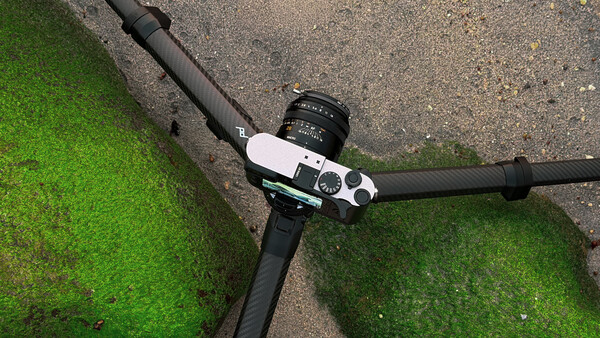
When this tripod came out years ago, so many of us wanted it to the point that a lot of us forced it to be useful in situations where it wasn’t the best fit. Now that we’ve seen the brand’s other tripod offerings, where it fits best is more obvious.
Have you ever had that experience where you owned a shirt that, on its own, was nice but just didn’t feel like it blended that well with your other clothes? Then, after some time, you get that pair of sneakers that gave it the purpose that it needed to realize. This is precisely my experience with the Peak Design Travel Tripod.
What Made It Unique
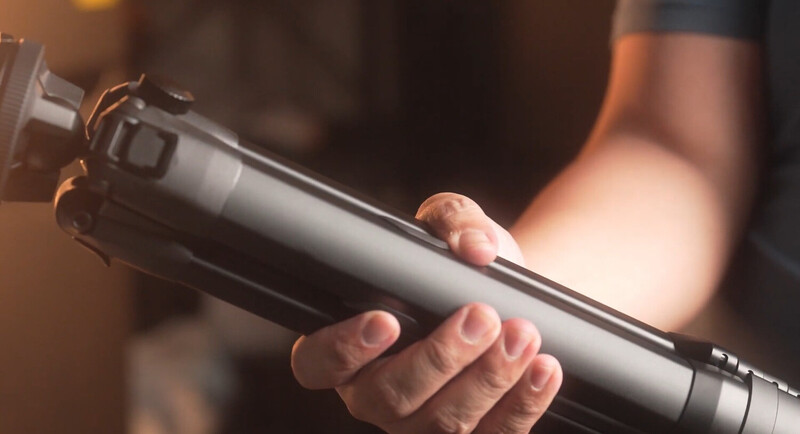
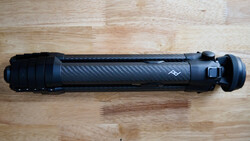
We have to give credit where credit is due: the Peak Design Travel Tripod came in a totally unique form when it first came out, and months later, every other tripod manufacturer was coming out with their own version of it. It was one of, if not the first, travel tripods that didn’t need to fold upwards to have a more compact form. Instead, the rods of the legs are shaped in such a way that the four different parts, three legs and the center column, would meet all in the middle to form a solid cylinder with no unnecessary space in between and no protruding parts.
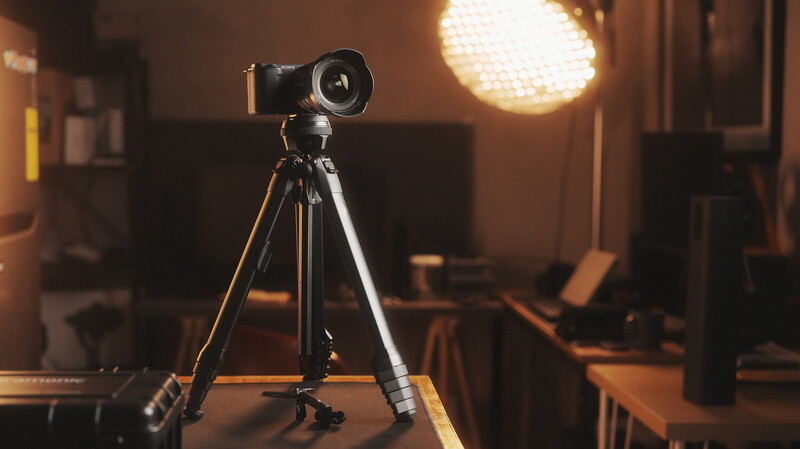
More than anything, the design spoke for itself because of how uniquely satisfying the user experience was. It formed a solid, compact shape that you could easily hold with one hand and stow on the side of your backpack (or inside it) while barely feeling the bulk or the weight. Of course, it did not come without flaws, and for most people (including myself), that was the ball head entirely.
The Undeniable Weak Link
The ball head on the travel tripod came with a unique inverted ball joint where the top platform envelops the ball that is connected to the rest of the center column. This seems to have been made that way for the sake of being more compact; however, it also meant that, in its most compressed form, the ball head is constricted and unable to rotate. One would have to slightly lift the center column to free up the range of motion. This was also because the movement of the head only relied on that ball joint and had no separate panning axis. And since the unique mounting clamp is also fixed on top, that also meant that the ability to tilt the camera up, down, or side-to-side was limited by the notch on the ball joint. While there were ways around them, these limitations pretty much affected how smooth the user experience was.
But all of those ergonomic features aside, perhaps the most common complaint that a lot of photographers had about it was that it was too short or too small, especially for those using full frame mirrorless camera setups. The 1.27 kg carbon fiber (or 1.56 kg aluminum) build can hold up to 9.1 kg of gear, but since the rods are thinner and shorter, it can seem as though the camera that it is holding is disproportionate to the tripod itself. It definitely wasn’t made for extremely windy situations or even being partially submerged in flowing water, despite the fact that carbon fiber would have meant better durability. At the end of the day, it just felt off, and it seems that we were simply asking more of the compact design than suited the situation.
The Ugly Duckling and the Swan of Travel Tripods
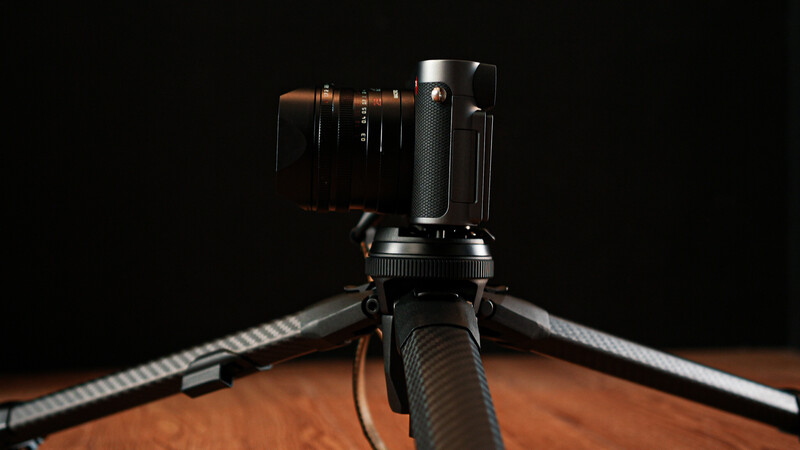
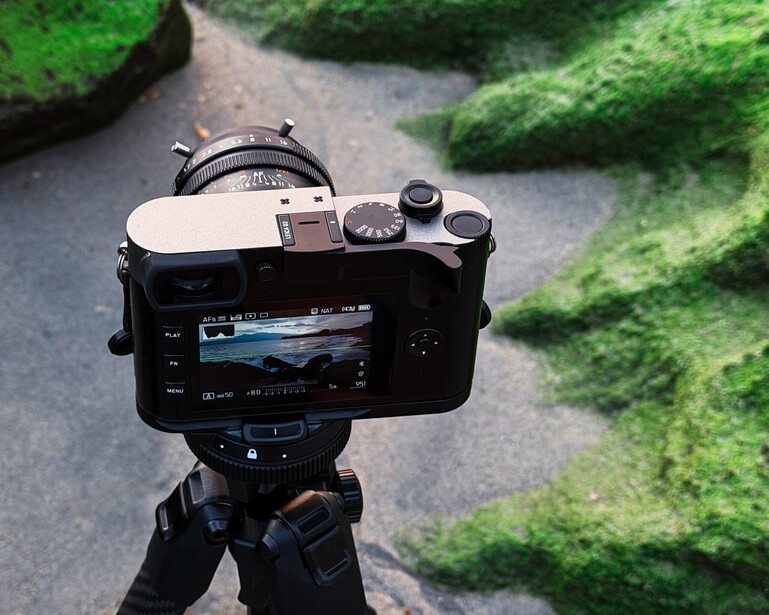
Over the last half-decade, especially during the tail end of the pandemic, compact cameras became more and more popular. By compact cameras, we don’t mean a smaller-than-usual full frame interchangeable-lens camera that still uses relatively big lenses but instead fixed-lens cameras that you could keep in your coat pocket. This was most palpable with the exponential increase in demand for the Fujifilm X100V and, later on, the X100VI, alongside the already-established Ricoh GR III and, more recently, the Ricoh GR IV. Recently, Leica also reported an undeniable increase in the popularity of the Leica Q system, which our very own Simon Burn talked about in a separate article. Personally, I felt the need to write this article as a follow-up to my years-old review of the tripod because when I started using it with my Leica Q2 and the recent units of the Leica Q3 that I tested, I had that realization that the tripod was indeed a better fit for such cameras. This is also supported by the fact that I’ve begun testing the Peak Design Pro Tripod, which reinforces my perception of where the Travel Tripod fits best within the brand’s lineup. Yes, on paper, it can hold up to 9 kilograms, which is more than enough for a full frame setup, but by proportion, the compact Travel Tripod feels best matched to compact travel cameras rather than camera setups that would require big bags and thick, durable camera straps.
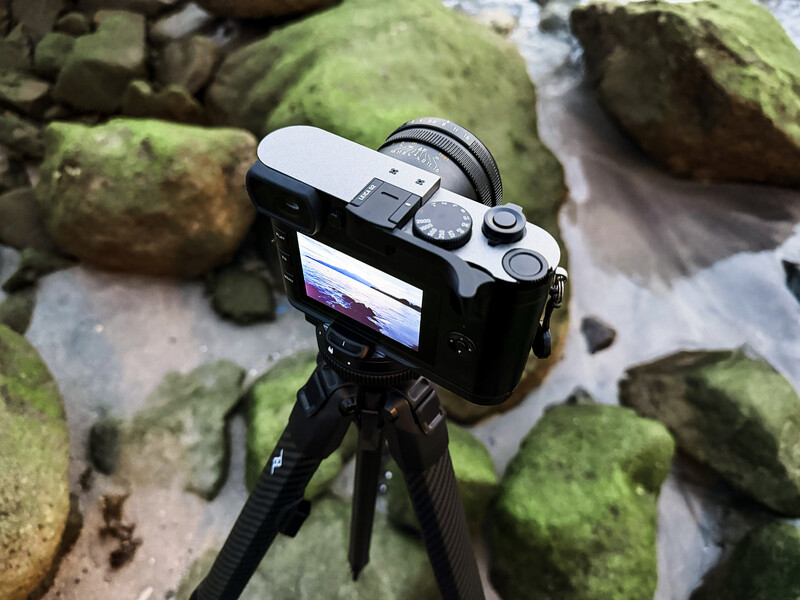
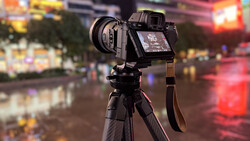
Using the Peak Design Travel Tripod with my Leica Q2 just felt like it made more sense. The Q2 is a camera that I would shoot handheld with about 95% of the time, but as a landscape photographer, I would always be open to the thought of using it with a tripod and a set of tiny filters for just-in-case situations where it would do well. I certainly would not go knee-deep on a boulder beach or up a windy mountaintop with this setup, but for casual, on-the-go travel situations, this combination absolutely makes sense. The user experience would still be flawed because of the design of the ball head and the fact that it requires a less-than-simple process to chop down the center column for low-angle shots, but again, these are just-in-case scenarios for a camera that is most of the time used for faster travel and street photography scenarios.
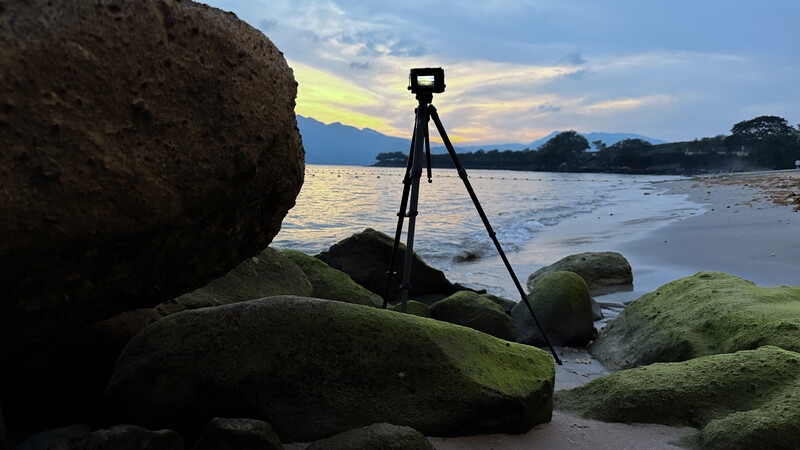
With all that considered, this tripod changed the way that travel tripods were made, despite the fact that it seems best suited to more casual use cases. For most of us, some days we prefer to use gear that is more suitable for demanding scenarios, but on some days, casual and sleek lets us focus on keeping our eyes open for potentially great images.
What I Liked
- Sleek and satisfying design
- Thinner than a large water bottle
What I Still Wish They’d Change on a Future Version
- Ball head has limitations and no pan axis
- Complicated way to reduce the center column

Join the Fstoppers community for free
-
Post comments and join in the discussions
-
Browse the site ad-free
-
Share your work and get featured in the community
-
Compete in the photo contests for fun and prizes
4 Comments
I own the Peak Travel Tripod, and I have used it extensively for well over a year. I agree it's better for smaller cameras, but on occasion, I have got away with using a bigger camera. I put a weight on the hook on the centre post to keep it more stable. It's a great tripod that compacts down very small and fits in my backpack, which is what I like best about it. What I don’t really like is the ball head that came with the tripod. Although it appears to be an innovative design with the way the camera can be locked in place and the single control locking ring, in practice it never worked very well for me at all because tilting the camera up, down, or side-to-side was limited by the 3 notches on the ball joint, which was much more difficult when the camera is in portrait or vertical position. It does work by adding an L bracket to the camera. I ended up getting a separate centre column for mounting a regular ball head (sold separately). I then bought a smaller-size ball head with a panning control knob and attached that to the centre post platform. Although not as compact compared to the original tripod head, it functions much better when I’m using it in the field. It’s too bad that Peak Design didn’t give a bit more thought to those annoying 3 notches on the underside of the ball head.
A key of advice if on a beach or on sand use tennis balls on the legs.
When all camera makers started going mirrorless in 2017 that is when all cameras were thought of as small and light weight.
Yes it is a super light weight tripod and strong but I use only for night captures for with todays cameras having IBIS and most all lenses having IS/OSS I have found hand holding even at blue hour no problem.
1. 2017 with the A7RM2 when I forgot my tripod plate for my camera and played hand holding bracketing 3 at +/- 2EV in very dim light in Antelope Canyon while others with Canon's and Nikons (before Mirrorless) on tripods. In the just few minutes per stop when others maybe got 2 captures I had several while looking up while on my back or capturing lower than others.
2. Hand Held A7RV + FE 200-600mm
3. using Peek Design with panorama rig with FE 12-24mm f4 G
4. testing with Pano rig atop a tracker Peek Design is strong for many things
I really think you’re too critical of this beautifully mDe tripod. Is it really such an inconvenience to elevate that ball head a fraction of an inch? And, is it really so much of a hassle to move the center column for a low profile? I dont think its really any inconvenience at all. Every piece of camera gear has its individual quirks. One should learn to enjoy the process instead of simply wanting to bet to the result.