
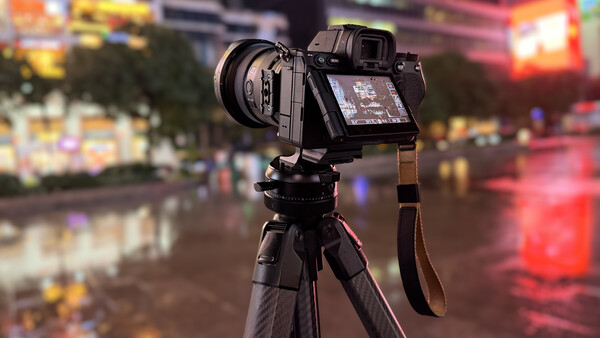
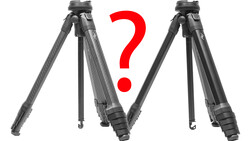
Peak Design's Travel Tripod is probably one of the most talked-about tripods on this site, and opinions have been polarized. Since the brand has expanded its tripod lineup with three new Pro models, it's clearly important that we see their differences and optimal use cases.
The Peak Design Travel Tripod introduced a distinctive approach to how travel tripods are made. Its inverted ball head eliminated the need for the reverse-folding legs commonly used by travel tripods to achieve a shorter folded height. The unusually shaped legs that folded into one solid cylinder just made sense for both function and design. However, the design was clearly not free of imperfections.
The Peak Design Pro Tripod
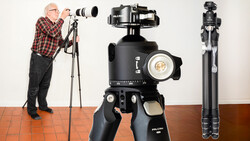
While everyone was waiting for a version 2 of the Travel Tripod, Peak Design was working on something entirely new. The Pro Tripod was not made to replace the Travel Tripod, but it intends to cater to photographers with more demanding requirements that are more typical of professional work. While the Travel Tripod focused on portability, the Pro Tripod focuses on stability and payload capacity, among others.
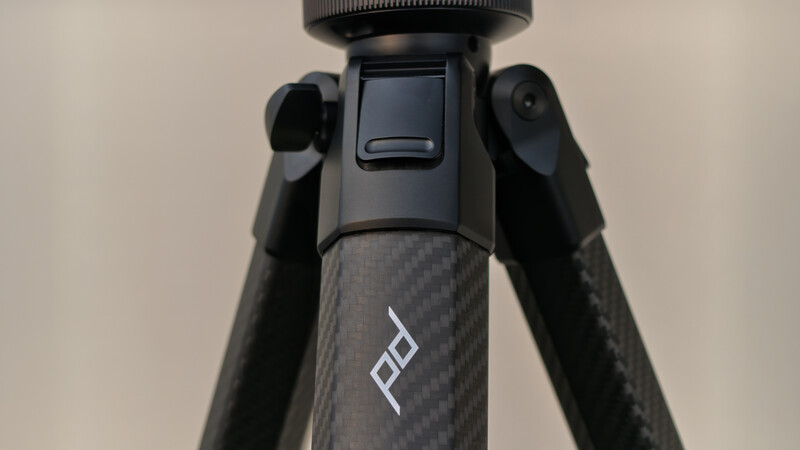
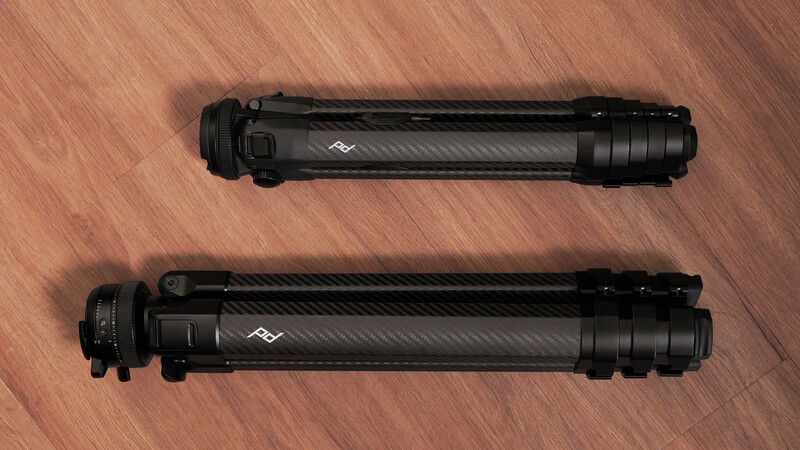
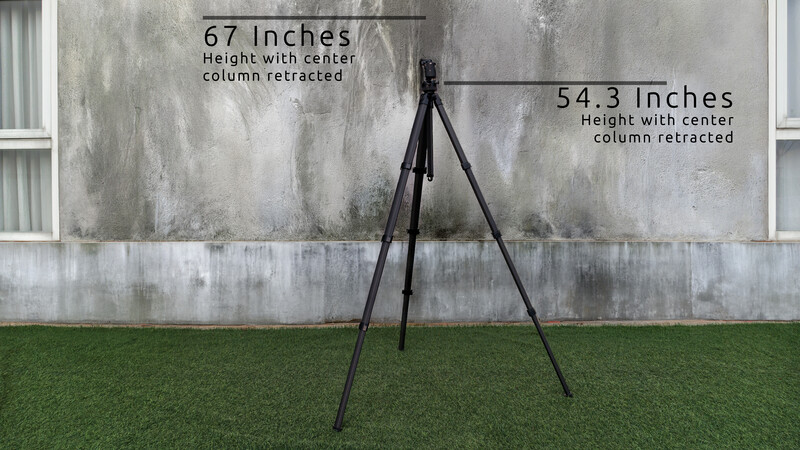
The Pro Tripod comes in a bigger form, with a heavier and denser build and a lot of differences in the ball head design. For one, when folded, it comes in at 19.7 inches compared to the shorter 15.5 inches of the Travel Tripod. The difference is more pronounced when fully extended, as it reaches 66.3 inches, 6.3 inches taller than the 60-inch height of the Travel Tripod. It weighs 1.9 kg and carries up to 18.1 kg of gear, which is nearly double the 9.1 kg payload of the Travel Tripod.
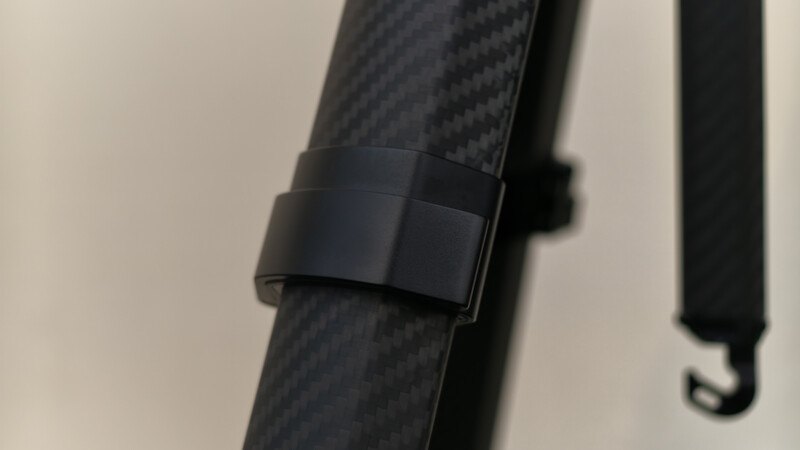
What remains similar between the two tripod lines is the shape of the legs and the clip locks that follow the contour of the legs. These allow the tripod to fold down into a relatively dense and compact cylinder that becomes easy to grip with one hand, although the Pro Tripod is thicker and heavier, as mentioned above.
The Pro Ball Head
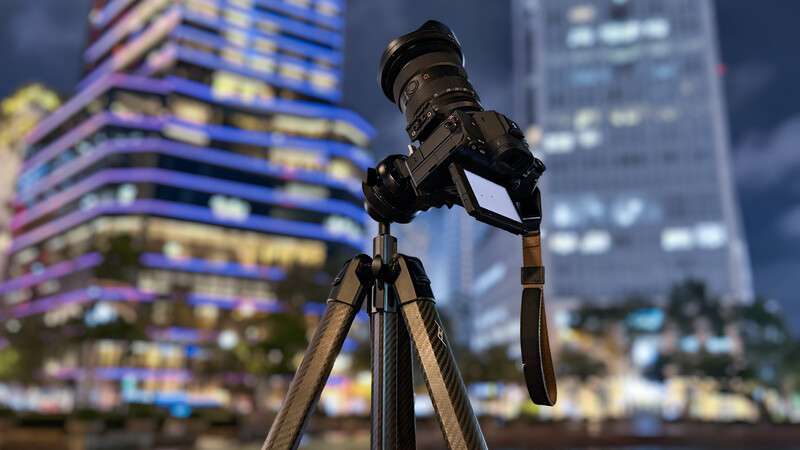
The biggest difference between the two tripods is the ball head. While the Pro follows the same inverted ball joint format as the Travel Tripod, it comes with a more robust head that, along with the legs, pretty much explains the heavier payload. Right above the ball joint is a ring that controls the locking tension of the ball head, and this is very similar to the mechanism that was first seen in the Travel Tripod. Above that ring is a small knob that controls the 360-degree fluid panning, a function that was not available independently on the Travel Tripod. Having this secondary movement significantly opens up the range of motion of the head, making it much more flexible in terms of angles. The panning knob can also lock this movement when necessary.
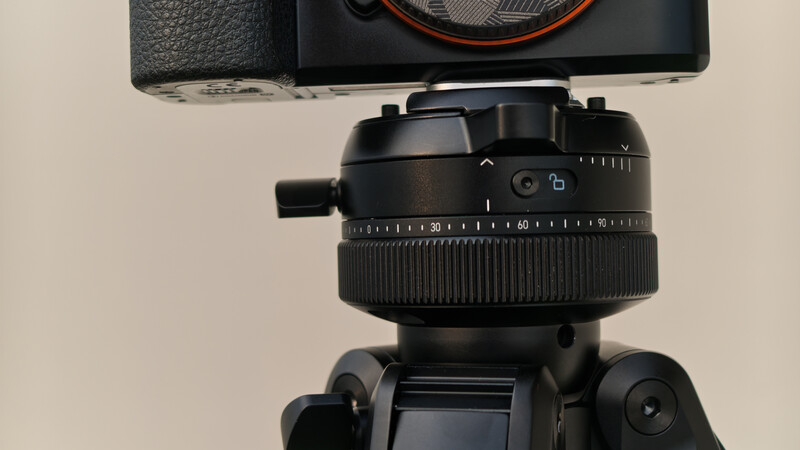
Above it is another ring with a one-sided tab that is used to lock or unlock the Arca-Swiss-compatible quick-release clamp. The biggest change is that this is now spring-loaded because it can be set in such a way that the camera plate pressing down on the platform triggers this mechanism to automatically lock and secure the camera with one click. A separate safety switch helps prevent accidental release. These controls altogether make for a more seamless and ergonomic user experience that lets the user focus less on turning knobs and rings.
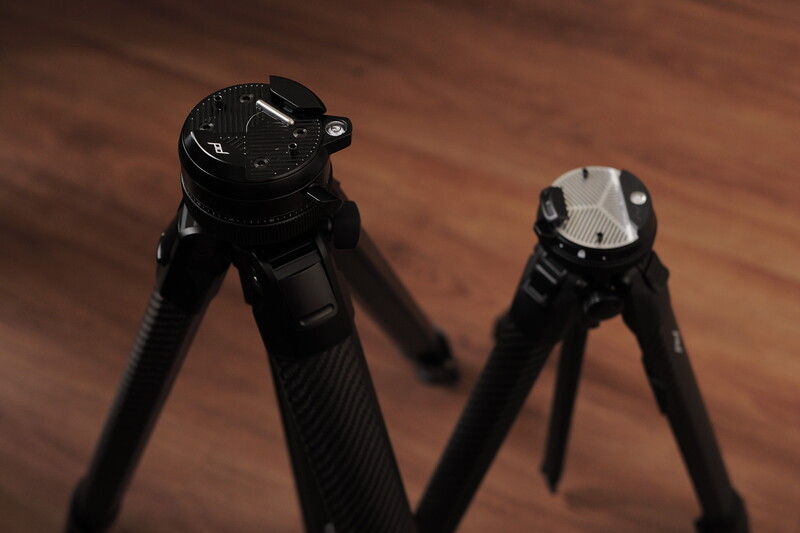
Another similarity between the heads on the two tripod variants is that both of them require the head to be tilted all the way to the side to reveal a small hole that provides access to the screw connecting the main stem of the center column to its remaining length. Turning this screw unlocks the center column and allows for most of it to be removed, which allows the user to shoot from very low angles. This is a function that was very widely discussed with the Travel Tripod, as it can be quite a tedious process.
Travel vs. Pro: Which Is Better for What?
The release of the Peak Design Pro Tripod pretty much clarified the intention behind the brand's tripod line. While the Travel Tripod has always been something that can be used for full frame interchangeable-lens cameras, it has always focused on portability and size. A 9.1 kg payload can definitely accommodate larger camera setups, but ideally, it is best used for compact cameras that are more suited for travel and any casual photography that might happen when traveling.
On the other hand, the bigger tripod line, as the name implies, is something that was designed for more demanding workflows, typically what is required for professional work. This also means that it was made for larger camera setups, especially those with larger and heavier lenses. The Pro lineup includes the Pro Lite, Pro, and Pro Tall, each offering a different balance of height, weight, and load capacity.
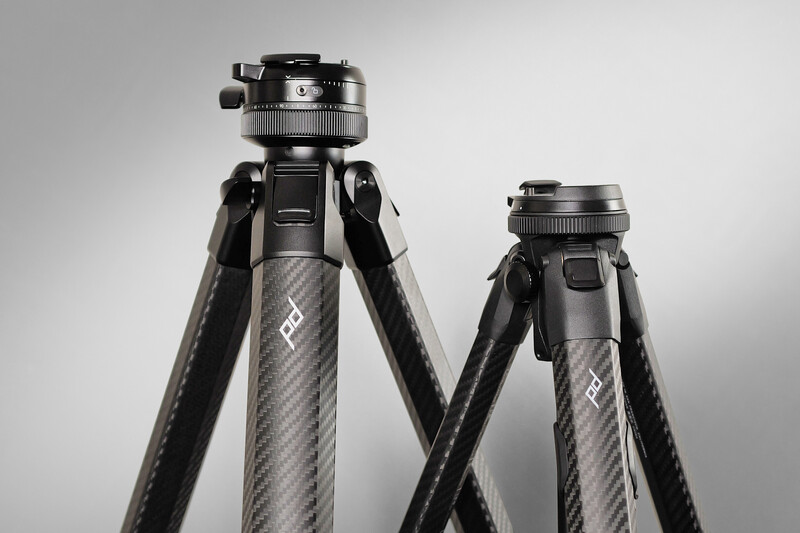
The changes implemented on the new ball head of the Pro Tripod also significantly enhanced the user experience. Aside from the sleek design, it can be said that the controls have been made to give a smoother process of mounting the camera and making adjustments easier when necessary.
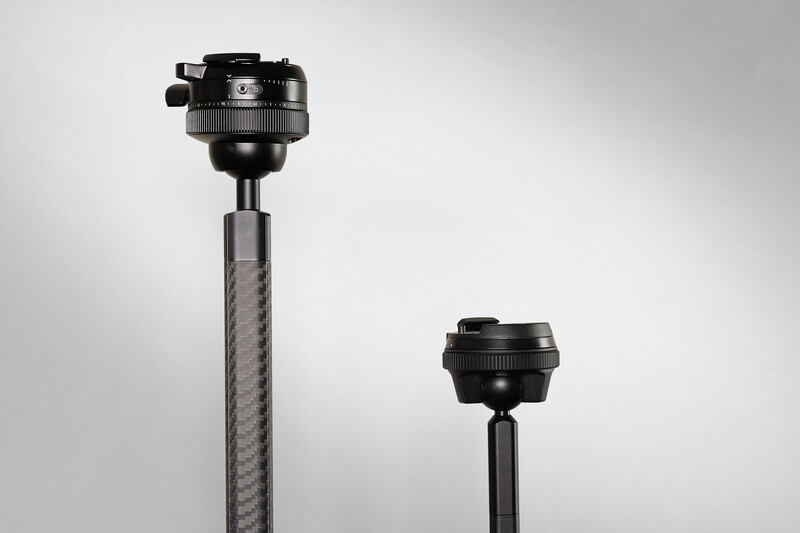
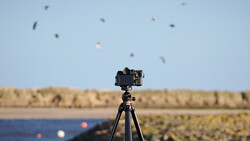
The Travel Tripod, as we've also discussed in a recent article, fits perfectly with relatively compact cameras such as a Leica Q3, a Fujifilm X100VI, or a Sony RX1R III. Yes, the payload can definitely cover much more, but by proportion, cameras of this size just make more sense with it. With that, the Travel Tripod shines best in shooting scenarios where the camera just really needs to sit on something sturdy and is not going against any harsh environmental factors. It works best for quick slow-shutter or even long-exposure shots when traveling, when the portability of the tripod has way more implications than its weight or maximum height.
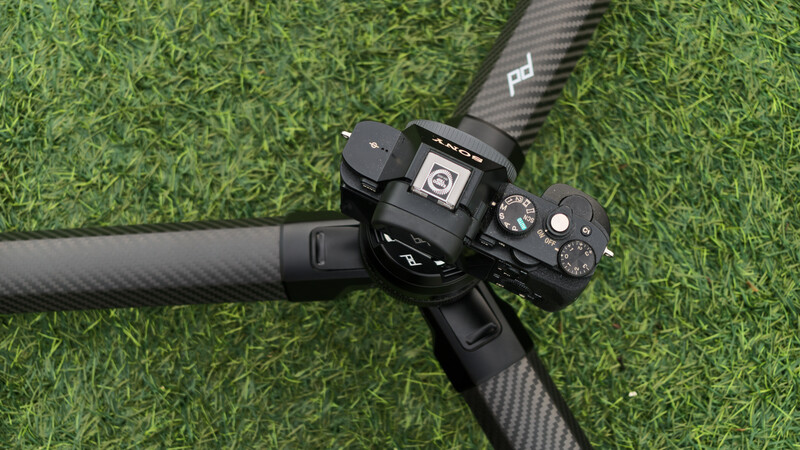
On the other hand, the Pro Tripod offers greater stability and capacity in less favorable situations. The extra height might come in handy for high-angle shots, and the extra payload capacity, of course, allows for larger professional gear. This tripod can be used for highly controlled studio situations as well as more rugged scenarios shooting outdoors. The combination of features and capacity of the tripod pretty much makes it a reliable all-around tripod, and it's an added bonus that the Pro lineup comes in three sizes depending on the user's preferences.
What I Liked
- Portability of the Travel Tripod
- Sturdy and heavy-duty build of the Pro Tripod
- Quick locking and improved range of motion of the ball head
What Can Be Improved
- Faster detachment of the center column
- Easier switching to specialized tripod heads without requiring a separate Pro Leveling Base accessory


Join the Fstoppers community for free
-
Post comments and join in the discussions
-
Browse the site ad-free
-
Share your work and get featured in the community
-
Compete in the photo contests for fun and prizes
No comments yet