Medium format used to mean a second mortgage and a digital back that cost more than a car. That era is over. In 2026 you can walk into a camera store and leave with a 100-megapixel sensor for the price of a high-end full frame body and a couple of pro lenses, and the gap between "the best image quality money can buy" and "a camera a working photographer can actually justify" has never been narrower. The decision now is not whether you can afford medium format, but which flavor of it fits the way you work.
Three things separate these cameras from one another, and none of them is resolution, because almost all of them share the same 100-megapixel class of sensor. The first is speed and autofocus: a few of these bodies can track a moving subject, and most cannot keep up with a fast one. The second is handling, which ranges from a conventional mirrorless body with a big grip to a modular waist-level cube with no viewfinder at all. The third is the system you are buying into, because the lens catalog, the color pipeline, and the tethering software matter more over a decade than any single spec.
This guide is organized around who you are and how you shoot, from the studio commercial photographer who lives on a tether to the landscape shooter who carries a body up a mountain. Every entry addresses all three axes, tells you where the camera sits in its product cycle (a real concern when a body can stay on the shelf for four years), and says plainly whether we have tested it ourselves or are working from verified specs. Prices below are current B&H figures for the body only and will move, so treat them as a snapshot.
At a Glance
- Best Overall: Fujifilm GFX100 II
- Best Value Entry: Fujifilm GFX50S II
- Best for Studio and Commercial Work: Hasselblad X2D II 100C
- Best for Landscapes: Fujifilm GFX100S II
- Best Compact and Travel Medium Format: Hasselblad 907X & CFV 100C
- Best Fixed-Lens Medium Format: Fujifilm GFX100RF
Best Overall: Fujifilm GFX100 II
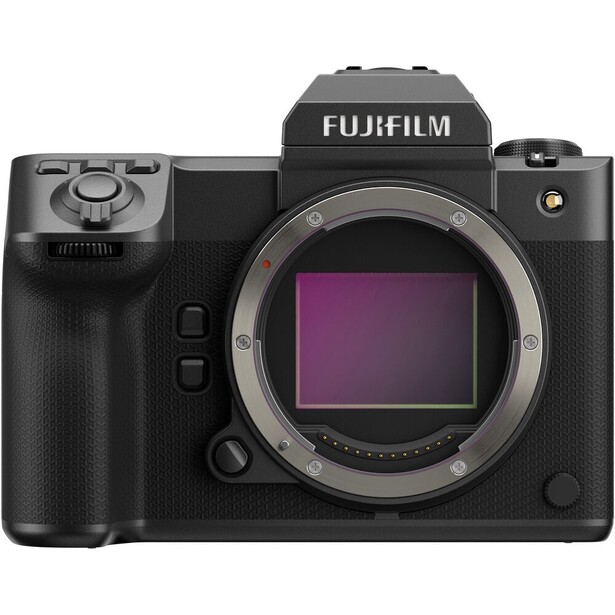
- Sensor: 102 MP 43.8 x 32.9 mm CMOS II HS
- Lens: Fujifilm G mount, interchangeable
- Autofocus: phase detection with subject detection, 100% sensor coverage
- Stabilization: 5-axis IBIS rated up to 8.0 stops
- Continuous shooting: up to 8 fps
- Viewfinder: 9.44m-dot OLED, 1.0x magnification
- Video: 8K/30p, plus DCI 8K and 4K
- Weight: 948 g with battery and card
- Price: $8,499 (B&H)
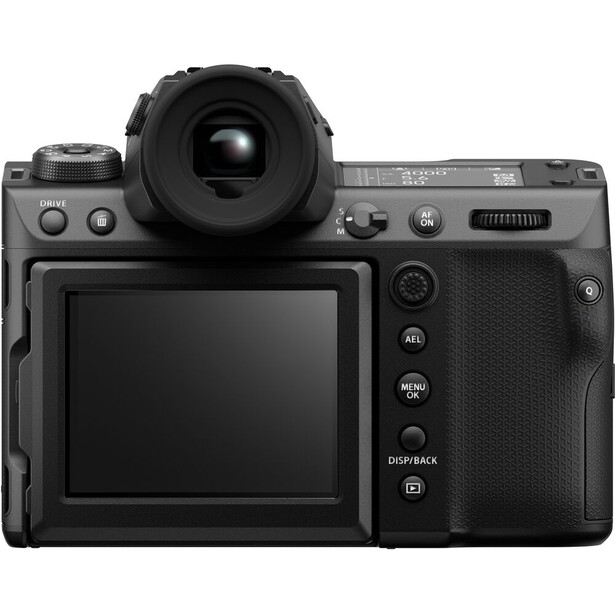
The GFX100 II is the medium format camera that behaves most like a modern professional body, and that is why it wins the overall slot. We reviewed the GFX100 II over 32 days of landscape and product work, and what follows combines that time with Fujifilm's published specifications and the camera's documented design. Fujifilm built it around a faster 102-megapixel sensor with roughly double the readout speed of the original GFX100, and the autofocus runs the same subject-detection logic as the X-series flagships, covering the full sensor and recognizing people, animals, birds, cars, and bikes. It is not a sports camera. It is the first big-sensor Fujifilm that keeps pace with a subject walking toward it instead of surrendering the moment it moves.
The 8-frame-per-second burst and 8-stop in-body stabilization matter more than they sound. Together they turn 102 megapixels from a tripod-only proposition into something you can genuinely hand-hold, which is the whole argument for shooting this sensor on location instead of in a studio. The 9.44-million-dot viewfinder is the largest and most detailed in any medium format camera, enough that manual focus on a fine texture is a pleasure rather than a guess. Fujifilm also gave it real video credentials, with internal 8K capture and a full complement of professional codecs, so a hybrid shooter who wants stills-first quality and occasional cinema-grade footage does not have to own two systems. On the system axis, the G mount is the deepest catalog in medium format, and the tethering and file pipeline are the most conventional here.
Where it asks for compromise is depth and price. The tilting rear screen is a three-way design rather than a fully articulating one, so vloggers and self-recording creators are not the audience, and at this price it sits well above the more affordable GFX bodies that share its sensor resolution. The 8-frame burst is medium format fast, not full frame fast, and the buffer fills quickly with 100-megapixel raw files. On product cycle, this is the oldest body in the guide: it launched in September 2023, Fujifilm has not announced a successor, and it is the pick here most likely to be replaced first, so it is worth watching for a discount rather than paying full list in a hurry. For a commercial, portrait, landscape, or editorial photographer who wants one medium format body that does nearly everything without a tripod bolted to it, nothing else is this complete, so check the current price of the Fujifilm GFX100 II at B&H.
What We Like
- Fast readout sensor with genuine subject-detection autofocus
- The largest, most detailed viewfinder in medium format at 9.44 million dots
- 8-stop stabilization makes 102 MP hand-holdable
- Serious internal 8K video for a stills-first hybrid
- The deepest lens catalog of any medium format system
What Could Be Better
- Priced well above the sensor-sharing GFX bodies below it
- Three-way tilt screen rather than a fully articulating one
- Buffer fills fast with 100 MP raw files
- The oldest body here, and the likeliest to be superseded next
Best Value Entry: Fujifilm GFX50S II
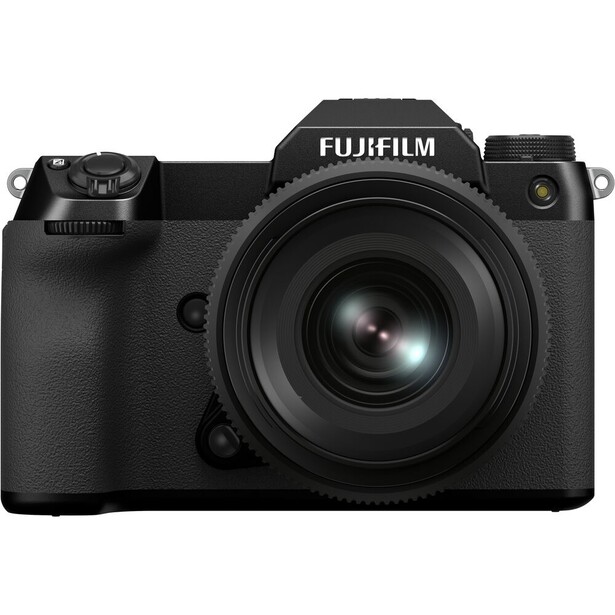
- Sensor: 51.4 MP 43.8 x 32.9 mm CMOS
- Lens: Fujifilm G mount, interchangeable
- Autofocus: contrast detection, 117 areas
- Stabilization: 5-axis IBIS rated up to 6.5 stops
- Continuous shooting: 3 fps
- Viewfinder: 3.69m-dot OLED, 0.77x magnification
- Video: 1080/30p only
- Weight: 900 g with battery and card
- Price: $3,688.95 (B&H)
If the goal is simply to own medium format for the least money, the GFX50S II is the door, and it is closing. Fujifilm now lists this body as discontinued on its own product site, which means the new stock still sitting at retailers is clearance stock at clearance pricing. That is exactly what makes it the value pick: it uses the same body shell and in-body stabilization as the 100-megapixel GFX100S, drops in the older 51.4-megapixel sensor, and currently sells new for less than plenty of full frame flagships. Fifty-one megapixels on a sensor this large still delivers the thing people buy medium format for, which is enormous tonal gradation, files that hold up to heavy retouching, and a rendering of depth that a smaller sensor cannot fake. We have only previewed a pre-production GFX50S II in the studio, so treat the description here as largely spec-based.
The compromises are in the parts that move. This is an older sensor with contrast-detection autofocus rather than the phase-detection system in every newer GFX, so on the speed axis it is the slowest camera in this guide: it hunts in low light, it is slow to lock, and the 3-frame-per-second burst confirms that this is a camera for subjects that hold still. Video tops out at 1080p, so cross it off any hybrid shortlist. The stabilization, rated up to 6.5 stops, is genuinely useful and makes hand-held shooting viable in decent light, which is more than the price suggests. There is also a pixel-shift multi-shot mode that stitches a 200-megapixel file when the subject and camera are both static, a real tool for art reproduction and landscape work. On the system axis you get the identical G mount and the full GF lens lineup, which is the strongest argument of all for starting here.
Nobody should buy this for action, events, or anything that requires confident tracking. The product-cycle situation is the other honest caveat: buying a discontinued camera means no more firmware feature drops and a body that will be worth less on resale than a current one. In exchange you get into the GF system for roughly half of what the 100-megapixel bodies cost. If you want one, do not wait for a sale that is not coming, and check the current price of the Fujifilm GFX50S II at B&H while new bodies are still on the shelf.
What We Like
- The cheapest way into a large medium format sensor
- In-body stabilization rated up to 6.5 stops
- 200 MP pixel-shift multi-shot for static subjects
- Full access to Fujifilm's GF lens lineup
What Could Be Better
- Discontinued by Fujifilm, so remaining new stock is finite
- Older contrast-detection autofocus hunts in low light
- Slow 3 fps burst rules out any action
- 1080p video only
- Lower resolution than the 100 MP bodies for the same sensor size
Best for Studio and Commercial Work: Hasselblad X2D II 100C
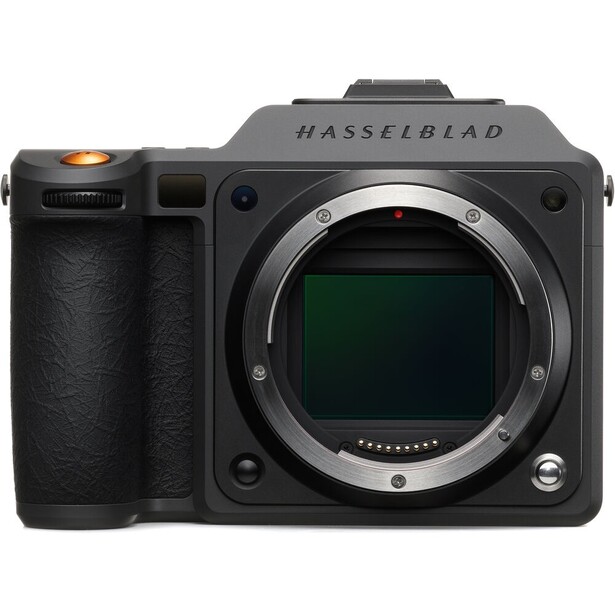
- Sensor: 100 MP 43.8 x 32.9 mm BSI CMOS, 16-bit color
- Lens: Hasselblad XCD mount, interchangeable
- Autofocus: 425 PDAF zones, AF-C with subject detection, LiDAR assist
- Stabilization: 5-axis IBIS rated up to 10 stops
- Continuous shooting: 3 fps
- Viewfinder: 5.76m-dot OLED, 1.0x magnification
- Video: none
- Weight: 840 g with battery
- Price: $7,799 (B&H)
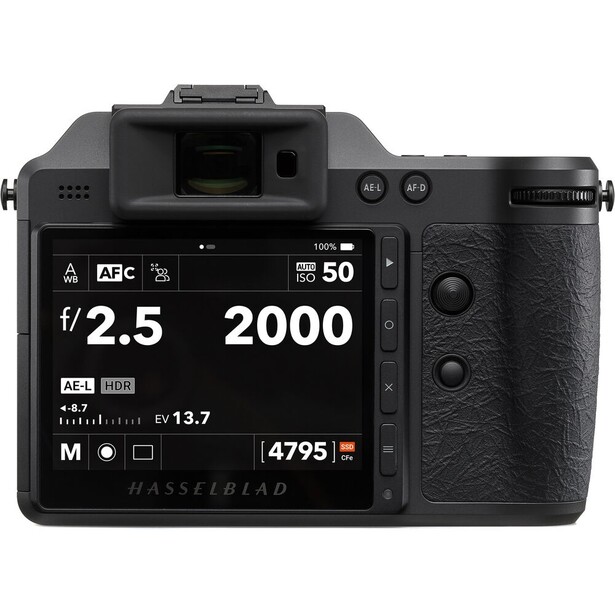
Hasselblad's color is the reason commercial and fashion photographers keep coming back, and the X2D II 100C is the most refined expression of it yet. We reviewed this camera in full, and the short version of our verdict is that the second generation is a real upgrade rather than a refresh. The 100-megapixel back-illuminated sensor captures 16-bit files with a rendition of skin and product surfaces that grades more easily than almost anything else on the market, and Hasselblad's Natural Color Solution means the files often need very little correction before they look right. For a studio shooter delivering skin tones and packaging color that a client will scrutinize under a loupe, that pipeline is worth real money.
What makes the second version credible as a working tool, rather than a beautiful object, is continuous autofocus, which the X series simply did not have before. The 425-zone phase-detection system now tracks with deep-learning subject detection for people, animals, and vehicles, backed by a LiDAR module that ranges the scene for fast acquisition in the dark. In-body stabilization is rated up to a headline 10 stops, the highest figure in this guide, and the 1 TB internal SSD means you can shoot a full commercial day straight to the camera without touching a card. It also captures true end-to-end HDR, writing HDR HEIF files you review on a 3.6-inch, 1,400-nit tilting screen that stays legible on a sunlit terrace.
This is still a deliberate camera. The 3-frame-per-second burst says so, and so does the total absence of video: the X2D II does not shoot a single frame of it. On the system axis, the XCD lens catalog is superb but narrow and expensive next to Fujifilm's, and there is no equivalent to the GFX video and codec toolkit. You also pay a clear premium over a GFX body of similar resolution. On product cycle it is the freshest body in this guide, launched in September 2025, so it should have years of firmware support ahead of it. For the studio and commercial photographer who values color fidelity and build quality above speed and versatility, nothing else feels like it, so check the current price of the Hasselblad X2D II 100C at B&H. Also consider the original Hasselblad X2D 100C if you want the same sensor and color at a discount and can live without continuous autofocus.
Read our full review: Hasselblad X2D II 100C Review: Worth the Upgrade?
What We Like
- Hasselblad Natural Color Solution and 16-bit files that grade cleanly
- Continuous autofocus with subject detection, a first for the line
- 1 TB internal SSD for shooting straight to the camera
- True in-camera HDR capture and a bright 1,400-nit screen
- The newest body here, with its firmware life ahead of it
What Could Be Better
- Slow 3 fps burst, still a deliberate camera
- No video at all
- Small, expensive native XCD lens catalog
- Commands a clear price premium over similar-resolution GFX bodies
Best for Landscapes: Fujifilm GFX100S II
- Sensor: 102 MP 43.8 x 32.9 mm CMOS II
- Lens: Fujifilm G mount, interchangeable
- Autofocus: phase detection with subject detection
- Stabilization: 5-axis IBIS rated up to 8.0 stops
- Continuous shooting: up to 7 fps
- Viewfinder: 5.76m-dot OLED, 0.84x magnification
- Video: 4K/30p, 10-bit
- Weight: 883 g with battery and card
- Price: $5,699 (B&H)
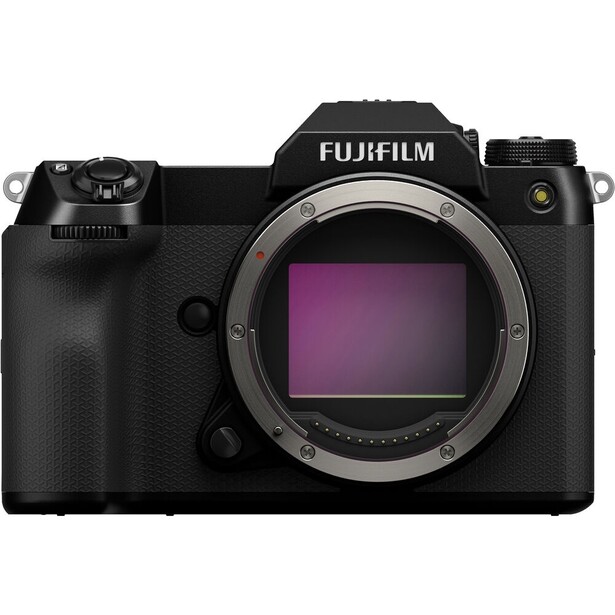
For landscape work the calculus is different: you want the most resolution and dynamic range you can carry up a hill, and you do not need blazing autofocus for a scene that is not going anywhere. The GFX100S II nails that brief. It packs the same 102-megapixel sensor family as the flagship GFX100 II into the lightest interchangeable-lens GFX body Fujifilm makes, at 883 grams, in a shape that balances on a travel tripod and fits a landscape backpack without dominating it. The files give you the latitude to recover a blown sky or a crushed shadow that a landscape often demands, and the resolution is enough to print a canyon at gallery size. We shot portraits with the GFX100S II for two weeks, in the studio and on location, and the landscape case here rests on Fujifilm's specifications and the sensor's well-documented behavior in the flagship.
The 8-stop in-body stabilization is the feature that changes how you shoot in the field. It lets you hand-hold at shutter speeds that would otherwise force a tripod, so a photographer working a fast-changing sunrise can move and reframe without resetting legs each time. Autofocus is the phase-detection, subject-detecting system from the current generation, which is far more than a landscape needs and enough for a portrait or a wandering elk. Fujifilm's film simulations are here too, and a landscape shooter who works in Velvia or Classic Chrome gets a usable preview and a strong starting point straight out of camera. If you want to go deeper on the craft side of that workflow, Elia Locardi's Photographing the World 4: Advanced Landscapes is the Fstoppers tutorial that pairs with this body.
It is slower and less specified than the GFX100 II by design. The burst tops out at 7 frames per second, the viewfinder is a rung down at 5.76 million dots, video stops at 4K, and this is emphatically not a wildlife or action camera despite sharing the sensor. None of that matters for the intended job. On product cycle it sits comfortably in the middle, launched in 2024 with no announced successor, and it inherits the same deep G-mount catalog, including the wide primes and the tilt-shift lenses landscape work rewards. For a landscape, architecture, or travel photographer who wants maximum resolution in the most portable serious body Fujifilm sells, check the current price of the Fujifilm GFX100S II at B&H, because it saves a meaningful sum over the flagship.
What We Like
- Flagship-class 102 MP resolution in the lightest interchangeable-lens GFX body
- 8-stop stabilization for hand-held field work
- Deep dynamic range for recovering skies and shadows
- Fujifilm film simulations and a strong wide-lens catalog
What Could Be Better
- Viewfinder and video a step below the GFX100 II
- 7 fps burst and no pretense of action ability
- No fully articulating screen for awkward low-angle setups
Best Compact and Travel Medium Format: Hasselblad 907X & CFV 100C
- Sensor: 100 MP 43.8 x 32.9 mm BSI CMOS, 16-bit color
- Lens: Hasselblad XCD mount, interchangeable, with V-system and technical-camera adapters
- Autofocus: 294 PDAF zones with face detection, single-shot AF only
- Stabilization: none
- Continuous shooting: not rated for burst shooting by Hasselblad
- Viewfinder: none built in, 3.2-inch tilting rear touchscreen
- Video: none
- Weight: 620 g, body plus digital back
- Price: $7,399 (B&H)
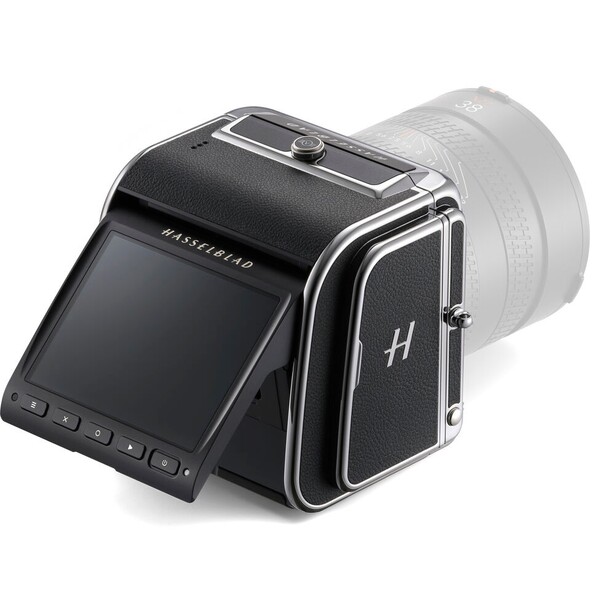
Waist-level shooting is the whole point of the 907X & CFV 100C, and it is why this modular oddity earns a slot no conventional camera can fill. The system splits into a slim 907X body and a CFV 100C digital back carrying the same 100-megapixel sensor and 16-bit color as Hasselblad's flagship, and the pair weighs 620 grams, less than many full frame bodies. You compose on a tilting rear screen with the camera at your belt, the way photographers shot Hasselblads for decades, and that alone changes what you notice on a street. We reviewed the 907X and CFV 100C in the studio, and the notes below draw on that shooting time and on Hasselblad's published specifications.
The reward for that patience is image quality identical to the far pricier X2D-class bodies, with up to 15 stops of dynamic range and the same Natural Color Solution rendering, plus a 1 TB internal SSD so you can travel without a wallet of cards. On the system axis it is unusually flexible: the back takes XCD glass, but it also mounts to Hasselblad's classic V-system film bodies and to technical cameras, which makes it a genuine bridge between analog and digital for anyone who already owns that gear. If that is the direction pulling at you, our guide to the best medium format film cameras covers the bodies this back will bolt onto.
The camera demands you accept its terms. There is no in-body stabilization, so slow shutter speeds need a steady surface or a tripod. There is no built-in viewfinder at all, which makes bright-daylight composition on the rear screen a fight and fast candid work close to impossible. Autofocus is single-shot only, with none of the tracking that the X2D II finally brought to the X series, and Hasselblad does not even publish a burst rate, which tells you what kind of shooting this is for. It launched in 2024, sits mid-cycle, and has no announced replacement. For a deliberate travel, street, or fine-art photographer who wants Hasselblad color in the smallest possible package and enjoys the ritual, check the current price of the Hasselblad 907X & CFV 100C at B&H. Anyone who needs to work quickly should buy something else.
What We Like
- Full 100 MP Hasselblad color in a 620 g package
- Waist-level shooting that changes how you compose
- 1 TB internal SSD for card-free travel
- Back mounts to classic V-system and technical cameras
What Could Be Better
- No in-body stabilization
- No built-in viewfinder, so bright-light composing is hard
- Single-shot autofocus and no ability to chase a moving subject
- No video
Best Fixed-Lens Medium Format: Fujifilm GFX100RF
- Sensor: 102 MP 43.8 x 32.9 mm CMOS II
- Lens: fixed 35mm f/4 (28mm equivalent), leaf shutter
- Autofocus: hybrid phase and contrast detection with subject detection
- Stabilization: none
- Continuous shooting: up to 6 fps mechanical
- Viewfinder: 5.76m-dot OLED, 0.84x magnification
- Video: 4K DCI/30p
- Weight: 735 g with battery and card
- Price: $5,599 (B&H)
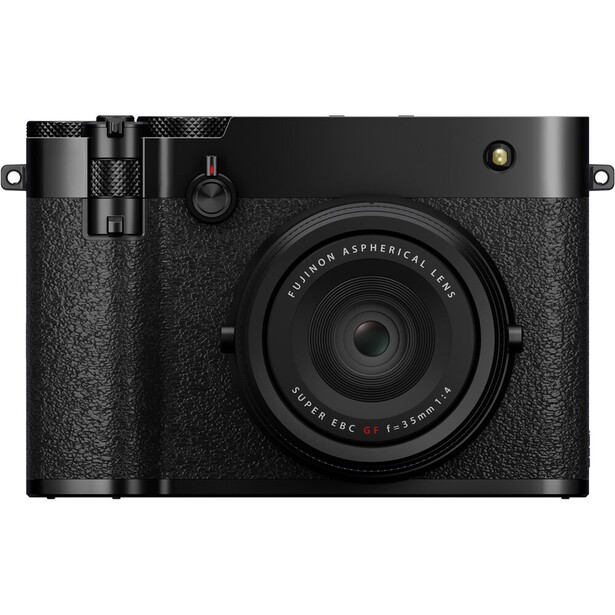
The GFX100RF answers a question nobody else asked: what if a 102-megapixel medium format sensor lived inside a camera the size of a large fixed-lens compact? Fujifilm shrank the body around a leaf-shutter 35mm f/4 lens, roughly a 28mm equivalent, which brings the whole camera in at 735 grams, the lightest GFX ever built. We got our hands on it and loved it, and the thing that lands first is how normal it feels to carry: it is a rangefinder-style street and travel camera that happens to record the most detailed files of anything you can hang from a strap.
The design choices reward a certain kind of shooter. A dedicated aspect-ratio dial lets you commit to a 65:24 panoramic or a square 1:1 frame in camera, which nudges you toward composing on purpose instead of cropping later. A digital teleconverter lever steps the framing from the native 28mm equivalent through 36mm, 50mm, and 63mm equivalents, trading resolution for reach. The leaf shutter is nearly silent and syncs with flash at any speed, a quiet gift for anyone mixing strobe with daylight. Autofocus is the current hybrid system with subject detection, so on the speed axis it is closer to the GFX100S II than to the old contrast-detection bodies, though the 6-frame-per-second burst keeps expectations honest.
The fixed f/4 lens is the whole story, for better and worse. There is no faster aperture for low light or shallow depth, no in-body stabilization to steady the sensor, and no swapping to a longer lens when 28mm is wrong for the scene, which on the system axis makes this the one camera here you cannot grow. Leaning on the digital teleconverter to fake a tighter frame throws away resolution and undercuts the reason to buy a 102-megapixel camera at all. It launched in 2025 and sits early in its cycle, so there is no successor on the horizon. For a street, documentary, or travel photographer who knows a wide angle suits their eye, check the current price of the Fujifilm GFX100RF at B&H, and buy it with clear eyes about that single focal length.
Read our full review: We Got Our Hands on the Beautiful New Fujifilm GFX100RF and Loved It!
What We Like
- 102 MP medium format in the lightest GFX body ever
- Silent leaf shutter with flash sync at any speed
- Aspect-ratio dial encourages deliberate composition
- Same 16-bit files and Fujifilm color as the full-size bodies
What Could Be Better
- Fixed 35mm f/4 lens with no faster aperture or swap option
- No in-body stabilization
- The digital teleconverter throws away resolution to fake reach
How to Choose a Medium Format Camera
Start by being honest about whether you need medium format at all. A modern full frame camera resolves more than enough detail for almost any commercial delivery, and it focuses faster, shoots longer bursts, and offers a deeper lens catalog for less money. What a 43.8 x 32.9 mm sensor buys you is tonal smoothness, dynamic range, and a rendering of depth and transition that is subtly but visibly different, along with the resolution headroom to crop hard or print huge. If your work does not benefit from those specific traits, the money is better spent on lenses and lighting for a system you already own, and our guide to the best mirrorless cameras is the more useful place to start.
If you are buying in, the first fork is speed versus deliberation. Only the GFX100 II, the GFX100S II, and the X2D II 100C offer autofocus you could call confident, and even those are slow next to a full frame flagship. Every other camera here is built for subjects that stay still: portraits, products, landscapes, still life, architecture. Decide whether you need to track anything before you spend, because most of these bodies will frustrate you the moment a subject moves quickly.
The second fork is the system, and it matters more than any single body. Fujifilm's GFX lineup has the broader and more affordable lens catalog, better video, and the more conventional handling, which makes it the safer choice for most working photographers and the reason four of our picks wear the badge. Hasselblad counters with color science, build quality, and a shooting experience that inspires a particular kind of photographer, at a price premium and with a smaller lens range. Handle both if you can, because the difference is as much about how the camera makes you feel as how it scores.
Finally, weigh stabilization and portability against your shooting style. In-body stabilization is the feature that frees a 100-megapixel sensor from the tripod, so if you shoot hand-held, prioritize the bodies that have it and be wary of the ones that do not. If you carry a camera all day, the GFX100S II, the GFX100RF, and the 907X are the light choices, each with a very different set of trade-offs. Watch the product cycle too, because these bodies live four years or more on the shelf and a camera late in its life is both a bargain and a dead end. Match the body to the way you actually work, then put the rest into glass, because the lens outlives the body every time.
What We're Looking For
Our picks weigh image quality and dynamic range, autofocus capability, stabilization, handling, and the depth and cost of each camera's lens system, judged against the specific job each slot describes rather than against a universal spec ranking. Every specification in this guide was verified against current manufacturer and retailer sources at the time of writing, and prices are the current B&H figure for the body only. Most picks across our buying guides come from gear our writers have used and reviewed hands-on, and where we have not tested a camera ourselves, we say so in the entry and write from verified specifications instead. We have shot with all six bodies here and link that coverage in their sections, though our time with the GFX50S II was only a preview of a pre-production unit.
Frequently Asked Questions
Is Medium Format Worth It in 2026?
It is worth it for a specific kind of photographer, not for everyone. If you shoot studio portraits, products, landscapes, or fine art where tonal smoothness, dynamic range, and huge print resolution genuinely change the result, medium format earns its cost. If you shoot events, action, or anything fast, a full frame camera will serve you better for less money. Buy it for the look and the latitude, not the bragging rights.
What Is the Difference Between Fujifilm and Hasselblad Medium Format?
Both use similar 43.8 x 32.9 mm sensors, so raw image quality is close. Fujifilm's GFX system offers more lenses, lower prices, better video, and more conventional handling and autofocus. Hasselblad emphasizes color science, build quality, and a deliberate shooting experience, at a higher price and with a smaller lens range. Fujifilm is the practical working choice, and Hasselblad is the one people fall in love with.
Do You Need Medium Format for Landscape Photography?
No, but it helps in specific ways. The larger sensor delivers more dynamic range for recovering bright skies and dark foregrounds, and the extra resolution lets you print very large or crop aggressively. A good full frame body and lens will produce excellent landscapes for a fraction of the cost, as our guide to the best cameras for photography lays out. Choose medium format only if you routinely print big or need every stop of latitude.
Can Medium Format Cameras Shoot Video?
Some can, though it is not their strength. The Fujifilm GFX100 II records internal 8K and full professional codecs, making it a genuine hybrid, and the GFX100S II handles 4K well. Hasselblad's current bodies shoot no video at all. If video is a priority, buy the GFX100 II or pair a medium format stills camera with a dedicated video body.
Fstoppers may earn a commission from purchases made through links in this article. Our picks are made independently by our editorial team.