
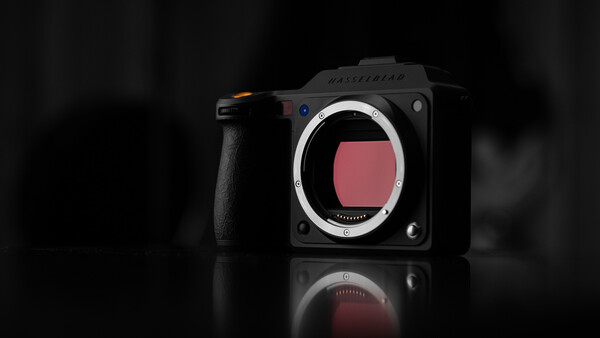
Hasselblad has upgraded its 100-megapixel beauty, which we originally reviewed in the article The Perfect Choice for the Perfectionist? We Review the Hasselblad X2D 100C. Much has improved, and much has stayed the same. How does it feel to use the second generation? Is it worth your time and money?
Still Gorgeous, Still Premium
One thing nobody can deny Hasselblad is the stunning design of the X2D 100C II—a masterclass of merging both premium form and function. An aluminum chassis, sharp edges, hefty feel, deep and comfortable grip with a captivating texture—it’s all here. All of the buttons feel substantial, rugged, and tactile. The newly introduced joystick sits in the right place and handles well. The command wheels click just the right way and offer just the right amount of resistance. The rear LCD now moves even further and at more angles than the predecessor, yet still feels as solid and firm as always. And let’s not forget the iconic orange shutter release button. It all fits together perfectly, like a puzzle waiting for you to experience it. There’s a reason people call the X-series cameras from Hasselblad the “Leicas of medium format.”x
I’ve had the camera for roughly a month, and I can’t deny, it handles extremely well. It fits my hand, the buttons are in all the right places, and the joystick is a very welcome addition. Being able to tilt the screen up 90 degrees and away from the body so it isn’t blocked by the viewfinder is a much-needed improvement over the first generation. The screen is as bright and vivid as a modern high-end smartphone. I had no issues using it outside. The viewfinder still takes approximately a second to switch from the rear screen, but once it does, it is as sharp and up to par with modern mirrorless cameras with its 5.76 million pixels. The 1x magnification, which I’ve already praised to high heaven in the GFX100 II, is a luxury one has to experience to understand, and I`m glad Hasselblad has decided to include it in the X2D 100C II as well.
The beautiful matte graphite-colored top plate still holds the screen for your basic information right next to the on/off button. Just like the first generation of the X2D, the camera does take its sweet time to turn on. But once it activates, you can quickly put it into sleep mode with a single off-button press. It will wake up from sleep pretty much instantly upon a shutter button press. Sleep mode may be more demanding for the battery, though, so I’d still prefer a faster turn-on time.
Internally Improved
As the name suggests, the camera’s sensor still captures 100 megapixels. I’ve been told by Hasselblad that it is the same sensor as the first-generation X2D, but there were some notable improvements made to it. Dynamic range has received a bump up to 15.3 stops, native ISO has dropped down to 50, and the most significant change has been made to the PDAF system. It now has 425 individual zones. That, combined with the new LiDAR, makes automatic focusing, tracking, and subject detection quite noticeably better than the original.
The camera can now fairly reliably track humans, vehicles, cats, and dogs. I say fairly reliably, as I did have a few occasions of missed focus. If this AF system existed in a full frame or APS-C body, it’d be just as fast, if not faster. But it powers a medium format, 100-megapixel sensor. The room for error with such a narrow depth of field is minimal. Looking at a captured image of people walking toward me in full, everything seems perfectly fine. But once I zoomed in to 100% magnification, there was a slight shift in focus. The discrepancy was only millimeters, but as I’ve said, such a big sensor and such high resolution reveal everything.
All in all, I found myself using AF-C tracking in a studio environment pretty much 90% of the time, while outside, trying street photography, I swapped between AF-C and AF-S roughly 50/50. Because once the camera is in AF-S, sure, your subject can’t move, but the camera grabs it near instantly and accurately. LiDAR has definitely been a nice addition.
Stable and Able
What many of us thought of as impossible just a few years back has become the norm: fully stabilized medium format sensors. Hasselblad pushes the envelope a little further by offering up to 10 full stops of IBIS, making it the most stabilized medium format camera on the market. I was able to hold some pretty long exposures, even with 100 megapixels of uncompromising resolution.
Image Quality? Nothing to Talk About
This is a $7,400 USD medium format camera from Hasselblad. Spectacular image quality is a given. I could sing hymns about the resolution, dynamic range, or bokeh, but the truth is that very few consumer cameras on the market currently come close. You buy this because you want the best image quality, and you know that is what you are getting. The only real competition would be the GFX100 II (or the GFX100S II), or larger sensor cameras such as Phase One’s XF system. The latter is a whole different world of photography altogether.
One aspect of image quality does deserve special attention, though, and that is the inclusion of Hasselblad’s new HNCS HDR. Expanding the color gamut from sRGB to a much wider P3 gives you even more dynamic range without sacrificing tonality or needlessly flattening the image. I’ve never been one to utilize HDR in my workflow, and there are more experienced photographers out there who could explain it better to you, but I do agree that this end-to-end solution does simplify the process well. From the moment you press the shutter to the processing done in-camera and in Hasselblad’s Phocus software, you get a final file capable of utilizing screens with up to 1,400 nits of peak brightness. Sure, you will not see any of this in print, but a modern photographer working for advertising brands, etc., could benefit from the X2D 100C II tremendously.




Workhorse Disguised as a Luxury Item
The camera looks great—we’ve already established that—but it is also designed to be used by professionals. First and foremost, the body does not contain a shutter mechanism. Instead, each of the XCD lenses has a leaf shutter built in. This gives you incredible freedom with strobes, as your shutter speeds can exceed thousands whilst staying in sync with the flash. Some of the boudoir images in the gallery below were captured with a 500-watt flash at 1/1300s just to try it out. The possibilities of capturing or freezing motion are significantly increased over a camera with a focal plane shutter, where you’re either stuck somewhere between 1/125s and 1/200s or you have to resort to HSS with significant power loss.
Another much-welcome feature is making a return from the original X2D, and that is the built-in 1 TB SSD. I think built-in memory should be standard nowadays. Sure, there is still a risk of data loss should the drive fail, but it is just as much at risk with memory cards as it is with an SSD. I was able to fit over 4,500 raw files onto the onboard memory without needing to use the CFexpress Type B card slot.
The one downside I see to the camera is the battery. It’s not small by any measure, but it’s not a beast either. I wouldn’t risk shooting a full-day wedding with just one battery. Luckily, the camera charges fairly quickly using the USB-C port, but that is standard nowadays.
What I Liked
- Gorgeous design
- Deep and comfortable grip
- 1 TB SSD
- Spectacular image quality
- High flash sync speeds
- Improved rear screen tilt
- Very bright rear screen
- New joystick
- Customizable buttons
- Much improved AF-C mode
What I Disliked
-
Still slow to turn on from a full off state
-
Still no ability to set monochromatic live view
Samples

















Join the Fstoppers community for free
-
Post comments and join in the discussions
-
Browse the site ad-free
-
Share your work and get featured in the community
-
Compete in the photo contests for fun and prizes
No comments yet