

The camera industry evolves through a pattern of gradual obsolescence where features that once seemed essential slowly fade away as new technologies offer superior alternatives that better serve photographers' actual needs. Here are five features likely on their way out in the next decade.
1. Dual Card Slots Will Be Replaced by Internal Storage Plus Single Slot
The dual card slot configuration that has become standard in professional cameras is heading toward obsolescence as manufacturers recognize that large internal storage combined with a single high-speed card slot provides better reliability, workflow efficiency, and backup security than traditional dual-slot approaches. Current dual-slot systems were designed for an era when memory cards had limited capacity and questionable reliability, requiring photographers to write simultaneously to two cards for backup security or use overflow recording to extend shooting sessions. Modern camera technology has evolved beyond these limitations, with internal SSD storage offering dramatically faster write speeds, while eliminating the mechanical wear issues associated with card slots that see constant insertion and removal cycles. The combination of substantial internal storage for primary recording plus a single card slot for backup or overflow provides all the security and capacity that dual-card systems offered while reducing mechanical complexity, improving write performance, and creating more internal space for battery capacity or cooling systems.The Hasselblad X2D II 100C is a great example of doing this right.
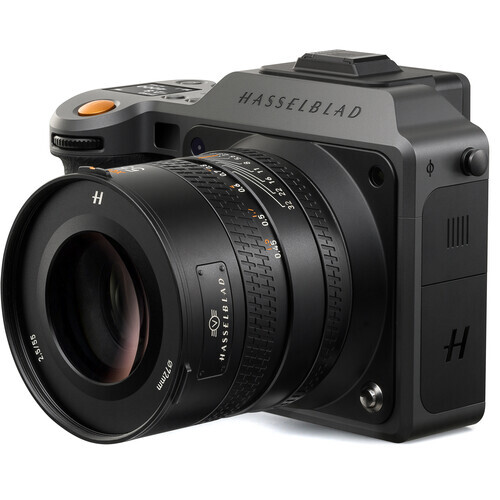
Industry adoption of this approach is already visible in recent camera releases, where manufacturers are experimenting with larger internal buffers and faster processing systems that effectively function as temporary internal storage, even in cameras that still maintain dual card slots for traditional market expectations. The transition will accelerate as internal storage costs decrease.
2. USB-C Becomes Universal (Ending the Era of Proprietary Connections)
The bewildering array of proprietary charging ports, data connections, and accessory interfaces that has plagued camera manufacturers for decades is finally being eliminated by universal adoption of USB-C as the standard connection for power, data transfer, and accessory communication. European Union regulations mandating USB-C for consumer electronics have accelerated this transition by forcing manufacturers to abandon proprietary solutions that locked users into expensive first-party accessories and cables that couldn't be shared across different camera systems or other devices. The practical benefits extend far beyond regulatory compliance to encompass significant improvements in user experience, equipment compatibility, and travel convenience as photographers can finally use the same cables and power adapters for their cameras, phones, laptops, and other devices rather than carrying separate proprietary solutions for each piece of equipment. USB-C's technical capabilities support faster data transfer speeds than most proprietary camera connections, higher power delivery for charging and operation, and bidirectional communication protocols that enable sophisticated accessory integration without requiring custom connection hardware.
The death of micro-USB and other legacy connection standards on cameras is long overdue, as these outdated interfaces created unnecessary frustration and compatibility problems while offering no practical advantages over modern USB-C implementations. Micro-USB's fragile connectors, slow transfer speeds, and limited power delivery capabilities made it unsuitable for professional camera applications, yet manufacturers continued using it for years purely because the component costs were marginally lower than USB-C alternatives. This penny-wise, pound-foolish approach cost photographers far more in frustration, broken cables, and limited functionality than it saved manufacturers in component costs, while creating compatibility nightmares for users who had to maintain separate cable collections for different devices. The elimination of proprietary connections also removes a significant barrier to third-party accessory development, as manufacturers can now create compatible products without needing to license proprietary connection specifications or reverse-engineer closed systems.
Camera manufacturers who continue shipping products with non-USB-C connections are essentially announcing that their cameras are already obsolete before they even reach customers, as these devices will require special cables and adapters that become increasingly difficult to source as the industry standardizes around USB-C. The transition is essentially complete among major manufacturers, with holdouts primarily in older camera lines that are maintained for compatibility rather than representing current design thinking. The benefits of standardization extend beyond individual convenience to encompass reduced electronic waste, simpler equipment management, and improved reliability as USB-C's robust design and widespread adoption ensure long-term parts availability and accessory support.
3. Manual Scene Modes Give Way to AI-Powered Intelligent Auto
The Portrait, Landscape, Night, Sports, and other manual scene modes that have cluttered camera mode dials for decades will be replaced by sophisticated AI systems that automatically recognize shooting scenarios and optimize camera settings without requiring users to manually select appropriate modes. These legacy scene modes were always crude approximations that applied generic settings based on assumptions about what photographers might want in different situations, often producing worse results than thoughtful manual adjustments or even basic program auto modes that responded to actual metering rather than preset assumptions. Modern AI scene recognition can analyze the actual content of the frame by identifying people, landscapes, moving subjects, low light conditions, and countless other factors and then apply optimized settings based on what's actually in front of the camera rather than what a mode dial suggests might be there. This intelligent automation provides all the benefits that manual scene modes promised while eliminating the workflow interruption of switching modes and the frequent mistakes that occurred when photographers forgot to change modes between different shooting situations.
When a camera's AI can identify that you're shooting a portrait against a landscape background in golden hour light while the subject is moving, it can optimize depth of field, shutter speed, color processing, and face detection priorities in ways that no single manual scene mode could address. This multi-factor optimization can happen automatically and continuously as shooting conditions change, providing adaptive camera behavior that manual mode selection could never achieve regardless of how quickly photographers could spin mode dials. Beginner photographers will get better results from intelligent auto than they ever achieved with manual scene modes.
Camera manufacturers are already eliminating dedicated scene mode options from their latest cameras, replacing them with intelligent auto modes that handle scenario recognition automatically while maintaining manual override capabilities for photographers who want complete control. This transition improves user interfaces by decluttering mode dials and menus while providing superior results for the photographers who would have used scene modes in the first place. The few remaining scene mode implementations exist primarily in entry-level cameras marketed to older users who expect them based on previous camera experience, but even these are being quietly phased out as manufacturers recognize that younger photographers never learned to use scene modes and find AI automation more intuitive. Professional and enthusiast cameras have largely abandoned scene modes entirely, acknowledging that their target users either shoot full manual or use semi-automatic modes with exposure compensation rather than relying on preset scene assumptions that rarely match actual shooting requirements.
4. Mechanical Shutters Lose Ground to Advanced Electronic Shutters
The mechanical shutter curtain that has been fundamental to camera design since photography's earliest days is increasingly being replaced by electronic shutter systems that offer silent operation, greater reliability, less mechanical complexity, and performance characteristics that mechanical systems cannot match. Modern electronic shutters have dramatically reduced the rolling shutter problems that plagued early implementations, with readout speeds fast enough to minimize distortion even when photographing fast-moving subjects or under artificial lighting conditions. High-end cameras like Sony's a9 III have introduced global shutter technology that completely eliminates rolling shutter artifacts while enabling flash sync at any shutter speed, though this premium technology remains expensive and limited to flagship models. More commonly, current cameras feature electronic shutters with significantly improved readout speeds that reduce rolling shutter to negligible levels for most practical photography applications, providing the silent operation and mechanical simplicity benefits without requiring expensive global shutter sensors. For example, the Nikon Z9's electronic shutter, but for 99% of intents and purposes, it is.
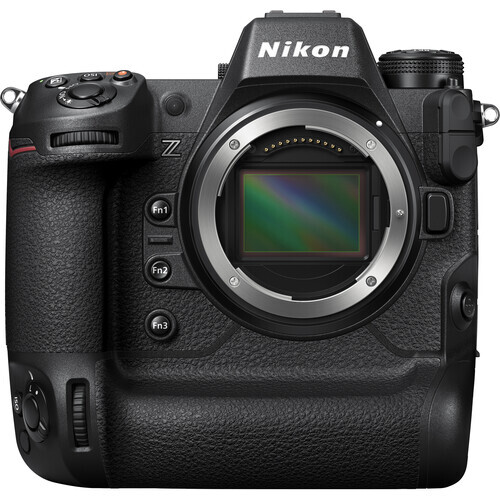
Professional photographers initially resisted electronic shutters due to legitimate concerns about rolling shutter artifacts with fast motion, banding under artificial lighting, and compatibility with flash systems that were designed around mechanical shutter timing. Current electronic shutter implementations have addressed most of these objections through faster sensor readout speeds that minimize rolling shutter effects, improved synchronization with flickering light sources, and better integration with flash systems even if full-speed flash sync remains limited to expensive global shutter cameras. The transition away from mechanical shutters is already underway in premium camera segments, with many current models offering electronic-first operation where mechanical shutters are retained primarily as backup options rather than primary shooting methods. Entry-level and mid-range cameras will continue including mechanical shutters for several more years as improved electronic shutter technology filters down market, but the trajectory is clear: electronic shutters are becoming the default with mechanical systems increasingly relegated to compatibility or backup status rather than primary operation.
5. Pop-up Flash Units Have Virtually Disappeared
The built-in pop-up flash that was once standard equipment on consumer and mid-range cameras has been almost completely eliminated from current camera designs as manufacturers recognize that these compromise-laden devices provide minimal value while consuming precious internal space and adding mechanical complexity. Pop-up flashes were always mediocre lighting solutions at best, producing harsh, unflattering light that screamed "amateur snapshot" while offering insufficient power for any serious flash photography applications. The mechanical mechanism required for pop-up functionality represented one of the most common failure points in digital cameras, with broken flash springs and misaligned pop-up mechanisms among the most frequent camera repair issues. They could be used to trigger other flashes, but cheaper and more reliable wireless triggers have also reduced the need for this function. Modern alternatives including LED video lights, hot shoe flashes, and smartphone-style computational photography that combines multiple exposures have made pop-up flashes completely unnecessary for virtually every photography application they were originally intended to serve.
The space savings from eliminating pop-up flash mechanisms allows manufacturers to include larger batteries, better cooling systems, or improved weather-sealing in the same physical footprint, providing tangible benefits that improve overall camera performance rather than including a marginally useful flash that most photographers never used anyway. Professional photographers never relied on pop-up flashes because the light quality was unacceptable for paid work, while casual photographers increasingly prefer their smartphone cameras that use computational photography to create well-lit images without flash at all. The middle ground of photographers who might have occasionally used pop-up flash for fill light or snapshots can now achieve better results with small LED panels that provide continuous light for both stills and video, or with minimal hot shoe flashes that remain permanently attached and provide more power than pop-up units ever could.
Camera manufacturers' decision to mostly eliminate pop-up flash from new designs acknowledges the reality that these features had become obsolete years before their actual removal, maintained primarily through product line inertia rather than genuine user demand or practical necessity. The last remaining cameras with pop-up flash are budget models where the flash serves more as a psychological reassurance than a useful feature, convincing buyers that they're getting more capabilities even though the flash's actual utility is minimal. Even these budget implementations are being phased out as manufacturers recognize that younger photographers have no expectation of built-in flash and find its absence irrelevant to purchasing decisions, while the cost savings from eliminating the mechanism can be redirected toward features that users actually value like better screens, faster processors, or improved connectivity.
Obsolescence as Progress
These feature eliminations represent genuine progress rather than just change for its own sake, with each obsolete feature being replaced by superior alternatives that better serve photographers' actual needs while reducing cost, complexity, and potential failure points. Mechanical complexity is giving way to electronic capabilities, proprietary solutions are being replaced by universal standards, and manual processes are being enhanced or replaced by intelligent automation that improves results while simplifying operation.



Join the Fstoppers community for free
-
Post comments and join in the discussions
-
Browse the site ad-free
-
Share your work and get featured in the community
-
Compete in the photo contests for fun and prizes
43 Comments
Obsolete and Obsolescence are marketing words that make the insecure and those who lack knowledge buy shiny new expensive gear that drive profit.
Of course the camera companies have to continue to keep on coming up with new "innovations" to make you buy their kit. That must be quite a stressful job!
Manufacturers of any product will always introduce the new latest and greatest, they are in the business to sell products. Profoto no longer produces any of the lighting kit I use and Canon is phasing out their EF gear I shoot with so I'm not worried as long as I can get service from them or a Third Party Shop. Use whatever gear in whatever mode that allows you to capture your images, pros do exactly that while amateurs chase the latest releases and worry about what other people think about their choices. Apple has perfected the "new shiny object" philosophy but don't buy into it.
One thing that will never change...stock photos of people holding a camera wrong.
.
What is wrong with using one's right hand to hold the weight of the camera while using the fingers of one's left hand to turn the focus ring on the lens? I keep looking at the lead photo and thinking "how does that Michael guy thing she is supposed do hold it while she focuses manually?"
.
ive had my left wrist operated on 5 times in 2 years ive got no choice but to hold camera wrong people go out of there way to tell me , I go out of my way to tell them to get stuffed with no explanation of my slightly disabled left wrist. Dont be to quick to judge
I sympathise. However my beef is with TV shows and cinema films that never seem to get their actors to hold DSLRs properly, or for these cameras to make strange loud noises when the shutters fire. AIso it is very rare for manufacturers to produce camera adapters for disabled photographers, e.g shutter buttons for the left hand.
So the way you are holding your camera is actually right, because it is the way that enables you to get photos most readily and efficiently. Our bodies are all different.
I am still waiting for Michael Bock to explain how he thinks someone should hold a camera when they are focusing the lens manually, as the woman in the lead photo is doing.
Try holding a Nikon 70-200mm f/2.8 S (turn of VR for grins) and shoot images at 1/30th for a few hours and see how many have motion blur. You want the left hand to support the lens and camera so the right hand can quickly adjust aperture, shutter, ISO, etc. If you are holding the weight of the lens, as shown, with your right hand for extended periods, your right hand will get fatigued. For manual lenses you focus using your left hand thumb and forefinger! On average you will less motion blur and more keepers. Just because you can get away with it on a small lens (as shown) doesn’t mean you can always use that technique.
To me, a 70-200mm f2.8 is a relatively small, lightweight lens. And it has nothing to do at all with the lead photo, because the person in that lead photo is using an even smaller, lighter lens. To say that the person in the lead photo is holding that camera/lens incorrectly because it is not the way one should hold a 70-200mm f2.8 is just non-sequitur.
Someone please tell me why it is wrong for the person in the lead photo to hold that small, light, camera/lens the way she is holding it, especially taking into consideration the fact that she is manually focusing the lens. How do you think she should hold it while turning the focus ring? While manually focusing, where should her right hand be, and where should her left hand be?
I have asked for this over and over and some of you want to argue and say she is holding it wrong but no one has actually explained exactly how she should be holding it.
I guess he means that it is better to put your left hand under the lens to support te weight and not over the lens (so pinky towards the camera). The hand under makes for a more stable situation. On the other hand I've heard from people coming from a video background, that this it the only way to do it on a video rig, also heard from a professional photographer on youtube (forgot her name but she's a prominent photographer) that for some women it is more comfortable to hold it like in the photo in the article and not from the bottom .
the thing that always annoys me is leaving the lens hood in the store position whilst shooting, you also see that a lot in stock photos.
But she is focusing the lens. That is what I think that Michael guy totally whiffed on when he made is insulting rude comment.
You can focus the lens with your hand under the lens , I do it all the time. And regarding Michael, some people have no manners online.
Yes it is possible to turn the focus ring with the hand under the lens. But for some of us, myself included, this is very awkward and strains the wrist to the very limit of its range of motion. Why do it in a way that feels so awkward when using such a little lens?
With such a tiny, light camera/lens combo like the one in the lead photo, "support" is not an issue, so why not focus the lens in the way that feels right and is comfortable?
I agree, do what feels good. The hand under is more stable (and I use my thumb and middle finger to turn the focus ring , not my wrist) , but if over is more comfortable do that.
100%. If you are flexing muscles, such as by squeezing the camera, you are introducing camera shake. Every time.
As long as people are able to capture the photos they want, they can hold a camera however they like. I have better things to do than criticise others for the way they approach their photography.
Did you ever use a film camera or a camera without auto focus? Try it out and let us know how it works
For about 20 years, myself. Holding the camera correctly worked brilliantly for a century.
That was the first thing I saw and thought "Nooooooooooo!!!" But it was a "Yeah". Ugh.
Most things never truly go obsolete. I mean you can still buy floppy discs and computers that are compatible with them on eBay, at Goodwill stores, at garage sales, etc. Ditto for cassette and 8 track tapes and the devices that play them. Ditto for engines that use leaded gasoline.
Old things, even very old things, will be available for generations and generations. So just because manufacturers aren't making brand new things with these features does not mean that the features are fully obsolete.
You can still buy rolls of film for obsolete film cameras 😲 . Don’t let the pedants find this out 😉.
Fortunately you can't buy leaded gasoline anywhere on the planet anymore (except AvGas 100LL for some small aircrafts).
Still shooting with a d300, here.
Ansel Adams is unmatched as a photographer and he liked to use a Deardorf 8x10 view and a Hassleblad 500c. No electronics there! I shoot with a Nikon D850 and Z8 (AP mode), but when I want to be really creative, I break out the 500cm. There is nothing like shooting manually and using film. It slows you down and makes you visualize the image before taking the shot. Using AI is not photography and it is creating photo technicians and not artists.
I shoot with a modern digital ilc and I still think film has a quality digital doesn’t quite match. Btw, I can easily and often do slow down on my ilc. I even use full manual and with manual lenses.
I sold my 1959 500c. I miss it with the 45° angle finder.
What would Ansel be using today?
Adams was a gear head. He'd be using the highest resolution MF cam available.
Ansel Adams excelled in his genre. But he should not be used as the ultimate model for what our mindset and gear requirements should be because some of us shoot genres that are very different from what Ansel shot. What he did and what he used and the way he went about photographing would simply not work at all for the genres that some of us shoot.
Internal storage and just one card slot does have at least one disadvantage. Digital, permanent storage has a limitation on the number of writes it can handle before starting to fail. I know SSD storage has become more reliable over the years but it is probably the most fickle part of the electronics in the camera and might end up being the camera's weak point. Maybe the manufacturers will make sure this storage is fairly easy to replace in case of a failure.
The lack of a shutter (and a mirror, obviously) would mean the sensor is exposed to whatever light enters the lens when walking about ready to shoot, making it more susceptible to possible damage from sunlight or lidars. Maybe the camera manufacturers will provide a simple, protective "shutter" to alleviate this problem.
I think that's already a part of many (or all) mirrorless cameras.
That's what Nikon does on the Z8.
Good SSDs are normally capable of multiple full drive writes per day, every day, for five years. It's not going to be an issue for 99% of people but I wouldn't say no to M2.2230-format internal storage.
All I’d like to become obsolete is the continual obsession with new gear and bitching and moaning about new gear not meeting people’s unrealistic expectations.
I think the complaining helps to get camera makers to push themselves harder and demand more from their R&D folks. It sure did back in the early 2000s and the 20 teens with regards to ISO and noise performance. If it weren't for people continually complaining about noise grain, they probably wouldn't have improved in that area quite as quickly as they did. Public complaining, en masse, really does help to get things done.
Internal storage? yeah what could possibly go wrong with that. Hmmm I remember people freaked out about cameras with one card slot. Now they love internal storage LOL
Internal storage PLUS a card slot. So the internal storage is nothing more than an emergency backup. If it fails, so what?
I certainly won't miss proprietary connecting cords and I never use scene modes so I won't miss those either. Pop up flash is something I tried once to see if it was useful (it wasn't). Here's hoping that the promised flash sync at all speeds won't be limited to a manufacturer's proprietary flash system...
Pop up flash I find very useful as a non firing master flash for studio work. By itself it is often useful as it puts sparkle in a subject's eyes whilst outside without the dreaded one sided shadow.
THAT is the response of a true photographer. Go watch the kids' eyes go glassy as you explain how to use to as a master lol.
It’s always fascinating to see how many so-called “photographers” rush to buy the latest and greatest camera, convinced that this magical piece of technology will instantly make them better image-makers. The reality, of course, is that most of them know very little about photography itself—and that’s exactly why they keep jumping from one “better” camera to the next.
For many years, I relied on my trusty Canon F-1 and transparency film because most of my assignments were destined for print—back when color separation was the name of the game. Every photograph I made came from doing things the hard way: understanding exposure, light, film characteristics, and the limits of the medium. There were no shortcuts—just skill, patience, and knowledge.
In 2004, I finally purchased my first professional digital camera—not because I needed it, but because clients had stopped wanting to pay for film and processing. I gave in to the times. My choice was the Canon EOS-1D Mark II, paired with a 70–200mm f/2.8, a 16–35mm f/2.8, and an 85mm f/1.2 lens. I still use the wide-angle and telephoto to this day. Sadly, the 85mm eventually gave out, and Canon no longer stocks focusing motors for it.
I truly hope younger photographers will one day understand this simple truth: it’s not the camera that makes the photograph—it’s the person behind it, and the knowledge they bring to the craft.
Just my two cents.
Ignacio Alvarez
As Ansel Adams once said "the most important part of the camera is the 12" (30cm) behind it". I think that is even more true today than ever. From my own experience it is most certainly true without a doubt.
I think internal storage makes sense in the consumer market *IF* it's more than just a marketing gimmick. Ideally, there should be enough of it to hold all of the images from a week-long family vacation, and it should be fast enough to shoot and store images from kids' sports with a competitive frame rate and buffer size. Couple that with a fast USB-C 3.2 (NOT 2.0) connection and/or Wi-Fi that's easy to set up and connect.
Even if you agree with all of Alex's reasons, and the manufactures can get past the technical objections from users, I don't think internal storage makes good business sense in the pro or prosumer market, however (note I said business sense, nothing about the technical merits). There's 25 years of online photo-gearhead culture that uncompromisingly believes professional cameras must have two card slots, and I don't think Sony, Canon, or even Nikon is willing to defy that orthodoxy.
Three takes: #1: DSLR mirror flip blackout is how I know whether I got the shot in my sports photography: If I saw my shot through the viewfinder, I missed it. #2: The XQD card that never comes out of my camera is my "user serviceable" internal storage. #3: Using micro SD's has eliminated hardware related SD failures for me because they're always safely stored in a throw-away adapter. Still, me being a pro, redundancy always wins the day.