Ask ten portrait photographers which lens lives on their camera and you will get two answers, an 85mm and a 50mm, delivered with the certainty of a religious conviction. Both camps are right, because they are photographing different things. The 85mm flatters a face and erases a background. The 50mm keeps the room in the frame and lets you work in it. Nearly every portrait lens buying decision comes down to that choice, then to a second one that costs a lot more money: how fast an aperture you actually need, and whether the jump from f/1.8 to f/1.4 buys you anything a client will ever see.
2026 is a good moment to be shopping for portrait glass. First-party flagships have gotten lighter, third-party makers have collapsed the price of an excellent fast 85mm to a level that would have been absurd five years ago, and Sigma's 85mm f/1.2 DG Art for Sony E and L-mount, previewed at CP+ in February, went on sale in the US on October 6 at $1,599, which is worth knowing before you spend heavily at that focal length.
This guide is cross-mount, covering Sony E, Canon RF, Nikon Z, L-mount, and the APS-C systems, and it spans a manual-focus character lens that costs less than a tripod head through to a near kilogram portrait telephoto. Every specification below was checked against a current manufacturer source, and every pick gets its real flaw stated in the text rather than buried in a bullet list.
At a Glance
- Best Overall: Sony FE 85mm f/1.4 GM II
- Best 85mm for the Money: Viltrox AF 85mm f/1.4 Pro
- Best 50mm: Sigma 50mm f/1.2 DG DN Art
- Best 135mm: Nikon NIKKOR Z 135mm f/1.8 S Plena
- Best for Canon RF and Hybrid Shooters: Canon RF 85mm f/1.4 L VCM
- Best Budget: Viltrox AF 85mm f/2 EVO
- Best APS-C: Sigma 56mm f/1.4 DC DN Contemporary
- Best Character and Vintage Look: TTArtisan 75mm f/1.5 Swirly Bokeh
- Best Portrait Zoom: Tamron 70-180mm f/2.8 Di III VC VXD G2
Best Overall: Sony FE 85mm f/1.4 GM II
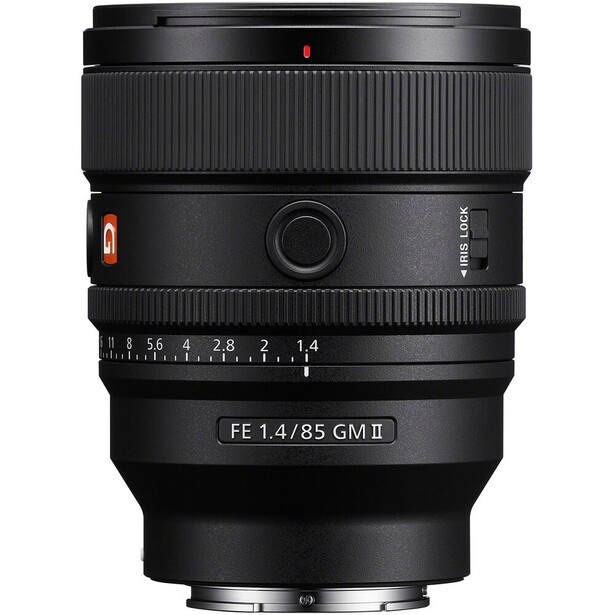
- Focal length and format: 85mm, full frame
- Mounts: Sony E
- Aperture range: f/1.4 to f/16
- Optical design: 14 elements in 11 groups
- Aperture blades: 11, rounded
- Minimum focus distance: 0.85 m (autofocus), 0.8 m (manual focus)
- Filter size: 77mm
- Weight: 642 g
- Price: $1,948 (B&H)
The single most useful thing about the Sony FE 85mm f/1.4 GM II is that it weighs 642 g. That is a strange headline for a lens people buy for its rendering, but the original GM was a lovely, ponderous thing photographers left in the bag on long days, and the II is roughly 20% lighter and about 13% smaller by volume. A fast 85mm you will carry through a nine-hour wedding is worth more than a marginally dreamier one you resent.
What Sony did not sacrifice is the optics. Two XA elements and a pair of ED elements deliver a lens that is sharp across the frame wide open, with specular highlights kept clean rather than onion-ringed and longitudinal chromatic aberration held down far enough that you are not fighting green fringes on eyelashes and jewelry in post. The 11-blade aperture keeps out-of-focus points round as you stop down, so backgrounds stay smooth at f/2.8. The autofocus is the practical separator: the two XD linear motors replace the original's ring-drive ultrasonic motor, and Sony rates the result at up to three times the focusing speed of the first GM, which is what it takes to hold eye tracking on a subject walking toward you at f/1.4. The handling matches, with an aperture ring that de-clicks, an iris lock, two customizable focus-hold buttons placed for both portrait and landscape orientation, and full weather-sealing behind a fluorine-coated front element.
The honest problems are two. It is expensive, roughly triple the price of the Viltrox below, and the closest focus of 0.85 m means tight beauty crops of an eye or a ring detail come from cropping rather than moving in. For a working portrait, wedding, or editorial photographer on E-mount who wants one lens to define the look of their work for the next decade, this is the one to buy. Check the current price of the Sony FE 85mm f/1.4 GM II at B&H.
Also consider the Sigma 85mm f/1.4 DG DN Art if you shoot L-mount or want most of this performance for meaningfully less money, at a nearly identical weight (625 g in E-mount, 630 g in L).
Read our full review of the Sony FE 85mm f/1.4 GM II.
What We Like
- Light enough to shoot all day at 642 g, without giving up f/1.4
- Clean, round specular highlights from the 11-blade aperture
- Fast, confident autofocus for a large-aperture 85mm
- Aperture ring with de-click and iris lock, plus two focus-hold buttons
What Could Be Better
- Costs several times what the best third-party 85mm f/1.4 lenses do
- 0.85 m minimum focus is too long for detail and beauty crops
- Sony E-mount only, with no adapted path to other systems
Best 85mm for the Money: Viltrox AF 85mm f/1.4 Pro
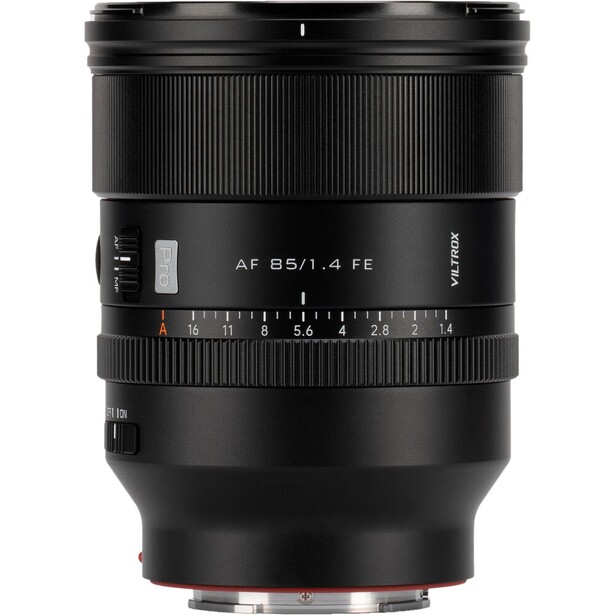
- Focal length and format: 85mm, full frame
- Mounts: Sony E, Nikon Z
- Aperture range: f/1.4 to f/16
- Optical design: 15 elements in 11 groups
- Aperture blades: 11
- Minimum focus distance: 0.79 m
- Filter size: 77mm
- Weight: 800 g (Sony E), 835 g (Nikon Z)
- Price: $598 (B&H)
Third-party lenses used to ask you to accept a compromise. The Viltrox AF 85mm f/1.4 Pro mostly refuses to. When we reviewed it, it was already quite sharp at f/1.4, with the kind of contrast and color that make you stop hunting for a reason to stop down. It is built like the expensive lenses too: our reviewer called the build fantastic, and you get a metal body, weather-sealing throughout, a well-placed aperture ring with a satisfying click, a custom button, and USB-C firmware updates that are refreshingly painless through Viltrox's app. The one piece of Viltrox's flagship kit it does without is the LCD info screen from the pricier LAB line.
The catch is in the spec block: 800 g in E-mount, which is 158 g more than Sony's GM II and the reason this is the value pick rather than the overall winner. The Nikon Z version is heavier still at 835 g. That is not what anyone would call compact, though in our testing it never actually became cumbersome across long studio and location shoots. Autofocus, driven by Viltrox's HyperVCM voice coil motors, was fast and accurate for us without quite matching the speed of a high-end Sony lens. Worth knowing: our pre-production copy sometimes hunted, jumping back and forth without locking, and a firmware update improved the behavior without entirely eliminating it. For fashion, headshots, seniors, and couples, none of that will bite you. For a toddler sprinting across a lawn wide open, it occasionally might.
Two optical caveats are worth knowing. Vignetting is heavy wide open, more than 2 EV of falloff in the corners at f/1.4, which is a lot of brightening to ask of a raw file if you shoot bright backgrounds. There is also longitudinal chromatic aberration at f/1.4, the green and magenta fringing you see on a backlit strand of hair, and it drops off sharply by f/2. Both are fixable in a click, and neither is unusual for a fast 85mm.
This is the lens for a photographer building a business rather than a collection. It gives you the f/1.4 look, the weather-sealing, and the sharpness, and it leaves enough in the bank for a second body or a lighting kit. Nikon Z shooters get the same optical formula, which is welcome, because Nikon's own 85mm f/1.2 S is a much heavier commitment in both senses. Against a Sony 85mm GM that has spent its life between $1,300 and $2,000, this is tremendous value. Check the current price of the Viltrox AF 85mm f/1.4 Pro at B&H.
Read our full review: We Review the Viltrox AF 85mm f/1.4 Pro Lens
What We Like
- Very sharp at f/1.4 in our testing, with great contrast and color
- Metal build, weather-sealing, and a de-clickable aperture ring
- Available on both Sony E and Nikon Z
- Roughly a third of the price of the first-party f/1.4 equivalents
What Could Be Better
- 800 g in E-mount and 835 g in Z, and nobody would call it compact
- Autofocus is fast but a step behind first-party motors, and our pre-production copy hunted at times
- More than 2 EV of vignetting and visible chromatic aberration at f/1.4
- No LCD info screen, unlike Viltrox's LAB series
Best 50mm: Sigma 50mm f/1.2 DG DN Art
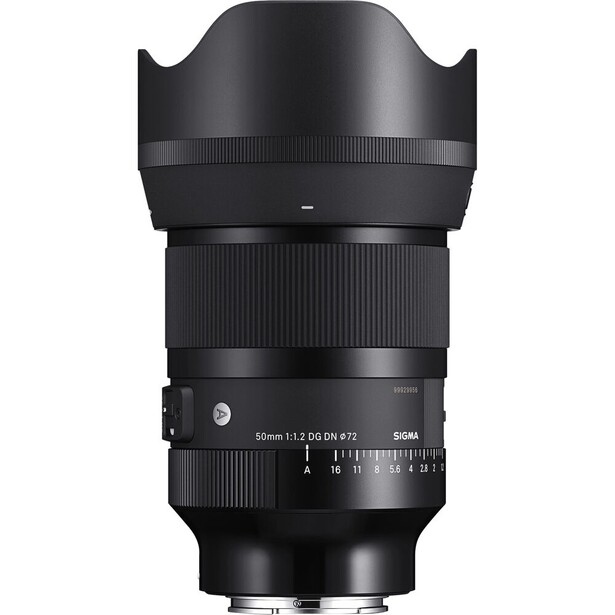
- Focal length and format: 50mm, full frame
- Mounts: Sony E, L-mount
- Aperture range: f/1.2 to f/16
- Optical design: 17 elements in 12 groups
- Aperture blades: 13, rounded
- Minimum focus distance: 40 cm
- Filter size: 72mm
- Weight: 740 g (Sony E), 745 g (L-mount)
- Price: $1,539 (B&H)
A 50mm is the portrait lens for photographers who want the room in the shot. It takes in the doorway and the window light and the mess of an actual life, and at f/1.2 it still separates a face from all of it. The Sigma 50mm f/1.2 DG DN Art is the one to buy, because Sigma got the Sony E version down to 740 g. Sigma calls that the lightest in its class, and the competition backs the claim up: Canon's RF 50mm f/1.2 L USM is 950 g and Nikon's NIKKOR Z 50mm f/1.2 S is 1,090 g.
The optical story is a 17-element design with four aspherical elements and a 13-blade diaphragm, an unusually high blade count that pays off in how long the bokeh stays circular as you close down. Sharpness is high from wide open, and Sigma's dual HLA linear motors give it autofocus that is quick and near-silent, with focus breathing kept low enough to be usable for video. There is an aperture ring with a click switch and a lock, plus dust and splash resistance and a water and oil repellent front coating.
What you give up is the last few percent of correction. At f/1.2 there is longitudinal chromatic aberration and some vignetting, both normal at this aperture. The more practical limitation is that a 50mm at f/1.2 has a depth of field measured in millimeters at portrait distances, and it will happily focus on an eyelash while missing the iris behind it.
The 40 cm minimum focus is the quiet feature here, close enough to shoot the hands and rings that turn a sitting into a story without swapping lenses. For environmental portraits, documentary work, and anyone who shoots in cramped rooms, this is the 50mm to own. Check the current price of the Sigma 50mm f/1.2 DG DN Art at B&H.
What We Like
- At 740 g, several hundred grams lighter than first-party 50mm f/1.2 primes
- 13 rounded blades keep bokeh circular when stopped down
- Fast, quiet dual HLA autofocus with minimal focus breathing
- 40 cm close focus covers detail shots without a lens change
What Could Be Better
- Visible longitudinal chromatic aberration at f/1.2
- Razor-thin depth of field is unforgiving of focus errors
- No Canon RF or Nikon Z version
Best 135mm: Nikon NIKKOR Z 135mm f/1.8 S Plena
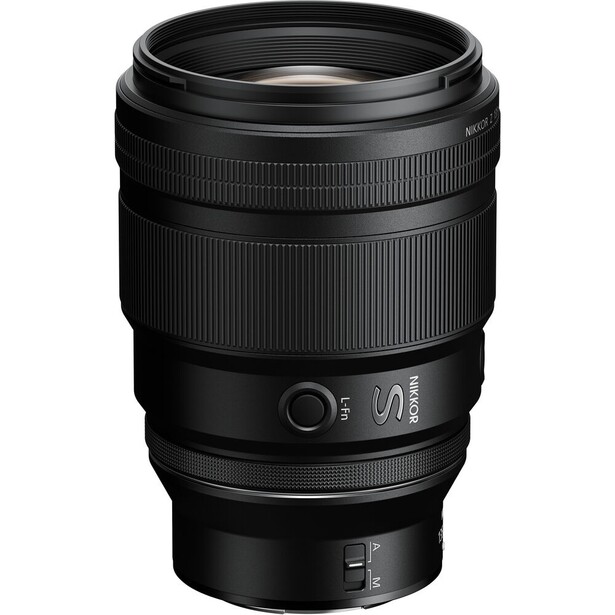
- Focal length and format: 135mm, full frame
- Mounts: Nikon Z
- Aperture range: f/1.8 to f/16
- Optical design: 16 elements in 14 groups
- Aperture blades: 11, rounded
- Minimum focus distance: 0.82 m
- Filter size: 82mm
- Weight: 995 g
- Price: $2,496.95 (B&H)
Most fast lenses render out-of-focus highlights near the edge of the frame as lemon shapes, squeezed by the mechanical vignetting of the barrel. Nikon named the NIKKOR Z 135mm f/1.8 S Plena after the Latin for full, because it was engineered so those highlights stay round from center to corner. Point it at a string of fairy lights behind a subject at f/1.8 and the difference from an ordinary telephoto is obvious.
The rest is a Nikon S-line lens: four ED elements and an SR element that push chromatic aberration down to a level where you stop thinking about it, and a build with a customizable control ring, an OLED information panel, an L-Fn button, and full sealing. The 0.2x maximum reproduction ratio is high for the class, so you can shoot a tight detail without a macro lens.
It is a specialist pick and not the overall winner because 135mm is a demanding focal length, and this one weighs 995 g and takes 82mm filters. You need physical distance from your subject, which rules out small rooms and makes conversation harder. That distance is also the point: the compression flatters faces more than any other focal length here, and the background collapses into an abstract wash an 85mm cannot match at the same subject size.
Buy it if you shoot outdoor portraits, dance, senior sessions, or editorial work where you can back up, and if you already own a 24-70mm zoom for everything else. Check the current price of the Nikon NIKKOR Z 135mm f/1.8 S Plena at B&H.
Also consider the Viltrox AF 135mm f/1.8 LAB if you shoot Sony E or Nikon Z and want 135mm rendering for far less money, at the cost of a heavier barrel: 1,235 g on Sony E and 1,265 g on Nikon Z.
What We Like
- Round bokeh highlights all the way into the corners at f/1.8
- Sharp from wide open, with chromatic aberration extremely well controlled
- 0.2x magnification is high for a portrait telephoto
- OLED panel, control ring, L-Fn button, and full weather-sealing
What Could Be Better
- 995 g and 82mm filters make it a commitment to carry
- Needs a lot of working distance, which rules out most indoor spaces
- Nikon Z only, at a price well above the 85mm alternatives
Best for Canon RF and Hybrid Shooters: Canon RF 85mm f/1.4 L VCM
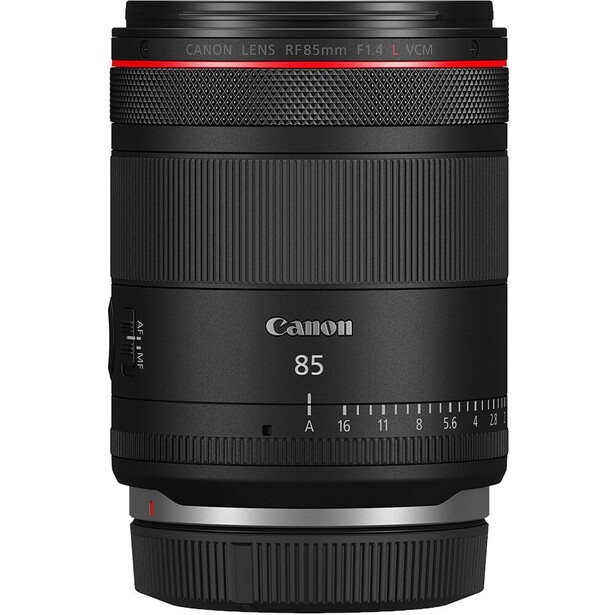
- Focal length and format: 85mm, full frame
- Mounts: Canon RF
- Aperture range: f/1.4 to f/16
- Optical design: 14 elements in 10 groups
- Aperture blades: 11
- Minimum focus distance: 0.75 m
- Filter size: 67mm
- Weight: 635 g
- Price: $1,649 (B&H)
Canon RF shooters spent years with a binary choice: the sublime, enormous RF 85mm f/1.2 L USM, or the modest RF 85mm f/2 Macro IS STM. The Canon RF 85mm f/1.4 L VCM lands between them and, for most working photographers, ends the argument. It weighs 635 g against the f/1.2's 1,195 g and shares its 67mm filter thread with Canon's other VCM primes.
The VCM is a voice coil motor, and it is why this lens matters to anyone shooting both stills and video. Voice coil focusing gives you the snap needed for eye-detect stills and the smooth travel needed for video in one lens, and Canon paired it with minimal focus breathing and an iris ring for aperture pulls.
The flaws are specific. Specular highlights take on a soap-bubble character, with visible onion rings inside the bokeh balls, which is exactly what the RF 85mm f/1.2 L renders so beautifully and exactly why some Canon photographers still pay for the bigger lens. The iris ring is smooth-only with no click detents, which video shooters love and stills photographers find fiddly. Close focus at 0.75 m and 0.12x magnification is poor, and there is no stabilization, so you lean on the body's IBIS.
For a Canon photographer shooting weddings, headshots, or events who wants an L-series fast 85mm they can hold up for eight hours, this is the pick. If you shoot only stills and your work is built on the softest possible background rendering, the Canon RF 85mm f/1.2 L USM remains the flagship, at roughly twice the weight and price. Check the current price of the Canon RF 85mm f/1.4 L VCM at B&H.
What We Like
- Half the weight of the RF 85mm f/1.2 L for L-series sharpness
- VCM focusing handles both fast stills tracking and smooth video pulls
- Iris ring and minimal focus breathing suit hybrid work
- 67mm filters shared across Canon's VCM prime lineup
What Could Be Better
- Onion-ring texture and a soap-bubble edge in specular highlights
- Iris ring has no click detents for stills shooters
- No stabilization, and close focus is poor for detail work
Best Budget: Viltrox AF 85mm f/2 EVO
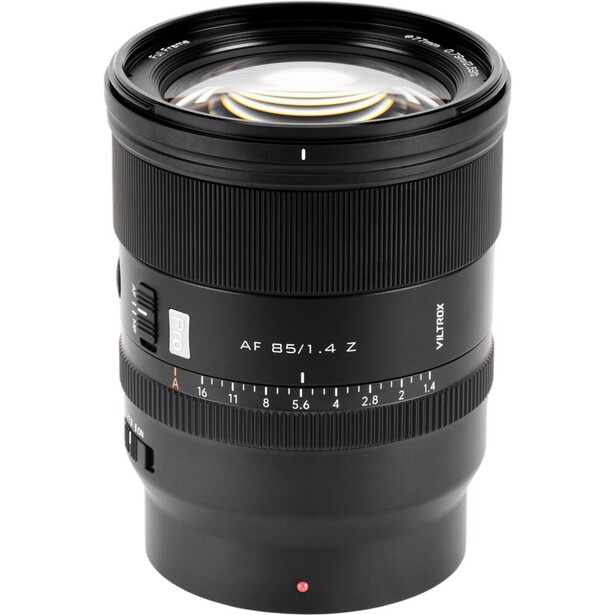
- Focal length and format: 85mm, full frame
- Mounts: Sony E, Nikon Z
- Aperture range: f/2 to f/16
- Optical design: 10 elements in 8 groups
- Aperture blades: 9, rounded
- Minimum focus distance: 0.74 m
- Filter size: 58mm
- Weight: 340 g (Sony E)
- Price: $275 (B&H)
Nobody needs to spend flagship money to shoot a good portrait, and the Viltrox AF 85mm f/2 EVO is the clearest proof of it on sale right now. At 340 g it undercuts even Sony's own FE 85mm f/1.8, which weighs 371 g, and it is light enough that it does not change how a camera feels around your neck. Two ED elements and two high-refractive elements keep it honest optically, and the nine-blade rounded aperture handles background highlights sensibly.
You are buying f/2 rather than f/1.4, a real difference but a smaller one than the marketing on faster lenses suggests. At portrait distances an 85mm at f/2 still throws a background convincingly out of focus, and the depth of field is deep enough to keep both eyes sharp on a three-quarter turn instead of gambling on one. What you lose is a stop of light in a dim reception hall and a slightly busier transition zone behind your subject.
The compromises show up in the focusing and the finish. It focuses with an STM stepper motor rather than the linear or voice coil designs in the lenses above, quiet and quick enough for a seated subject or a walking one, and out of its depth on anything that behaves like sport. The weather protection is a rubber gasket at the mount and nothing more, so it survives a light drizzle rather than a downpour. What it does keep is the de-clickable aperture ring, which is a genuine surprise at this price and the reason it doubles as a video lens.
For a photographer with a new camera and a kit zoom, this is the single best upgrade available. Buy it, spend the difference on lighting, and read our beginner camera guide if you are still choosing the body it hangs off. Check the current price of the Viltrox AF 85mm f/2 EVO at B&H.
Also consider the Sony FE 85mm f/1.8 if you want first-party autofocus and a third of a stop more light, at 371 g and a higher price, or the Canon RF 85mm f/2 Macro IS STM if you shoot RF and want stabilization and half-life-size close focus.
What We Like
- 340 g, lighter than Sony's own 371 g FE 85mm f/1.8
- Costs a fraction of any f/1.4 option here
- ED glass and a nine-blade rounded aperture keep the rendering clean
- De-clickable aperture ring and USB-C firmware updates, rare at this price
What Could Be Better
- STM focusing is fine for portraits and outclassed by linear motors on anything moving fast
- f/2 gives up two-thirds of a stop against an f/1.4 lens, and some background separation
- Weather protection is a mount gasket and nothing else
Best APS-C: Sigma 56mm f/1.4 DC DN Contemporary
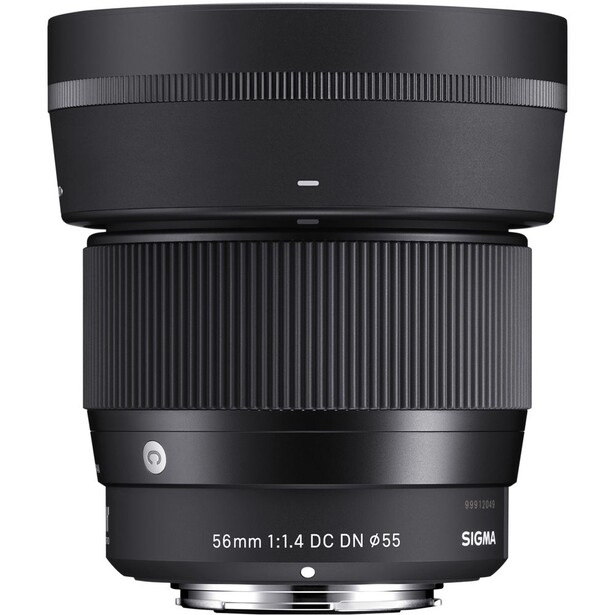
- Focal length and format: 56mm, APS-C and Micro Four Thirds (roughly 84mm equivalent on APS-C, 112mm on Micro Four Thirds)
- Mounts: Sony E, Fujifilm X, Nikon Z, Canon RF, L-mount, Micro Four Thirds, Canon EF-M
- Aperture range: f/1.4 to f/16
- Optical design: 10 elements in 6 groups
- Aperture blades: 9, rounded
- Minimum focus distance: 50 cm
- Filter size: 55mm
- Weight: 256 g to 295 g depending on mount
- Price: $454 (B&H)
Crop-sensor shooters get told their cameras cannot do portraits, which is nonsense, and the Sigma 56mm f/1.4 DC DN Contemporary is the lens that proves it. On an APS-C body it frames like an 84mm, the classic portrait angle, and at f/1.4 it produces separation that reads as full frame in a print. Sigma has kept adding mounts over the years, so it now covers Sony E, Fujifilm X, Nikon Z, Canon RF, L-mount, Micro Four Thirds, and the legacy EF-M system, which is why it beats any single-system rival here.
The optics punch far above the price. Sharpness at f/1.4 is high in the center and stays respectable to the edges, contrast is strong, and the nine-blade rounded diaphragm produces backgrounds that look intentional rather than nervous. It is tiny, between 256 g and 295 g depending on mount, and it balances properly on the small bodies APS-C shooters actually own.
The weather-sealing story is inconsistent, and you should check before you order. Sigma fits a dust and splash resistant mount to the L-mount, X-mount, and Nikon Z versions only, so Sony E and Canon RF buyers do not get it. There is no optical stabilization, and longitudinal chromatic aberration is visible wide open.
This is the lens to buy the same week you buy a Fujifilm X-T5, a Sony a6700, or a Nikon Z50 II. Fujifilm shooters who want more speed and a weather-sealed metal build should look at the Fujifilm XF 56mm f/1.2 R WR, which is the better lens and costs a good deal more. Check the current price of the Sigma 56mm f/1.4 DC DN Contemporary at B&H.
What We Like
- Available on nearly every APS-C mount, including Canon RF and Nikon Z
- An 84mm-equivalent portrait angle at f/1.4 for very little money
- Under 300 g, so it suits the small bodies it is designed for
- Strong center sharpness and clean nine-blade bokeh
What Could Be Better
- Sealed mount only on the L-mount, X-mount, and Nikon Z versions
- Chromatic aberration is visible at f/1.4
- Plastic barrel and no stabilization
Best Character and Vintage Look: TTArtisan 75mm f/1.5 Swirly Bokeh
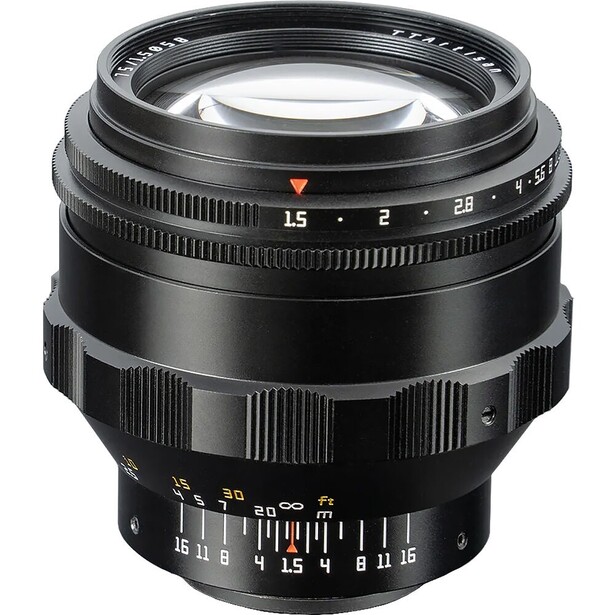
- Focal length and format: 75mm, full frame
- Mounts: M42 screw mount (adaptable to E, RF, Z, X, and L) and Leica M
- Aperture range: f/1.5 to f/16
- Optical design: 6 elements in 4 groups
- Aperture blades: 13
- Minimum focus distance: 0.75 m
- Filter size: 58mm
- Weight: 562 g to 669 g depending on mount
- Price: $289 (B&H)
Every lens above is engineered to erase its own personality. The TTArtisan 75mm f/1.5 Swirly Bokeh is the opposite proposition, a homage to the Zeiss Biotar 75mm f/1.5 of the 1930s, built to produce the swirling background that made that lens a legend. Six elements in four groups is an almost antique formula, and the aberrations it leaves uncorrected are the entire point.
Wide open at f/1.5, the background bends into concentric arcs that wrap around the point of focus, strongest at the edges of the frame and most dramatic against something dappled and busy like backlit foliage. The center stays surprisingly contrasty. Everything beyond it softens and swirls. Stop down to f/4 and it becomes an ordinary competent sharp lens, which is the choice TTArtisan hands you.
Understand exactly what you are buying. It is manual focus and manual aperture with no electronic contacts, so there is no EXIF data, no autofocus, and no in-camera correction. It sells in M42 screw mount and Leica M, so most buyers add a cheap adapter and accept that focusing an f/1.5 lens by hand at 75mm demands focus peaking, magnification, and patience. The all-metal barrel is a pleasure to use, with a clicked aperture ring and a smooth focus throw.
This is not a lens for a paid session where you must deliver 400 images. It is the lens you bring to a personal project, a portrait of a friend in a field at golden hour. Photographers who want the same spirit with a soft glow rather than a swirl should look at the Lensbaby Velvet 85, a native-mount lens with a 12-blade aperture. Check the current price of the TTArtisan 75mm f/1.5 Swirly Bokeh at B&H.
What We Like
- Genuine swirling bokeh that no corrected modern lens can replicate
- All-metal build with a clicked aperture ring and 13 blades
- Adapts to nearly every mirrorless mount via a cheap M42 adapter
- Costs less than a mid-range tripod head
What Could Be Better
- Manual focus and manual aperture, with no EXIF or corrections
- Needs an adapter, and adapters vary in quality
- Soft and low in contrast outside the center at f/1.5
Best Portrait Zoom: Tamron 70-180mm f/2.8 Di III VC VXD G2
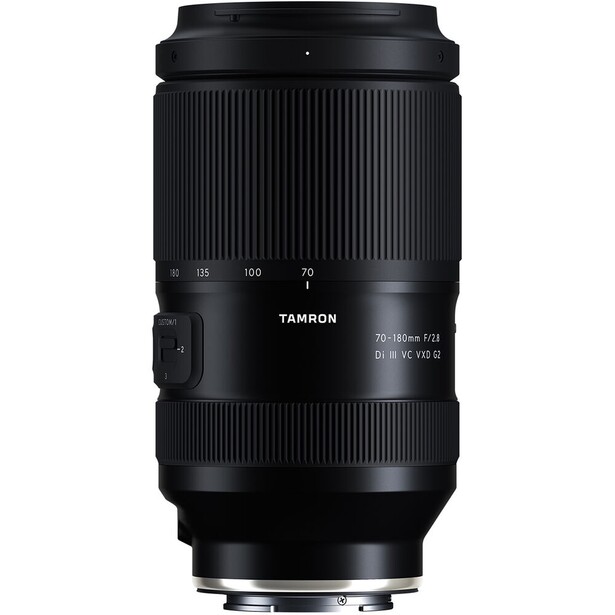
- Focal length and format: 70-180mm, full frame
- Mounts: Sony E, Nikon Z
- Aperture range: f/2.8 to f/22
- Optical design: 20 elements in 15 groups
- Aperture blades: 9, rounded
- Minimum focus distance: 0.3 m at 70mm, 0.85 m at 180mm
- Filter size: 67mm
- Weight: 855 g (Sony E), 865 g (Nikon Z)
- Price: $999 (B&H)
Primes win the bokeh argument and zooms win the working day. A 70-200mm f/2.8 is what most portrait and wedding photographers reach for when they cannot control the distance to their subject, and the Tamron 70-180mm f/2.8 Di III VC VXD G2 gives you almost all of that range for much less weight and money. At 855 g in the Sony E version (865 g in Nikon Z) it undercuts Sony's own 70-200mm f/2.8 GM OSS II by 190 g, and the heavier first-party zooms by considerably more.
The G2 fixed the one thing missing from the original: Tamron's VC stabilization is now built in, which matters at 180mm in a dim church. Autofocus runs on a VXD linear motor, fast and quiet enough for stills and video alike. It focuses to 0.3 m at the wide end for a 1:2.6 magnification, close enough for the detail work that usually forces a lens change.
You are giving up 20mm at the long end, and that is not nothing. At 180mm you stand slightly closer than a 200mm shooter for the same crop, so background compression is marginally less aggressive, and photographers who need every millimeter of reach should stay with a 70-200mm. The barrel also extends as you zoom, and the nine-blade aperture is a lower count than the primes here, so specular highlights turn slightly angular below f/2.8.
For a photographer who shoots portraits alongside weddings, events, or sports, this is the most practical lens here. Pair it with an 85mm prime for the shots that need f/1.4 and you have a portrait kit with no gaps. Canon RF shooters, who cannot buy this lens, should look at the Canon RF 70-200mm f/2.8 L IS USM Z instead. Check the current price of the Tamron 70-180mm f/2.8 Di III VC VXD G2 at B&H.
What We Like
- 855 g in E-mount, lighter than any first-party 70-200mm f/2.8
- VC stabilization, added in the G2, works where it matters at 180mm
- 0.3 m close focus at the wide end for detail shots
- Available on both Sony E and Nikon Z
What Could Be Better
- 20mm short of a true 70-200mm at the long end
- Nine-blade aperture is less generous with bokeh than the primes here
- Extends when zoomed, and there is no Canon RF version
How to Choose a Portrait Lens
Three decisions matter, and everything else is detail. Focal length determines how a face is drawn and how much room you need. Aperture determines how much background you erase and how much you spend. Autofocus determines how many of the frames you take are actually usable. Build quality, filter size, and blade count are tiebreakers, not reasons.
50mm or 85mm?
An 85mm lens is the safe answer, and the reason is geometry. To fill the frame with a head and shoulders at 85mm you stand a meter and a half to two meters away, and from that distance a nose is drawn in proportion to the ears behind it. Move in to a meter or so with a 50mm for the same crop and the nose grows, the ears recede, and the face widens, an effect people call unflattering because it is.
The 50mm wins everywhere the 85mm is impractical. In a small apartment, at a family gathering, in a coffee shop, an 85mm backs you into a wall, and the 50mm lets you shoot a full-length portrait in a room where you cannot get far enough away. It is also the environmental portrait lens, the one that shows a chef in their kitchen rather than a chef against a blur. If you mostly shoot people you know in the places they live, get the 50mm. If you control the location, get the 85mm.
f/1.8 or f/1.4?
The gap between f/1.8 and f/1.4 is two-thirds of a stop of light, worth less than photographers think, and a meaningful change in the size of your background blur, worth more than the numbers suggest. It also costs two to four times as much, adds a few hundred grams, and cuts your depth of field to a point where an eye can be sharp while an eyebrow is not.
The honest advice is that most people should buy the f/1.8. Photographers who own f/1.4 lenses shoot them at f/2 most of the time anyway, because at f/1.4 you cannot reliably hold two eyes sharp on a turned head and because clients rarely ask for more blur. Buy the faster lens if you work dark venues without flash or your style depends on maximum separation. Otherwise buy the slower one and spend the savings on a light and a modifier. Our budget and third-party lens guide covers where cheap glass is genuinely as good as expensive glass, and Peter Hurley's Perfecting the Headshot is the fastest way to learn what makes a portrait work once the lens is on the camera.
One spec deserves more attention than it gets: the aperture blade count. A lens with 11 or 13 rounded blades keeps its out-of-focus highlights circular as you stop down, while a nine-blade lens starts turning them into visible polygons by f/2.8. Since most of us shoot portraits at f/2 to f/2.8 rather than wide open, that is the difference you will actually see in your files.
What We're Looking For
We select portrait lenses on the rendering of out-of-focus areas, the sharpness of the plane of focus at working apertures rather than at f/8, the reliability of autofocus on a moving human eye, and the weight, because a lens that stays in the bag is worth nothing. We prefer lenses with high rounded blade counts, low longitudinal chromatic aberration, and close-focus distances short enough for detail shots. Every specification here was verified against current manufacturer specification pages and live retailer listings at the time of writing, and every price is pulled live rather than typed in. Picks are drawn from Fstoppers' own hands-on reviews where we have them and, where we have not put a lens through our hands, from those verified specifications and each lens' documented optical design.
Frequently Asked Questions
What Is the Best Focal Length for Portraits?
85mm is the standard answer for head-and-shoulders portraits, because the working distance it demands renders facial features in natural proportion. 50mm is better for environmental and full-length work in tight spaces, and 135mm flatters faces most of all if you have room to back up. On APS-C, a 56mm lens gives you the same angle of view as an 85mm on full frame.
Is f/1.4 Worth It Over f/1.8 for Portraits?
For most photographers, no. The two-thirds of a stop buys larger background blur and a little more low-light headroom, but it typically doubles or triples the price and thins depth of field to the point where keeping both eyes sharp becomes difficult. Buy f/1.4 if you shoot dark venues or your style depends on maximum separation. Otherwise put the savings into lighting.
Can I Shoot Portraits With a Zoom Lens?
Yes, and many working professionals do. A 70-200mm f/2.8 or a 70-180mm f/2.8 covers most portrait focal lengths at an aperture that still separates a subject from the background, and the flexibility is worth more than a stop of light at a wedding. Primes still win on bokeh quality and low-light performance, so many photographers carry one of each.
Do I Need a Full Frame Camera for Portraits?
No. An APS-C camera with a fast prime like a 56mm f/1.4 produces portraits that hold up in print and online, and the smaller sensor mostly costs you about a stop of background blur and low-light performance. Full frame gives you more separation at the same framing and cleaner high-ISO files, which matters in dim venues more than in a studio.
Is the Sigma 85mm f/1.2 DG Art Worth Waiting For?
If you shoot Sony E or L-mount and want the fastest 85mm available, there is no longer a wait: Sigma announced it on September 8, 2026, and it went on sale in the US on October 6 at $1,599. Its f/1.2 primes have historically undercut first-party equivalents on price, but at about 905 g it is a heavy lens, and the 85mm f/1.4 options here are already excellent if you do not need the extra stop.
Fstoppers may earn a commission from purchases made through links in this article. Our picks are made independently by our editorial team.