The old argument about third-party glass is over, and the lens makers won it. A Chinese optics company can now sell you a full frame autofocus prime for less than the kit zoom bolted to the front of your camera cost as an upgrade, and it will resolve more detail. What has replaced the quality argument is a messier one about access. Nikon is in court with Viltrox over Z-mount patents, nobody sells a licensed full frame autofocus lens for Canon RF, and two brands pulled their autofocus Z-mount lenses from Chinese shelves in March 2026. The lens you want may be excellent and still not exist for your camera.
That makes mount availability the first question, not the last one. Sony E-mount shooters have an embarrassment of choice. Nikon Z shooters have a good selection with a legal cloud over part of it. Canon RF shooters are limited to APS-C unless they adapt EF glass. Fujifilm X and Micro Four Thirds sit in between, well served by the small manufacturers and ignored by Sigma's full frame lines.
So every pick below states which mounts it actually ships in and what the compatibility risk looks like right now, alongside the specs. We have spread these picks across autofocus and manual focus, stills and cine, and from pocket-money primes to genuinely professional glass, because "budget" in this category no longer means "compromise." It means you decided where to spend.
At a Glance
- Best Overall Value: Tamron 28-75mm f/2.8 Di III VXD G2
- Best Budget Prime: Viltrox AF 50mm f/2 Air
- Best Budget Zoom: Sigma 18-50mm f/2.8 DC DN Contemporary
- Best Autofocus Bargain: TTArtisan AF 56mm f/1.8
- Best Manual-Focus Lens: Thypoch Simera 35mm f/1.4
- Best Cine-Style Set: Sirui Night Walker T1.2 S35 Cine 3-Lens Set
- Best Specialty Lens: Laowa 90mm f/2.8 2x Ultra Macro APO
- Best Splurge: Viltrox AF 135mm f/1.8 LAB
Best Overall Value: Tamron 28-75mm f/2.8 Di III VXD G2
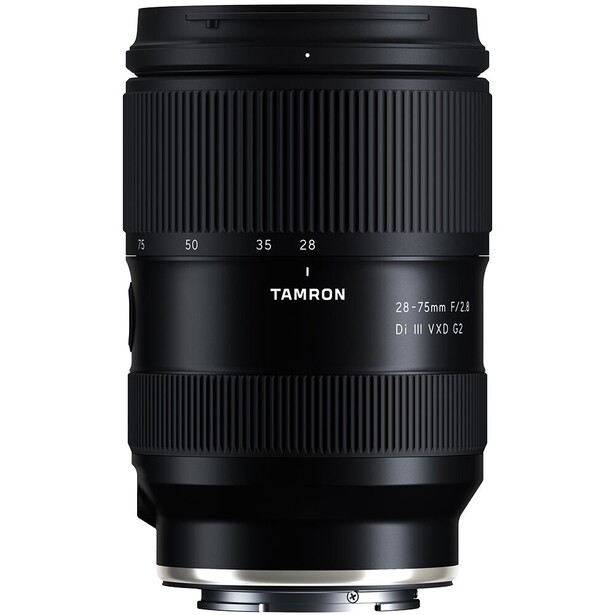
- Mounts: Sony E, Nikon Z
- Coverage: full frame
- Optics: 17 elements in 15 groups
- Aperture: f/2.8, 9 rounded blades
- Focus: autofocus, VXD linear motor
- Minimum focus: 0.18 m at 28mm, 0.38 m at 75mm (1:2.7 max magnification)
- Filter thread: 67mm
- Weight: 540 g (Sony E), 550 g (Nikon Z)
- Price: $699 (B&H)
Ask a working photographer which third-party lens has earned its keep and the answer is usually a Tamron standard zoom. The 28-75mm f/2.8 Di III VXD G2 is the one that gets recommended most, and the reason is not that it is cheap. It is that it does the job of a first-party 24-70mm f/2.8 at roughly half the weight penalty and a fraction of the outlay, and the optical difference at working apertures is small enough that clients will never see it.
The G2 is a real revision, not a price cut on an old design. The VXD linear motor is quick and near-silent, and it holds focus during video pulls without the audible chatter of Tamron's earlier RXD units. The lens gains a customizable function button and a USB-C port in the mount for firmware updates and focus-behavior tweaks through Tamron's Lens Utility software. Close focus is the party trick: 0.18 m at the wide end gives 1:2.7 magnification, close enough for detail shots at a wedding or on a product table without swapping to a macro.
The honest limitation is the wide end. Twenty-eight millimeters is not 24mm, and if you shoot interiors, tight event rooms, or environmental portraits where you back up against a wall, you will feel those 4mm missing on every job. Center sharpness is strong wide open, with corners that lag slightly until f/4, which is exactly what you would expect from a zoom at this weight. There is no optical stabilization either, so on an unstabilized body you are leaning on shutter speed.
Mount reality: this exists for Sony E and Nikon Z only, and both are made under license, so nothing about the Viltrox litigation touches it. Canon RF shooters cannot buy it at any price. Check the current price of the Tamron 28-75mm f/2.8 Di III VXD G2 at B&H.
Also consider the Sigma 28-105mm f/2.8 DG DN Art if you want the extra reach and can accept a lens that weighs 990 g and takes 82mm filters.
Read our full review of the Tamron 28-75mm f/2.8 Di III VXD G2.
What We Like
- First-party image quality at working apertures for a fraction of the money
- Fast, quiet VXD autofocus that behaves in video
- Genuinely useful 0.18 m close focus at the wide end
- USB-C firmware updates and customization built into the mount
What Could Be Better
- Starts at 28mm, not 24mm, and you notice indoors
- Corners take until f/4 to catch up with the center
- No optical stabilization
- Nothing for Canon RF shooters
Best Budget Prime: Viltrox AF 50mm f/2 Air
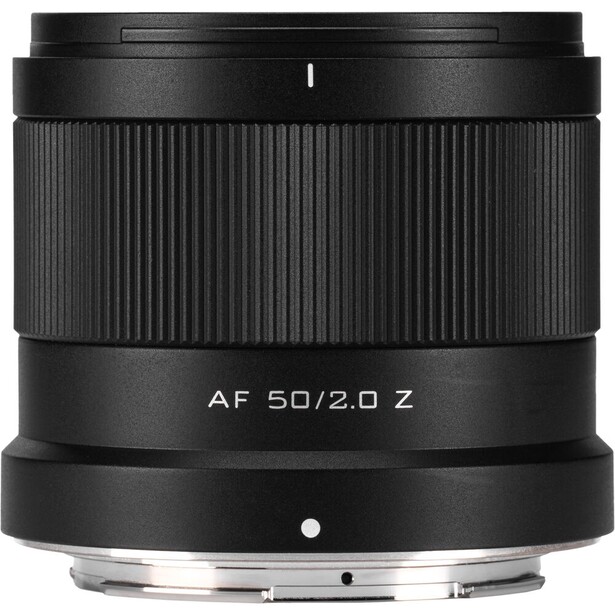
- Mounts: Sony E, Nikon Z
- Coverage: full frame
- Optics: 13 elements in 9 groups (3 ED)
- Aperture: f/2, 9 blades
- Focus: autofocus, STM stepping motor
- Minimum focus: 0.51 m (0.11x max magnification)
- Filter thread: 58mm
- Weight: 205 g (Sony E), 220 g (Nikon Z)
- Price: $199 (B&H)
Viltrox built the Air series by asking what could be removed rather than what could be added, and the AF 50mm f/2 Air is the clearest expression of that. There is no aperture ring. The barrel is plastic over a metal mount. The maximum aperture stops at f/2 instead of chasing f/1.4. What is left is a 205 g autofocus prime, 57mm long and 65mm across, that delivers image quality which would have been remarkable at three times the price a few years ago.
When we reviewed it, our writer lived with it for night street photography: neon signs, dim bars, food trucks, crowded pool halls. Center sharpness at f/2 held up, tightened to properly crisp by f/2.8 to f/4, and peaked around f/5.6, with the corners catching up by f/8. The autofocus was the surprise at this price, locking reliably even in mixed neon light and through glass, and chromatic aberration that shows up in high-contrast test charts rarely intruded on real frames. The STM motor is quiet rather than silent, video autofocus is slower than stills, and faint motor noise makes it onto recordings, but for street, travel, portraits, and family photos it locks and holds.
The compromises are visible if you look for them. Vignetting at f/2 is heavy enough that raw profiles do real work, and there is enough field curvature that flat-subject shooters (copy work, brick walls) will find the corners a little behind. The plastic barrel and lack of weather-sealing put it in the "keep it out of the rain" category. None of that matters to the person this lens is for, which is somebody who wants a fast prime in a jacket pocket.
Mount reality: Sony E and Nikon Z, no Fujifilm X or Canon RF version. The Z-mount version is exactly the product class caught up in Nikon's patent suit against Viltrox, so buy from a retailer with a real return policy and understand that future firmware support in that mount is not something we can promise. Check the current price of the Viltrox AF 50mm f/2 Air at B&H.
Also consider the Viltrox AF 40mm f/2.5 Air if you would rather have a slightly wider, even smaller everyday prime.
Read our full review: Why This $199 Viltrox 50mm Lives on My Camera After Dark
What We Like
- 205 g and pocketable, with real autofocus
- Sharp from f/2 across most of the frame
- USB-C port in the mount for firmware updates
- Full frame coverage, so it survives a body upgrade
What Could Be Better
- Heavy vignetting wide open
- No aperture ring, no weather-sealing, plastic barrel
- STM autofocus is audible and not built for fast action
- Z-mount version sits inside the Nikon litigation
Best Budget Zoom: Sigma 18-50mm f/2.8 DC DN Contemporary
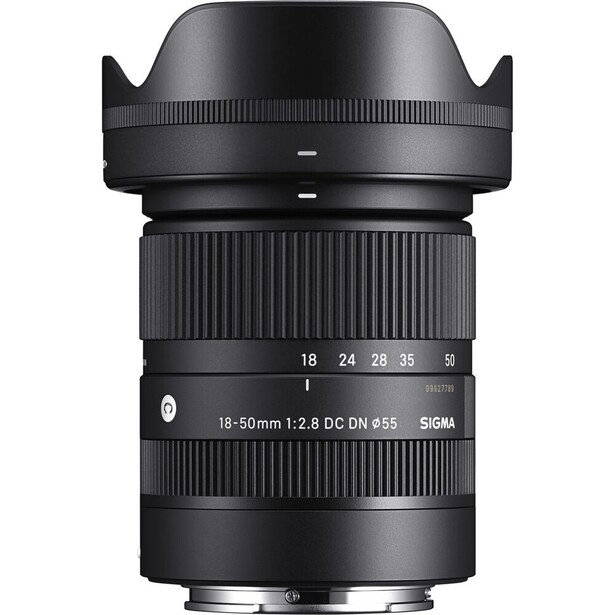
- Mounts: Sony E, Fujifilm X, Canon RF, L-Mount
- Coverage: APS-C
- Optics: 13 elements in 10 groups (1 SLD, 3 aspherical)
- Aperture: f/2.8 constant, 7 rounded blades
- Focus: autofocus, stepping motor
- Minimum focus: 12.1 cm at 18mm, 30 cm at 50mm (1:2.8 max magnification)
- Filter thread: 55mm
- Weight: 290 g (Sony E, L-Mount), 285 g (Fujifilm X), 300 g (Canon RF)
- Price: $599 (B&H)
Nothing else in this guide has quietly changed as many people's photography as the 18-50mm f/2.8 DC DN Contemporary. It is the lens that turns a cheap crop-sensor body into something that behaves like a proper camera: a constant f/2.8 across a 27-75mm equivalent range, in a barrel that weighs less than a can of soda and takes tiny 55mm filters. Anyone buying their first interchangeable-lens camera should put this at the top of the upgrade list, ahead of any body. Our beginner camera guide makes the same argument from the other direction.
What is remarkable is how little it gives up to earn that size. Sharpness is high in the center from f/2.8 and the corners tidy up quickly, distortion and vignetting are correctable and correction profiles are widely available, and the 12.1 cm minimum focus at the wide end lets you get uncomfortably close to a subject for a zoom of this class. The autofocus is a stepping motor rather than a linear unit, so it is not the fastest system Sigma makes, but on a modern body with subject detection it tracks a walking person without drama.
The obvious weakness is the range. It stops at 50mm (75mm equivalent), and if you shoot portraits or events you will want a longer prime beside it. It has a weather-sealed mount gasket rather than full sealing, so it is splash-tolerant and not more than that.
Mount reality: Sony E, Fujifilm X, Canon RF (licensed by Canon, for its APS-C RF bodies), and L-Mount. There is no Nikon Z version, which surprises people, and Sigma has never announced one. Nikon Z crop shooters finally have an answer in the Tamron 17-70mm f/2.8, which reached Z-mount and Canon RF in July 2026. Check the current price of the Sigma 18-50mm f/2.8 DC DN Contemporary at B&H.
Also consider the Tamron 17-70mm f/2.8 Di III-A VC RXD if you want more reach and built-in stabilization, or if you shoot Nikon Z crop, where the Sigma does not go.
Read our full review of the Sigma 18-50mm f/2.8 DC DN Contemporary.
What We Like
- Constant f/2.8 in a 290 g package
- Transforms an entry-level APS-C body more than any body upgrade would
- Excellent 12.1 cm close focus at the wide end
- Available in four mounts, including Canon RF crop bodies
What Could Be Better
- Range stops at 50mm, so you need a longer lens beside it
- Stepping-motor autofocus trails Sigma's faster linear units
- Sealed mount gasket only, not a fully sealed barrel
- No Nikon Z version, and none announced
Best Autofocus Bargain: TTArtisan AF 56mm f/1.8
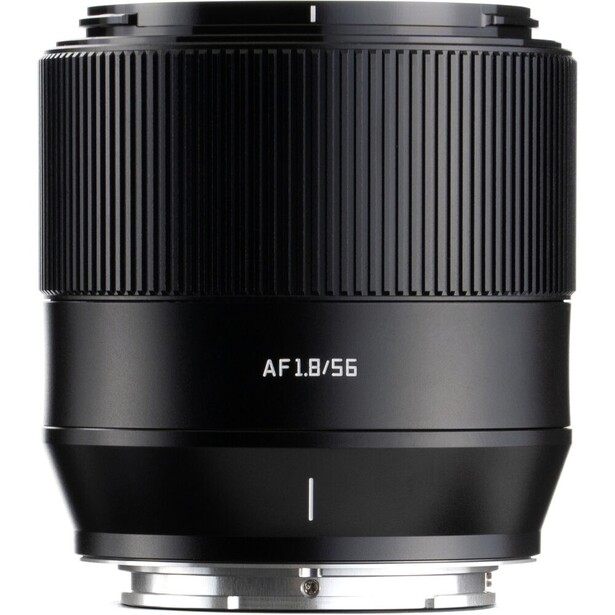
- Mounts: Sony E, Fujifilm X, Nikon Z
- Coverage: APS-C
- Optics: 10 elements in 9 groups (1 ED)
- Aperture: f/1.8, 9 blades
- Focus: autofocus, STM with lead-screw drive
- Minimum focus: 0.5 m
- Filter thread: 52mm
- Weight: 233 to 245 g depending on mount
- Price: $129 (B&H)
Somewhere below the Viltrox price floor sits a class of lens that should not work, and the TTArtisan AF 56mm f/1.8 is the best of them. It is an aviation-aluminum barrel with an 84mm equivalent field of view on APS-C, autofocus with working eye detection, and a price well under what any first-party portrait prime for the same mount will cost you. Buy one for a Fujifilm X-T or a Sony a6000-series body and the portrait end of your kit is solved for the weekend.
The lead-screw stepping motor is the design decision that carries it. It is not a fast system, and it hunts a little in dim light, but it is accurate, and once it locks onto an eye it stays there through normal portrait movement. Center performance is sharp from f/1.8, with corners that improve markedly by f/2.8, plus the pleasing, slightly soft-edged bokeh that a simple 10-element design tends to produce. The single ED element does enough work that purple fringing on backlit hair stays inside what a raw editor can fix.
You are buying at this price, so be realistic. There is no weather-sealing, and the focus ring is a fly-by-wire affair with no useful damping. Autofocus speed is the real ceiling, and our month with the Fujifilm version bore that out: this is a lens for a seated portrait, a posed group, or a slow street scene, not for a kid sprinting across a field.
Mount reality: Sony E, Fujifilm X, and Nikon Z APS-C. The Z version is the one to watch, given that Nikon's legal campaign has already pushed some Chinese brands to pull Z-mount stock in their home market. For portrait work at any budget, our portrait lens guide covers the step up. Check the current price of the TTArtisan AF 56mm f/1.8 at B&H.
Also consider the Viltrox AF 56mm f/1.7 Air if you want a lighter 170 g barrel and a waterproof front coating for a little more money.
What We Like
- A genuine autofocus portrait lens at the bottom of the market
- Metal barrel that feels far more expensive than it is
- Accurate eye detection once it locks
- Three mounts, including Fujifilm X
What Could Be Better
- Slow autofocus that hunts in low light
- Corners need f/2.8 to sharpen up
- No weather-sealing and a vague focus ring
- Stock is intermittent, so availability can bite
Best Manual-Focus Lens: Thypoch Simera 35mm f/1.4
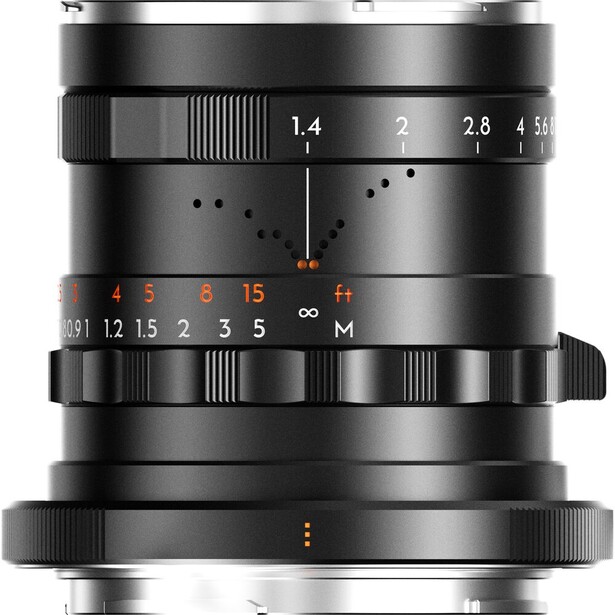
- Mounts: Leica M, Sony E, Nikon Z, Fujifilm X, Canon RF
- Coverage: full frame
- Optics: 9 elements in 5 groups (3 high-refractive, 1 aspherical)
- Aperture: f/1.4, 14 blades
- Focus: manual only, no electronic contacts
- Minimum focus: 0.45 m
- Filter thread: 49mm
- Weight: 310 g (Nikon Z)
- Price: $369 (B&H)
Manual-focus lenses sell on feel, and the Simera 35mm f/1.4 has more of it than lenses costing four times as much. Thypoch is a young Chinese company that started in Leica M mount and worked outward, and the details it obsessed over are the ones that matter when you focus by hand: a mechanical, retracting depth-of-field scale with red index dots that moves as you turn the aperture ring, a tactile detent at 0.7 m so your fingers learn the zone-focus distance, and an aperture ring with click and declick modes marked with a sun and a moon.
Optically it is a lens with a personality rather than a scorecard. Wide open at f/1.4 it is soft and low in contrast, with visible chromatic aberration and about 2.6 EV of vignetting, and there is measurable focus shift as you stop down. By f/4 it snaps into being genuinely sharp and contrasty. If you read that as a list of faults, this is not your lens. If you read it as a rendering, which is how most people who buy a 14-blade f/1.4 manual prime read it, then it delivers a look that no clinical autofocus 35mm will give you.
The practical cost is real and worth stating plainly. There are no electronic contacts, which means no EXIF aperture data, no in-body stabilization coupling on cameras that use lens data, and no autofocus assist of any kind. You focus with the magnifier or focus peaking, every time. It also flares readily without the metal hood, so keep the hood on it.
Mount reality: this is the widest mount coverage of any pick here, including Canon RF, because a lens with no electronic contacts does not need Canon's permission to exist. That is the loophole the manual-focus makers have been quietly exploiting for years. Check the current price of the Thypoch Simera 35mm f/1.4 at B&H.
Also consider the TTArtisan Tilt 50mm f/1.4 if you want a manual lens with an optical trick rather than a classic rendering.
Read our full review of the Thypoch Simera 35mm f/1.4.
What We Like
- Mechanical depth-of-field scale and click/declick aperture ring
- Build quality that shames lenses at several times the price
- 14 blades give round highlights well into the aperture range
- Available in five mounts, Canon RF included
What Could Be Better
- Soft and low-contrast wide open, with focus shift on stopping down
- No electronic contacts, so no EXIF and no autofocus assist
- Flares easily without the hood
- Heavy vignetting at f/1.4
Best Cine-Style Set: Sirui Night Walker T1.2 S35 Cine 3-Lens Set
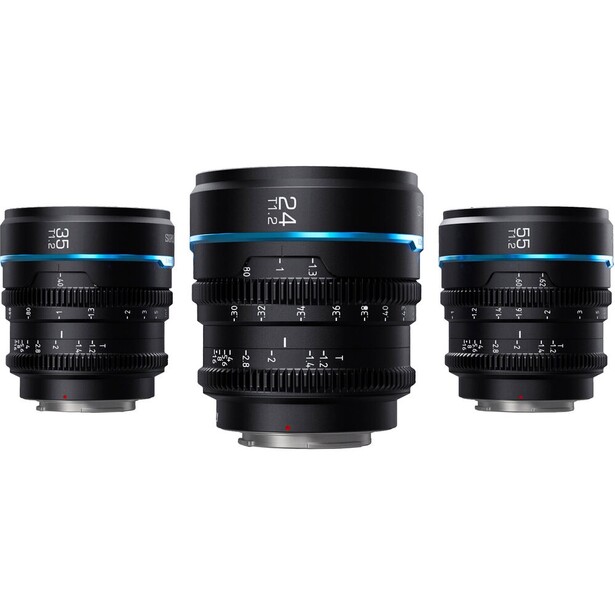
- Mounts: Sony E, Fujifilm X, Canon RF, L-Mount, Micro Four Thirds
- Coverage: Super35
- Optics: 12 elements in 11 groups (24mm); 11 elements in 10 groups (35mm and 55mm)
- Aperture: T1.2, 12 blades
- Focus: manual only, 270-degree focus throw, 0.8 MOD gears
- Minimum focus: 0.3 m (24mm) to 0.6 m (55mm)
- Filter thread: 67mm across the set
- Weight: 505 g (24mm), 513 g (35mm), 555 g (55mm)
- Price: $749.25 (B&H)
Buying a matched cine set used to mean spending more on glass than on the camera. Sirui's Night Walker T1.2 S35 trio broke that, and it did it by getting the boring parts right. The 24mm, 35mm, and 55mm share a front diameter, a 67mm filter thread, identical gear positions, and matched lens lengths, so a follow focus, matte box, or rig stays where you left it when you swap lenses. On a run-and-gun shoot that saves more time than any optical spec on the box.
T1.2 across the set is the headline, and it is a real T-stop rather than an optimistic f-number, which means the three lenses expose alike and cut together without a grading fight. The 270-degree focus throw is long enough for repeatable marks, the 12-blade iris keeps highlights round, and the color rendering is consistent enough across the set that a single LUT holds from wide to tele. Sharpness is usable wide open, with the expected softening at the extreme corners.
Two things will rule this set out for some people. First, coverage: these are Super35 lenses, so they will not fill a full frame sensor. On a Sony a7-series or a Nikon Z6-series body you are shooting in APS-C crop mode, which is fine for 4K but costs you resolution and low-light headroom. Second, they are manual only, with no electronic communication, so there is no autofocus, no stabilization data, and no lens metadata in the file.
Mount reality: Sony E, Fujifilm X, Canon RF, L-Mount, and Micro Four Thirds. There is no Nikon Z option, and Sirui is one of the brands that pulled its autofocus Z-mount lenses from Chinese retail in March 2026 while Nikon's patent campaign plays out, so do not expect one soon. Check the current price of the Sirui Night Walker T1.2 S35 Cine 3-Lens Set at B&H.
Also consider the individual Sirui Night Walker 16mm T1.2 S35 and Sirui Night Walker 75mm T1.2 S35 to extend the set at both ends.
What We Like
- Matched gears, lengths, and 67mm filter thread across all three lenses
- True T1.2 across the set, so exposure matches lens to lens
- 270-degree focus throw with usable repeatable marks
- Five mounts, including Micro Four Thirds and Canon RF
What Could Be Better
- Super35 coverage only, so full frame bodies must crop
- Manual focus and iris with no electronic communication
- Corners soften noticeably wide open
- No Nikon Z mount, and unlikely to get one
Best Specialty Lens: Laowa 90mm f/2.8 2x Ultra Macro APO
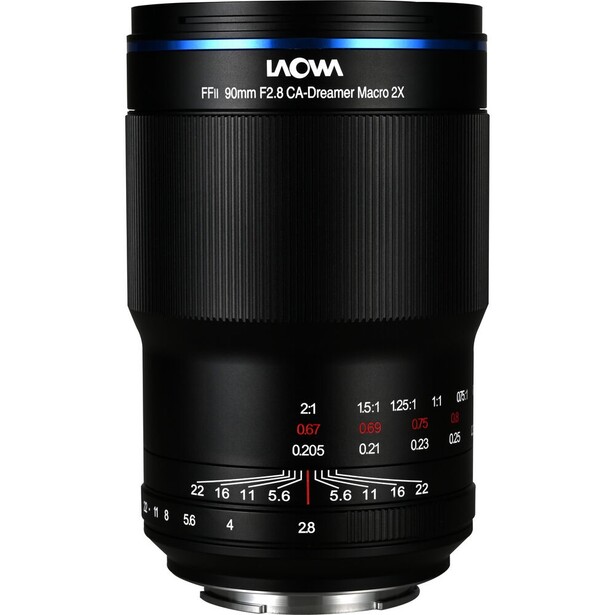
- Mounts: Sony E, Nikon Z, Canon RF, L-Mount
- Coverage: full frame
- Optics: 13 elements in 10 groups (3 ED)
- Aperture: f/2.8, 13 blades
- Focus: manual only, 2x maximum magnification
- Minimum focus: 0.205 m
- Filter thread: 67mm
- Weight: 619 g
- Price: $499 (B&H)
Venus Optics has built an entire company out of lenses the majors will not make, and the 90mm f/2.8 2x Ultra Macro APO is the one that most often replaces a first-party lens outright rather than sitting beside it. Canon, Nikon, and Sony all sell excellent 1:1 macro lenses. None of them gives you 2:1 without a tube or a bellows. This one focuses to 0.205 m and puts a subject on the sensor at twice life size, which is the difference between photographing an insect and photographing an insect's eye.
The APO designation is doing work here. Three ED elements suppress the longitudinal chromatic aberration that ruins high-magnification work, where every out-of-focus edge is a potential purple halo, keeping the color transitions in a focus stack clean enough to need no fringing correction. The 13-blade iris keeps specular highlights circular deep into the aperture range, which matters when your background is a wall of dew.
It is manual focus, and at 2x magnification that is the correct engineering decision rather than a cost saving. Autofocus at that scale is nearly useless because depth of field is a fraction of a millimeter and you focus by moving the camera, not the lens. But it means you need a tripod or a focus rail for anything serious, and there is no stabilization, so handheld macro at 2x is possible only in good light with a fast shutter and a lot of patience. At 2x the effective aperture is roughly three stops darker than f/2.8, so plan on light.
Mount reality: Sony E, Nikon Z, Canon RF, and L-Mount. Because it is a manual lens with no electronic contacts, Canon RF users can buy it, which makes it one of the few genuinely interesting third-party options RF shooters have. If you are new to the discipline, Fstoppers' Mastering Macro Photography tutorial covers the technique this lens demands. Check the current price of the Laowa 90mm f/2.8 2x Ultra Macro APO at B&H.
Also consider the Laowa 15mm f/4.5 Zero-D Shift if your specialty need is architecture rather than macro.
What We Like
- 2:1 magnification with no tubes, which no first-party macro offers
- True apochromatic correction with three ED elements
- 13-blade iris keeps highlights round when stopped down
- Doubles as a capable 90mm short telephoto
What Could Be Better
- Manual focus only and no stabilization
- Effective aperture drops sharply at high magnification
- Realistically needs a tripod or focus rail
- No EXIF data from the lens
Best Splurge: Viltrox AF 135mm f/1.8 LAB
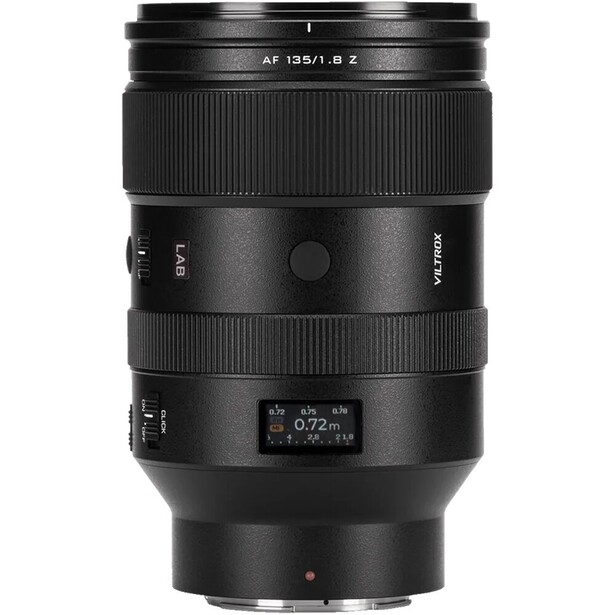
- Mounts: Sony E, Nikon Z
- Coverage: full frame
- Optics: 14 elements in 9 groups
- Aperture: f/1.8, 11 blades
- Focus: autofocus, HyperVCM voice-coil motor
- Minimum focus: 0.72 m (0.25x max magnification)
- Filter thread: 82mm
- Weight: 1,235 g (Sony E), 1,265 g (Nikon Z)
- Price: $899 (B&H)
LAB is Viltrox's answer to the accusation that budget brands cannot build a serious lens, and the AF 135mm f/1.8 LAB is the strongest evidence for the defense. It is a 1,235 g slab of metal with an 82mm front thread, a color LCD panel on the barrel for aperture and focus-distance readout, dual customizable Fn buttons, a click and declick aperture ring, a three-position focus limiter, weather-sealing, and a HyperVCM voice-coil motor dragging a large focus group around fast enough to keep up with eye detection on current bodies.
The optical result is what makes it a splurge worth making. We spent two months with the Z-mount version on a Nikon Z6 III, shooting portraits, wildlife, food, and video, and it was sharp wide open at f/1.8 from center to corner, with little vignetting and no distortion worth mentioning. Eye-detection autofocus held moving and backlit subjects without lagging behind native Z glass. The 11-blade iris keeps highlights round and smooth from f/1.8 through f/2.8, and our reviewer put its build in the same class as Nikon's Plena, a lens that costs several times as much. At f/1.8 on a 135mm lens, the subject separation is the kind that makes people ask what camera you used, and the 0.25x maximum magnification means you can fill the frame with a face or a detail without a second lens.
The weight is the whole argument against it. This is not a lens you carry casually, and on a small body it hangs badly enough that you will want a lens plate and a strap that means it. A 135mm prime is also a specialist tool. If you shoot portraits in tight rooms, it is too long, and you would be better served by an 85mm.
Mount reality: Sony E and Nikon Z. The Z version is the one Nikon's patent action is aimed at, and while the lenses already sold keep working, we cannot promise Viltrox will be able to keep updating Z-mount firmware if the case goes badly. That risk is priced into the lens, and it is the main reason to think twice before committing to it on a Nikon body rather than a Sony one. Check the current price of the Viltrox AF 135mm f/1.8 LAB at B&H.
Also consider the Sigma 85mm f/1.4 DG DN Art if you want a fast portrait prime you can actually carry all day.
Read our full review: The Viltrox AF 135mm f/1.8 LAB Z Mount: Better Than Nikon’s 135mm?
What We Like
- Optics that match first-party 135mm f/1.8 lenses at a large discount
- HyperVCM voice-coil autofocus that tracks eyes reliably
- LCD readout, Fn buttons, and real weather-sealing
- 0.25x close focus adds genuine flexibility
What Could Be Better
- 1,235 g is a commitment on any body
- 135mm is too long for tight indoor portrait work
- 82mm filters are expensive
- Firmware updates require Viltrox's phone or desktop app, not a simple download
- Z-mount future support is exposed to the Nikon litigation
How to Choose a Budget or Third-Party Lens
Start with the mount, because the mount decides what you are even allowed to consider. Sony E is the open market: every brand in this guide builds for it, first-party alternatives are plentiful, and nothing is at legal risk. Nikon Z has excellent licensed options from Sigma and Tamron and a much larger unlicensed catalog from Viltrox, Sirui, Meike, and 7Artisans that is now the subject of an active patent case in Shanghai. Canon has licensed RF to Sigma and Tamron for APS-C lenses only, and no licensed full frame autofocus lens from either exists, so full frame RF shooters are limited in practice to manual lenses with no electronic contacts (Laowa, Thypoch, TTArtisan, 7Artisans) or to adapting EF glass. Fujifilm X and Micro Four Thirds are well served by the small brands and mostly skipped by Sigma's full frame lines.
Next, decide what you are actually buying with the savings. Third-party lenses hit first-party image quality at stopped-down apertures far more often than people expect. What they do not consistently match is autofocus at the edges of performance: tracking a bird in flight, holding a face at 20 fps, working in near-darkness. If your photography lives at those edges, buy the first-party lens for that one job and fill the rest of the bag with third-party glass. If it does not, and for most photographers it does not, the price gap buys you a second lens.
The spec that matters more than people think is weight. A 990 g zoom and a 540 g zoom take the same photographs, and only one of them comes with you on the third day of a trip. The spec that matters less than people think is maximum aperture. An f/1.7 lens and an f/1.4 lens are about half a stop apart, which is a shutter speed you will never miss, and the slower one is usually smaller, cheaper, and sharper wide open. Chasing the last fraction of a stop is the most common way to overspend in this category.
Finally, be honest about focus. A manual lens is a genuinely different way to shoot, and for landscape, macro, and cine work it is not a downgrade. For anything moving unpredictably, it is a handicap that no amount of character in the rendering will offset. Buy manual because you want to focus by hand, never because it was cheaper.
What We're Looking For
We weigh optical performance at the apertures people actually shoot, autofocus reliability on current bodies, build quality relative to price, and mount availability, which in this category is a first-class specification rather than a footnote. Every spec here was verified against the manufacturer's current published figures and a live retailer listing at the time of writing, and we note where a mount version does not exist rather than implying it does. Where an Fstoppers writer has reviewed one of these lenses hands-on, that review is linked from its entry. The rest are assessed from the manufacturer's current published specifications and each lens's documented optical design, and we do not claim to have shot with a lens we have not.
Frequently Asked Questions
Are Third-Party Lenses as Good as First-Party Lenses in 2026?
At stopped-down apertures, yes, and often better. Sigma's Art line and Tamron's zooms routinely match or exceed the first-party equivalents optically. The gap that remains is autofocus at the extremes of speed and low light, plus features like teleconverter compatibility and full burst-rate support on some flagship bodies, where first-party lenses still have privileged access.
Why Can't I Buy Sigma or Tamron Full Frame Lenses for Canon RF?
Because the licensing so far covers APS-C only. Canon began licensing RF to Sigma and Tamron in July 2024, and every licensed lens since has been an APS-C design. In a March 2026 interview Canon executives said they place no restriction on what third parties build and that the absence of full frame RF glass is not Canon's doing, but neither Sigma nor Tamron has announced a full frame RF lens. Manual-focus lenses with no electronic contacts, such as those from Laowa and Thypoch, sidestep the question entirely.
Is It Safe to Buy Viltrox Lenses for Nikon Z Right Now?
Lenses you already own will keep working. News broke in January 2026 that Nikon had brought a Z-mount patent claim against Viltrox in the Shanghai Intellectual Property Court, the case entered proceedings on March 2, 2026, and Sirui and Meike pulled their autofocus Z-mount lenses from Chinese retail within days. The pullback has stayed inside China, and U.S. retailers still stock the lenses. Buying is not risky in the sense that the lens will stop working, but future firmware support for Z-mount is genuinely uncertain.
What Is the Single Best Third-Party Lens to Buy First?
For a full frame camera, a fast standard zoom like the Tamron 28-75mm f/2.8 G2, because it replaces a kit lens and covers most work. For an APS-C camera, the Sigma 18-50mm f/2.8, for the same reason at half the size. Buy the zoom that covers your working range first, then add a cheap fast prime once you know which focal length you keep reaching for.
Fstoppers may earn a commission from purchases made through links in this article. Our picks are made independently by our editorial team.