
You may have noticed that photography lenses are marked in f-numbers, f/1.4, f/2.8, f/8, while cinema lenses are marked in T-numbers, T1.5, T2.9, and wondered whether they mean the same thing. They are closely related, they sit in the same spots on the aperture ring, and a T-number looks just like an f-number with a different letter in front. But they measure two genuinely different things, and the gap between them tells you something real about how lenses work and why a cinematographer cares about it while a portrait photographer mostly does not.
F-Stop: A Geometric Calculation
The f-stop is a calculated number, derived from pure geometry. It is the lens's focal length divided by the diameter of the entrance pupil, the apparent size of the aperture as seen through the front of the lens, which the front elements can magnify or shrink relative to the actual iris opening. A 50mm lens with a 25mm entrance pupil is at f/2, because 50 divided by 25 is 2. That is the entire definition. It describes the effective size of the opening light passes through, expressed as a ratio to the focal length, which is why, at ordinary shooting distances, the same f-stop gives roughly the same exposure across different lenses and focal lengths.
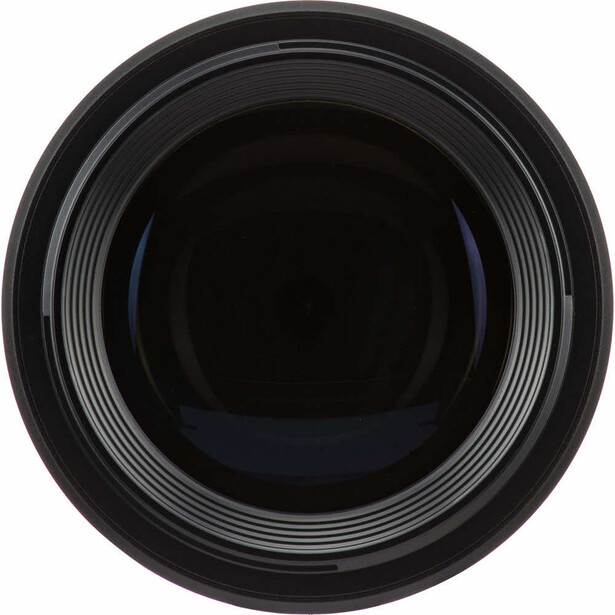
Here is the crucial limitation: the f-stop only describes the geometric aperture side of the equation. It says nothing about what happens to the light after it enters the lens. And quite a lot happens. Light passing through a lens has to travel through multiple glass elements, sometimes a dozen or more, and at every glass-to-air surface a little light is reflected away or absorbed. Coatings reduce these losses but never eliminate them. So the amount of light the f-stop implies is entering the lens is always somewhat more than the amount that actually reaches the sensor. The f-stop is a theoretical value, a statement about geometry, not a measurement of delivered light.
T-Stop: A Measured Reality
The T-stop closes exactly that gap. The "T" stands for transmission, and a T-stop is the f-stop adjusted for the lens's real-world light loss. It tells you how much light actually makes it through all that glass to the sensor, expressed on the same scale so the numbers are directly comparable.
Because every lens absorbs and reflects some light, a lens's T-number is always a little higher (representing slightly less light) than its f-number. A lens with a maximum aperture of f/1.4 might transmit light equivalent to T1.5 or T1.6 once you account for the losses inside it. All else equal, more elements and more air-glass surfaces tend to widen that gap, though coatings and glass choices can matter as much as raw element count, so a complex modern lens can sometimes transmit better than a simpler older one. A simple prime might lose only a fraction of a stop, while a long zoom packed with elements can lose noticeably more.
There is a key consequence built into how T-stops are determined: there is no purely geometric way to arrive at one. There is a formula, the T-stop equals the f-number divided by the square root of the lens's transmittance, but that transmittance value cannot be calculated from focal length and aperture the way an f-stop can. In practice it has to be measured or calibrated from the actual lens design, because focal length and aperture alone cannot tell you how much light the lens transmits. This calibration is one reason T-stops are associated with more expensive lenses, since it adds another layer of measurement and quality control.
Why the Two Numbers Diverge
To make this concrete, consider that two different lenses both marked f/2.8 can deliver visibly different amounts of light to the sensor. One might be a simple optical design that transmits close to its theoretical value, landing around T3.0. Another, a complex zoom with many elements like a 70-200mm f/2.8, might transmit only as much as T3.4, a little over half a stop darker, despite both reading f/2.8 on the barrel. Set both to f/2.8, point them at the same scene, and the second image comes out darker. The f-stop suggested the same geometric aperture; the T-stops reveal that the lenses do not actually deliver the same exposure.
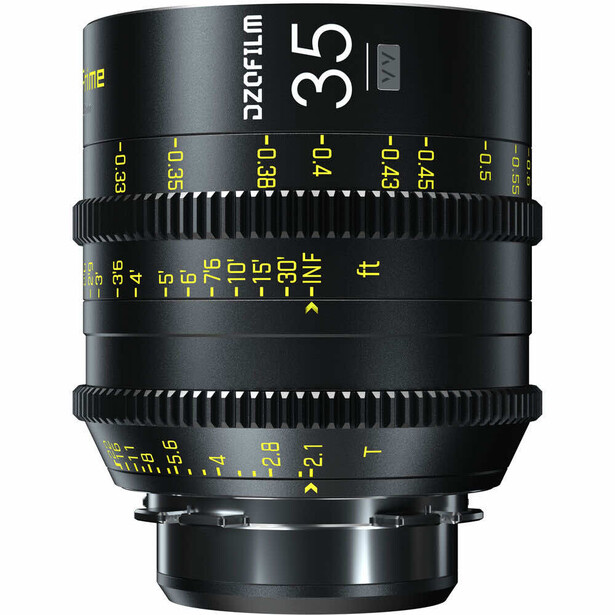
A useful illustration is that some manufacturers sell closely related photo and cine versions of the same lens design. Samyang, sold as Rokinon in some regions, offers lenses like its 35mm and 50mm primes in both a photo edition marked f/1.4 and a cine edition marked T1.5. The photo and cine versions are commonly based on the same optical formula, with the cine version marked in transmission stops and built with cine-specific handling features rather than redesigned glass. The Rokinon 35mm T1.5 Cine and its Samyang 35mm f/1.4 photo counterpart are closely related versions of the same basic lens design wearing two different scales, and the same pairing exists for the Rokinon 50mm T1.5 Cine and its Samyang 50mm f/1.4 sibling.
Why Photography Uses F-Stops and Cinema Uses T-Stops
If T-stops are more accurate, why does almost every still photography lens use f-stops? The answer comes down to what each discipline actually needs.
For a still photographer, the small exposure differences between lenses simply do not matter much. In many modern lenses the gap is small, often around a third of a stop, though larger differences of half a stop or more do occur with fast primes and complex zooms. Either way, the camera's own through-the-lens meter sees the dimmer result, and in automatic or semi-automatic modes the camera compensates by adjusting shutter speed or ISO, without the photographer ever knowing. In full manual exposure the meter still shows the loss, but you make the adjustment yourself. On top of that, a still photographer shoots one frame at a time and can correct minor exposure variation in editing in seconds. The theoretical f-stop is good enough, and testing every lens for its true transmission would add cost for no practical benefit.

Cinematography is a different problem entirely. A film production shoots many shots, often across multiple cameras and multiple lenses, sometimes over multiple days, and all of that footage has to cut together seamlessly. Crucially, cinematographers usually set exposure manually and hold it across lens swaps and setups, so they cannot lean on a camera quietly compensating the way a stills shooter can. If a director of photography switches from a wide lens to a telephoto mid-scene and the two lenses transmit different amounts of light at the same f-stop, the exposure jumps between shots, and a colorist has to spend expensive time matching them later. T-stops greatly reduce that problem at the source. Set every lens in a matched cine lens set to T2.8 and they all deliver near-identical exposure, regardless of how many elements each contains, so shots cut together cleanly and lighting setups transfer reliably from one lens to the next. Affordable full-frame cine primes like the DZOFilm Vespid and SIRUI lines are built around exactly this matched-set logic, with consistent T-stops across focal lengths. T-stops do not guarantee a perfect match on their own, since vignetting, color tint, and other factors still vary between lenses, which is why cine sets are also matched for color rendering and not just transmission, but they remove the single biggest and most predictable source of mismatch. On a production where minutes cost real money, that consistency is worth paying for.
A Common Misconception: Depth of Field
Here is a point that trips people up. Since the T-stop is the "more accurate" number, you might assume it governs everything the f-stop does. It does not. Depth of field is determined by aperture geometry, the entrance pupil relative to focal length, not by light transmission. A lens set to f/2.8 produces the depth of field of f/2.8 regardless of its T-stop. Holding focal length, focus distance, format, and framing constant, two lenses at the same f-stop give you the same depth of field even if their T-stops differ, because depth of field follows the geometry, not how much light survives the trip through the glass.

So the two numbers split their jobs cleanly. The f-stop tells you about depth of field and the geometric aperture. The T-stop tells you about exposure and delivered light. In practice, f-stops remain the language of aperture geometry, while T-stops are the language of exposure matching, which is why both persist rather than one replacing the other. A filmmaker uses the T-stop to nail consistent exposure across a set of lenses, but still thinks in terms of the aperture's geometry when deciding how much of the scene to render sharp.
A Note on Precision
One clarification worth making, because it is often stated loosely: saying cine lenses are "individually tested and marked" does not mean each lens has its T-stop markings painted in a unique spot on the barrel. The markings are typically machine-etched in standardized positions. What the testing and calibration buy you is an aperture mechanism accurate and consistent enough that the standard markings genuinely correspond to the stated transmission, lens to lens within a set. The point is reliable accuracy across matched lenses, not hand-customized engraving on each copy.
Where the Marked Number Stops Being the Whole Story
A couple of real-world wrinkles are worth knowing so you do not treat either number as an absolute guarantee. A T-stop tells you the lens's transmitted exposure value, but it does not guarantee uniform brightness across the frame. Vignetting means the edges of an image receive less light than the center, so a lens at T2.0 may be delivering closer to T2.8 or worse in the corners, especially wide open.
The marked f-stop is also most straightforward for exposure at ordinary focus distances. At very close focus, particularly in macro work, magnification changes the effective aperture, so the lens delivers less light than its marked f-stop or T-stop suggests. This is the "bellows factor" macro shooters account for, and it applies to both numbers, since it is a geometry-of-magnification effect rather than a transmission one.
Which One Should You Think About?
For the vast majority of stills photographers, the honest answer is that you can keep thinking entirely in f-stops. Your camera meters through the lens, and in automatic or semi-automatic modes it compensates for transmission loss automatically; in manual mode, the meter still shows you what is happening. Your lenses are marked in f-stops anyway, and the differences are small enough to handle in editing when they appear at all. Understanding that the T-stop exists, and that your lens delivers slightly less light than its f-number implies, is useful knowledge, but it changes nothing about how you shoot.
If you shoot video or film seriously, especially with more than one lens, the T-stop becomes a genuinely practical tool. T-stop calibration is only one of the reasons cine glass, from budget Rokinon Cine primes up to premium sets like the Samyang XEEN line, is built and priced the way it is, alongside geared focus and iris rings, long focus throws, de-clicked apertures, consistent gear positions across a set, sturdier housings, suppressed focus breathing, and color matching, but it is one of the visible ones. And if you are a hybrid shooter moving between stills and motion, knowing the distinction explains a lot: why your video exposure can drift when you swap lenses, why cine lenses cost more, and why the same physical lens can wear two different numbers depending on who it was made for.
If you want to build the broader foundation this sits within, Photography 101 covers exposure and how your camera actually works from the ground up. For shooters moving toward motion, where T-stops genuinely matter, Introduction to Video: A Photographer's Guide to Filmmaking is the natural starting point, and Introduction to Adobe Premiere covers the editing stage where exposure matching between shots becomes real work.



Join the Fstoppers community for free
-
Post comments and join in the discussions
-
Browse the site ad-free
-
Share your work and get featured in the community
-
Compete in the photo contests for fun and prizes
1 Comment
Even with T stops, few cinematographers trusted those numbers until they ran their own tests. It was avast improvement for people shooting real film, especially Ektachrome Commercial back in the 1970s.