A travel tripod is a compromise you agree to before you leave the house. Every gram you shave off the legs comes out of the stability budget, and every centimeter you cut from the packed length usually costs you a leg section, which costs you rigidity again. The tripod that wins is not the lightest or the stiffest. It is the one you actually carry on day four of a trip, when your shoulders hurt and the light is going and the honest question is whether the thing in your bag is worth the walk back to the viewpoint.
Three numbers decide this purchase, and only three. Packed length tells you whether the tripod rides inside your bag or dangles off it. Weight tells you how far you will carry it before you start leaving it in the hotel. Load capacity and leg-tube diameter together tell you whether it will hold a 70-200mm lens still in a breeze, which is the moment most cheap travel tripods quietly fail. Maximum height matters less than the marketing suggests, because almost nobody shoots with the center column fully extended once they have seen what it does to sharpness.
This guide is organized by weight class and by the job you need the tripod to do, not by a single ranking. We have picks under 1 kg, picks that survive a telephoto lens, and one that is not a tripod at all. Every number in each spec block was re-verified against the manufacturer's current spec page rather than carried over from an older listing. Load ratings are always the manufacturer's own claim, so treat them as a ceiling rather than a promise. Prices move constantly on tripods, so check the live figure before you commit. If you want the full range of supports including studio and heavy-duty options, our tripods guide covers the ground this one deliberately skips.
At a Glance
- Best Overall: Peak Design Travel Tripod (Carbon Fiber)
- Best Budget: Manfrotto Befree Advanced AS Aluminum Travel Tripod
- Best Ultralight: Fotopro X-Aircross 3 Carbon Fiber Travel Tripod
- Best for Landscape Photography: Leofoto LS-284CX Ranger Carbon Fiber Tripod
- Best Quick-Release System: Falcam TreeRoot Quick Lock Travel Tripod
- Best for Video: Ulanzi JJ06 GlideGo Video Tripod
- Best for Heavy Telephoto Kits: Peak Design Pro Lite Carbon Fiber Tripod
- Best Premium Legs: Gitzo GT1545T Traveler Series 1 Carbon Fiber Tripod
- Best Minimalist Option: Platypod eXtreme
Best Overall: Peak Design Travel Tripod (Carbon Fiber)
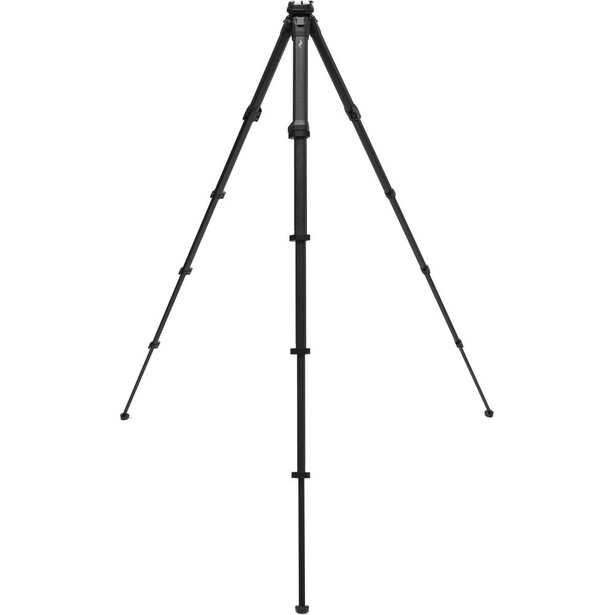
- Weight: 1.27 kg (2.81 lb)
- Folded length: 39.1 cm (15.4 in)
- Max height: 152.4 cm (60 in), 130.2 cm (51.25 in) with the column down
- Min height: 14 cm (5.5 in), in low mode
- Load capacity: 9.1 kg (20 lb)
- Leg sections: 5
- Head: integrated ball head, Arca-type compatible
- Price: $599.95 (B&H)
The engineering argument for the Peak Design Travel Tripod is about dead space. A conventional tripod folds three round legs around a round center column and a knobbed ball head, and the gaps between those cylinders are air you carry across a continent. Peak Design's legs are shaped so they nest flush against the column, the ball head sits inside the leg cluster rather than on top of it, and the whole thing collapses to a package 39.1 cm long and 7.9 cm across, roughly the diameter of a water bottle. Nothing else here with a 152.4 cm maximum height and a 9.1 kg load rating packs into a cylinder that tidy.
The specifics above come from Peak Design's current spec sheet. The leg cams are flat levers set flush into the leg, released in one motion rather than five separate twists, so setup is fast, and the ball head is adjusted by one collar instead of the usual pair of knobs. There is a phone mount hidden inside the center column, which sounds like a gimmick until the one time you need it.
The cost of the design is real. Those five leg sections mean the bottom tube is thin, so at full extension in wind it flexes more than a chunkier four-section tripod. The ball head is integrated and cannot be swapped, so if you want a geared head or a gimbal, this is the wrong platform. The carbon version is expensive for a mid-capacity travel tripod, and Peak Design's own Pro Lite now exists to answer the stability complaint. Anyone shooting wide angle landscapes, street, and travel documentary with a mirrorless body and a normal zoom will not run into the ceiling. Anyone hanging a 100-400mm lens off it will.
The aluminum version saves a lot of money for 290 g of extra weight (Peak Design lists it at 1.56 kg), and it is the smarter buy for someone who drives to their locations rather than hiking to them. For the traveler optimizing for volume in a carry-on, the carbon model remains the one to beat, so check the current price of the Peak Design Travel Tripod (Carbon Fiber) at B&H. Also consider the Peak Design Travel Tripod (Aluminum) if the price of carbon is the only thing stopping you.
Read our full review of the Peak Design Travel Tripod.
What We Like
- Folds to a 7.9 cm cylinder with almost no dead air inside it
- Flush leg cams release in one motion, so setup is fast
- Integrated ball head adds no packed bulk
- Hidden phone mount in the center column
What Could Be Better
- Thin fifth leg section flexes in wind at full height
- Ball head cannot be replaced
- Expensive relative to its 9.1 kg load rating
- Proprietary plate shape, though Arca-type plates fit
Best Budget: Manfrotto Befree Advanced AS Aluminum Travel Tripod
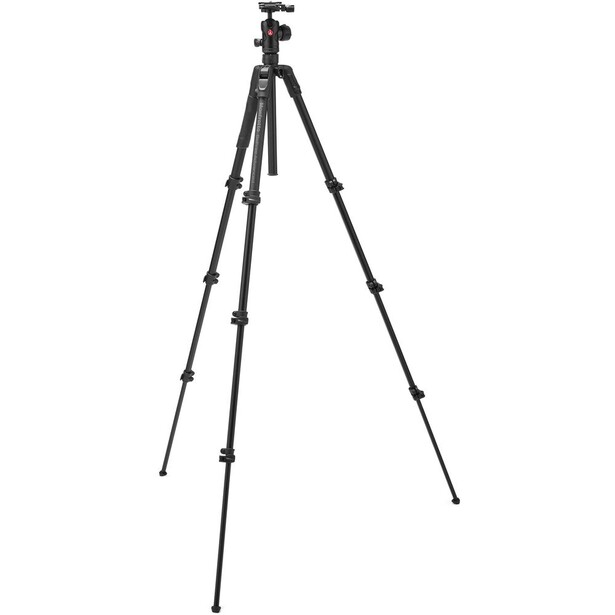
- Weight: 1.51 kg (3.33 lb)
- Folded length: 40 cm (15.75 in)
- Max height: 150 cm (59.1 in)
- Min height: 40 cm (15.75 in)
- Load capacity: 9 kg (19.8 lb) safety payload
- Leg sections: 4, tubes stepping 22.5/19/15.5/12mm
- Head: Manfrotto 494 center ball head, Arca-type compatible
- Price: $149.95 (B&H)
Manfrotto has been iterating on the Befree for more than a decade, and the current Befree Advanced AS finally fixes the complaint that dogged the whole line: the 200PL PRO plate on the 494 head is Arca-type compatible, so the L-bracket already on your camera fits without an adapter. That is what the AS in the name buys you. Everything else is the formula that made the line a default recommendation. Four aluminum leg sections, twist locks, a 40 cm packed length that slides down the side pocket of most daypacks, and a 9 kg safety payload that is honest rather than optimistic.
The tradeoff is legible on the spec sheet. Aluminum buys a lower price and costs you 240 g against the carbon version of the identical tripod, which Manfrotto lists at 1.27 kg, roughly the weight of a small prime lens. If you are flying somewhere and walking a few kilometers a day, you will not notice it. If you are carrying a full pack up a mountain, you will. The aluminum tubes are also more forgiving of the abuse a travel tripod actually takes: dropped on gravel, stood in salt water, thrown in an overhead bin.
Two limitations should shape your expectations. The minimum height is 40 cm, which is high, because the legs spread to three fixed angles and the center column does not invert or go horizontal. Low-angle macro and ground-level foreground work are off the table without a separate short column. The 494 ball head holds a mirrorless body with a 24-70mm lens without creep, but it is not a precision instrument, and heavier telephoto lenses will make it drift as you lock down. The Befree line has been around long enough that a refresh is plausible, so buying at a sale price is the smart move.
For a first serious travel tripod, or as the one you take somewhere you would be upset to lose an expensive carbon tripod, this is the sensible choice. Check the current price of the Manfrotto Befree Advanced AS Aluminum Travel Tripod at B&H.
What We Like
- Arca-type plate support at last, so your L-bracket just works
- Honest 9 kg payload for the price
- Aluminum tubes shrug off knocks that chip carbon
- Packs to 40 cm and fits a daypack side pocket
What Could Be Better
- 40 cm minimum height rules out ground-level work
- Heaviest of the sub-1.6 kg picks here
- The 494 head drifts under heavier lenses
- Mature product, so a replacement could arrive
Best Ultralight: Fotopro X-Aircross 3 Carbon Fiber Travel Tripod
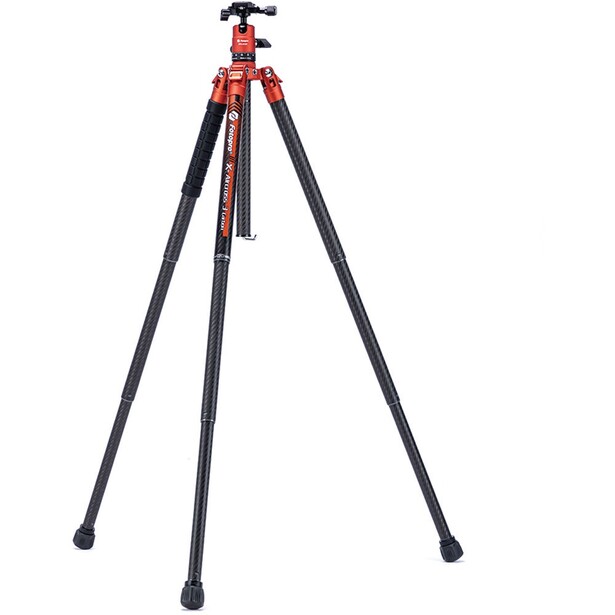
- Weight: 940 g (2.07 lb)
- Folded length: 36.5 cm (14.4 in)
- Max height: 151 cm (59.4 in)
- Min height: 16 cm (6.3 in)
- Load capacity: 10 kg (22 lb)
- Leg sections: 5
- Head: FPH-42QR ball head, Arca-type compatible
- Price: $169 (B&H)
Under a kilogram, with a head attached, folding shorter than the Peak Design, and rated to 10 kg. At its price, the X-Aircross 3 should not exist, and it is the tripod to reach for when the weight of your kit is the constraint that decides whether you bring a tripod at all. Fotopro is not a famous name in the United States, which is most of why this thing is cheap. The engineering is not.
The design leans on 25mm carbon tubes across five sections, and the leg angle locks let it drop to 16 cm for foreground work. Fotopro also sells a Lite version of the same legs with the smaller FPH-32Q head, so check which one a listing is actually showing you before you buy. The leg locking system is clever, the tripod is startlingly light in the hand, and the price makes the compromises easy to accept.
Understand what 940 g costs. A tripod this light is easily blown over by wind with a camera on top, which is why there is a hook under the center column: hang your bag from it, every time. The bottom leg section is thin enough that at full height with a long lens you will see the frame vibrate in the viewfinder if you touch the camera. The bundled FPH-42QR ball head is fine for a mirrorless body and a mid-range zoom, and it is the first component you would upgrade. Fit and finish sit a step below the Leofoto and Gitzo tripods here, with more plastic in the leg angle locks than a spec sheet reveals.
For hikers, backpackers, and anyone whose real problem is that their current tripod stays home, none of that matters much. A 940 g tripod that comes with you beats a 1.8 kg tripod that does not, so check the current price of the Fotopro X-Aircross 3 Carbon Fiber Travel Tripod at B&H.
What We Like
- Under 1 kg with the ball head fitted
- Shortest folded length of any full-size pick here
- Drops to 16 cm for low-angle work
- Same legs are sold in a cheaper Lite configuration
What Could Be Better
- Very light, so it needs weight on the hook in wind
- Thin fifth leg section vibrates with long lenses
- Ball head is the weakest part of the package
- Fit and finish trails the premium brands
Best for Landscape Photography: Leofoto LS-284CX Ranger Carbon Fiber Tripod
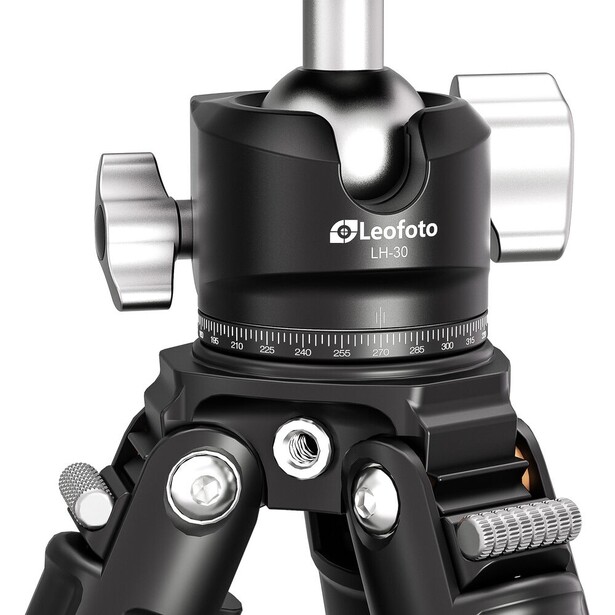
- Weight: 1.1 kg (2.43 lb), legs only
- Folded length: 47.5 cm (18.7 in)
- Max height: 164 cm (64.6 in) with the add-on column, 132 cm (52 in) without
- Min height: 8 cm (3.15 in)
- Load capacity: 10 kg (22 lb)
- Leg sections: 4, tubes stepping 28/25/22/19mm
- Head: not included; sold as a kit with the LH-30 or LH-36LR ball head
- Price: $429 (B&H)
Landscape photography punishes flimsy tripods in a way street photography never does. You are shooting 30-second exposures on a headland with wind coming off the water, and any flex in the leg tubes shows up as a smeared horizon you do not notice until you are home. The Leofoto LS-284CX Ranger answers that with four fat leg sections instead of five thin ones, a 28mm top tube, and no center column at all in its base configuration. Take the column out of the equation and you remove the single largest source of vibration in any tripod.
Leofoto ships it with a separate DC-282C add-on column you insert when you need the extra 32 cm of height, which is the right way around: default to rigid, opt into height. The legs drop to 8 cm off the ground, the lowest of any tripod here, which is what you want for a foreground rock or a stream. All of that comes in at 1.1 kg for the legs. The specs above come from Leofoto's current listing.
The price of that rigidity is packed length. At 47.5 cm folded it will not fit inside a 20-liter daypack, and it is 8 cm longer than the Peak Design, which is the difference between a tripod that hides in a carry-on and one that straps to the outside. It also arrives without a head unless you buy a kit, so budget for that. Build quality is high, with machined aluminum hardware and twist collars that seat without slop, though Leofoto's US distribution has historically been thinner than Manfrotto's, so parts and service are less convenient.
Serious landscape shooters who already own a good ball head, and who will trade packed size for stiffness, should start here. If long exposures are the reason you own a tripod, the Fstoppers course Photographing the World: Landscape Photography and Post-Processing is a useful companion, and you can check the current price of the Leofoto LS-284CX Ranger Carbon Fiber Tripod at B&H.
What We Like
- Four fat leg sections resist wind better than five thin ones
- No center column by default, with an add-on column when needed
- Gets down to 8 cm for foreground compositions
- Only 1.1 kg despite the thick tubes
What Could Be Better
- 47.5 cm folded is long for a travel tripod
- No head included in the base configuration
- US service and spare parts are less convenient than the big brands
- Model naming across the Ranger line is confusing
Best Quick-Release System: Falcam TreeRoot Quick Lock Travel Tripod
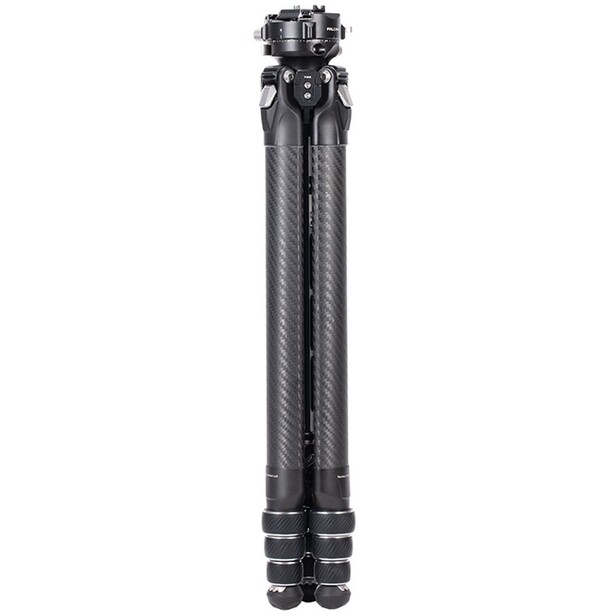
- Weight: 1.5 kg (3.31 lb)
- Folded length: 47.3 cm (18.6 in)
- Max height: 155.2 cm (61.1 in), 130.5 cm (51.4 in) with the column down
- Min height: 16.8 cm (6.6 in)
- Load capacity: 20 kg (44 lb) tripod, 5 kg (11 lb) ball head
- Leg sections: 4, M40 carbon fiber
- Head: inverted ball head with an F38 clamp, Arca-type compatible
- Price: $387 (B&H)
Most tripod plates are a tax you pay every time you swap bodies. Falcam's F38 system is the counterargument: one square plate, a hard click into the clamp, and the same plate carries across the company's clamps, cages, straps, and shoulder mounts. The TreeRoot puts that clamp on top of a tripod that would be worth owning anyway, and its head also accepts standard Arca-type plates, so you are not locked in if you change your mind.
The legs are the other reason it is here. Falcam uses M40 high-modulus carbon in a Reuleaux triangle tube profile rather than a plain round tube, and rates the tripod to 20 kg, double what most supports in this class claim. The twist locks release with roughly a third of a turn instead of the usual half, which sounds trivial and is not: with four sections and three legs, that is twelve twists per setup. It also drops to 16.8 cm and reaches 155.2 cm. The quick locks and the F38 clamp are the features you notice on day one and keep noticing.
Where it loses is portability. At 1.5 kg and 47.3 cm folded, it outweighs the Peak Design, Gitzo, Leofoto, and Fotopro tripods here and is long enough to ride on the outside of a daypack rather than inside it. The 20 kg leg rating is also undercut by a ball head rated to 5 kg, which is the real ceiling of the system. That head is competent rather than exceptional, and it is the component to replace if you push into telephoto work. Falcam is a young brand with a sprawling accessory catalog, and the model names across the TreeRoot line, standard, Lite, and Pro, legs-only and kit, are easy to confuse when you order.
Anyone already living in the F38 ecosystem, or anyone who swaps a camera between a tripod, a gimbal, and a shoulder rig several times a day, gets more out of this tripod than the spec sheet suggests. Check the current price of the Falcam TreeRoot Quick Lock Travel Tripod at B&H.
What We Like
- F38 clamp is the fastest camera swap in the category
- Third-turn twist locks make setup genuinely quicker
- M40 carbon legs rated to 20 kg
- Also accepts standard Arca-type plates
What Could Be Better
- 1.5 kg, heavier than every compact carbon pick here
- Ball head is rated to only 5 kg, well under the 20 kg leg rating
- 47.3 cm folded means it rides outside the bag
- Confusing model variants at checkout
Best for Video: Ulanzi JJ06 GlideGo Video Tripod
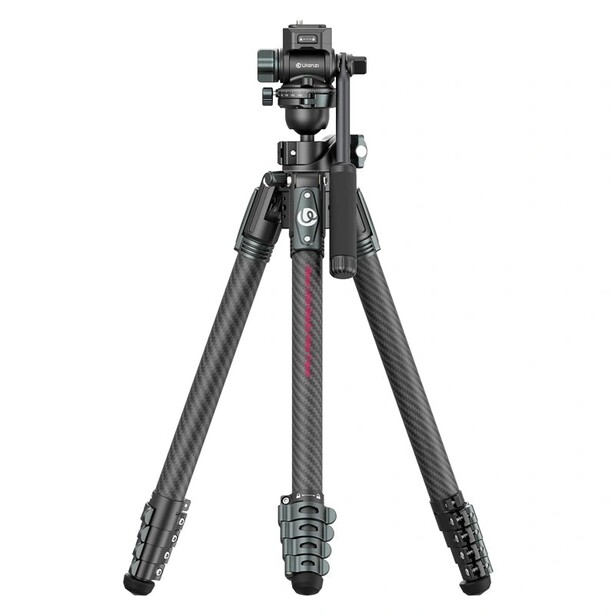
- Weight: 1.76 kg (3.88 lb)
- Folded length: 51.5 cm (20.3 in)
- Max height: 187 cm (73.6 in)
- Min height: 44 cm (17.3 in)
- Load capacity: 18 kg (39.7 lb) legs, 5 kg (11 lb) head
- Leg sections: 5, carbon fiber
- Head: ball head with 360-degree pan, a 90-degree vertical switch, and -50 to +60 degrees of tilt
- Price: $239.20 (B&H)
Video on the road asks two things of a tripod that stills never do: a level pan you can control, and enough height to put a camera at a standing subject's eye line. The JJ06 GlideGo gets to 187 cm, taller than every other pick in this guide by more than 20 cm, and its head carries separate pan and tilt locks so the tilt stays clamped while you swing the camera through 360 degrees. Height like that normally arrives on a video tripod that weighs three times as much.
Ulanzi's twist on the design is a dual center column, which lets you rig the second column horizontally for overhead and top-down shots, the setup a solo creator otherwise fakes by inverting the column and shooting upside down. It uses Ulanzi's Uka quick release, cross-compatible with Falcam's F38 plates, and it carries a removable screwdriver handle with seven interchangeable bits inside the leg, a detail you appreciate the first time a rig screw works loose in a hotel room.
The compromises are where you would expect. This is the heaviest tripod in the guide at 1.76 kg and the longest folded at 51.5 cm, so it is a tripod you carry to a shoot rather than one you carry all day. The bigger caveat is the head itself. It is a ball head with locks, not a fluid head with a drag cartridge, so the pans are not smooth enough for a hero reveal and the tilt lock shifts the frame slightly as it clamps. Treat it as a way to hold a static shot at any height and level a pan you cut out of, not as a substitute for a fluid head. The 44 cm minimum height is high, and the head's 5 kg rating is the practical limit no matter what the legs claim.
For a solo shooter making travel films, interviews, or product B-roll on the move, it does the job of two supports at the weight of one. Check the current price of the Ulanzi JJ06 GlideGo Video Tripod at B&H.
What We Like
- 187 cm of height, far beyond the rest of this group
- Independent pan and tilt locks on the head
- Second center column rigs horizontally for overhead shots
- Built-in screwdriver handle with seven bits
- Uka plates work in Falcam F38 clamps
What Could Be Better
- Heaviest and longest-folding pick here
- Not a fluid head, and the pans show it
- Tilt lock shifts the frame slightly as it clamps
- 44 cm minimum height
- Head is not removable, so you cannot fit a real fluid head
Best for Heavy Telephoto Kits: Peak Design Pro Lite Carbon Fiber Tripod
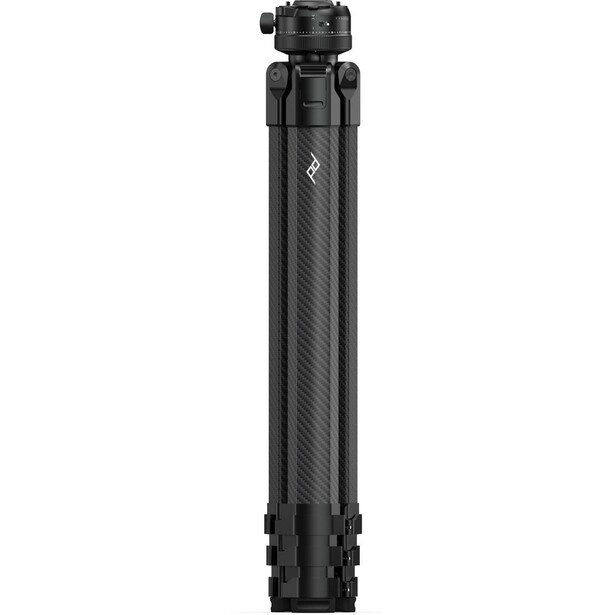
- Weight: 1.7 kg (3.7 lb)
- Folded length: 48.8 cm (19.2 in)
- Max height: 162.6 cm (64 in)
- Min height: 15.7 cm (6.2 in)
- Load capacity: 15.9 kg (35 lb)
- Leg sections: 4, carbon fiber
- Head: integrated Pro ball head with fluid panning, Arca-type compatible
- Price: $799.95 (B&H)
Peak Design spent 2025 answering the one complaint that followed the Travel Tripod everywhere, which is that it is not stiff enough for a serious lens. The Pro Lite is the travel-sized member of the resulting Pro line, and the numbers tell the story: four fat leg sections instead of five thin ones, a 15.9 kg load rating against the Travel Tripod's 9.1 kg, and 10 cm more height. It is the tripod to buy if you shoot wildlife, birds, or sports on the road and have watched a 400mm lens turn a lighter tripod into a metronome.
The ball head is the part that justifies the price. It has 360-degree fluid panning with an independent lock, which lets you track a moving subject horizontally while the tilt stays clamped, and it tilts 90 degrees for vertical work when the center column is up. The legs use flip locks rather than twists, which are faster with gloves and easier to see when one is not seated.
It is not really a travel tripod in the packed-length sense. At 48.8 cm folded and 1.7 kg it is nearly 10 cm longer and more than 400 g heavier than the Travel Tripod, which is why the original still wins the overall slot. It is also the most expensive pick here by a wide margin, and it is hard to argue with someone who spends the difference on a lens instead. There is a real question of whether a photographer who needs 15.9 kg of capacity should be buying a travel tripod at all rather than a full-size set of legs and a gimbal head.
If your travel kit includes a long lens and you have been unhappy with what a light tripod does to it, this is the one that stops the complaint. Check the current price of the Peak Design Pro Lite Carbon Fiber Tripod at B&H.
What We Like
- 15.9 kg load rating holds a long telephoto lens steady
- Fluid panning with an independent lock in the ball head
- Flip locks are fast and glove-friendly
- Four thick leg sections instead of five thin ones
What Could Be Better
- The most expensive pick in this guide
- 48.8 cm folded and 1.7 kg, so barely a travel tripod
- Integrated head cannot be swapped for a gimbal
- Overkill for anyone shooting wide angle landscapes
Best Premium Legs: Gitzo GT1545T Traveler Series 1 Carbon Fiber Tripod
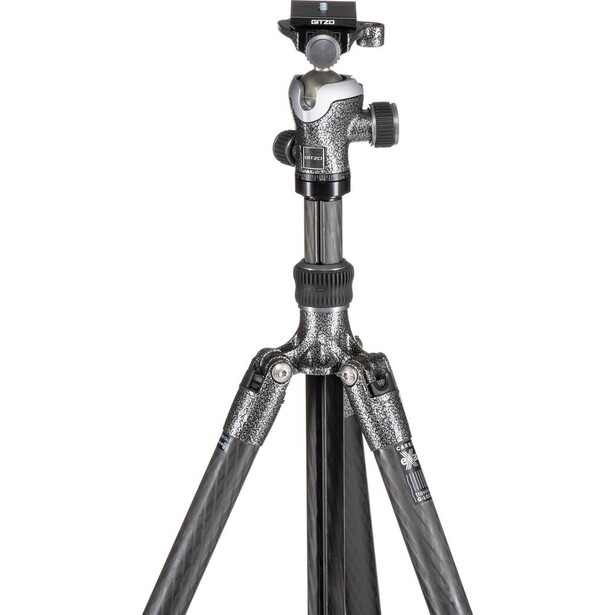
- Weight: 1.055 kg (2.33 lb), legs only
- Folded length: 42.5 cm (16.7 in)
- Max height: 153 cm (60.2 in)
- Min height: 22 cm (8.7 in) with the short column fitted
- Load capacity: 10 kg (22 lb)
- Leg sections: 4, Carbon eXact tubes stepping 25.3/21.7/18.3/14.7mm
- Head: not included; sold headless or in a kit
- Price: $449.88 (B&H)
Gitzo invented the 180-degree folding traveler tripod, and the GT1545T is still the reference implementation. The legs reverse around the center column so the whole thing collapses to 42.5 cm while the top tube stays a full 25.3mm. At 1.055 kg it is the lightest set of legs here, undercutting even the Leofoto Ranger.
What you pay for is manufacturing tolerance. The G-lock twist collars seat with a precision the budget tripods do not match, the leg sections do not develop the gritty slop cheap carbon tubes acquire after a season of sand and salt, and Gitzo will still sell you a replacement leg section a decade from now. It ships with a short center column for low work, taking it to 22 cm, and Gitzo publishes an actual lens recommendation rather than only a load rating: 135mm, with 200mm as the maximum.
The problems are the price and the missing head. Buying this tripod and a decent ball head costs meaningfully more than the Peak Design Travel Tripod, and it packs more than 3 cm longer. The bottom leg section is 14.7mm, and while the tubes are excellent, physics still applies at full extension in wind. The design is old, which is a strength for spare parts and a weakness for features: no phone mount, no integrated head, no clever quick release, just very good legs.
For a photographer who already owns a ball head they love and wants legs that will outlast three camera bodies, this is the buy. Check the current price of the Gitzo GT1545T Traveler Series 1 Carbon Fiber Tripod at B&H.
What We Like
- Lightest legs here at 1.055 kg, with a 25.3mm top tube
- G-lock collars and tolerances that hold up for years
- Spare parts available long after purchase
- Short center column included for 22 cm minimum height
What Could Be Better
- Expensive, and the head is an extra purchase
- Packs longer than the Peak Design Travel Tripod
- Thin 14.7mm bottom leg section
- No modern conveniences, just legs
Best Minimalist Option: Platypod eXtreme
- Weight: 272 g (9.6 oz)
- Folded length: 19.7 x 13.4 cm plate (7.75 x 5.25 in)
- Max height: set by the surface you place it on
- Min height: ground level, plus the height of your head
- Load capacity: 10 kg (22 lb)
- Leg sections: none; four hinged spike feet with rubber tips
- Head: not included; 3/8"-16 titanium bolt takes any standard head
- Price: $149 (B&H)
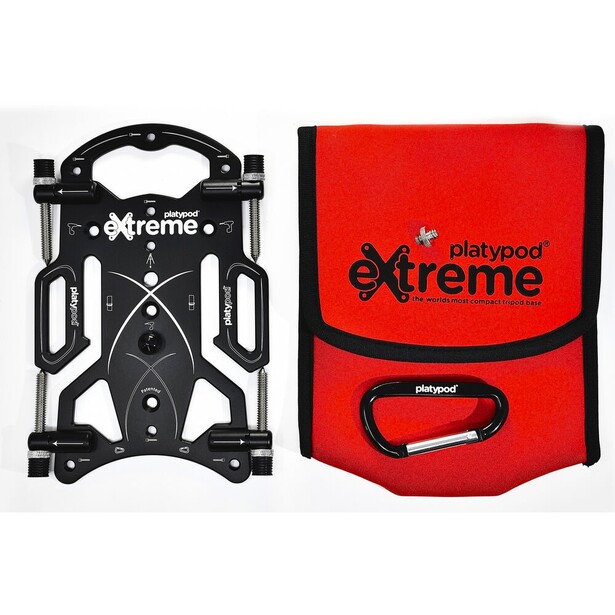
Sometimes the right answer to "which travel tripod" is "none of them." Airlines lose them, museums and cathedrals ban them, and there are trips where the honest calculation is that you will use a tripod twice and resent carrying it for the other twelve days. The Platypod eXtreme is a machined aluminum plate the size of a paperback that slides into a laptop sleeve, weighs 272 g, and holds 10 kg once you screw a ball head onto its titanium bolt.
You use it by finding a surface. A stone wall, a café table, a railing, the roof of a car, a boulder. The four hinged spike feet flip out and thread down to level the plate on uneven ground, and the rubber tips screw on when you are working on something you would rather not scratch. It goes places a tripod cannot: flat on the floor for a low product shot, strapped to a tree through the belt slots, braced on a bridge parapet for a long exposure. Seven 1/4"-20 sockets are machined into the plate, so a microphone or a small light can ride alongside the camera.
The limitation is total and obvious. It has no height of its own. If there is no surface at the elevation you need, you have no shot. It does not replace a tripod for landscape work where the composition demands eye level, and it does not replace one for video. The head is a separate purchase, which pushes the real cost up, and a decent ball head weighs more than the plate does.
As a second support that lives permanently in your bag, or as the only support on a trip where a tripod is impractical, it earns its space in a way nothing else here does. Our camera backpacks guide covers the bags with a sleeve it slides into. Check the current price of the Platypod eXtreme at B&H.
Read our full review: Platypod Extreme vs Delta: Honest 2025 Review
What We Like
- 272 g, and it slides into a laptop sleeve
- Holds 10 kg, more than several full tripods here
- Hinged spike feet level it on rock and gravel
- Goes where tripods are banned or impossible
What Could Be Better
- No height of its own; you need a surface
- Head sold separately, and it will outweigh the plate
- Useless for eye-level compositions and video pans
- Spike feet take time to level properly
How to Choose a Travel Tripod
Start with packed length, because it is the number that decides whether the tripod comes with you. Anything at or under about 40 cm rides inside a carry-on or a 20-liter daypack. Anything over about 45 cm straps to the outside, where it catches on branches, announces to a crowd that you are carrying camera gear, and is the first thing to go when you are tired. That single measurement separates the Peak Design and Fotopro tripods from the Leofoto, Falcam, and Gitzo ones, and it matters more to whether you take pictures than any load rating.
Then count the leg sections. Five sections pack shorter than four, and the price is that the bottom tube gets thinner, which is where flex lives. A five-section tripod at full extension is meaningfully less stable than a four-section tripod of the same weight, and the fix is simple: do not extend the bottom section unless you have to. Every tripod is stiffer with its skinniest section stowed, so build height from the top sections down and treat the last one as an emergency.
Load capacity is the spec people over-read. Manufacturers test it as a static vertical load, which is not what breaks a tripod in the field. What breaks a tripod in the field is wind, a heavy lens hanging off-axis, and your hand touching the camera. Leg-tube diameter is the more honest indicator of stiffness, and a top tube around 28mm, as on the Leofoto Ranger, tells you more than any payload figure. Check the bottom tube too: the Gitzo's thinnest section is 14.7mm, and that is the tube holding your camera when you extend everything.
The center column is the last thing to think about, and the answer is usually to leave it down. A raised column is a single unbraced tube supporting your camera above three splayed legs, and it is the least rigid part of any tripod. Buy for the height you need with the column down, not the headline maximum. If you want a tripod that converts to a monopod, the Benro Rhino Carbon Fiber Zero Series does it by threading the center column onto a removable leg, at the cost of a 52 cm folded length. Finally, always use the hook under the column. Hanging your bag from a light carbon tripod is the cheapest stability upgrade in photography.
What We're Looking For
Our picks weigh packed length and weight first, because a travel tripod that stays home has failed at its only job, then stability under a realistic camera and lens, then the quality of the head and the leg locks, which is where cheap tripods reveal themselves. Every specification here was verified against the manufacturer's current spec page and a live retailer listing at the time of writing, and where two sources disagreed we went with the manufacturer. Load ratings are manufacturer claims measured as a static vertical load, so we weigh leg-tube diameter and section count alongside them rather than taking a payload number at face value. Most picks across our buying guides come from gear our writers have used and reviewed hands-on; where a description here rests on the published specification and a product's documented design instead, the entry says so.
Frequently Asked Questions
Is Carbon Fiber Worth the Extra Money Over Aluminum?
Usually yes, if you walk with your tripod. Carbon saves roughly 200 to 300 g against an equivalent aluminum tripod and damps vibration faster, which shows in long exposures. Aluminum is cheaper, tougher when dropped, and perfectly fine if you drive to your locations. The weight difference is about the same as a small prime lens, so decide based on how far you carry it.
How Much Should a Travel Tripod Weigh?
Aim for 1.0 to 1.5 kg including the head. Below 1 kg you start fighting wind and need to hang weight from the center hook every time. Above 1.8 kg you have left the travel category and should be honest about whether you will carry it. The sweet spot for a mirrorless body and a mid-range zoom sits right around 1.3 kg.
Can a Travel Tripod Hold a 70-200mm Lens?
Most of them can hold it, but fewer can hold it still. A 70-200mm f/2.8 lens plus a mirrorless body is well over 2 kg of off-axis weight on a long lever arm, which is what excites vibration. Look for a tripod with four thick leg sections rather than five thin ones, use a lens collar so the weight sits over the head, and keep the center column down.
Do I Need a Tripod at All in 2026?
Less often than you used to. In-body stabilization now buys several stops hand-held, and computational blending handles a lot of low-light work. You still need a tripod for exposures beyond a second or two, for focus stacking, for panoramas that must align, and for any video with a static frame. If your answer is "twice a trip," a Platypod-style plate may be the smarter purchase.
What Is the Smallest Travel Tripod That Still Reaches Eye Level?
Among the picks here, the Fotopro X-Aircross 3 folds shortest at 36.5 cm while still reaching 151 cm, and the Peak Design Travel Tripod is close behind at 39.1 cm with a 152.4 cm maximum. Both get an average adult to roughly eye level with the center column raised, though you will be steadier if you keep the column down and accept a slightly lower camera position.
Fstoppers may earn a commission from purchases made through links in this article. Our picks are made independently by our editorial team.