
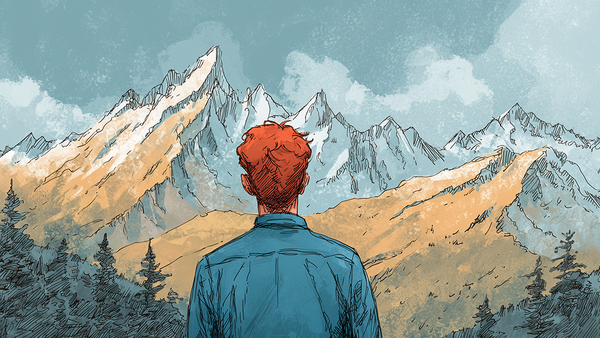
Today, let’s chat about one of the toughest questions any artist must answer to succeed in business and in life.
I’m a screenwriter. I’m also a director, photographer, cinematographer, and all the things that I talk about on this site. But my original sin, the thing that gets me up in the morning, has always been screenwriting. It’s what I’ve done with the bulk of my hours on Earth, and it still drives all the other art forms, whether or not words are part of the equation. This morning, I was revisiting one of the seminal tomes written on the craft, "Screenplay" by Syd Field, and I heard a passage that I think is universally applicable to artists of all stripes.
Field was talking about screenplay structure and stressing the importance of knowing your ending before you ever start writing your beginning. Maybe not the exact story beats or memorable lines of dialogue you plan to employ, but rather, he suggested that it is necessary in telling a story to have at least a general idea of how things will turn out. Will the hero win in the end? Will the bad guy get away unscathed? What lessons will your character learn that will leave him or her changed at the end of the story?
The reason it is important to know the end is because that knowledge will determine the route the character will need to take to get there. Every scene in a script is meant to build up to the ultimate conclusion. The only way to know if a scene is necessary is to know how it relates to your final destination. If a scene is fun but not really related to your larger theme, there’s a good chance that you’ll end up cutting it before the final draft. If you’re building up to a grand finale, your character will need to go through trials and tribulations along the way that make that specific finale feel earned and worth the trip. You’ll only know what those tribulations should be if you know where they are headed.
I mention this today not because I am trying to convert you all to screenwriters, but rather because it dawned on me that this simple advice is equally valid to photographers or other artists building their careers.
The great thing about being an artist is the endless possibilities. Art is about creating. And the only limits to what you create are your imagination. Sure, there are budgetary constraints, but generally speaking, the bigger you dream, the bigger you can achieve.
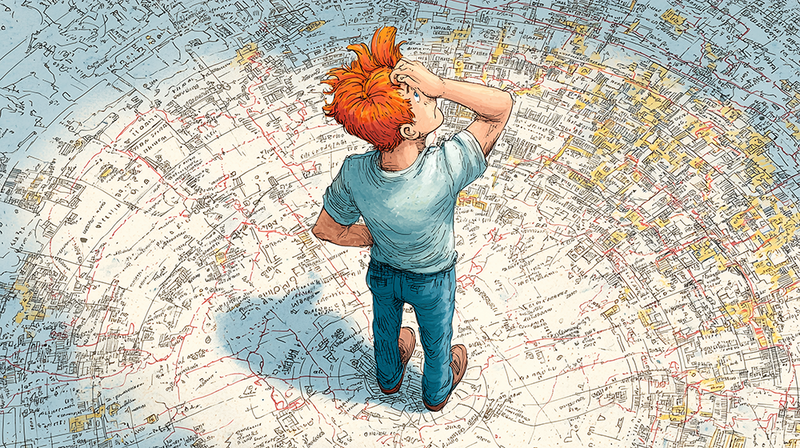
But because the possibilities are limitless, it can sometimes be hard to identify your area of focus. If you have the option of going in any direction, which one do you choose? And what if you make the wrong decision? What do you do then?
Over my varied three-decade career in the arts, I’ve faced this decision on multiple occasions. My greatest strength, as evidenced by my overworded multi-hyphenate intro, is that I have an incredibly varied skill set. Not in the sense that I dabble in many things, but rather, either through intention or wanderlust, I’ve been blessed with the opportunity to do multiple things (exclusively in the moment) in succession, each being my sole focus for a long enough stretch of time to establish myself in the field, build a reputation, and receive certain accolades. So now, when I try to consider my next move, it’s less a question of trying to decide which thing I “can” do and more a question of what it is that I “want to” do. Or, more specifically, what I most want to do.
Now, to be clear, I’m not trying to oversell myself or suggest that I am a master of all trades. Rather, what I’m trying to elucidate is a major challenge I feel as an artist, which I’m guessing many of you have felt as well. In the early parts of my career, the struggle was believing in myself against all odds and believing I could make my dreams come true. And while that is always going to be an ever-present issue for any artist, as I’ve aged, the harder question has become, “What is my true north?” In a world of options, if I could only pick one, what would it be?
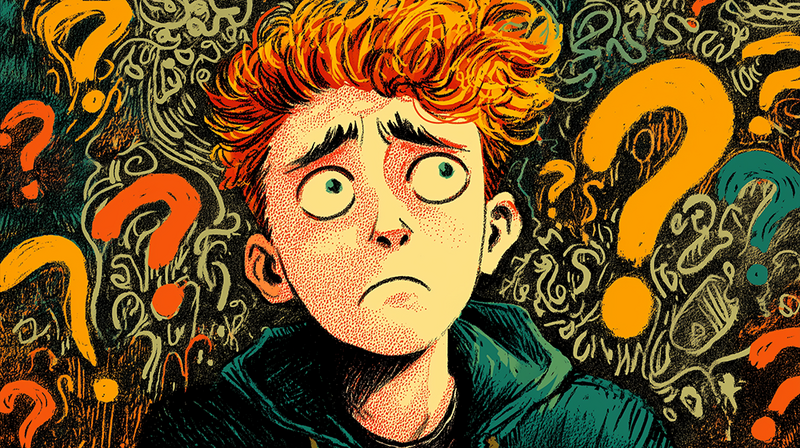
Some years, I’ve tried to have my cake and eat it too. I’ve tried to pursue all of my interests simultaneously, flipping back and forth depending on which way the wind happened to be blowing that day. But while this was creatively freeing, it was also limiting. Regardless of how hard I work, there are still only 24 hours in a day. When one takes my already feeble brain and divides its attention like slices of pizza, there simply isn’t enough to go around. Even less bandwidth goes around as I age and my ability to concentrate on more than one thing at a time dwindles further.
So my biggest challenge in recent years hasn’t been trying to figure out how I’m going to make it or finding my artistic voice. My biggest challenge has been trying to narrow my focus and be bold enough to decide what exactly it is that I truly want. It’s been trying to find my true north (or acknowledging what I already know). In short, it’s being clear on how I want the story to end so I know what scenes I need to add along the way to reach my final destination and which scenes need to be cut.
https://www.youtube.com/watch?v=E1I0hAxGFXw&t=2s
I speak from experience. Whatever measure of success I have had in life as an artist has always been the result of a near-monastic focus on a specific goal. Like I said, I’ve also done the follow-your-bliss version of my career, but if I’m being 100% objective, it was those times when I had a specific and clear goal in mind that I generated the best results. That applies both to the financial side and the creative side. When I forced myself to live and breathe that singular focus, to wake up thinking about it and go to bed thinking about it, it allowed my brain a distinct clarity. Suddenly, obstacles in my path didn’t seem so high because I was now using 100% of my mental energy to figure out a solution as opposed to just thinking about it when I had five minutes between other tasks. When I was practicing my craft, I was significantly more effective. Because now, instead of just going through the motions when on set, I was fully locked in 24/7, 365 days a year. That made it better not only when I was intentionally doing my work but even allowed my resting brain to solve problems for me when I was off the clock. When I knew my true north and put it out into the world, it allowed me to make progress both actively and passively because every step I took was done through the funnel of a greater notion.
Now, at this point, I should mention two things. One, I’m not suggesting you be focused on your work to the detriment of your family or other meaningful parts of your life. Rather, I am discussing your professional focus. And second, there is one additional curveball that life will throw at you that often doesn’t arise until you’re already deep into the game. Sometimes, your true north will change.
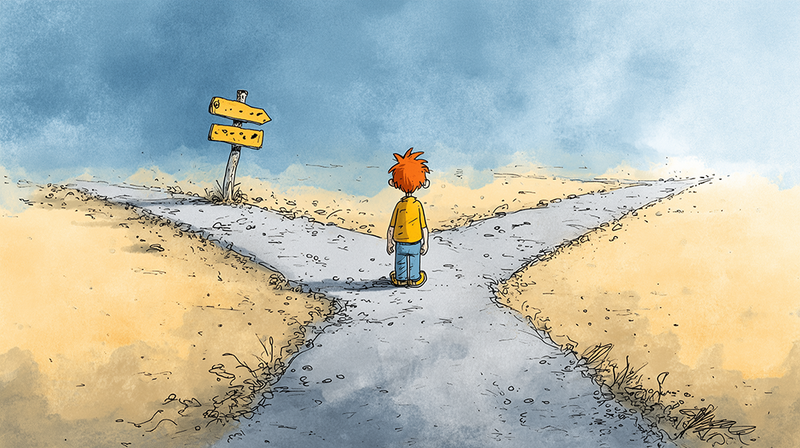
It’s hard to imagine when you are knee-deep in your passion and living your dream 24/7, 365, as I mentioned, that one day you might wake up and find that you have a completely different goal in mind. That thing that served as your obsession, that thing that got you out of bed in the morning, has suddenly morphed into something completely different—something you no longer recognize. It’s not that you don’t still love a particular thing, but through growth and time, you suddenly find yourself being woken up at night by an entirely new dream altogether.
Now, all that soul-searching and personal development you had to do when you first started on your journey and you were sure was long behind you, you will now find yourself going through it all again as a new passion starts to take hold. You’ll find yourself questioning your decisions and your sanity as you waffle between the old dream and the new one. Or perhaps you’re like me and have to struggle between four or five dreams at the same time.
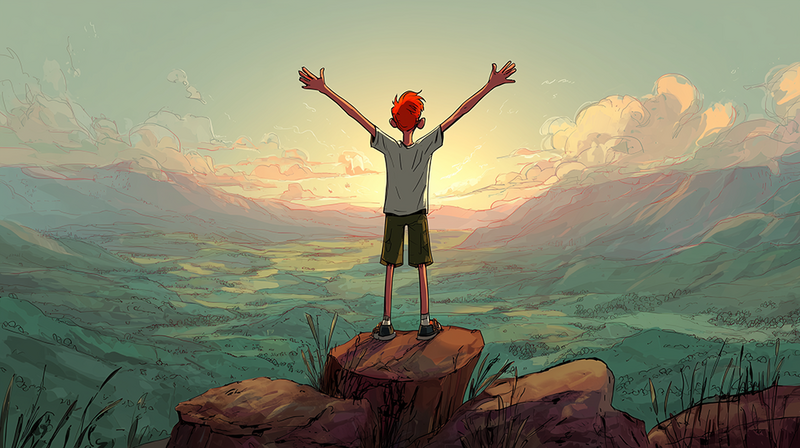
But this is where we come back to Syd Field and the art of screenwriting. One of the earliest lessons a screenwriter learns is that great drama is very rarely the result of choosing between good and evil. It’s not often that clear-cut. And if your story is that clear-cut, it’s probably going to be pretty boring. I mean, if the choice is between good and evil, what’s the point of the debate? Instead, great drama usually comes from characters choosing either between the lesser of two evils or the greater of two goods. The choice isn’t as clear as “Should I do this thing I love or this thing I hate?” Instead, the dramatic choice is between “Which of these two positive outcomes will I ultimately choose?” Or, “If I’m destined to fail, which of these two versions of loss is preferable? And might one of those losses actually end up being a win for the greater good?”
As you go on in your journey, your choice will be less about whether you follow your dream or keep your day job. It will morph into asking yourself which of the things you absolutely love in life you need to leave behind in order to follow the one thing you love most. And then allowing yourself the room to grow and, if necessary, reconsider that question as the conditions of the playing field or your dreams continue to evolve.
There are very few objective answers in art. That’s what makes it so invigorating. Every question is open-ended. But the more you are able to be honest with yourself and identify what it is that you really want in this world, more than anything else, the better chance you will be giving yourself at reaching your true north. So ask yourself the question, “Where do I really want to go?”






Join the Fstoppers community for free
-
Post comments and join in the discussions
-
Browse the site ad-free
-
Share your work and get featured in the community
-
Compete in the photo contests for fun and prizes
1 Comment
Christopher Malcolm wrote:
"..... when I try to consider my next move, it’s less a question of trying to decide which thing I “can” do and more a question of what it is that I “want to” do."
Wow! It must be incredible to be in a position to be able to do what you want, to have a choice between different paths, multiple options.
Unfortunately, this is something that most of us can not relate to. In my life, I need to do the things that someone will pay me to do, and those things are not at all what I want to do. Art and creativity are demoted to 2nd place in my schedule, because no one will pay me to do the things that fulfill me in those areas. I need to do menial tasks such as re-seal people's driveways, build patios and walkways, re-paint old rooms in old houses, repair damaged drywall, etc., etc., etc., because those are the things that people will pay me to do, and I need money to be able to pay for gas and car insurance and food and electricity and housing. I do not want to do these things, my heart is not in them, but no one will pay me anything to do the creative things that I find fulfillment in.
So I can not relate to being able to choose what I "want to do" over what I "can do". Economic realities prevent me from being able to make such choices. Honestly, there isn't even enough work at these mundane things that I do to earn income. I would love to be able to get 30 or 40 hours a week doing those things, because then there would be a little money left over. But even when I settle for what I "can do", there isn't even enough of that to make ends meet.
You seem to be in a very privileged position, and I hope that you realize just how rare that is, and are commensurately grateful.