Turning your passion into a career is one of the most debated decisions in creative work, and the answer is rarely as clean as either side makes it sound. Scott Choucino from Tin House Studio has been living this question for years, and his take is more nuanced than the usual "follow your dreams" pitch.
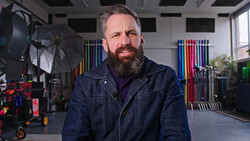
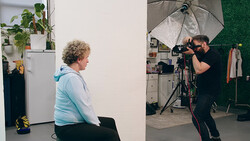
Coming to you from Tin House Studio, this candid video sees Scott Choucino walking through the real tradeoffs of building a life around photography, and he doesn't dress it up. He opens with the familiar tension: monetizing a passion can kill it, because suddenly your creative decisions belong to someone else. But his counterpoint is practical. If you're going to spend 50 hours a week doing something anyway, would you rather grind through a commute and a desk job, or occasionally deal with a difficult client while doing work you actually care about? He leans hard into the time argument. A conventional job doesn't just take 40 hours; add the commute, the recovery, the fact that by 7 p.m. you're too wiped out to even read about the thing you love, and the math starts looking very different.
The part of his argument that actually holds weight is the counterintuitive point about money. Choucino says that trying to make money from photography is one of the surest ways to produce forgettable work. When you shoot with a payday in mind, you default to safe, generic images that nobody connects with. His own turning point came before COVID, when he stopped chasing commercial work and started making images purely for himself. That shift, he says, took him from a decent living to a genuinely good one. It's the kind of result that sounds backward until you think about how creative markets actually work: the work that stands out is almost never the work made to a brief.
Choucino is also honest about how his calculus has changed now that he has children. Early in his career, he could afford to be selfish with his time and his choices, and that freedom is a big part of why it worked. He's direct about the fact that if photography stopped paying today, he'd walk into a factory without hesitation, not for himself, but for them. That's the variable most of these conversations leave out: the risk tolerance equation looks completely different depending on who's depending on you. If it's just you, the risk of chasing the passion is much easier to absorb. If other people are in the picture, the math changes fast. Check out the video above for the full rundown.

Join the Fstoppers community for free
-
Post comments and join in the discussions
-
Browse the site ad-free
-
Share your work and get featured in the community
-
Compete in the photo contests for fun and prizes
2 Comments
Assuming that we are handed a blank canvas and told, do what you do, is naive. Instead we get handed a massive amount of constraints most jobs never see at this level. It’s such compressed amount, the mojority of new photographer cannot anticipate the scale of it.
Failure is not in the art, it’s in the assumption that the art is the expectation. Competence is the real currency.
The true artistic part doesn’t have to be perfect or acquired in full before hand, because it is not the objective. In fact knowing too much can turn to rigidity, where art is assumed to be currency when it is not. Many fall short of the client’s expectation with this format.
Instead, with time, the artistic aspect can be crafted into a specialisation groing from regularly returning clientele. At that point art independently gets attached to the currency. This is identity, the photographer, and with identity comes stability.
There is no ultimate real top of a carrier in photography. Assuming it is a "thing" is lack of clarity. Instead, that level becomes yours when you find in yourself the satisfaction that resonates with your needs and broadly speaking life. The true art.
During my film photographer professional career the end of that was a production lab environment where perfection in processing was ahead of any art. The art came over time but at the end of those 14 years I had created so many images, about 30,000 a year, that I burned out. Yes, I shot most of that myself. The job was photo materials for the professors at the college. That was from 1984 through 1998.