
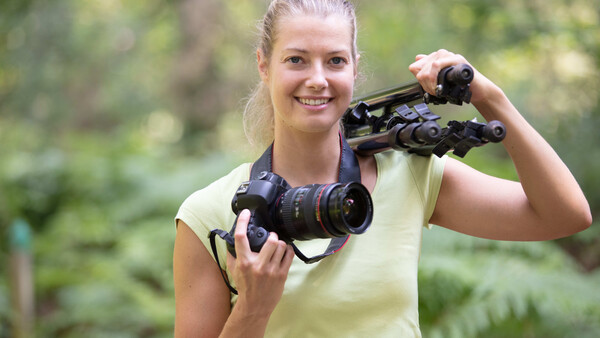
A brand just slid into your DMs. They love that photo you posted last week and want to use it on their Instagram. What do you charge? If your first instinct is to panic, calculate your hourly rate, or worse, just send them the file for free because "exposure is good," then you need to read this article. Right now.
Disclaimer: This article provides general information about copyright and licensing for educational purposes only and does not constitute legal advice. Copyright and licensing laws vary by jurisdiction, and individual circumstances differ. For specific legal advice regarding your photography business, contracts, or intellectual property rights, please consult with a qualified attorney licensed in your jurisdiction.
The single biggest mistake photographers make is thinking they sell pictures. You don't. You sell permission. And until you understand that distinction, you will never charge what you're worth, and you will continue to watch other photographers build thriving businesses while you scramble for scraps.

The Two Pillars That Define Your Business
Before we get into the mechanics of how to charge, you need to understand the two non-negotiable concepts that form the foundation of your entire business. These aren't optional. These aren't "nice to know." These are the pillars that will determine whether you make $500 or $50,000 on a single image.
Pillar 1: Copyright (What You Always Keep)
Copyright is the legal ownership of your intellectual property. As the creator, you own the copyright the instant you press the shutter. Not when you edit it. Not when you deliver it. The second that light hits your sensor, you are the sole owner of that image. What this means in practice is that you, and only you, have the right to decide who gets to use the photo, how they use it, where they use it, and for how long. Copyright is your asset. It's your inventory. It's the thing that has value, and you should guard it accordingly.
Pillar 2: The License (What You Sell)
The license is the specific set of permissions you grant to a client, allowing them to use your copyrighted photo within specific, agreed-upon boundaries. This is the actual product you are selling. When a client hires you, they are not buying your camera, your time, or your creative genius. They are buying a defined set of usage rights. Your contract is your license, and if your contract doesn't clearly define these terms, then you don't actually have a license at all. You have a mess. And messes cost you money.
The 4 "Dials" That Determine a License's Price
Now that you understand what you're actually selling, let's talk about how to price it. A license's value is not arbitrary, and it's not based on how many hours you spent shooting. It's a calculation based on four specific variables. Think of these as dials on a mixing board. The more permissions the client needs, the higher you turn the dials, and the higher the price. Master these four dials, and you will never struggle with pricing again.
Dial 1: Media
The first question you need to answer is, where will this image live? The medium matters because different media have different reach, different impact, and different value. A photo used in an internal company newsletter that fifty people will see has far less value than a photo plastered on a billboard that five million people will see every day. Digital usage might include social media, the client's website, email newsletters, or web ads. Print usage might include internal reports, magazine advertisements, product packaging, or billboards. Broadcast usage could mean local television, national TV commercials, or streaming platforms. Each of these categories has a different value, and each should be priced accordingly. The rule is simple: more eyeballs equal more value, which equals more money.
Dial 2: Territory
The second dial is geography. Where, physically, will this image be used? A local business that only operates in Cleveland, Ohio is reaching a fundamentally different audience than a national brand running a campaign across the entire United States, which is fundamentally different than a global brand like Nike or Apple running a worldwide campaign. Territory options typically break down like this: local (a specific city or region), regional (a state or group of states), national (an entire country), or global (worldwide). A global license is one of the most expensive things you can sell because the client is buying the right to put your image in front of every human on Earth. That permission has enormous value, and you need to charge like it.
Dial 3: Duration
The third dial is time. How long does the client get to use your image? This is where a lot of photographers leave massive amounts of money on the table because they don't define an end date. If you don't specify a duration, you've just given them the image forever, and forever is worth a fortune. Standard license durations might be one-time use (a single publication or post), six months, one year (this is a common standard for many commercial jobs), three years, five years, or "in perpetuity," which means forever. Perpetuity is a massive grant of rights, and it should never, ever be given away cheaply. If a client wants to use your image forever, they need to pay a huge premium for that privilege. A one-year license might cost $2,000. A perpetuity license for the same usage could cost $10,000 or more. The longer the duration, the more you should charge.
Dial 4: Exclusivity
The fourth and final dial is exclusivity, and this is where things get expensive. The question here is simple: can anyone else, including you, use this image while the client is using it? The standard is non-exclusive, which means the client can use it as defined in the license, and you can too. You can put it in your portfolio, on your website, in materials. You can enter it in competitions. You can even license it to other clients for different uses. This is the default, and it's how most licenses work. But then there's the expensive option: exclusive use. An exclusive license means the client is the only entity on earth who can use that image for the specified time and territory. And here's the kicker: that means you can't use it either. You can't put it on your website. You can't show it to other clients. It's locked up. Exclusivity is extraordinarily valuable to clients, especially in competitive industries, because it means their competitor cannot use the same image. If a client wants exclusivity, you need to charge accordingly. An exclusive license might cost three to five times more than a non-exclusive license for the same usage because you're sacrificing all future revenue potential from that image.

Putting It All Together: Real-World Scenarios
Theory is great, but let's get practical. Here are two scenarios that illustrate exactly how these dials work in the real world and why the same image can be worth $500 to one client and $50,000 to another.
Scenario 1: The Small Business (The Local Coffee Shop)
A local coffee shop in your city reaches out. They need a few photos for their Instagram and website. They're a small business with one location, and their marketing budget is modest. Here's what your license looks like. Media: digital only, specifically web and social media. Territory: local, meaning just your city or maybe your metro area. Duration: one year, which is standard and reasonable for a small business. Exclusivity: non-exclusive, so you can still use the images in your portfolio and license them elsewhere if the opportunity arises. For a job like this, your price is your creative fee (your day rate for shooting and editing) plus a small, reasonable licensing fee. The licensing fee might be $500 to $1,500, depending on the scope. This is fair because the reach is limited, the duration is short, and you retain all your rights. Everyone wins.
Scenario 2: The National Ad Campaign (The Shoe Company)
Now let's turn up the dials. A national footwear brand reaches out. They love that running photo you shot last year, and they want to use it as the hero image for their new national ad campaign. This is a completely different ballgame. Media: this isn't just web and social anymore. They want print usage, including billboards and full-page magazine ads, plus digital usage across all web ads and social platforms. Territory: national, meaning the entire United States. Duration: two years, which is longer than your standard one-year term. Exclusivity: they want exclusive use within the footwear industry, meaning no competing shoe brand can use this image, and you can't license it to anyone in that space. Now let's talk price. Your creative fee, your day rate for shooting, is now a small fraction of the total invoice. The license is the real product here. This brand is spending millions of dollars on this campaign. They're buying billboards. They're buying magazine spreads. They're buying national reach. Your image is the centerpiece of that investment, and its value is directly tied to the scale of their use. A license like this could be $10,000, $25,000, $50,000, or more, depending on the brand size and campaign budget. This is not a case of greed. This is how business is done. You are selling permission to use your intellectual property as the face of a multi-million-dollar campaign, and you need to charge accordingly.
A Special Case: What About Weddings and Portraits?
If you shoot weddings or family portraits, you might be reading this and thinking, "This doesn't apply to me." Wrong. It absolutely applies to you, but the structure is slightly different. For private clients like brides, families, or individuals, the standard is what's called a personal use license. This license gives the client unlimited personal, non-commercial use of the images. They can print them. They can post them on their personal social media. They can share them with their friends and family freely. They can make holiday cards. They can do essentially anything they want as long as it's personal and not commercial.
Here's what a personal use license does not include: they cannot sell your images. They cannot give them to their wedding planner, florist, or venue to use in those businesses' advertisements. They cannot use your photos to promote their own business or brand. And here's where this gets interesting for you: this restriction creates a new revenue stream. When the bride's venue calls and asks for photos to use on their website and Instagram, you don't just hand them over. You license those images to the venue as a separate transaction. Same with the florist. Same with the wedding planner. Each of those businesses is using your images for commercial purposes, which means each of them needs to pay for a commercial license. Suddenly, one wedding has generated not just your creative fee from the couple, but also licensing fees from three or four different vendors. This is found money that most wedding photographers are leaving on the table because they don't understand licensing. Instead of a license fee, many wedding photographers will use this as an opportunity to build symbiotic relationships with venues and vendors. The point is that your work shouldn't be used for free.
Stop Being a Photographer, Start Being a Business
Here's the bottom line: stop giving away your photos. Your images have value far beyond the day you shot them. A photo you took three years ago could be worth $20,000 to the right client tomorrow, but only if you retained your copyright and only if you understand how to license it properly. Your contract is your license, so you need to define these terms on every single job. Every one. No exceptions. If you're not defining media, territory, duration, and exclusivity in your contracts, you are leaving thousands of dollars on the table, and you're doing it on every single job you shoot.
Here's your homework: go review your contract tonight. Right now, if possible. Are you defining these terms? Do you even have a contract, or are you shooting on a handshake and a prayer? If your contract doesn't clearly spell out what the client can do with your images, where they can use them, for how long, and whether it's exclusive, then you don't have a contract. You have a liability. Fix it. Update it. And start thinking like a professional, not a hobbyist.
If you would like to learn more about the business of photography, check out "Making Real Money: The Business of Commercial Photography With Monte Isom!"


Join the Fstoppers community for free
-
Post comments and join in the discussions
-
Browse the site ad-free
-
Share your work and get featured in the community
-
Compete in the photo contests for fun and prizes
1 Comment
People love to talk about pricing, being professional but they lowball the market and it hurts everyone. After thirty years in the Industry, I'm amazed at all levels of photographers giving their images away whether it's the quantity of images, licensing and term of use.