
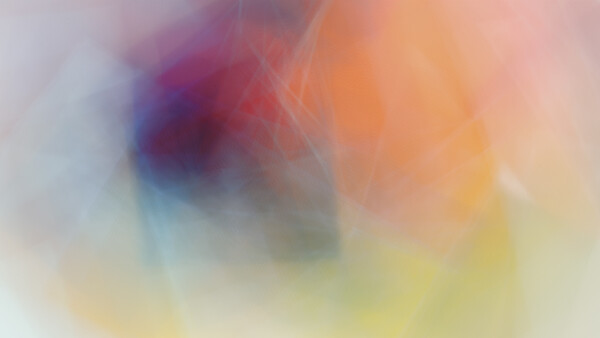
Photographers constantly describe their work as abstract, experimental, or conceptual. The problem is not the words themselves, but that they often refer to different levels of the work. When visual style, process, and project structure are mixed under one label, clarity disappears. This article separates those levels and shows how to use the terms precisely.
Confusion around the words "abstract," "experimental," and "conceptual" rarely begins with bad images. It begins when language stops distinguishing between levels of work. They show up in bios, portfolio sections, captions, and project descriptions. The issue is not that these words are "wrong." The issue is that they come from a different place. They entered photography from the art world, where they had clearer meanings tied to how work is built, how it's presented, and what kind of claim it makes. In photography culture, those meanings often slide toward whatever sounds like a compliment. The same word starts to cover three different things. Then a viewer reads your description one way, and your images land another way. That gap is where confusion starts, and once it starts, it spreads fast.
So the reset has two steps. First, what these terms mean in art, where they were formalized. Second, how photography commonly uses them now. After that, the clean way to think about them is not as three labels you stick on a body of work, but as three separate dimensions. One word rarely covers all of them. When photographers force it to, the description becomes vague even if the images are strong.
Abstract
In the art world, "abstract" was never a polite synonym for "hard to recognize." It described a structural decision. In painting, abstraction meant stepping away from depicting the world as a scene you could enter. The canvas stopped functioning as a window. Depth and perspective lost their job. Scale became unstable, sometimes impossible to pin down. The image could still contain cues that feel spatial, yet the work no longer depended on showing a coherent world with objects arranged inside it. The point was not to hide the subject; it was to make form and surface do the heavy lifting, because form became the subject.
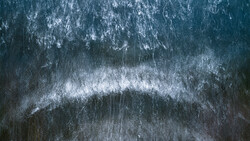
Photography inherits the word, then changes it. In photography, "abstract" usually refers to what the image looks like to a viewer in the first second. Tight cropping erases context. A close-up makes scale unclear. Texture and pattern take over. Reflections scramble what you expect to see. Motion blur breaks edges. Shallow depth of field removes anchors. The subject may still be there, but it stops guiding the reading of the frame. That is the practical, everyday meaning of abstract photography, and it's real. It's also not the same thing as abstraction in painting.
Here is the key difference worth stating directly. Painting could drop the illusion of a depicted world because it was never bound to a real-world referent in the same way. A photograph is. Even when a photo becomes hard to recognize, it still records a real scene in front of the lens. Perspective can remain intact. Lighting still behaves like lighting. Space is still there, even when you strip away clues that make the subject obvious. This is why "abstract photo" often means "reduced recognition," while "abstract painting" often means "a different construction of the image itself." They overlap in effect. They diverge in mechanism.
This matters for how you use the word on a site like Fstoppers. If you call your work abstract, most readers will take it as a description of the visual read. They will expect form, texture, light, color relationships, and a frame that does not rely on story. They won't assume you changed your process. They won't assume you are making an art-historical claim. If your image still reads like a normal subject shot in a normal way, the word starts to look like a costume. If the image reads through shape and surface, the word does its job.
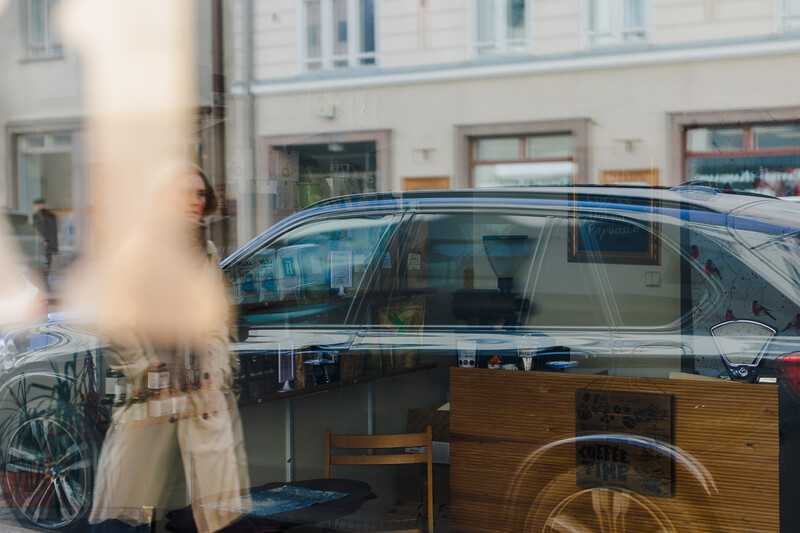
An abstract photograph, in the practical sense, might be a tight frame of light and shadow on a wall where no object anchors the scene. Or a close study of reflections in glass where space becomes ambiguous. The camera still records a real situation, but recognition stops guiding the reading. Form does. If you can describe the subject clearly, but the frame is read through shape, light, and surface first, you are in abstract territory.
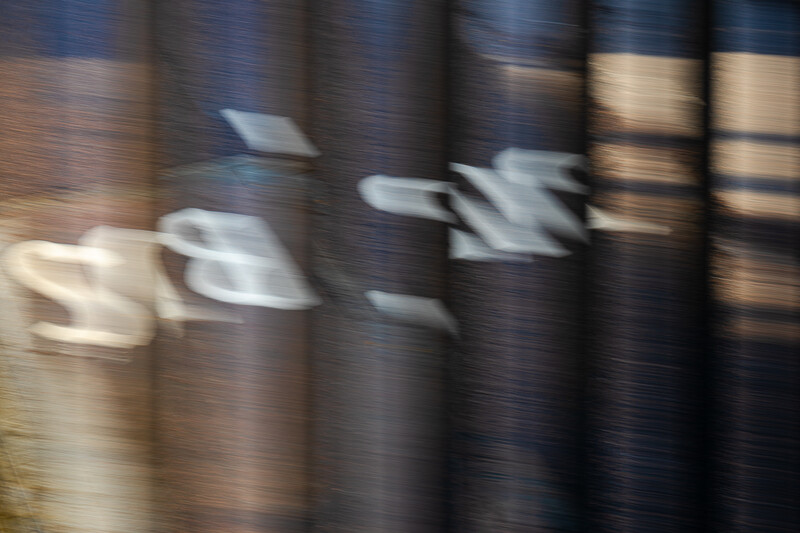
Experimental
In art history, "experimental" did not mean "unusual looking." It meant pushing on the medium itself. New materials. Altered processes. Rules that used to be stable were treated as negotiable. The experiment was not a mood; it was a test. You changed how work is made, how it behaves, how it can exist, because you were trying to find the edge of what the medium can do.
Photography culture often pulls the word toward the surface. "Experimental" becomes a tag for images that look different from mainstream work. Heavy color grading, layered exposures, extreme distortion, odd lighting, deliberate artifacts. Sometimes that is fair. Sometimes it is just a look. The same result could come from a plugin and a preset pack, which is fine, but it's not the same thing as experimenting with method.
If you want the term to mean something in photography, tie it back to the process. Experimentation in photography is about what you changed in your workflow. Maybe you tested a lighting approach you don't know yet. Maybe you broke your usual exposure habits. Maybe you tried a tool in a way it wasn't designed for. Maybe you changed your print process, your paper choice, your presentation method, your capture format, your entire chain from shoot to output. The point is not to impress anyone with difficulty. The point is that a test happened, and the test affected the work.
There is another point photographers often miss, and it's worth keeping because it's practical. True experimentation can be invisible. A viewer sees the final image, not the decisions that created it. That means "experimental" is a word you can't rely on the picture to explain for you. If you use it, you should be able to state clearly what variable was changed and why. If you can't, the word becomes a soft fog over the process.
Also, an experiment is a phase. It is not a permanent identity. Once a method becomes repeatable and reliable, it stops being experimental. It becomes your workflow. Calling the same repeated method "experimental" five years later does not sound rebellious — it sounds like you never decided what your process is.
Experimental photography becomes concrete when that change can be identified without metaphor. For example, deliberately shooting an entire project at an ISO you normally avoid, to study how noise reshapes texture and tone. Or using a lighting setup that removes your usual key light and forces shadow to dominate. Or printing the same image on radically different papers to see how surface changes perception. The result may or may not look unusual. The experiment lies in what was altered and why.
Conceptual
This is the term that gets abused the most, because it sounds serious while staying vague. In the art world, "conceptual" has a strict core. The work begins with a defined idea, rule, or condition. The execution follows that rule. The image serves the setup. It doesn't matter if the final image is visually loud or visually plain. In many classic conceptual works, the visuals are intentionally simple. The project lives in the structure, not in the drama of the frame.
Photography communities often soften the word into something else. "Conceptual" starts to mean symbolic, metaphorical, emotional, or "has a message." You see it attached to staged portraits, narrative scenes, moody series, and images that aim for interpretation. Some of that work may be excellent. The problem is that "symbolic" is not the same as "conceptual" in the stricter sense. Symbolism is a visual strategy. Conceptual is a project structure.
So translate the stricter meaning into a version without art-school language. Conceptual photography is built around a clear setup that shapes the whole series. One lens only. One subject repeated daily. A fixed camera position. A framing rule you do not break. A defined constraint that forces consistency across the set. You should be able to explain that setup in one short sentence. If you need a paragraph full of vague terms to explain what the "concept" is, you probably have mood, not structure.
Another practical detail that belongs here, because it prevents people from getting stuck: conceptual work usually makes more sense at the level of a series than a single frame. A single image can be strong without any project setup behind it. A set of images gets judged differently. When you label a series "conceptual," readers expect that the series has a clear reason for being a series. Not just "these images feel connected," but "this project was made under a defined condition." If that isn't there, the word starts to look like a way to borrow weight.
Conceptual photography becomes clear when the rule precedes the images. For example, returning to the same street corner every day for a year. Or building an entire series around one constraint you refuse to break. Or building a project around a fixed constraint that does not change, regardless of subject. The images may differ. The condition does not.
Three Separate Dimensions
Now the clean part, because it removes most of the confusion. These three terms describe different layers of practice. Treat them like three separate dimensions, not three competing categories.
"Abstract" describes how the image reads visually. It sits on a spectrum from subject-driven to form-driven.
"Experimental" describes how you worked. It sits on a spectrum from standard workflow to testing and process change.
"Conceptual" describes how the project is organized. It sits on a spectrum from open-ended shooting to a series built around a defined setup.
Once you keep those levels separate, a lot becomes obvious. You can make abstract-looking images using a stable, normal workflow, with no special project structure behind them. That happens all the time, including in commercial work. You can experiment heavily with process and still produce fully recognizable subjects. That is common in lighting tests and in print-driven practice. You can build a series around a strict setup and shoot it in a straightforward documentary style. Conceptual does not require visual weirdness.
Where people get lost is when one term is expected to cover everything at once. An unfamiliar image gets called conceptual because it feels "deep." A strong color grade gets called experimental because it looks different. A tight crop gets described as abstract because the subject is hard to name. The words drift away from what they can actually tell someone. When the levels collapse, evaluation collapses with them.
Typical Mix-Ups
The first common mix-up is treating abstract as proof of conceptual intent. A frame is hard to recognize, so the description claims a "concept." In art history these are different roads. In photography they get merged because both can produce images that resist easy reading. Still, if the only thing you can point to is reduced recognition, you have an abstract visual result. That's not automatically a conceptual project.
The second mix-up is treating experimental as a synonym for "unusual look." If the process didn't change, you're usually talking about style, editing choices, or a visual preference. Nothing wrong with that. The problem is the word. "Experimental" implies a test. It implies a process decision that isn't fully settled yet. If you call something experimental, be ready to say what the test was.
The third mix-up is using "conceptual" when you mean "symbolic." A photo can be symbolic without being conceptual. It can be emotional without being structured as a project. If the series wasn't built around a clear setup, calling it conceptual reads like an attempt to add gravity rather than add clarity.
Practical Ways to Use the Words
For these terms to work as useful descriptions, keep them tied to what they actually describe. Use "abstract" when the work reads through form, and the subject is no longer the main hook. Use "experimental" when your process changed concretely, and you can name what you tested. Use "conceptual" when the series is built around a defined setup that you can state plainly, without fog.
You don't need to police your language. You do need to avoid collapsing separate levels of work into one convenient label. These words came from art with stronger meanings. Photography adapted them, and that adaptation is not a crime. It just created drift. Knowing both layers helps keep the description consistent with what the viewer actually sees.


5 Comments
Interesting, because in the last 20 minutes I was writing a text that to me, defines a good reggae or ska band. The kind that sticks and people like get attached to without really understanding why. And honestly they don't have to know why. But I just scrolled through your article, and felt similarity in the process.
Good reggae is about resonance. It’s not linear, and it’s not something you can design. It emerges. Rhythm isn’t the architecture; it’s the product of something deeper. Resonance happens in the felt experience, in the body, and in the people.
When the people in a band can merge into a shared texture, they connect fluidly. Each musician stops being an individual performer and becomes part of the collective pulse. They embody one another. That’s when resonance appears: fluid, frictionless, alive.
This is the environment that allows improvisation, like in jazz, but through rhythm. That’s reggae, ska, and dub.
But there’s a key: you need a generator—a person who brings the first pulse. The rest of the band doesn’t follow mechanically; they gravitate toward that pulse, merging their energy into it. The groove emerges from that collective alignment, not from anyone’s design.
Not everyone experiences music this way. Some listeners feel it superficially—they enjoy it, they nod along, but they don’t inhabit it. Fully resonant music requires being inside the flow, not outside watching it.
Thanks for this thoughtful piece. I refuse to pigeonhole or limit myself to one “genre” but I am trying to gain a better understanding of what trips my trigger. One of the things I seem drawn towards is “Abstracts that are only abstract at first glance”. I like an image that at first makes you try to figure out what you’re looking at, but then after you realize what it is, you stick with it because it’s *interesting*. You don’t seem to have a category for that one. 😆
I have. It’s just an exceptional photograph. 😆
For anyone interested in these kinds of photographic explorations there is an Fstoppers group called Minimalism, Abstract, Experimental (and more...) one of the largest groups in the Fstoppers world.
It is a safe place to explore lots of very creative ideas so please join us, share your images, comment on the work of others, and most importantly, have fun.
https://fstoppers.com/groups/minimalism-abstract-experimental-and-more/…
I have conceived a few experimental abstract photos in my day.