

Many photographers produce abstract-looking images accidentally. Far fewer build abstract photography as a discipline.
Genres long treated as stable no longer function with the same authority, and the medium adjusts its center of gravity. Among these changes, abstraction stands out, no longer treated as a style but as a response to photography's weakening dependence on representation. The practical question, then, is where to begin if one intends to work with abstraction professionally rather than treat it as a fortunate accident. When does an image stop being a fortunate deviation and start belonging to a deliberate system? That is the threshold that must be crossed before calling a photograph abstract in a professional sense, and before calling oneself an abstract photographer.
The real problem is not abstraction; it is legibility within photographic culture. If intention cannot be visually distinguished from accident, then intention must be demonstrated rather than declared. That demonstration cannot happen through a single image. It must be built.
When the story drops out of the frame, the image loses its usual support. Narrative normally carries more weight than we admit; it holds even weak photographs in place. Remove that, and nothing holds the image in place. The viewer fills gaps. Abstract photography removes that anchor, the strongest interpretive crutch built into the medium by default. Once the narrative foothold disappears, the viewer has nothing to stabilize perception except formal organization. When that organization is not strong enough, the image collapses into "random texture" or "mistake." This reaction follows from how photographs are normally read.
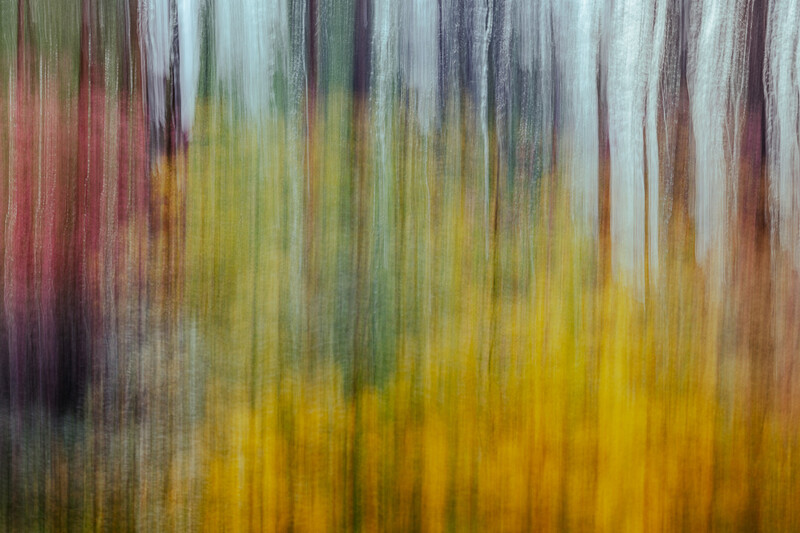
When narrative disappears, evaluation shifts. Viewers begin examining control. They look for focus precision, microcontrast, tonal discipline, clean shadows without noise contamination, color coherence, dynamic range management, correct skin rendering when applicable, absence of clipping, and structural sharpness. Photography has historically equated technical correctness with competence. A photograph that does not display control over exposure, clarity, tonal structure, and noise is automatically suspected of incompetence. Abstract photography often challenges those very parameters, which means it enters direct conflict with the baseline scale of photographic evaluation.
This is why abstraction functions differently in photography than in painting. A painter is not required to prove resemblance. A photographer is implicitly expected to prove fidelity and control. When abstraction disrupts sharpness, tonal accuracy, microcontrast, or spatial legibility, the burden of proof shifts to the author. The question becomes less "what is this about?" and more "is this under control?" Without visible evidence of discipline, deviation reads as failure and is quickly placed in the "technical mistake" category.
The problem becomes clear here: a single frame cannot prove discipline. Cameras generate accidental visual interest in large quantities. A lucky blur can look persuasive once. A clipped highlight may feel expressive in isolation. One image cannot establish whether a deviation is part of a system or a fortunate misfire. This is where method becomes necessary, not as philosophy, but as verification.
Repetition is the only visible proof of intention in abstract photography. If the same visual decision keeps returning under different conditions — the same way motion dissolves detail, the same way highlights break, the same way space flattens — it stops feeling accidental. Repetition makes control visible. Once control is visible, doubt disappears: the work becomes debatable instead of dismissible. Only after control is evident does the viewer gain permission to respond aesthetically, without the distraction of asking whether the camera failed.
Method, in this context, does not function as an explanation. It functions as evidence. It defines how far the deviation is allowed to go. It removes the presumption of accident. A system is not the repetition of failure. It is the conscious narrowing of possibilities. Abstraction develops through reduction. The limits are set early: what stays outside the frame, how far tonal contrast is allowed to move, and how much spatial information remains. When the same decision returns under different conditions — the same way motion dissolves detail, the same way highlights break, the same way space flattens — the viewer stops asking whether something went wrong. What first looked unstable begins to look deliberate. The image moves away from novelty and toward continuity.
The issue becomes sharper in the digital environment. Most abstract photographs are encountered first on a phone screen, compressed, reduced in scale, viewed in seconds. Fine tonal transitions disappear, subtle color gradations flatten, and surface texture is lost. Microcontrast collapses and edge precision softens. Tonal micro-transitions are averaged by compression algorithms. Without narrative anchoring and without tactile scale, only structural clarity survives the feed. Random success might capture momentary attention. It does not build recognition. A consistent visual language does.
The digital stream rewards recognizability. Recognizability requires repetition. Repetition requires method. What appears at first glance to be freedom from rules turns out to demand stricter internal discipline. Abstract photography cannot rely on story or technical polish to validate itself. It must rely on visible consistency in how it departs from those norms.
The test is simple. In photography, intention is not proven by statement. It becomes visible only through recurrence. In a single frame, intention and error are indistinguishable. If a body of work depends on isolated visual accidents, it cannot establish itself as a practice. The camera will inevitably reproduce similar accidents tomorrow, without the author's involvement. If the work rests on one fortunate deviation, it loses the argument the moment that deviation appears elsewhere by chance. When deviation is structured and repeatable across conditions, it ceases to be luck and becomes language.
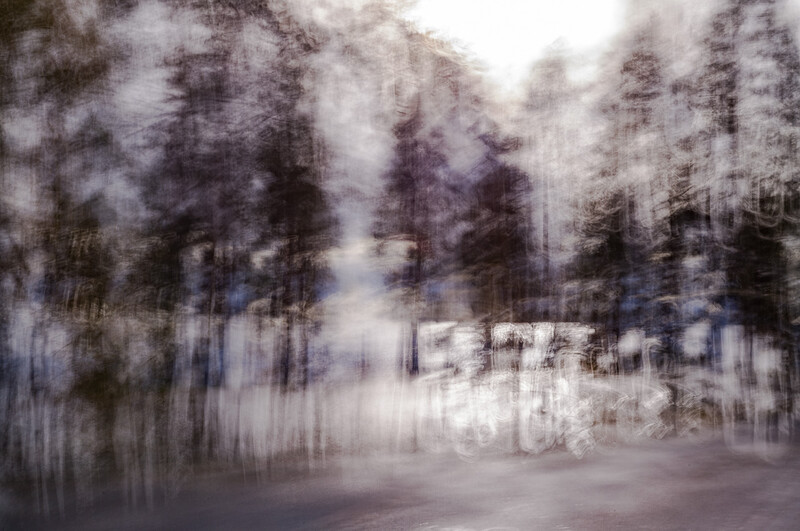
Abstract photography does not deny that photographs can describe objects. It questions the assumption that photographs must describe them in order to qualify as photography. Nor does it reject technical control. It redefines where control operates. Instead of displaying mastery through perfect compliance with technical standards, it demonstrates mastery through stable, repeatable departures from them.
The difference between an abstract photograph and a fortunate error is not intensity, strangeness, or originality. It is continuity. In the photographic field, abstraction does not need to win the argument "what is this?" It needs to win the argument "why is this not a technical failure?" When the same decision repeats within clear limits, abstraction becomes readable as photography rather than malfunction. That continuity is what transforms a series of unusual frames into a disciplined visual position.
In a medium that produces accidents constantly, where control is culturally equated with sharpness, tonal precision, and technical cleanliness, method is not an optional conceptual layer. It is the only mechanism that allows abstract photography to exist as a sustained practice. Without it, abstraction remains indistinguishable from noise. Without repetition, an abstract image remains a moment. With repetition, it becomes a position. Only then can you say you are working abstractly on purpose. You are no longer producing abstract photographs by accident — you are building abstract photography as a practice.



Join the Fstoppers community for free
-
Post comments and join in the discussions
-
Browse the site ad-free
-
Share your work and get featured in the community
-
Compete in the photo contests for fun and prizes