Street photography lives or dies on story. A technically perfect shot of a stranger on the sidewalk means nothing if there's no narrative pulling the viewer in.
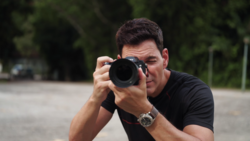
Coming to you from Liam Giuliani of 7th Era, this practical video breaks down the specific elements that separate a forgettable street shot from one that actually communicates something. It opens with a point that tends to get dismissed in gear debates: lens choice shapes the story you can tell. Shooting on something like a 40mm lens forces you closer to your subject, and that proximity pulls in the small details that a zoom lens like a 24-70mm simply can't. Those details are often what carry the narrative weight of an image. Many people gravitate toward longer zooms precisely because walking up to a stranger is uncomfortable, but that comfort comes at a cost to the story.
The video then moves into something that sounds obvious but rarely gets addressed directly: knowing what story you're actually trying to tell before you go out and shoot. Giuliani draws on his own experience shooting in places like India and Vietnam, where daily life spills into the streets in ways that don't exist in most Western cities. He describes walking through a spice market and seeing workers unloading enormous bags from a truck, then turning to find another man hauling one down the street. Those aren't manufactured scenes. They're moments that exist only if you're in the right place with a clear sense of what draws you in. His advice for figuring out your own direction is straightforward: find a photographer whose work genuinely pulls you in, study what they shoot, and build a shoot around that.
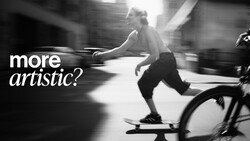
Editing also plays a role in how a story lands. Color grading and contrast choices set the emotional tone of an image before a viewer even processes what's in the frame. A flat, neutral edit tells a different story than one with heavy grain and crushed shadows. The section on candid shooting is where the video gets into real craft territory, and it's worth watching closely. The difference between a candid image and a staged one isn't just technical. It's the difference between a viewer feeling something and feeling nothing. There's more in the video on how to move, how to time the shot, and how to push past the discomfort of shooting strangers in public, all of which Giuliani covers from 12 years of working through it himself. Check out the video above for the full rundown.
1 Comment
I like his work. However I have to say that shooting with a 40mm prime lens (my favourite too - by a long way, Viltrox 40/2.5 on the A7Cii and OM 20/1.4 on the OM-3) or shooting with a 24-70 at 40mm is the same thing ! I don't find the lens size a major differentiator in how people react. You're taking a photo of them - that's enough. You can see my work (mostly China etc.) on IG (thedragonsfather).
However that said I also find a small bone of contention when it comes to photographing people when they know they are the subject. There are two aspects to this, showing someone in context and street portraiture. Yes when they know people do tend to freeze, or become serious or shy, but these images also have a power. Take both.