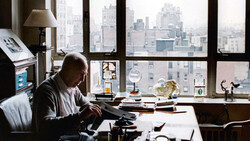
Washington Irving’s classic story of the Headless Horseman saw Sleepy Hollow, New York, as its setting. The village was officially known as North Tarrytown until it adopted the name Sleepy Hollow in 1996. Nearby Tarrytown, a historic village on the eastern bank of the Hudson River, was where photographer John Free was born. Life would take him to Old Saybrook, Connecticut, and then to Los Angeles, where he would establish himself as a photographer. It was during his time in LA that his philosophy on photography would emerge. He had a simple belief that a camera is only valuable when the person holding it is fully engaged with the world.
John Free recalled beginning his pursuit of photography on Christmas Eve 1970 in Frankfurt, Germany, while traveling through Europe. It began a lifelong pursuit that eventually led him to street photography and teaching. Influenced by Henri Cartier-Bresson, Robert Frank, and W. Eugene Smith, Free didn’t copy their signature styles; rather, what he took from them was something else, something more demanding. What Free got from them was discipline, curiosity, technical control, and commitment to the human experience.
With Free, photography should have a purpose. Before pressing the shutter, the photographer should consider what brought them to the scene and what the photograph communicates to the viewer. This does not mean that every photo needs a story or explanation. Instead, it means the photographer should make deliberate decisions rather than collect interesting moments.
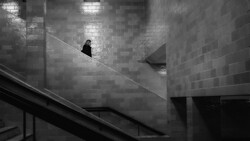
Free asks the photographer to study movement, gestures, their surroundings, and what possibilities a scene may have. He asks for effort, not passive observation. To live in the scene, the photographer must move, get close enough when needed, investigate the world, and not wait for the perfect scene to appear. The camera should be a tool to explore.
Technical ability matters when making a photograph, but Free expresses that technique should serve the photo rather than draw attention to it. The photo’s goal is to offer the viewer an encounter with feeling and clarity, not to demonstrate how technically sound a photographer is. With this, Free’s teachings encourage people to pay attention to life and transform ordinary experiences into something worth remembering. John Free’s philosophy can see a simple photo become something significant when it captures a connection between a person and the world around them.
Each photographer has their own approach and even their own philosophy. John Free’s philosophy asks a photographer to slow down, look with more intention, and be curious. Many photographers can take a technically sound photo, but there is something about using the camera to find a thing in the world that matters. And this philosophy can offer the viewer the opportunity to experience what was viewed through a camera.
From Ted Forbes’ YouTube channel, The Art of Photography, take a peek at how John Free uses the camera to capture life and help the viewer experience the same.


Join the Fstoppers community for free
-
Post comments and join in the discussions
-
Browse the site ad-free
-
Share your work and get featured in the community
-
Compete in the photo contests for fun and prizes
No comments yet