
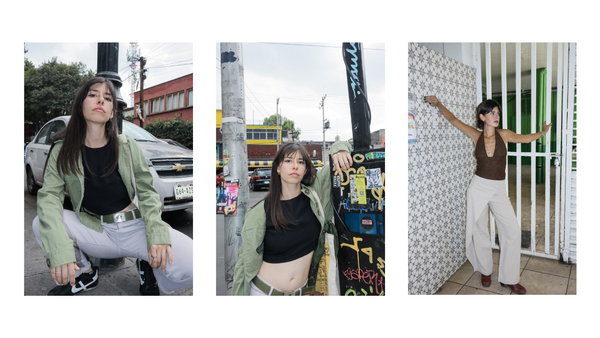
Portraiture did not begin with photography. It began with control. Long before the camera, someone was already deciding how a face should be seen, remembered, and fixed in time. The portrait has always been an act of authority. Photography didn't change that; it just made the act faster and more invisible.
Francis Bacon understood something most photographers still refuse to accept: the face is not a surface to describe, but a structure to break. Not out of cruelty, but out of necessity. Because resemblance is a lie. The closer you get to likeness, the further you move from truth. So he distorted, twisted, collapsed—not to destroy the subject, but to destroy the illusion of coherence.
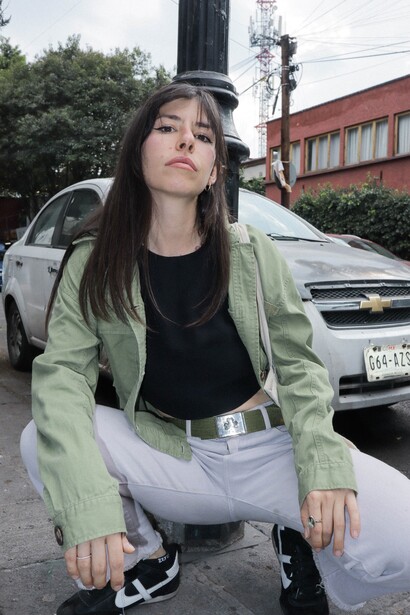
Antonin Artaud called for a theater of cruelty. Not violence for spectacle, but violence as clarity, a way to strip away performance and reach something that cannot be negotiated or softened. Portraiture, if it wants to matter, must operate on that edge. Not cruelty toward the person, but cruelty toward the fiction.
The contemporary portrait is built on avoidance. It avoids tension, contradiction, risk. It wants to be accepted by the subject, by the viewer, by the system that circulates images and rewards compliance. So the face becomes safe. Balanced, clean, optimized. Dead.
But a face that risks nothing gives nothing back. Helmut Newton never pretended neutrality existed. His images force a position: you either look, or you look away. There is no comfortable middle. Power and desire collapse into the same gesture.
Diane Arbus worked differently, but the mechanism is identical. She didn't beautify. She insisted. She held the gaze long enough for it to become unstable, long enough for the viewer to question their own distance. That instability is the image. Not the lighting, not the lens, not the technical execution. The fracture.
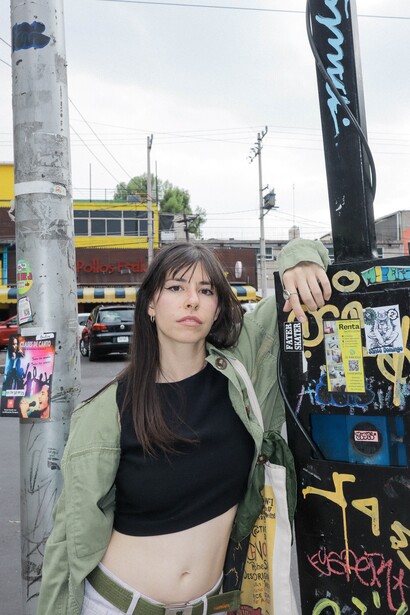
Look at how we photograph now. We smooth. We reassure. We "respect." We produce images that cannot offend—and therefore cannot remain. What does not resist is not remembered.
Every serious portrait contains a violation. Of distance, of expectation, of identity. Not legal. Perceptual. You cross a line that is usually left intact, and something suddenly shifts. It doesn't have to be dramatic or loud, but it has to be irreversible.
Toni Thorimbert collapses distance until presence becomes unavoidable. There is no performance left to hide behind. Efrem Raimondi removes everything that explains, until the subject is left without narrative protection. No story, just exposure. And exposure is never neutral.
The point is this: a portrait does not resolve. It destabilizes. It does not explain who someone is; it reveals that they cannot be fully explained. If you are trying to "do justice" to your subject, you are already constructing a lie. Justice is stable. A face is not. A face shifts while you look at it. It contradicts itself. It resists being fixed. And the moment you fix it, you betray it.
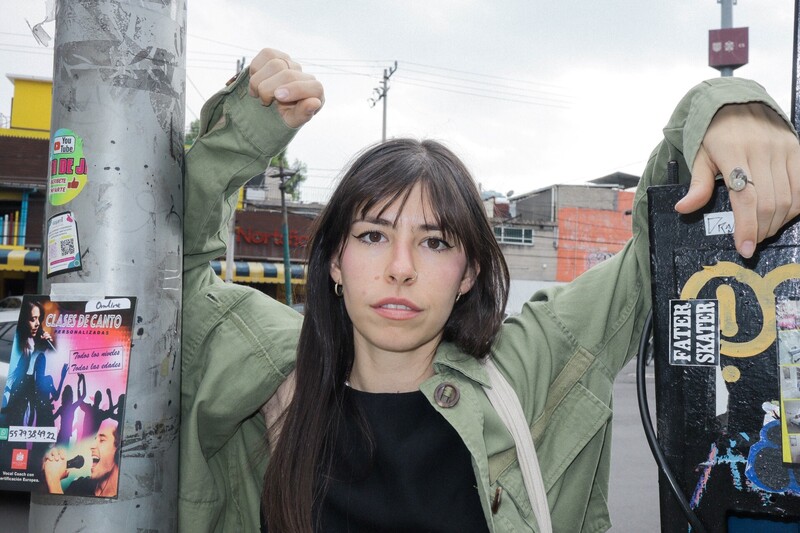
So betray it consciously. Choose how far you go. Choose where you press. Choose what you take, and what you leave unresolved. Every decision is a cut, and every cut leaves a mark.
The question is not whether your portrait is good. The question is whether it leaves a trace—something that doesn't dissolve immediately, something personal, something showing a different idea, something that lingers, slightly uncomfortable, slightly unresolved. If your images work instantly, flow easily, and get approved without friction, you've probably already lost them. The images that matter arrive late. They stay longer than they should. They make the viewer aware of their own position.
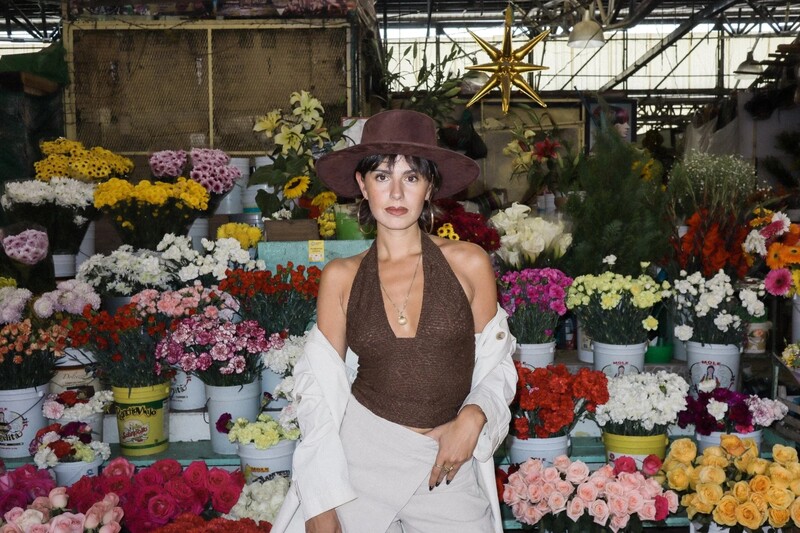
The face is not innocent. And neither are you. Photography happens exactly at the point where that lack of innocence becomes visible. Everything else is technique, and technique has never threatened anyone.
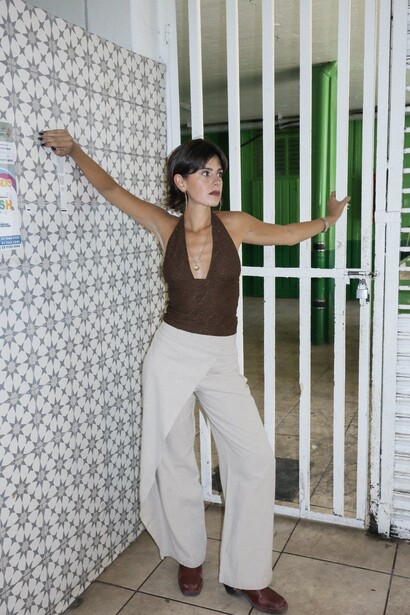
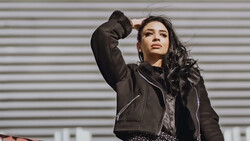
Please note: the photos included here are part of an editorial project I am realizing in Mexico City.


Join the Fstoppers community for free
-
Post comments and join in the discussions
-
Browse the site ad-free
-
Share your work and get featured in the community
-
Compete in the photo contests for fun and prizes
4 Comments
Completely disagree Portraiture is ALL about observing and trust. Worked for me for over 45 years as the go to photographer in my field of Exec portraits. in Toronto.
I think we’re actually talking about two very different things.
What you describe, observation and trust, is absolutely valid within a certain kind of portraiture, especially when the goal is to represent someone in a way that aligns with how they see themselves, or how they need to be seen professionally.
That’s a specific context. And it works.
But that’s not what I’m addressing here.
I’m not talking about portraiture as service, or as confirmation. I’m talking about portraiture as investigation. As something that doesn’t necessarily aim to reassure the subject or reinforce an existing identity.
Trust, in that sense, can also become a limit.
Not because it’s wrong, but because it often keeps both photographer and subject within a shared agreement of how things should appear.
What interests me is what happens just outside of that agreement.
Not in a confrontational or disrespectful way, but in a way that allows for ambiguity, tension, even slight discomfort.
That’s where, for me, a portrait starts to move beyond description.
So I wouldn’t say one approach cancels the other.
They simply serve different purposes.
Alex,
Your response to Glenn Brown actually clarified some of the questions that I raised as I read the article. This is about two different ways to approach portraits. It is hard to understand the path you have taken because it doesn't embrace the promotional style of portraiture most of us have come to know. The best way I can describe your approach is that your aim is to create a portrait in an unguarded moment. Some of the best portraits of children that I have taken are those that were taken while the child was not posed or directed but engrossed in active play or engaged with something they discovered. Those portraits didn't begin with a purpose other than to photograph a kid being a kid and the biggest initial obstacle was the camera itself. Thanks for writing an article that was difficult to understand but prompted a new way of thinking.
I think you got closer to the core than you might think.
It’s not really about rejecting “promotional portraiture” as much as refusing to start from a predefined outcome. The moment you decide what the image has to be, you’re no longer observing, you’re directing. And that’s a completely different practice.
What you describe with children is exactly the point. Not because they’re children, but because they haven’t learned to perform yet. No strategy, no self-image to protect. Just presence. That’s where something real can happen.
With adults, that layer is always there. The camera is not just a tool, it’s a trigger. It creates distance, self-awareness, control. My work is about navigating that tension without trying to erase it or dominate it.
At the same time, I’m not interested in doing the “assignment” in the most predictable way. Even in commissioned work, where there are clear requests and expectations, I believe there’s always space to push a bit further. To bring something of your own into the frame. Otherwise you just execute, you don’t author.
For me, that margin is essential. That’s where a recognizable voice starts to exist. Not by breaking the brief, but by not stopping at it.
So yes, unguarded moments matter. But they’re not something you “wait for” passively, nor something you construct. They exist in that fragile space between intention and surrender.
If the article felt difficult, it’s probably because this approach doesn’t offer a clear method to replicate. It’s not a formula. It’s a position you take, and then you deal with whatever comes out of it.