A full frame pancake lens that costs around $200, mounts autofocus, and shrinks a Sony body down to something that reads as a point-and-shoot sounds like it has to give something up. The Viltrox 26mm f/2.8 EVO Edition FE gives up a little, but far less than the price and size suggest.
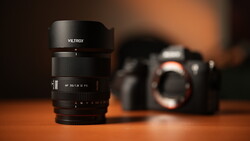
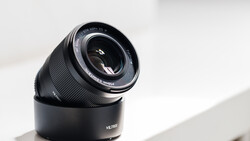
Jacek Sopotnicki walks through the Viltrox 26mm f/2.8 EVO Edition FE as the pancake he had been waiting to pair with his Sony kit. Build quality lands where you'd expect from Viltrox: compact, lightweight, with focus and aperture rings that turn smoothly. There's a USB-C port on the mount for firmware updates and a rubber gasket for weather-sealing. Sopotnicki flags one habit worth forming early, since the aperture ring has no lock, set it to f/11 or f/16 before switching to A mode so you don't nudge it while shooting from the camera. A magnetic cap that snaps onto the front rounds out the travel-friendly design.
Center sharpness at f/2.8 impresses him, with strong contrast right from the widest aperture. The corners drop off in both sharpness and contrast, and purple fringing shows up and stubbornly hangs around even when you stop down to f/4 or f/5.6. Barrel distortion is present but tidy, and profile corrections clean it up. Vignetting reaches deep toward the center and survives even at f/8, though it's soft enough to pull out in post. Against harsh light the lens flares readily, which Sopotnicki turns into a feature during a portrait session with his sons, using the warm, sunny flares on purpose. Focus breathing is visible too, and he leans into it as a semi-anamorphic effect rather than treating it as a flaw.
Autofocus on a small lens like this is the real surprise. On his Sony a7 IV, it stays reliable and doesn't hunt, though the motor is audible and not the fastest around. Close-focus performance stands out, with sharp results at f/2.8 up close and pleasant background separation once you stop down to f/4. Bokeh comes out rounder and smoother than he expected from a 26mm f/2.8 on full frame. Stars aren't its strength, and Sopotnicki says he wouldn't reach for it as an astro lens. One detail he points out that many reviews skip: the lens hood carries a 43mm filter thread, so you can screw filters onto it.
The invisibility angle is where this lens fits into a bigger shift. Street and travel shooters have been quietly downsizing for years, moving toward gear that doesn't announce itself in a crowd. A pancake like this turns an a7 IV, a7 III, or the compact Sony a7C II into something that reads as a casual compact instead of a pro rig. That matters on the street, where a smaller profile changes how people react to you and lets you work faster and closer. The same logic applies to travel, where weight and bulk decide whether the camera comes along at all. If you already own a full frame Sony body and want a lens that lives on it for personal projects and everyday carry rather than paid work, this is the category the 26mm was built for. Pair the flare and breathing character with the low profile and you have a lens that suits a specific style of shooting: loose, spontaneous, and unbothered by clinical corner performance.
Sopotnicki is candid that the lens isn't flawless, but it earned a rare spot: instead of going back to the manufacturer or onto a shelf, it stays in his bag. For roughly $200, a shooter who values size, sharpness in the center, and a lens that keeps a Sony body low-key gets a strong compromise.
Watch Sopotnicki break down the sample images and show exactly where this pancake shines and where it stumbles in the video above.

Join the Fstoppers community for free
-
Post comments and join in the discussions
-
Browse the site ad-free
-
Share your work and get featured in the community
-
Compete in the photo contests for fun and prizes
No comments yet