Pentax has not released a new digital camera in three years, and its last full frame DSLR is eight years old. If you still shoot Pentax, or you’re thinking about it, that gap should get your attention.
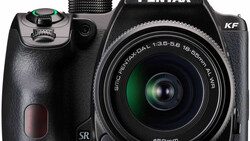
Coming to you from James Warner snappiness, this thoughtful video looks at where Pentax stands in 2026 and what might actually be next. The biggest rumor is a long-awaited successor to the Pentax K-1 Mark II, often referred to as a K-1 Mark III. The talk centers on a possible 60-megapixel sensor and improved autofocus, borrowing what Pentax learned from the Pentax K-3 Mark III. You can still buy the K-1 Mark II new at full price, which says a lot about how slowly this line moves. An update would not need to reinvent anything. Better AF, a refreshed sensor, and the same rugged build would be enough to keep loyal users in the system.
That kind of restrained upgrade makes sense. Pentax users value grip, weather-sealing, and features like Astrotracer that you do not find elsewhere. A refined K-1 body that keeps the core feel intact would reward the people who stayed while others switched to mirrorless. At the same time, the rumor has floated around for years. Each year becomes “the year.” If 2026 passes without an announcement, you have to ask how much longer Pentax can lean on aging hardware without losing even more ground.
The more interesting movement is happening in film. Pentax surveyed users about film interest, then followed through with the Pentax 17, a half-frame camera with modern electronics. It is not a recycled point and shoot. It is a newly built film body from a legacy brand, and by Pentax’s own account it performed better than expected. That opens the door to bolder ideas. One roadmap concept was a premium compact, something along the lines of the Ricoh R1, but newly manufactured, repairable, and reliable. Vintage premium compacts from Contax and Olympus now sell for over $1,000 and often fail due to aging electronics. A modern, slim, wide-angle compact done right would hit a real gap in the market.
Medium format, on the other hand, looks quiet. The Pentax 645Z has not seen an update in over a decade, and rumors of a successor have faded. That segment is crowded and expensive. Walking away may be the practical move.
The video also floats riskier ideas. A revival of the Pentax MX-1 with stronger optics and controlled flare could give you a metal-bodied compact with character but modern performance. Even wilder is bringing back the Pentax Q series with interchangeable lenses at a realistic price, aimed at the growing crowd carrying dedicated compacts again. Smartphones killed that category once. Now young shooters are buying small cameras simply because they are fun and different, even when image quality is worse than their phone. If Pentax can price a refreshed Q aggressively and support it with lenses, it would sit in a space the larger brands ignore. Check out the video above for the full rundown from Warner.



Join the Fstoppers community for free
-
Post comments and join in the discussions
-
Browse the site ad-free
-
Share your work and get featured in the community
-
Compete in the photo contests for fun and prizes
No comments yet